Cleaning goals are measurable targets for how well and how efficiently equipment and facilities are cleaned – for example a verification pass rate, a cleaning time or the water and chemicals used. In food processing, pharmaceuticals and healthcare, clear goals help meet safety regulations, maintain equipment, keep workplaces safe and turn cleaning into a process that can be improved.
This page shows how to set goals that measure the right things and how to achieve them – including when the answer is a change to the equipment rather than more effort. For the people side, see communication and innovation in cleaning practices.
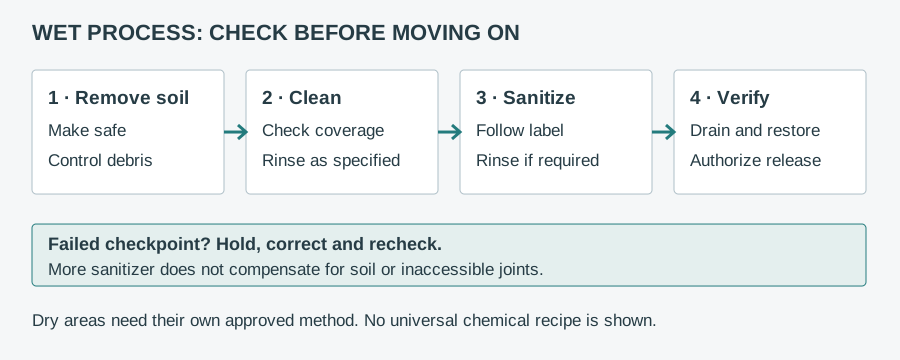
Use the sanitation sequence and acceptance framework to define the process and checks that the goals must preserve.
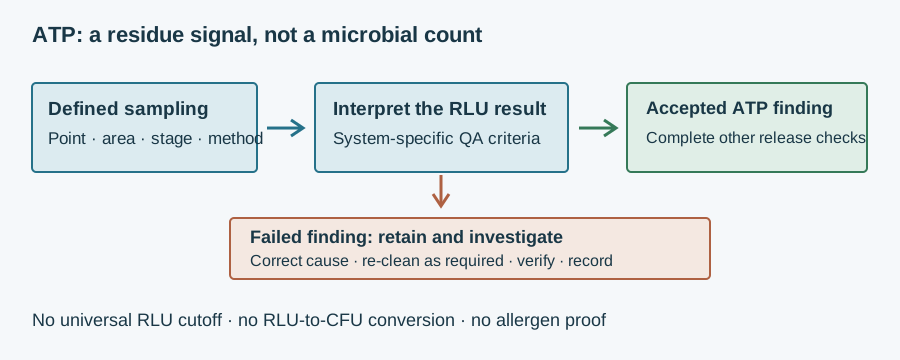
Use the point-specific ATP criteria and sampling workflow before comparing rapid-test pass rates across machines or cleaning shifts.
Why cleaning goals matter
- Health and safety: proper cleaning reduces the risk of contamination and illness, especially in food processing and pharmaceuticals.
- Regulatory compliance: cleaning supports HACCP-based food safety systems and GMP (Good Manufacturing Practice); worker safety rules such as OSHA in the US cover how cleaning is done.
- Operational efficiency: clean equipment runs with fewer breakdowns and hygiene-related stops.
Without goals, cleaning tends to be judged by appearance. With goals, it gets a framework for measurement and continuous improvement.
Which cleaning metrics to use
Choose a small set of metrics that cover both the result and the effort:
| Metric | Type | What it tells you | Caution |
|---|---|---|---|
| Visual inspection pass rate | Result | Visible soil removed | Subjective; use checklists |
| ATP pass rate | Result | Organic residue at defined points | Set fixed sampling points |
| Microbiological / allergen swab results | Result | Specific hazards | Slow; used for validation and trends |
| Repeat findings per location | Result | Persistent problem spots | Points to design or wear issues |
| Cleaning time per machine | Effort | Labour and downtime | Never use alone |
| Water and chemical use | Effort | Cost and environmental load | Check concentration stays correct |
| Scheduled tasks completed on time | Process | Discipline and capacity | Says nothing about quality |
The key rule: pair every effort goal with a result goal. A shorter clean with worse ATP results is not an improvement.
How to set effective cleaning goals
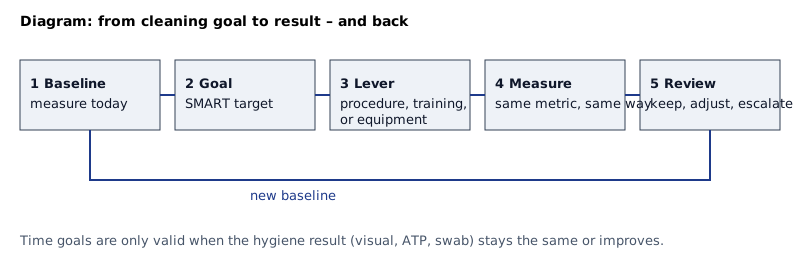
- Assess current practice. Audit how cleaning is actually done; ask cleaners where they lose time; collect existing verification data.
- Measure a baseline for each metric, per machine or area, over a representative period.
- Define SMART goals – Specific, Measurable, Achievable, Relevant, Time-bound. An example of the format: "Reduce cleaning time for the line 2 conveyor by a set percentage within three months, with ATP pass rate unchanged or better." Set the actual figure from your baseline.
- Prioritise high-risk areas. In food processing: conveyors, filling machines and areas prone to residue build-up. In healthcare: sterile rooms and laboratories.
- Choose the lever for each goal: procedure, training, tools or equipment (see below).
- Build a schedule with daily, weekly and monthly tasks, assigned responsibilities and checklists or software to track completion.
- Review at fixed intervals and reset the baseline when a goal is reached.
Choosing the right lever
| If the gap is… | Typical lever | Example |
|---|---|---|
| Steps skipped or done wrongly | Procedure and training | Photo-based SSOP (sanitation standard operating procedure) at the machine |
| Inconsistent results between shifts | Training, supervision, automation | Joint inspections; CIP (cleaning in place) for closed systems |
| Slow disassembly | Equipment | Tool-free removable parts for COP (cleaning out of place) |
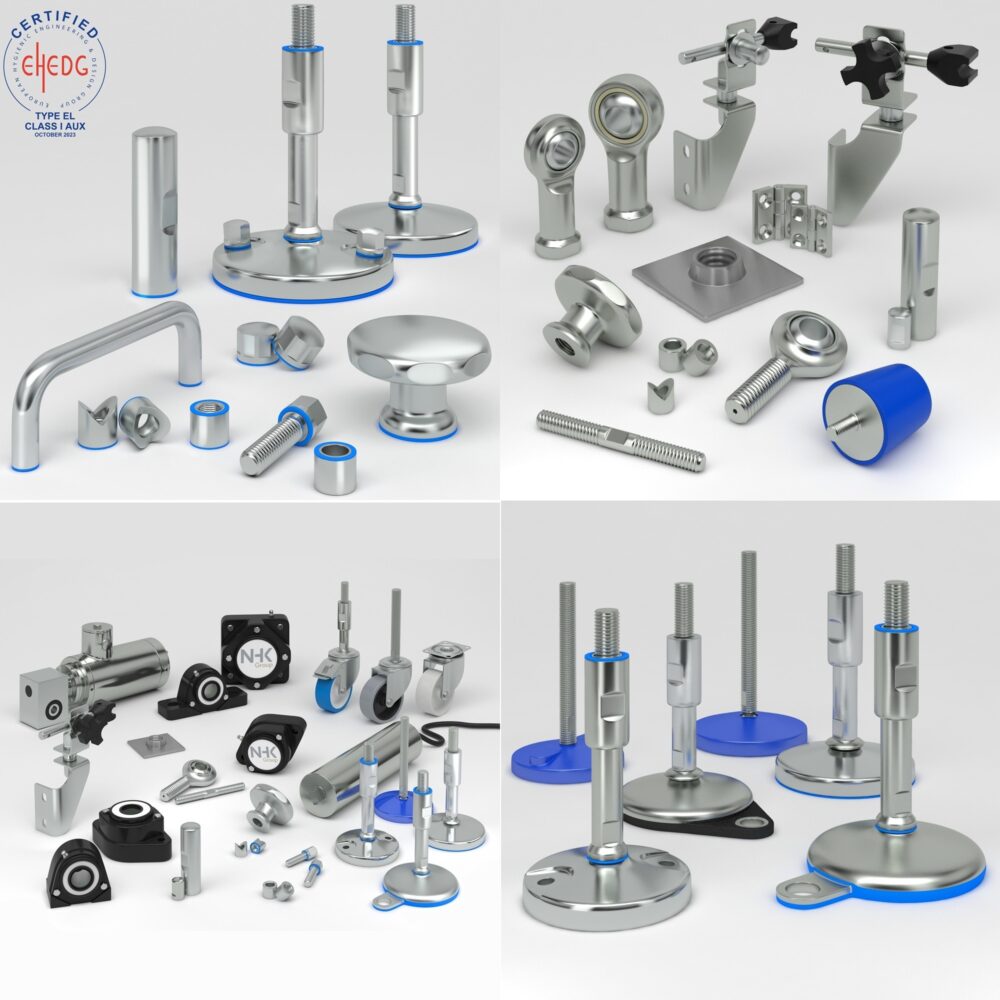
| Same spot fails repeatedly | Equipment or maintenance | Replace exposed-thread feet or hex fasteners with hygienic designs |
| Water pooling, slow drying | Equipment or layout | Self-draining surfaces, floor slope to drains |
| Seals degrading | Material choice | Seal material compatible with the chemicals (EPDM, FKM, VMQ) |
Effort alone cannot clean a crevice – a narrow gap cleaning fluid cannot flush – or an exposed thread reliably. When a goal is missed repeatedly at the same location, look at the equipment. Options include hygienic levelling feet and hygienic bolts; the design reasons are in challenges faced by cleaners in food production.
Technology
- Automated cleaning systems reduce manual labour and make results more consistent.
- Monitoring sensors record cleaning parameters – temperature, concentration, flow – against set values.
- Digital cleaning logs simplify record-keeping for audits.
- Data analysis can show patterns and help adjust schedules; it supports decisions but does not replace verification.
Achieving goals through training and accountability
- Hands-on training on the actual machines and equipment.
- Compliance awareness: why each step matters for food safety and regulations.
- Ownership: assign areas to teams, show their results, and recognise good performance.
- Performance reviews that discuss results and obstacles – including obstacles caused by equipment.
Monitoring and evaluation
- Track the chosen metrics with the same method and sampling points every time.
- Schedule routine inspections in addition to self-checks.
- Review trends monthly; investigate any location that fails repeatedly.
- Report results back to the cleaning team.
Common obstacles and how to handle them
- Time constraints: reduce the work rather than rushing it – better access, fewer crevices, tool-free parts. Faster methods such as high-pressure cleaning should be used only where the equipment is designed for it, because high pressure can drive water into bearings and spread aerosols.
- Resistance to change: involve cleaners in decisions and show the data before and after.
- Budget: prioritise changes by the effort they remove; replacing problem components at planned stops spreads cost.
Example: a conveyor cleaning goal
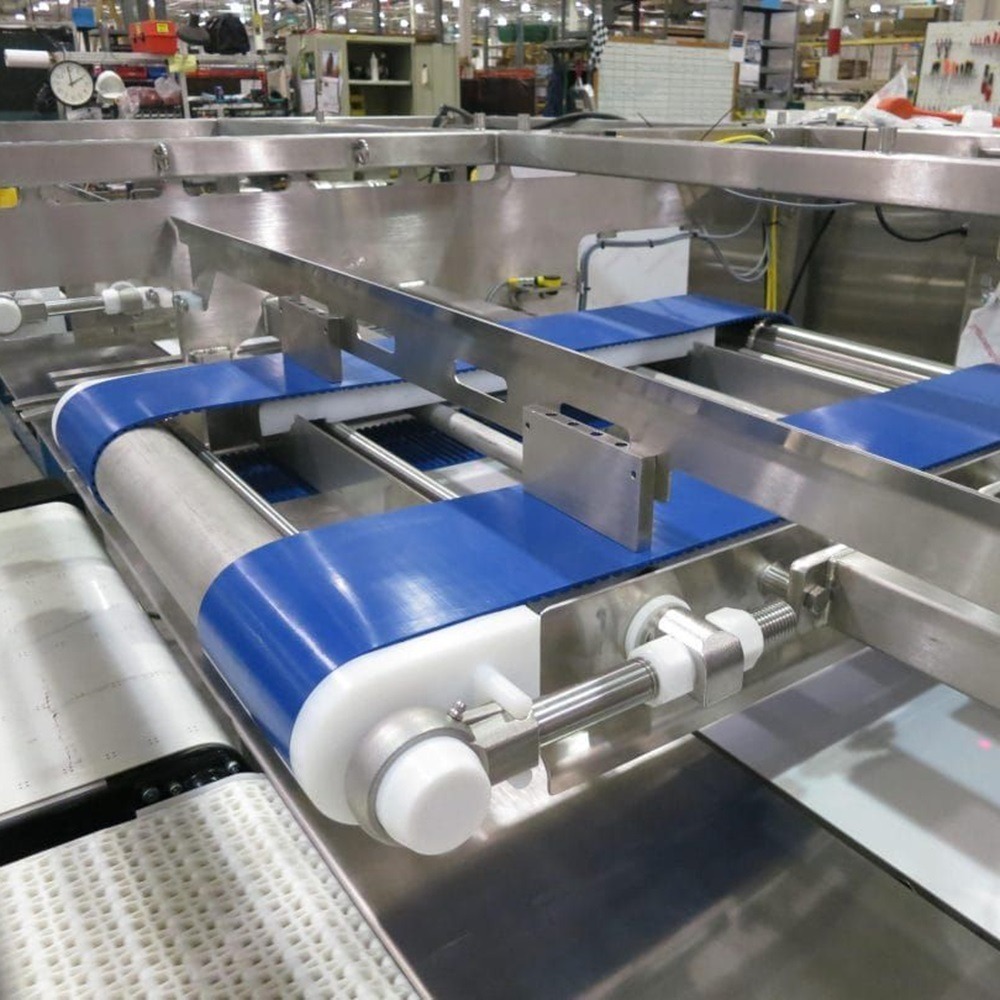
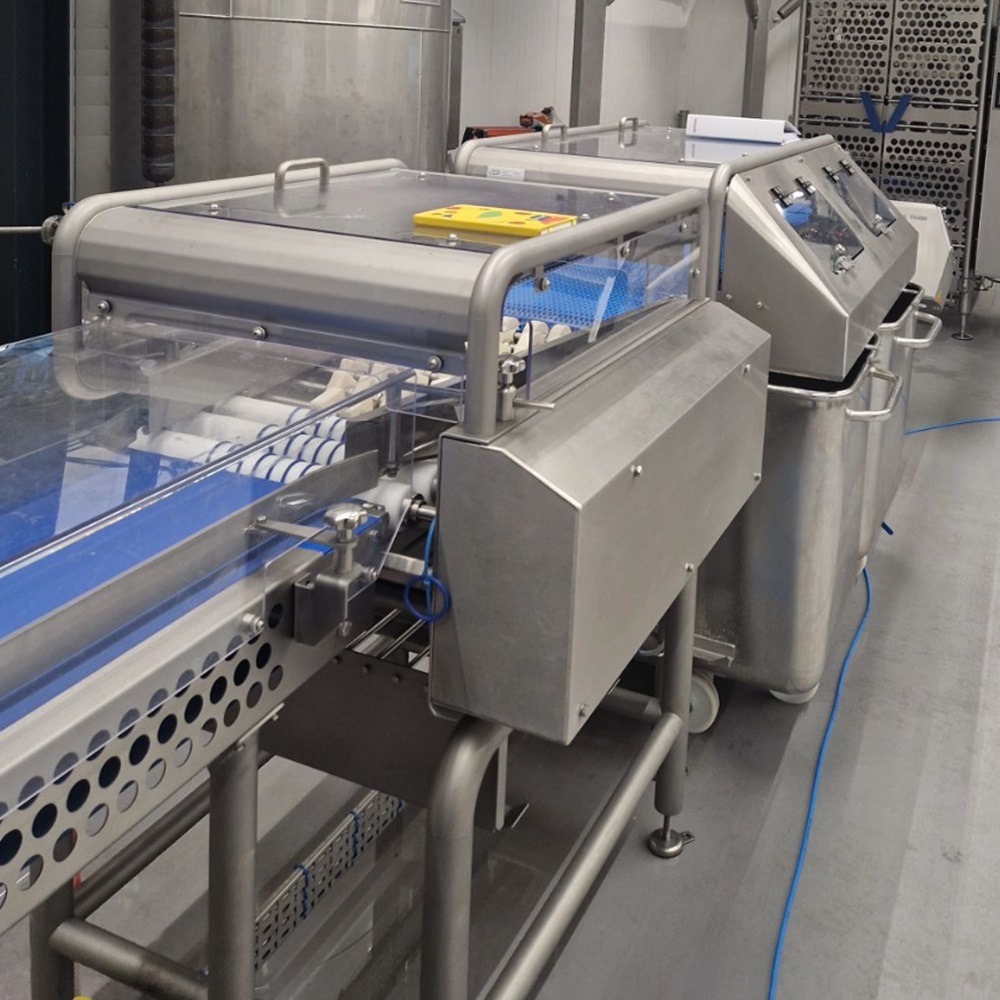
Assumptions (illustrative): on a vegetable conveyor, cleaners report that the base takes a large share of the cleaning time, and ATP checks at the feet fail more often than elsewhere.
- Baseline: cleaning time and ATP pass rate recorded over four weeks.
- Goal: shorter cleaning time with a higher ATP pass rate at the feet, within one quarter.
- Lever: procedure change alone does not help; maintenance replaces exposed-thread feet with sealed hygienic feet.
- Measure and review: same metrics, same points, for four weeks after the change; the new values become the next baseline.
Benefits of well-set cleaning goals
- Productivity: fewer stops and longer equipment life.
- Reputation: consistent hygiene builds trust with customers and auditors.
- Regulatory confidence: documented, consistent cleaning reduces the risk of non-conformities.