
Materials and surfaces
Published by NHK Group ApS
Material choice decides how a component behaves in years of washdown: whether it corrodes, cracks, absorbs moisture or loses its surface finish. The surface itself matters as much as the grade. A rough or damaged surface gives bacteria a place to attach and makes cleaning less effective.
This section explains the materials used in hygienic machinery components and where each one fits. It compares stainless steel grades such as AISI 304 and AISI 316L, covers engineering plastics and composites used for housings and base plates, and looks at elastomers for seals and gaskets.
It also covers surface roughness and how it is specified, passivation and corrosion behaviour, resistance to common cleaning and disinfection chemicals, and the questions to ask about food-contact suitability.
Material data from suppliers is a starting point. Temperature, chemical concentration, contact time and mechanical load in your own process all change the result, so test or verify the choice for the application.
Stainless steel grades
Food-grade stainless, 304 vs 316L, 420 vs 440, 440C, alloying elements and steels for 3-A.
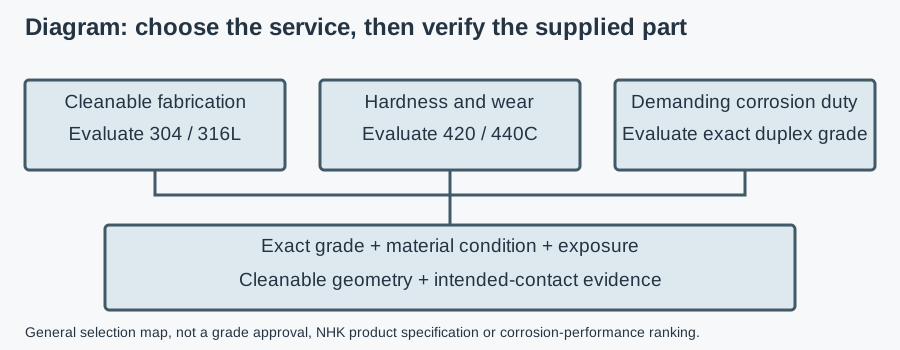
Food Grade Stainless Steel: Grades and Washdown Selection
Compare 304, 316L, 420, 440C and duplex for food machinery. Check washdown limits, surface condition, food-contact evidence and component specifications.
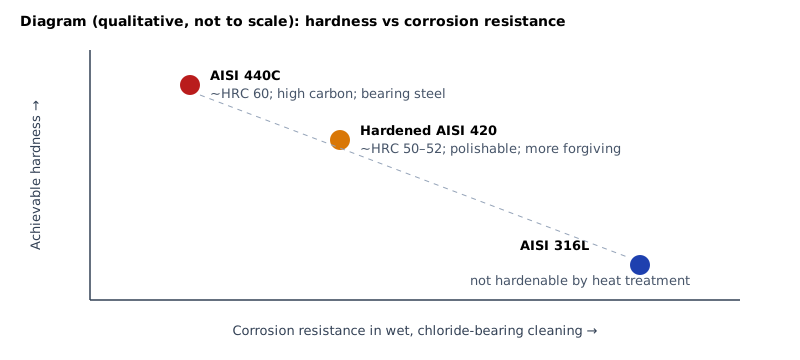
420 Stainless Steel for Machine Parts: Properties and Limits
Is 420 stainless steel good for machine parts? AISI 420 and 420B properties, hardening, corrosion limits in washdown, where it fits and what to specify.
440 Stainless Steel for Bearings and Wear Parts
Is 440 stainless steel good? AISI 440 hardness, corrosion limits in washdown, why it is used for bearings and wear parts, and what to specify.
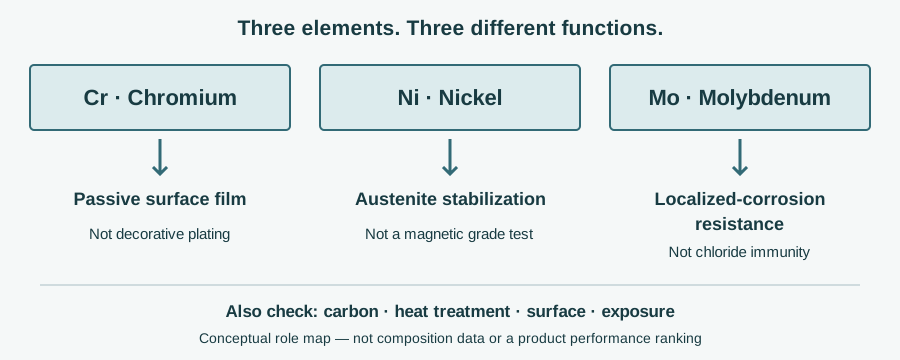
Chromium Nickel Molybdenum Stainless Steel: Element Roles
Understand chromium, nickel and molybdenum in stainless steel. Connect passive film, structure and chloride resistance to grade selection and checks.
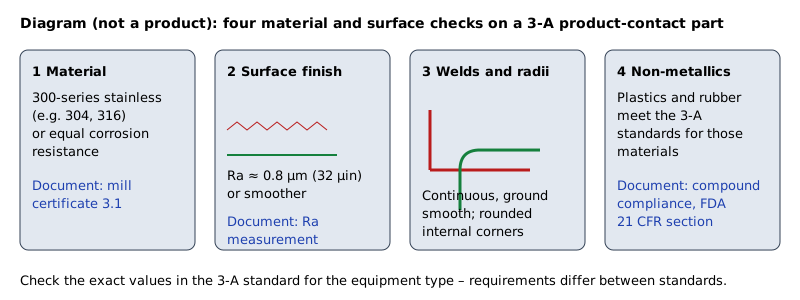
Stainless Steel for 3-A Sanitary Standards: Material Requirements
Stainless steel for 3-A Sanitary Standards: 300-series grades, Ra and No. 4 finish, welds, radii, plastics and rubber, and the documents to keep for TPV.
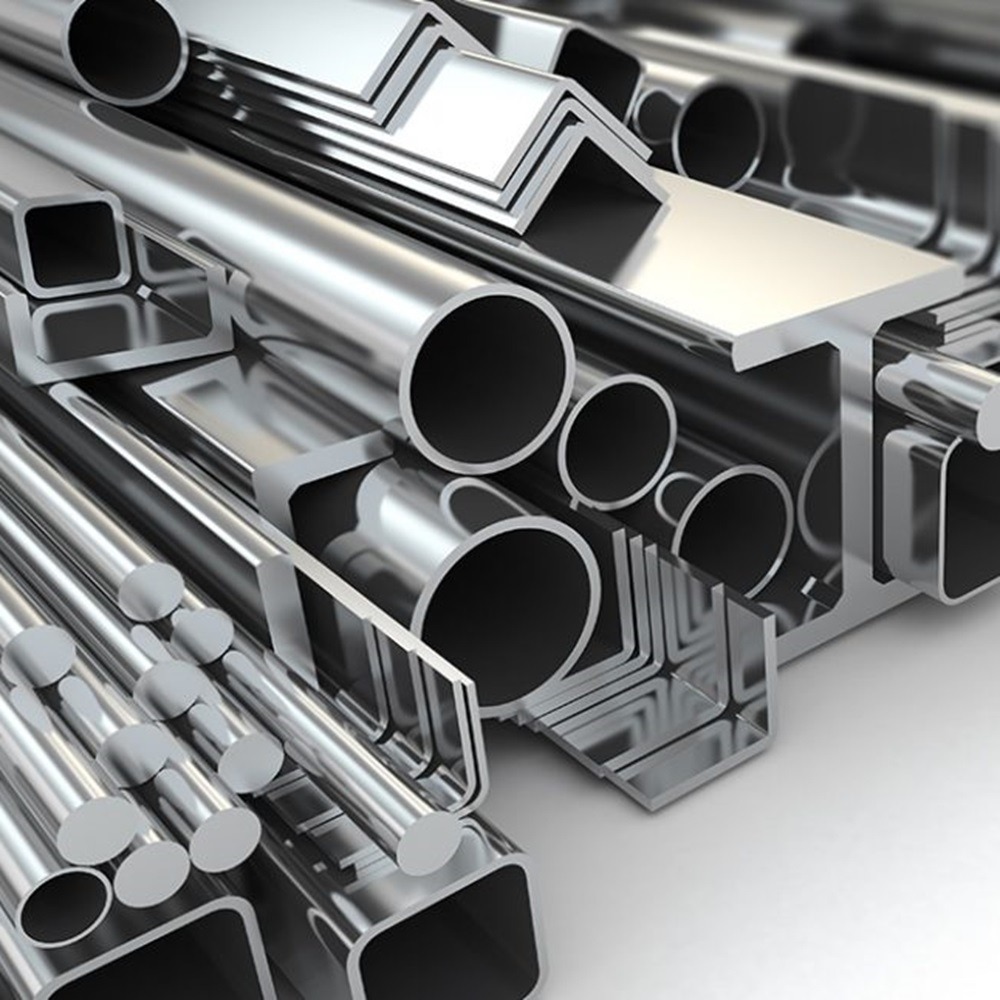
AISI 316L vs AISI 304: A Practical Comparison for Hygienic Equipment
AISI 316L vs AISI 304 for food, biotech and pharma equipment: PRE, chlorides, welding (304L vs 316L), finish – plus a selection method and spec checklist.
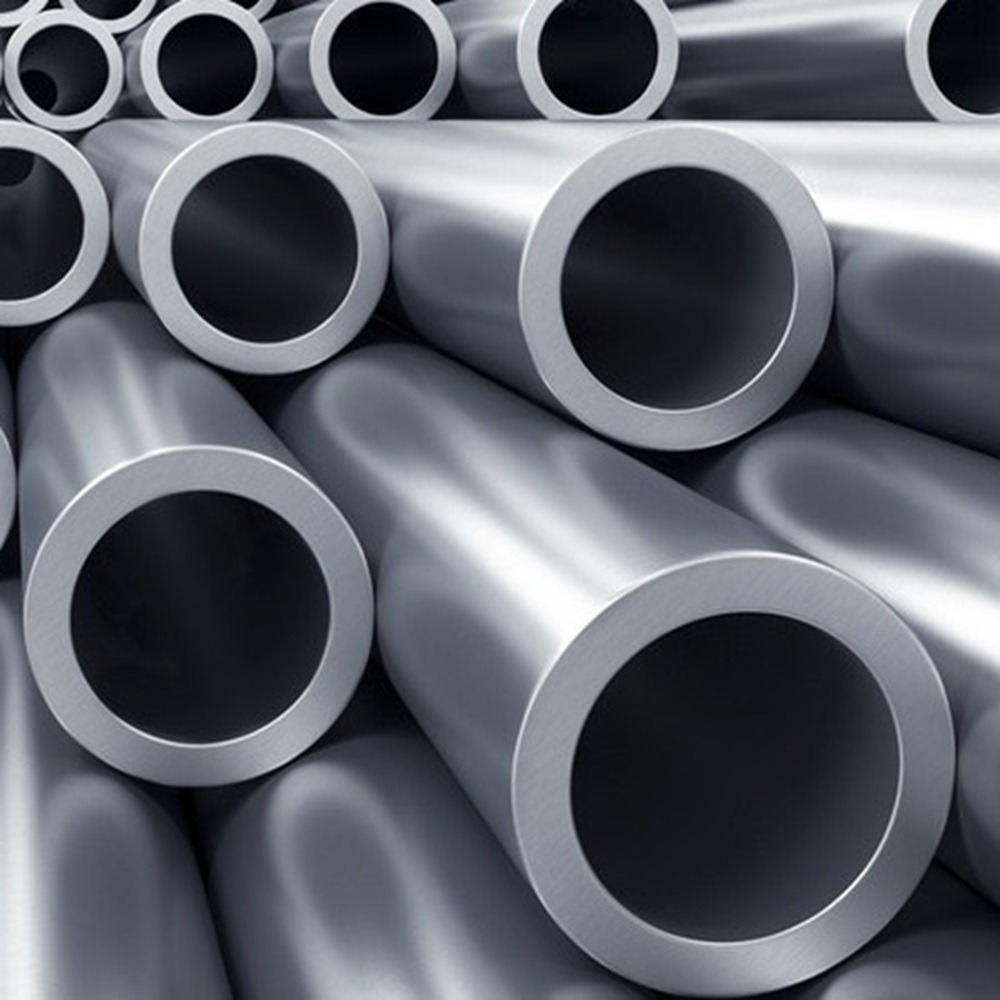
420 vs 440 Stainless Steel: Which Is Better, AISI 440C or Hardened AISI 420?
420 vs 440 stainless steel for food and pharma machinery: hardness, corrosion, polish and where AISI 440C or hardened 420 fits – with a selection table.
Corrosion
Corrosion types, galvanic and chloride corrosion, passivation and electropolishing.
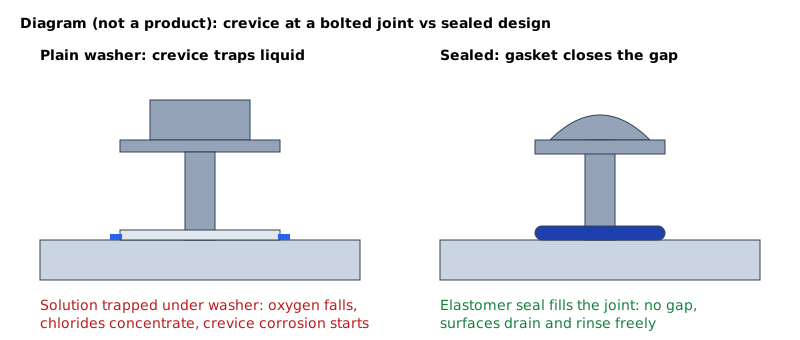
Corrosion in Food Processing Equipment: Field Guide
Identify pitting, crevice corrosion, stress corrosion cracking and weld attack. Use inspection steps and a specification checklist for food machinery.

Galvanic Corrosion: Metal Pairs and Isolation on Machinery
Assess stainless steel with aluminium, zinc-plated and carbon-steel parts. Check washdown electrolyte, wetted area ratio and safe isolation methods.
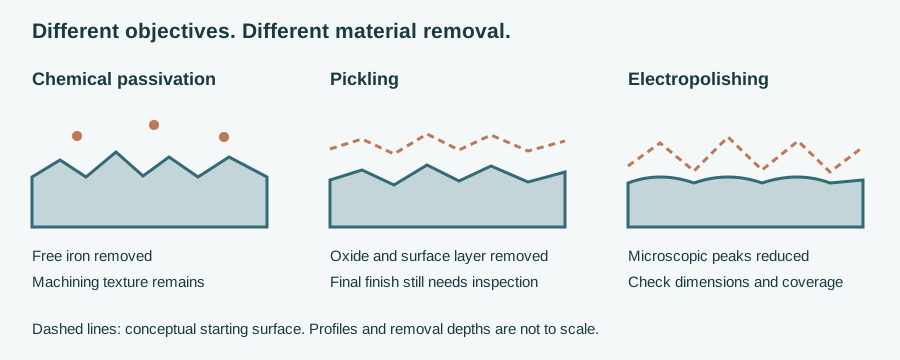
Passivation vs Electropolishing: Specify the Right Surface
Compare passivation, electropolishing and pickling for stainless parts. Choose by weld condition, finish and tolerances; specify tests and documents.
Surfaces and seals
Surface roughness Ra, surface finish and elastomer seal materials.
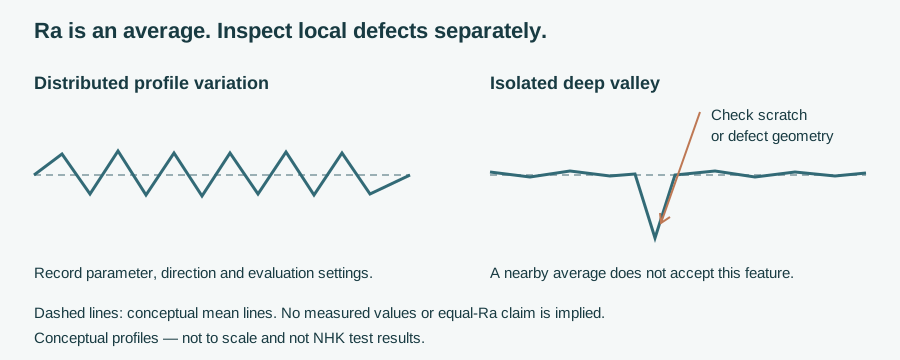
Surface Roughness Ra for Food Contact: Specify and Verify
Specify Ra for food-contact surfaces: interpret 0.8 µm guidance, finish routes and drawing symbols; verify measurements, welds and seal interfaces.
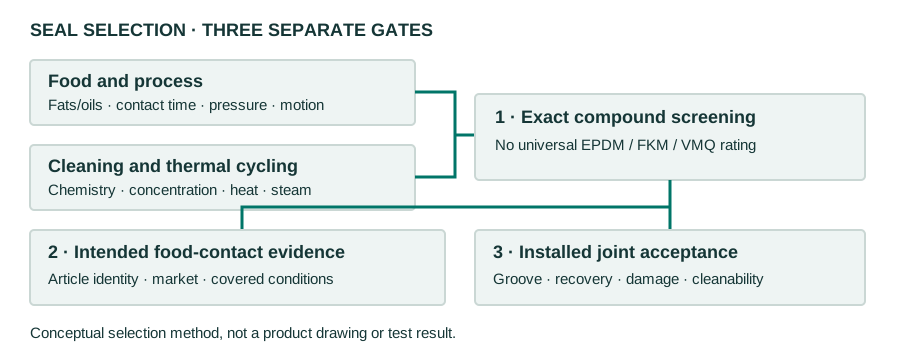
Elastomer Seals for Food Processing Equipment: Selection
Compare EPDM, FKM and silicone by food, fats, cleaning and steam. Check compound-specific evidence, O-ring fit, failure signs and food-contact documents.
Need components for this application?
NHK Group supplies hygienic bearing units, levelling feet, castors and conveyor components for food, dairy, beverage and pharmaceutical machinery.