Cleaning and sanitation of food processing equipment is a controlled process for removing soil and managing contamination before production resumes. Cleaning removes food deposits and other unwanted material; sanitising reduces microorganisms on appropriately cleaned surfaces to the level required by the applicable procedure. Neither a clean-looking housing nor an ingress rating establishes that a line is ready for food.
This pillar belongs to the Hygienic design and standards hub. Use it to choose a method, define checkpoints and connect cleaning evidence to component selection. Site procedures, chemical labelling, equipment instructions and the food-safety plan govern the actual operating limits; this guide does not prescribe universal chemical recipes or release criteria.
Dry and wet cleaning: choose the method before the sequence
Select the method from product, soil, hazard, equipment access and moisture sensitivity, not from the availability of a hose. A splash zone receives product or cleaning spray without intended direct product contact; transfer from that zone can still contaminate food. Map clean and dirty areas, tools and movement before starting.
| Method | Typical decision criteria | Component implications | Acceptance question |
|---|---|---|---|
| Dry removal and dry cleaning | Dry product or moisture-sensitive environment; removable loose soil | Accessible joints, controlled vacuuming, tools that do not damage seals | Has residue been removed without spreading dust or introducing water? |
| Manual wet cleaning or foam | Open equipment with an approved wet-cleaning procedure | Compatible surfaces and seals, drainage, protected bearings and electrics | Can every intended surface be reached, rinsed where required and inspected? |
| CIP: cleaning in place | A system designed to clean internal surfaces without dismantling | Suitable circulation, drainage, valves and verified coverage | Are all intended flow paths exposed to the required cycle? |
| COP: cleaning out of place | Parts removed for separate cleaning in a controlled system | Safe removal, identifiable parts, inspectable joints and correct reassembly | Are all parts cleaned, protected and refitted without contamination? |
Send your application data and get a component recommendation
Dry cleaning is not a weaker wet clean: adding water to a dry area can create persistent wet niches and spread contamination. Use suitable collection equipment and controlled tools; compressed air or sweeping may disperse contaminated dust. Any exceptional wet clean needs an approved containment, drying and restart plan. Dry removal may also precede a wet process where permitted, without turning that process into dry sanitation.
For flour, dough and fat-bearing deposits, the bakery and confectionery cleaning-boundary guide maps process-specific soil to access and component checks.
For exposed chilled products, the ready-meal cleaning and boundary review connects internal circuits, external equipment and tool movement to the process flow.
For open machinery, foam is a delivery method, not evidence that the detergent reached every joint. CIP is not automatically appropriate for exterior bearing housings, and COP does not excuse damage caused during dismantling. The installed cleanability and access checklist helps decide whether geometry makes the proposed procedure achievable.
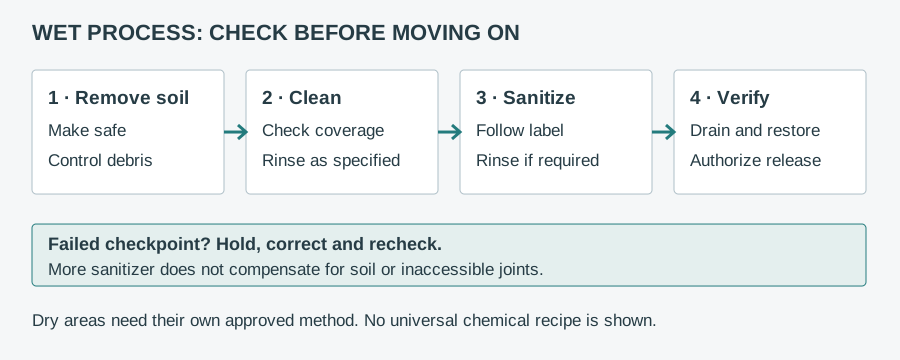
Food plant sanitation steps: a checkpoint-led wet sequence
The following sequence is a planning framework for equipment approved for wet cleaning, not a chemical application instruction. Combine or modify stages only through the approved procedure and product label. Define safe isolation, tools, chemical handling, waste routing and responsibilities before work begins. Never mix chemicals or attempt to neutralise them by improvisation.
- Prepare and make safe. Stop production, control energy and stored loads, protect product and packaging, and isolate sensitive equipment according to the machine procedure. Remove or expose specified parts without creating unguarded hazards; account for components so nothing is left in the product path.
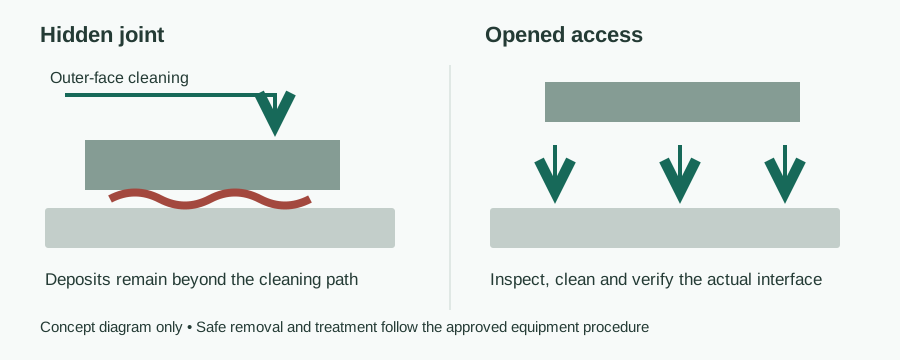
- Remove gross soil. Collect loose product and deposits using the designated method. Work without pushing debris into seals, bearings, hollow sections or neighbouring clean zones. Record inaccessible locations rather than washing longer to compensate for missing access.
- Pre-rinse where specified. Use the approved water quality, delivery conditions and routing. Avoid splash or aerosols from drains toward equipment. Do not choose hotter water or higher pressure merely because soil remains; these can alter soil behaviour or damage components.
- Apply the cleaning process. Use the specified detergent identity, concentration, temperature, contact time and mechanical action. Check delivery and coverage at difficult locations. Foam disappearing or a pump running does not prove the required surface contact or circulation occurred.
- Remove detergent and loosened soil. Rinse where the procedure requires it and check the intended endpoint. Inspect joints, undersides, covers and removable parts for remaining deposits. If soil remains, correct the cleaning stage before treating sanitiser as a substitute for removal.
- Sanitise using the approved treatment. Apply the specified chemical or other treatment to cleaned surfaces. Follow the product's application conditions and label, including whether a post-treatment rinse is required or prohibited for the intended use. There is no universal final-rinse rule.
- Drain, dry and restore. Follow the applicable drainage and drying requirements; prevent recontamination during handling and reassembly. Verify cover seating, seals, guards and parts accountability. Do not lubricate a bearing merely because it has just been washed.
- Verify and authorise release. Record the cycle and inspect/sample at the designated points using the approved methods and criteria. Manage deviations, re-cleaning and product disposition through QA procedures. A completed checklist alone is not evidence that all acceptance criteria were met.
For actual work instructions, specify the checkpoint and the response to failure at every stage. Water quality appropriate for the application does not make uncontrolled recycled rinse water acceptable. A change to recovery, dosing or cleaning timing needs risk review and verification. Use the resource measurement and cleaning-usage guide to investigate consumption without weakening required hygiene controls.
What water, pressure, chemicals and temperature mean for parts
Cleaning exposure is a combination of medium, concentration, temperature, contact time, mechanical action and frequency. Define these together for the proposed assembly. A metal compatible with a cleaner may still have an incompatible elastomer, plastic, adhesive or lubricant. More aggressive conditions are not automatically more effective or acceptable.
| Interface | Exposure or failure mechanism | Engineering check | Evidence to request |
|---|---|---|---|
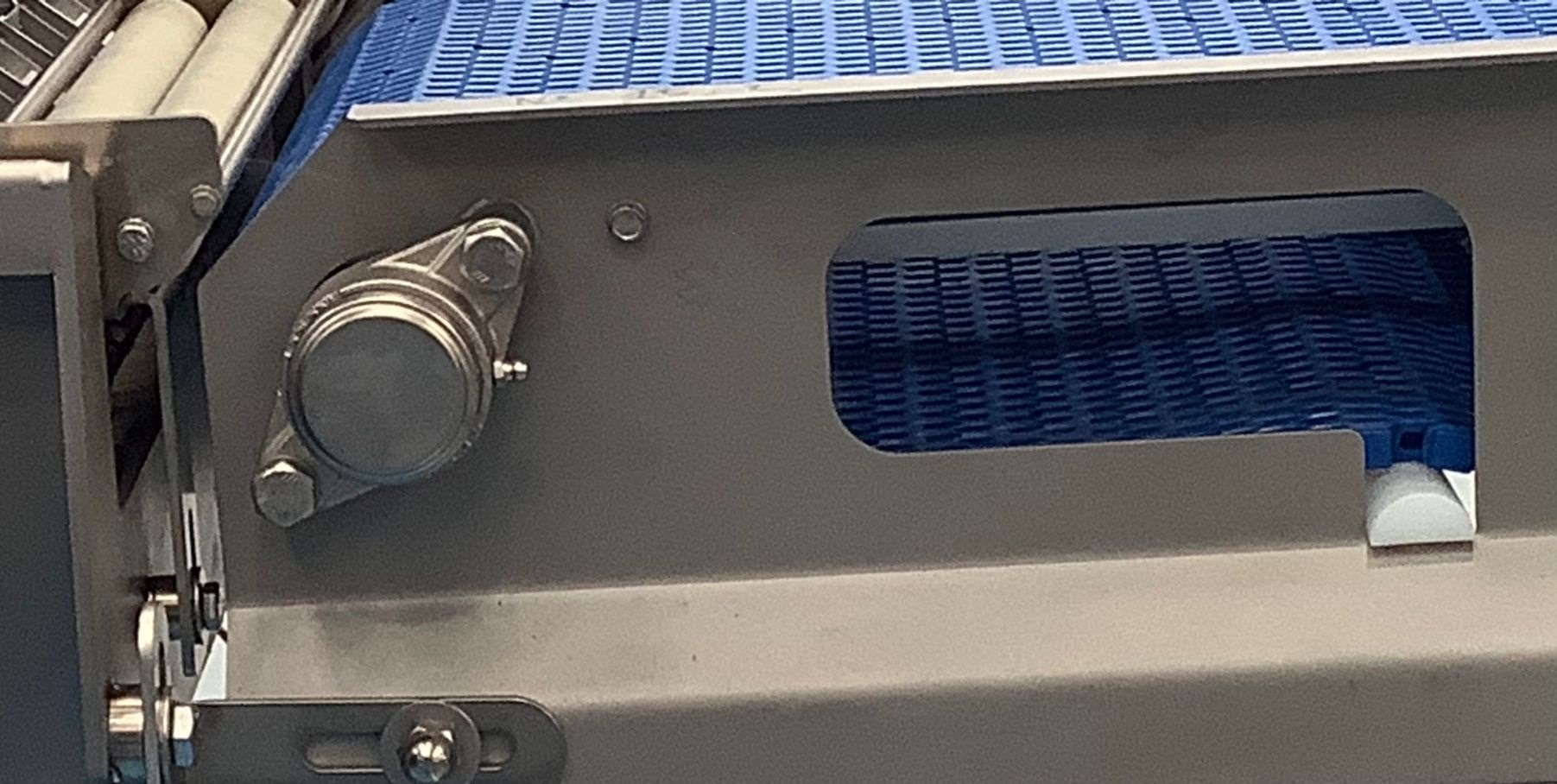
| Bearing unit and shaft seal | Jet entry, retained water, lubricant leakage | Exact cover, seal, installed orientation and cleaning limits | Assembly-specific ingress evidence and permitted servicing |
| Levelling foot or castor | Retained soil at base, fork, stem or wheel; water pockets | Cleaning access, sealed interfaces, drainage and support condition | Installation instructions, materials and relevant cleaning compatibility |
| Fastener and mounting joint | Crevice residue, loose seal, corrosion beneath head | Seal seating, approved tightening and joint accessibility | Joint drawing and installation/inspection criteria |
| Product-contact surface | Residue retained at damage, welds or rough finish | Surface condition, weld quality and cleanability | Material identity, finish specification and applicable compliance evidence |
| Elastomer seal | Swelling, cracking, extrusion or loss of seating | Exact compound, product contact and complete cleaning exposure | Compound-specific compatibility and declaration where applicable |
Levelling feet must remain stable and cleanable in the mounted condition. A self-draining shape sheds liquid only if orientation and surrounding joints permit it. Crevices are narrow gaps; dead spaces are regions where soil or liquid can remain; harborage points retain contamination through normal cleaning. Inspect the installed system, not only the part's visible top surface.
IP67 under IEC 60529 addresses temporary immersion, not high-pressure washdown. IP69K is a designation in ISO 20653; neither it nor another ingress test establishes hygiene certification, chemical compatibility or unlimited cleaning exposure. Use the related IP cluster's immersion and jet-test evidence comparison when reviewing sealing documents.
In the related corrosion cluster, use the cleaner exposure and metal-attack diagnostic guide for staining, pits or attack beneath joints. Do not solve repeated corrosion by changing stainless grade without identifying retained liquid, concentration, rinse and surface damage. NHK lists sealed bearing configurations for cleaning-condition enquiries; request exact-item limits rather than transferring a category description to every unit.
Sanitation in food processing: validation, verification and monitoring
Validation establishes evidence that the chosen control can achieve the intended outcome under defined conditions. Monitoring records whether the process operated as specified. Verification checks implementation and effectiveness using appropriate records, inspection, testing and review. These activities support each other but are not interchangeable.
An internal cleaning-validation study might challenge the hardest-to-clean location, representative difficult soil and relevant allergen changeover, with methods and criteria justified by the food-safety team. A routine visual check cannot replace that evidence. Equally, a commissioning study does not show that tonight's clean was performed correctly.
ATP testing measures adenosine triphosphate as an indicator of biological residue; it does not specifically identify pathogens or prove an allergen was removed. Relative light unit results depend on the instrument, method, surface and residues, and chemicals may interfere. Set justified site/method-specific action limits. Do not copy an arbitrary ATP cutoff from another plant or equate a pass with sterility.
Microbiological and allergen-specific methods answer different questions. Establish sampling locations, timing, recovery and interpretation suitable for the hazard and surface; include hidden or difficult interfaces where relevant. Investigate persistent findings for biofilm, a community of microorganisms associated with an attached matrix, or for a damaged/inaccessible joint. Extra sanitiser does not correct missing cleaning access.
For US facilities within scope, 21 CFR Part 117 separates sanitary-operation requirements and sanitation controls. Its §117.160 excludes sanitation controls and food-allergen controls from the rule's formal validation requirement; that is not permission to use ineffective procedures or omit required monitoring, verification and corrective action. Customer schemes, other jurisdictions or site risk assessments may require additional documented cleaning-effectiveness evidence. Do not present one jurisdiction's framework as a universal audit rule.
Auditor-ready records and a pre-operation acceptance checklist
The auditor should be able to connect the approved procedure, operating record, findings and corrective action to the same equipment and version. The exact evidence depends on jurisdiction, food-safety plan and certification/customer requirements. Do not label a generic document folder as proof of compliance.
- Scope and instructions: equipment/zone map, soil and hazard assessment, SSOP—sanitation standard operating procedure—with parts removal, methods, responsibilities and frequency.
- Controlled inputs: detergent/sanitizer identity, labelling, safety data, dosing controls, water requirements and component compatibility basis.
- Execution evidence: date, asset, operator, relevant cycle parameters, instrument checks, departures from the approved method and reassembly record.
- Effectiveness evidence: applicable validation or cleaning-effectiveness study, justified acceptance criteria, sampling plan, visual/ATP/allergen/microbiological records as appropriate, and trends.
- Disposition and change control: release authority, corrective action and re-clean checks; review after changed product, chemical, equipment, seal or cleaning method.
Pre-operation acceptance should confirm no visible residual soil at specified points, no unexplained standing liquid, intact and correctly seated seals/covers, accounted-for parts, restored guarding and completed required tests. Reject or hold against the approved criteria, not an improvised rule. EC 1935/2004 concerns all food-contact materials; EU 10/2011 specifically concerns plastics; FDA 21 CFR 177.2600 concerns rubber articles. Request applicable material evidence without calling these hygiene certifications.
Which cleaning guide should you use next?
This pillar connects every existing cleaning-cluster page. Select the problem first rather than reading every guide in order.
| Your task | Detailed route | What to take back to the procedure |
|---|---|---|
| Assign assembled circuits and removable parts | CIP vs COP component design checks | Map coverage, drainage, loading and restoration evidence |
| Select open-equipment application and rinse | Foam cleaning vs high pressure cleaning selection checks | Review spray paths, water measurement and component exposure |
| Investigate persistent machinery niches | Biofilm in food processing investigation guide | Separate retention, reintroduction and removal evidence |
| Interpret rapid residue checks | ATP swab test sampling and limit-setting guide | Define point-specific methods, criteria and corrective action |
| Decide whether the assembly is reachable and drains | Installed cleanability checklist | Inspect interfaces, not just visible surfaces |
| Reduce water or detergent consumption | Resource measurement guide | Compare consumption only with acceptable hygiene results |
| Remove recurring access and operator-work obstacles | Cleaning-shift walk-down and equipment obstacles | Record where work fails because of design or wear |
| Set useful performance targets | Cleaning goals, baselines and result metrics | Pair effort targets with hazard-appropriate acceptance |
| Turn findings into corrective action | Cleaner-to-QA and maintenance feedback loop | Identify an owner and close the finding |
These routes address implementation, not alternative chemical recipes. None supplies a universal ATP threshold, sanitiser concentration or cleaning time for every machine.
Example: residue behind a conveyor bearing cover
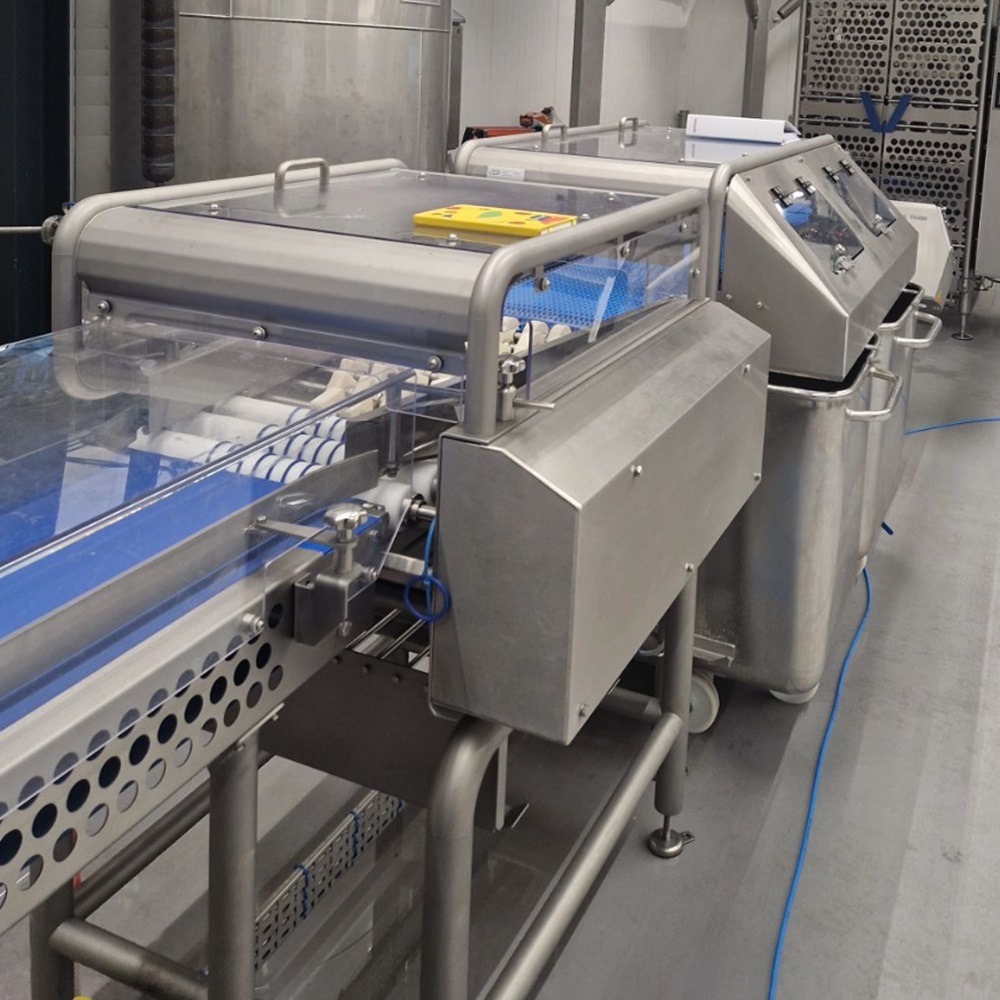
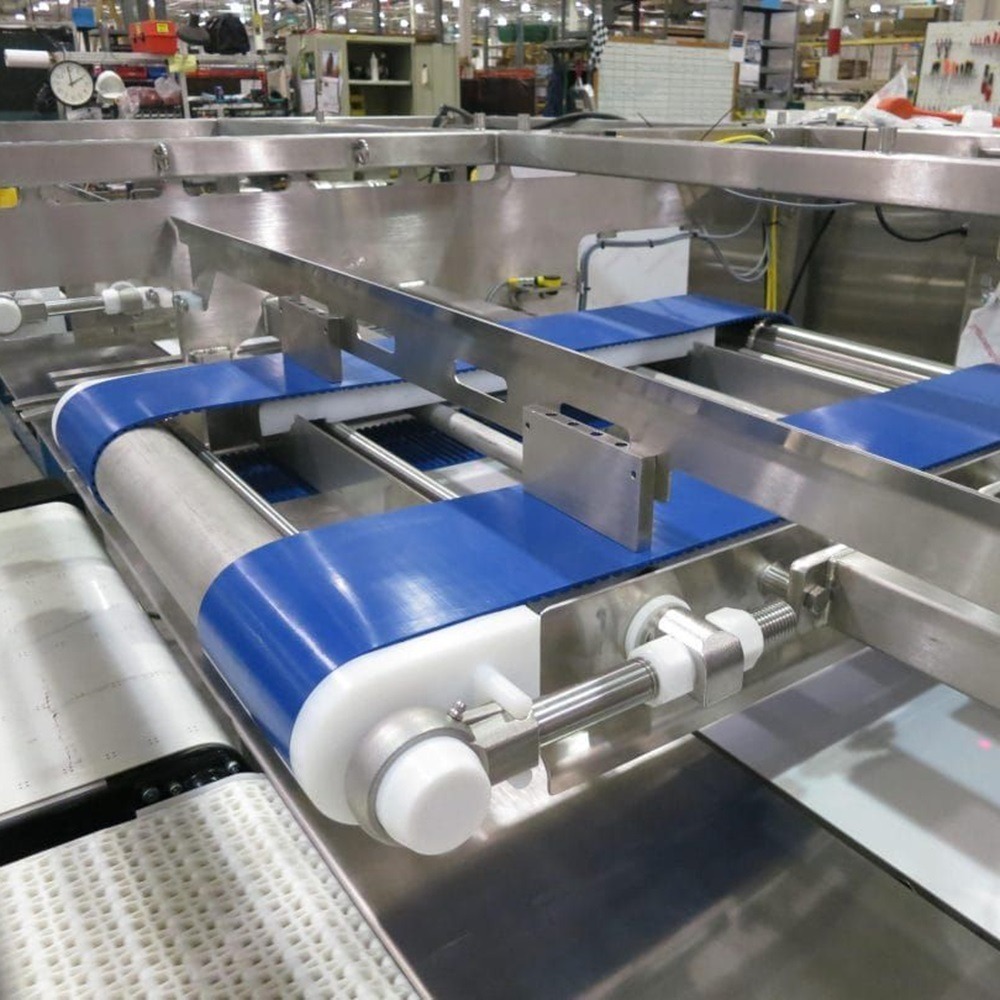
Example — hypothetical assumptions, not NHK field data. A wet-cleaned conveyor has an accepted exterior inspection but residue is found behind one removable cover. The procedure's coverage evidence and seal condition are incomplete; no organism, cause or successful repair is assumed.
Make the machine safe and involve QA in disposition. Record cover orientation and residue before disturbance, check whether the procedure requires removal, and assess the sealing joint and cleaning access. If cleaning solution cannot reach the interface, increasing spray pressure outside is not proof of cleaning inside. Agree the access or component change, revise the instructions and obtain the required effectiveness evidence before restart. Continue checks at the same relevant location after the change.
Specification and enquiry: send the cleaning envelope
Copy and complete: “Component designation, drawing reference and quantity: __. Product-contact/splash/non-contact zone: __. Product, soil and relevant allergen changeover: __. Dry/manual/foam/CIP/COP method and removal access: __. Chemical identity, concentration, temperature, dwell, rinse, pressure and frequency: __. Orientation, drainage and current seal/joint findings: __. Load, speed and intended duty: __. Cleaning-effectiveness and routine verification criteria: __. Required material, food-contact, ingress and exact-design documents: __. Delivery country: __.”
Send these details to NHK
Use the buyer’s application and evidence guides to organise the request. NHK can suggest a component and prepare a quote from this site's enquiry form; QA and the machine builder retain responsibility for the cleaning procedure and release decision. Confirm the proposed item’s documentation and exposure limits. EHEDG certifies specific equipment designs, and 3-A Symbol authorisation follows Third Party Verification; both are voluntary and neither validates the plant's cleaning programme.