
Levelling feet and castors
Published by NHK Group ApS
Feet and castors connect the machine to the floor, and the floor is where water, product residue and cleaning chemicals collect. A conventional levelling foot with an exposed thread and a hollow base plate is very hard to clean, and it can hold contamination right next to the production zone.
Hygienic levelling feet avoid that with closed threads, sealed joints, smooth radiused surfaces and base plates that do not trap liquid. Solid base feet, adjustable feet with composite base plates and fully stainless designs each have their place, depending on the load, the floor and how often the machine is moved.
Castors raise similar questions: wheel and tread materials, bearing protection, brakes, corrosion resistance and noise. Mobile equipment is cleaned and moved often, so the castor has to cope with both.
The pages here explain load rating, adjustment range, floor fixing, anti-vibration options and cleanability, so you can choose feet and castors that keep the machine level and the floor area easy to clean.
Levelling feet
Hygienic, swivel, seismic, anti-slip and load-cell feet, conveyor legs, anchoring and load per foot.
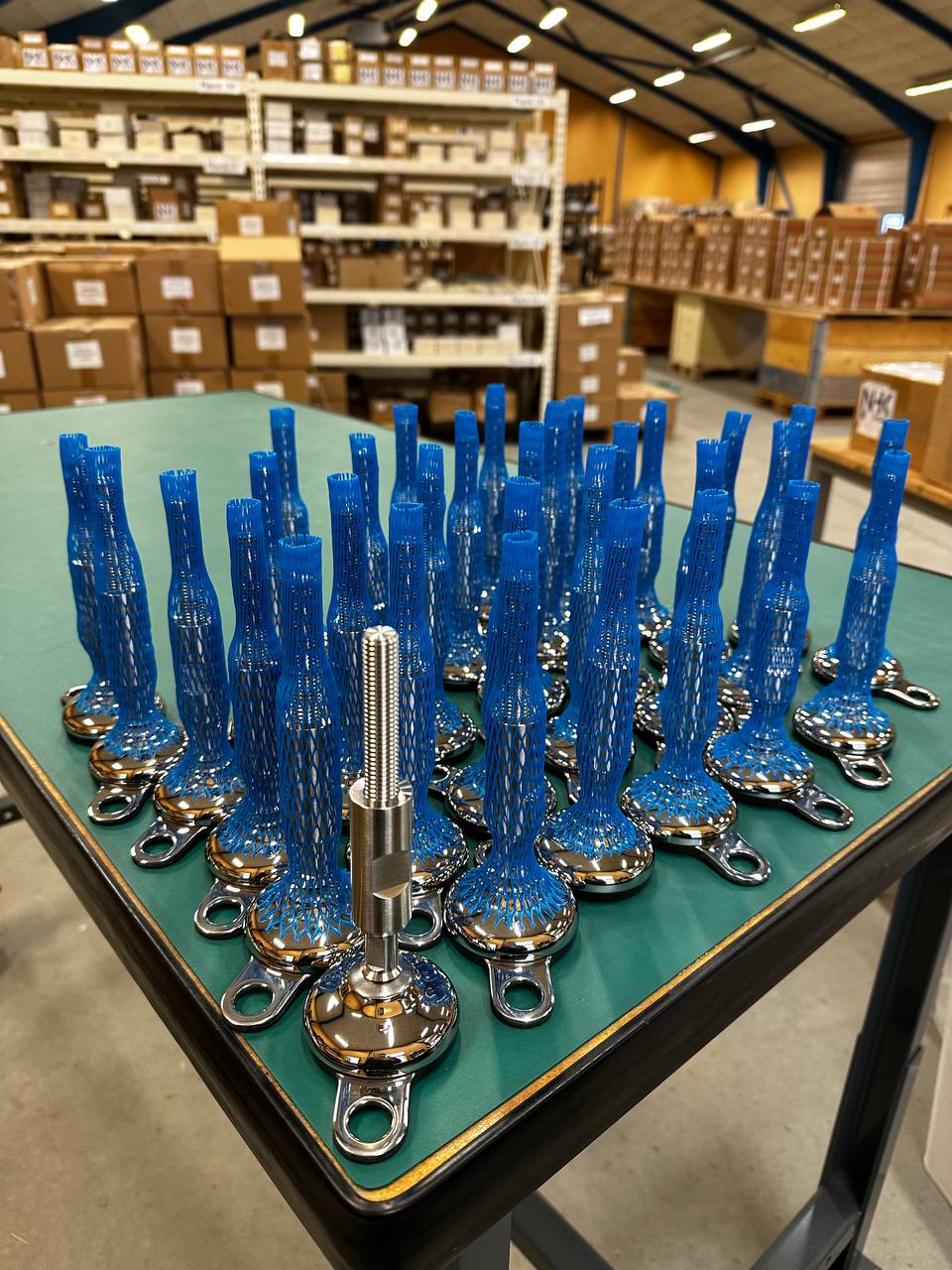
Industrial Leveling Feet: Selection Guide for Machines and Conveyors
Choose industrial leveling feet: load per foot method, thread and stem, swivel base, anchoring, hygienic vs standard – with example and RFQ checklist.
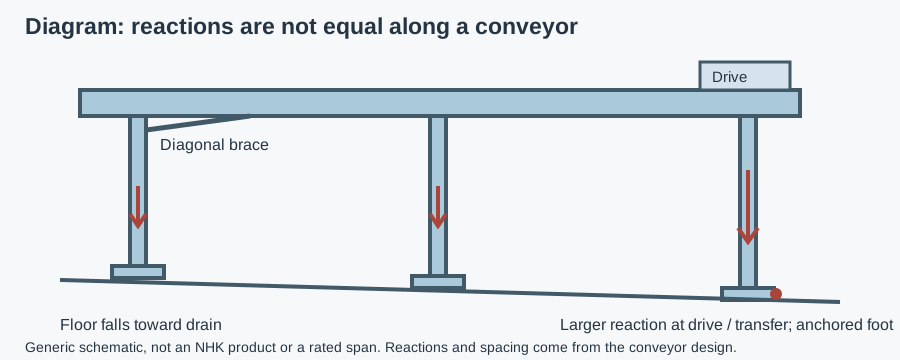
Conveyor Legs: Support, Leveling Feet and Cleaning Access
Specify adjustable conveyor legs and leveling feet: support reactions, height range, bracing, anchoring and a cleaning-access checklist for food plants.
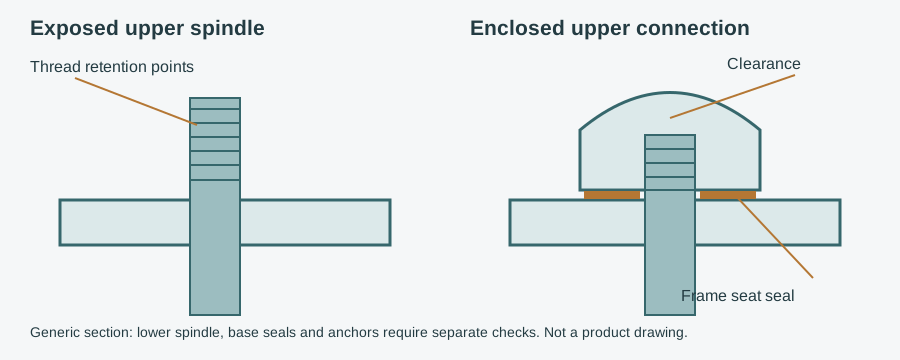
Hygienic Top Cover: Spindle Sealing and Retrofit Checks
Select a hygienic top cover for levelling feet: thread enclosure, frame seals, adjustment clearance and retrofit limits. Includes inspection and RFQ checks.
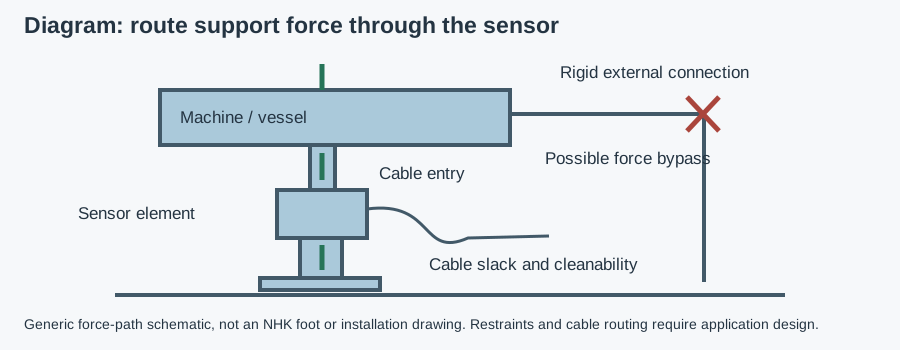
Load Cell Feet: Weighing, Cable Routing and Hygiene
Select load cell feet by support reactions, weighing requirements, cable routing and cleaning. Includes force-path checks, acceptance steps and RFQ wording.
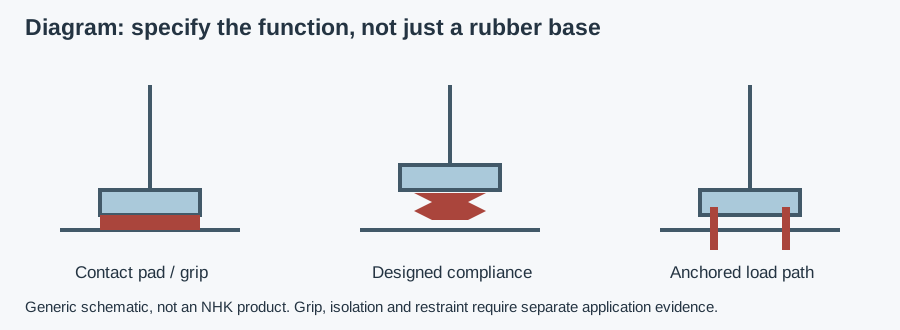
Rubber Leveling Feet: Grip, Isolation and Anchoring
Choose rubber leveling feet by load, pad compatibility, wet-floor grip and vibration behavior. Learn when anchoring is needed and what documents to request.
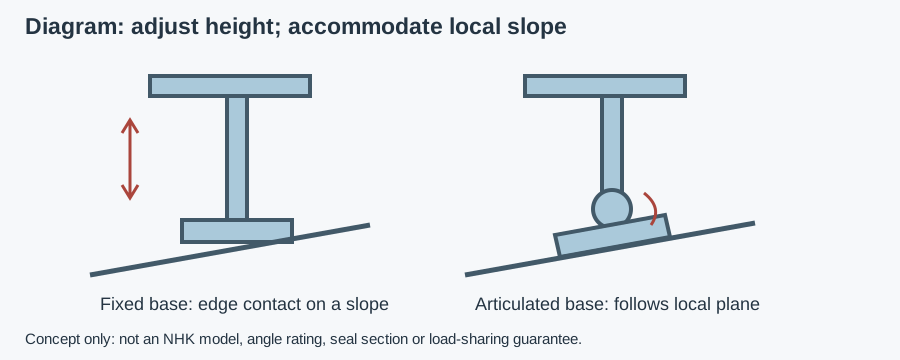
Swivel Leveling Feet: Angle, Load and Ball-Joint Hygiene
Select articulated machine feet by floor slope, loaded angle, stem extension and joint sealing. Includes installation checks and a copyable RFQ.
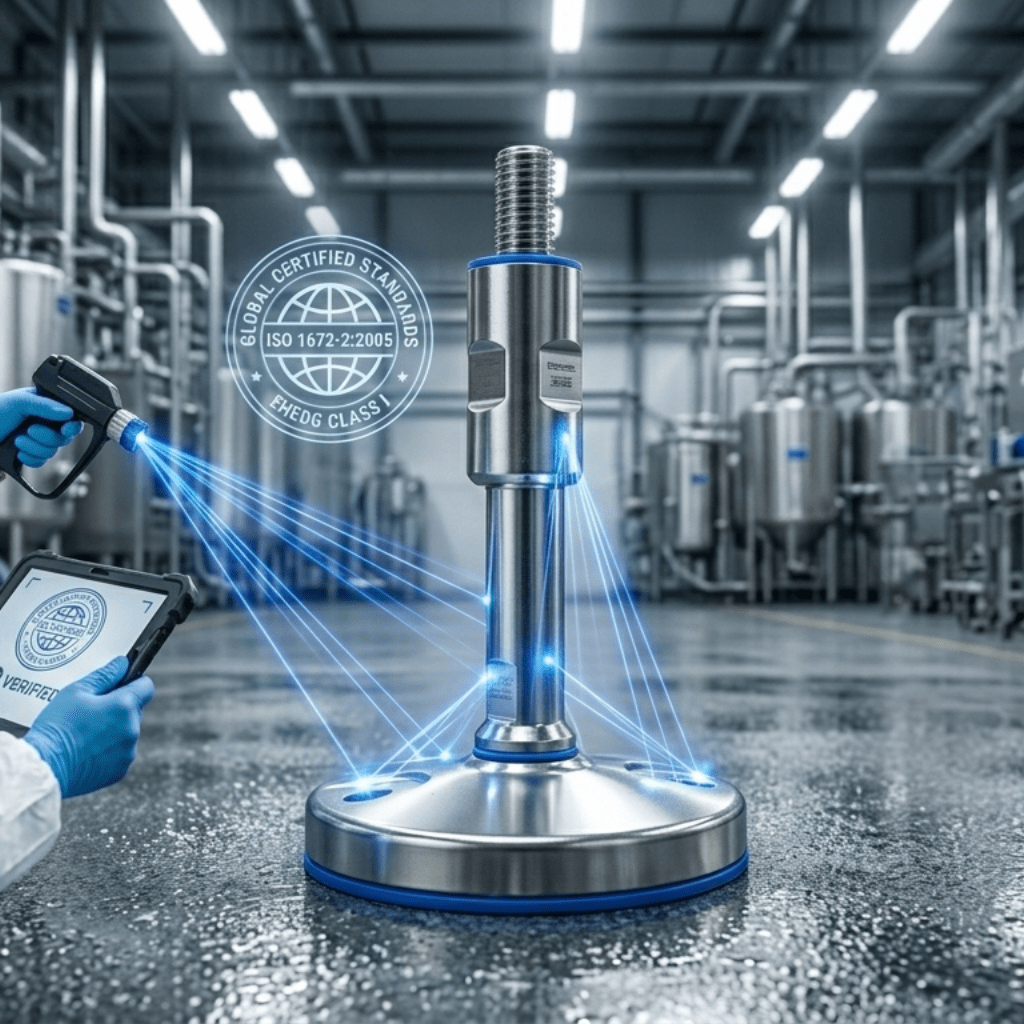
Adjustable Feet vs Leveling Feet: Terms, Designs and What to Specify
Adjustable, leveling, machine and solid base feet explained: how the designs differ, a 6-step selection method, load example and an RFQ checklist.
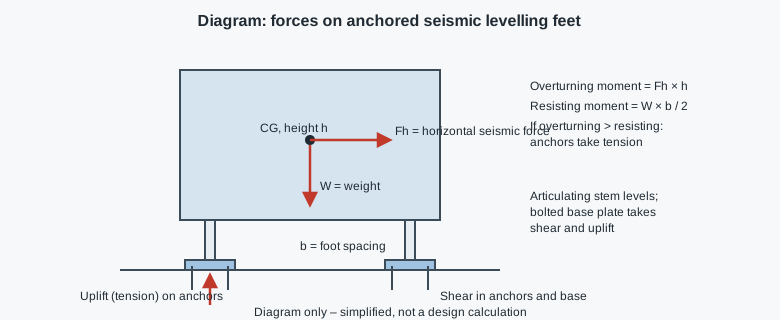
Seismic Leveling Feet: When You Need Them and What to Specify
Seismic leveling feet explained: when anchorage is required, force estimate for shear and uplift, hygienic anchoring, installation checklist and RFQ data.
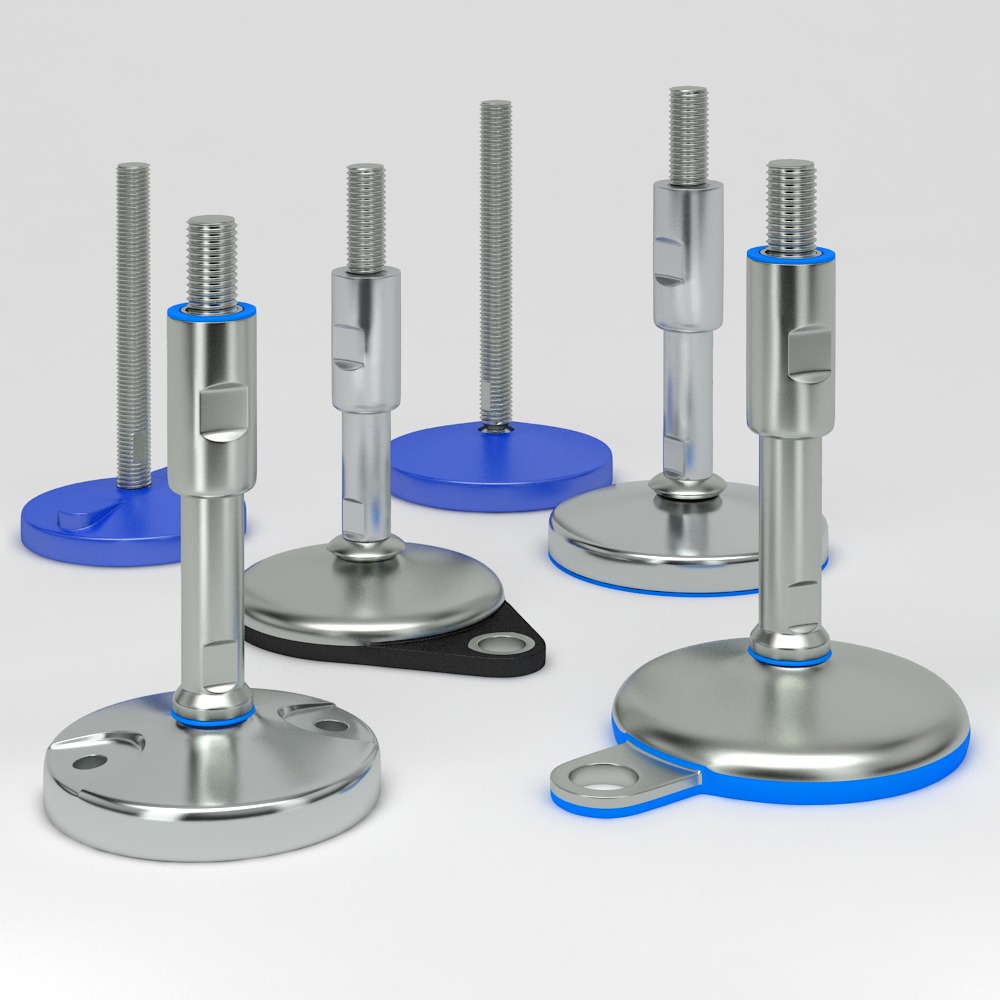
How Machine Feet Affect Stability, Vibration and Equipment Lifetime
Load per foot, soft foot, vibration and alignment: how machine levelling feet affect stability and equipment lifetime, with a selection method and checklist.
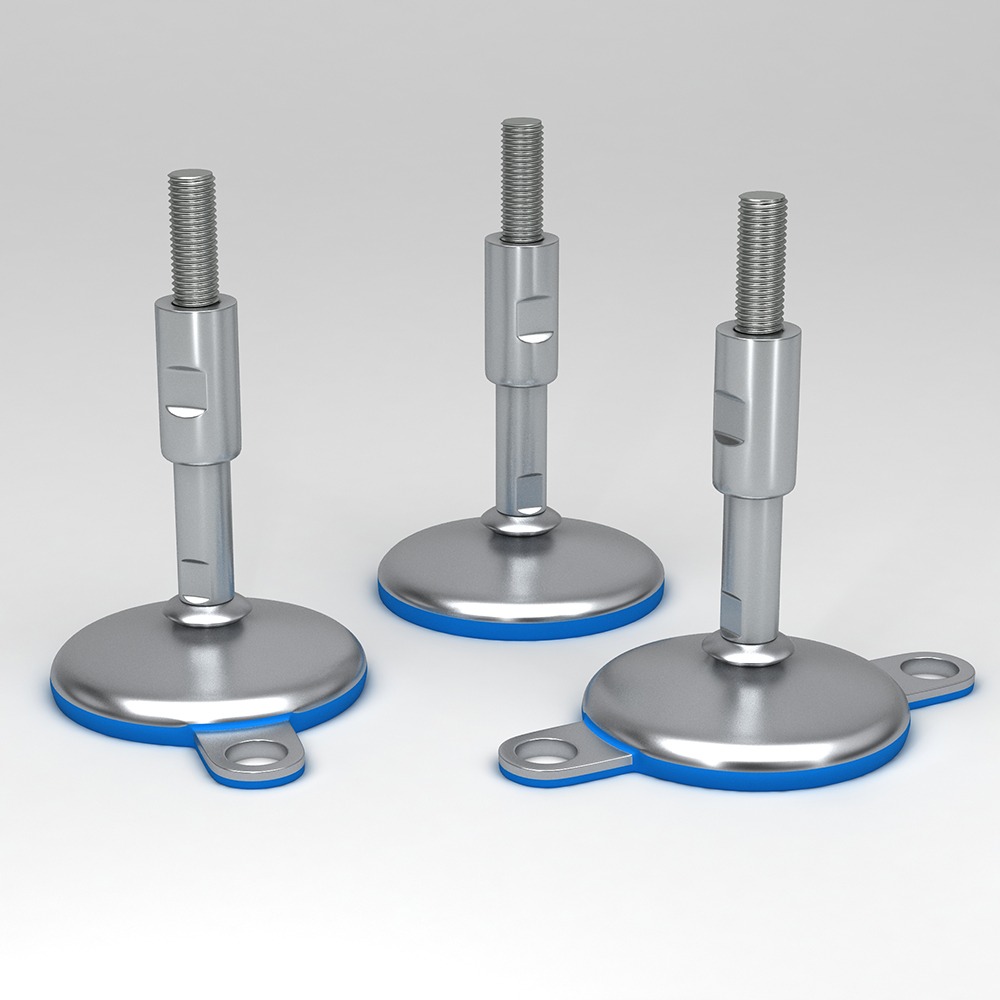
One or Two Fixing Holes? How to Choose the Right Anchoring Foot for Machinery
One or two fixing holes? Choose the right anchoring foot for machinery from shear, uplift, rotation and floor data – with a selection method and checklist.
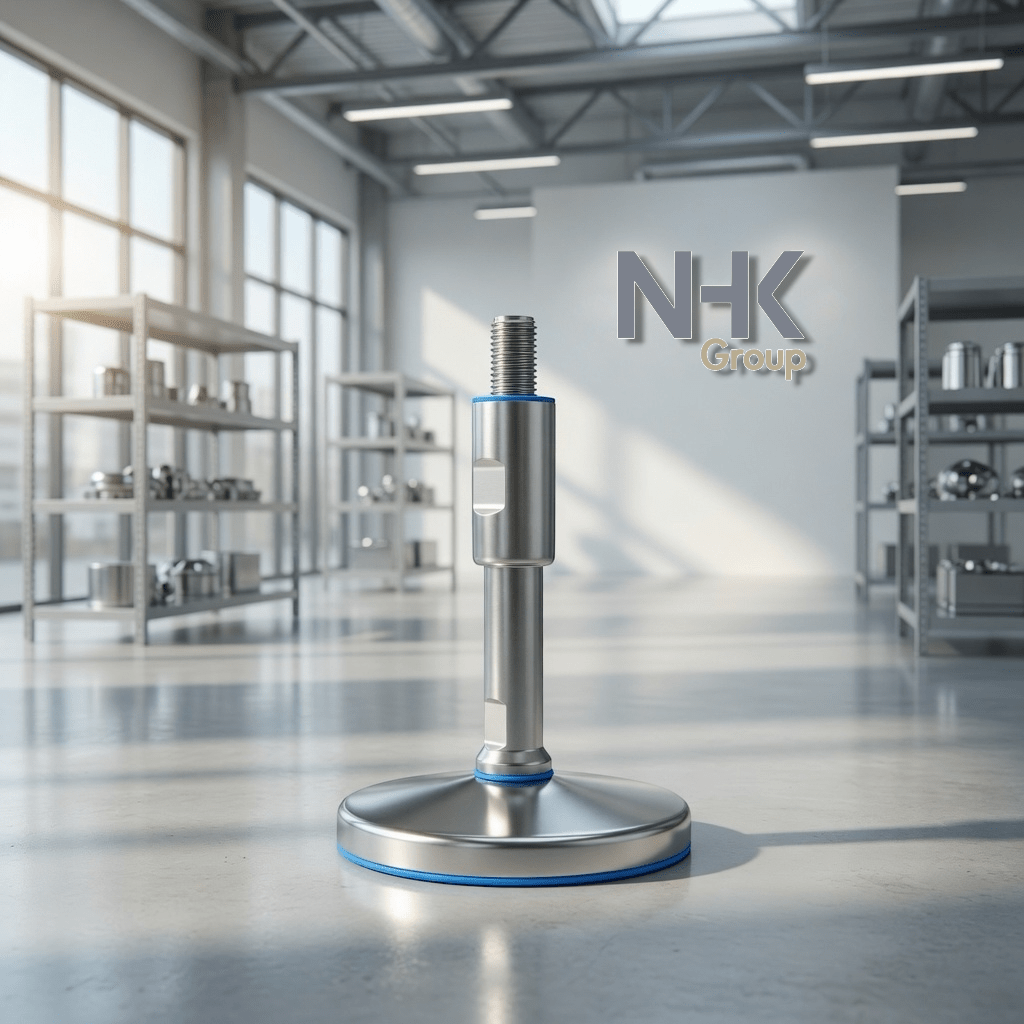
Hygienic Levelling Feet: Clean Design from the Ground Up for Stainless Steel Machine Feet
What makes hygienic levelling feet hygienic: sealed threads, self-draining bases, 304 vs 316L, seal materials, EHEDG and 3-A – with a selection checklist.
Stainless Steel Leveling Feet: The Role of Hygienic Machine Feet in Reliable Food Production
How stainless steel leveling feet affect cleaning, uptime and audits in food plants: failure modes, 304 vs 316L, verifying EHEDG/3-A claims, checklists.
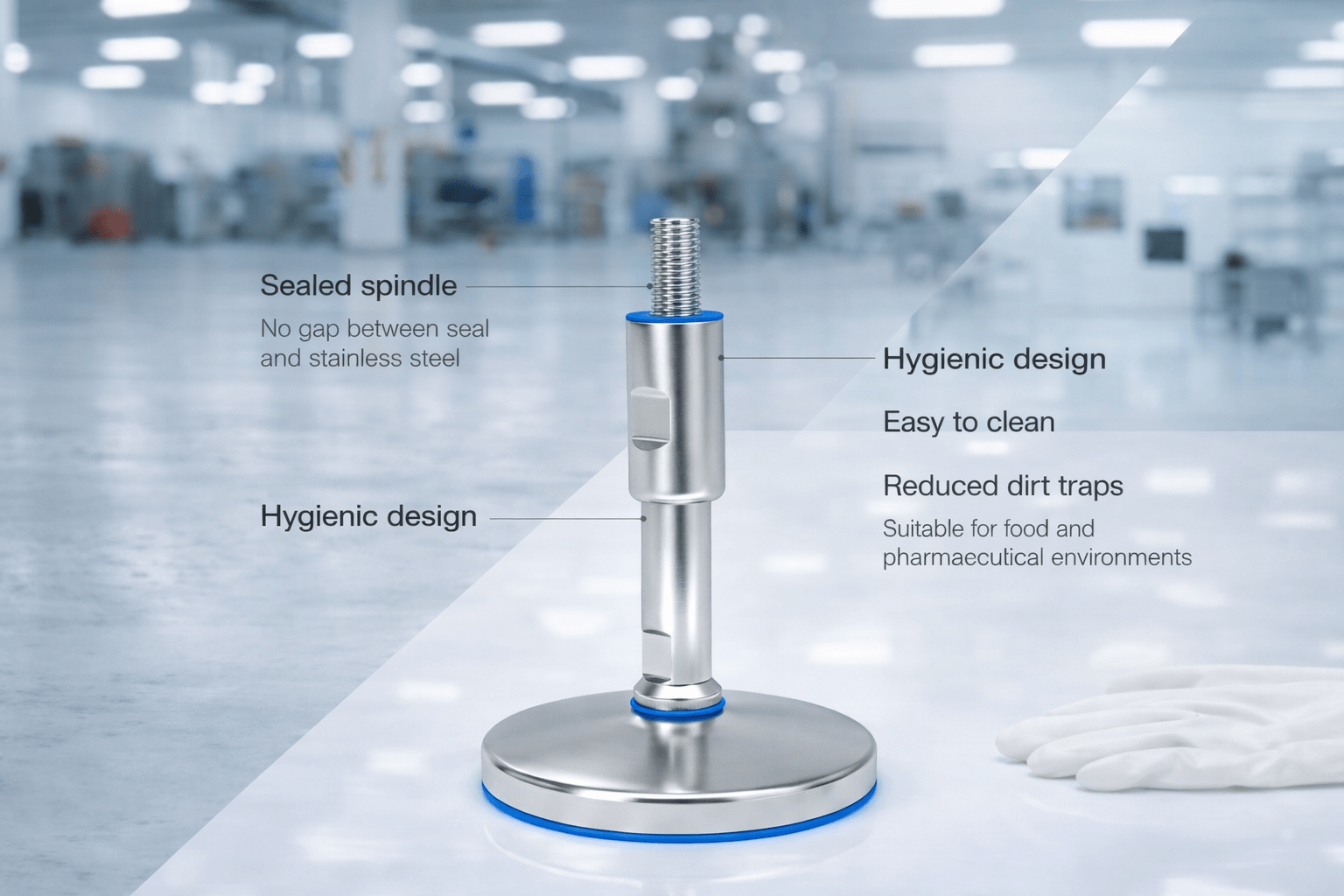
Redefining Machine Support: Hygienic Machine Leveling Mounts and NHK Group Hygienic Feet
Fully threaded, protected, sealed or floor-lock? How to choose hygienic machine leveling mounts by zone, slope, load and fixing – with a selection table.
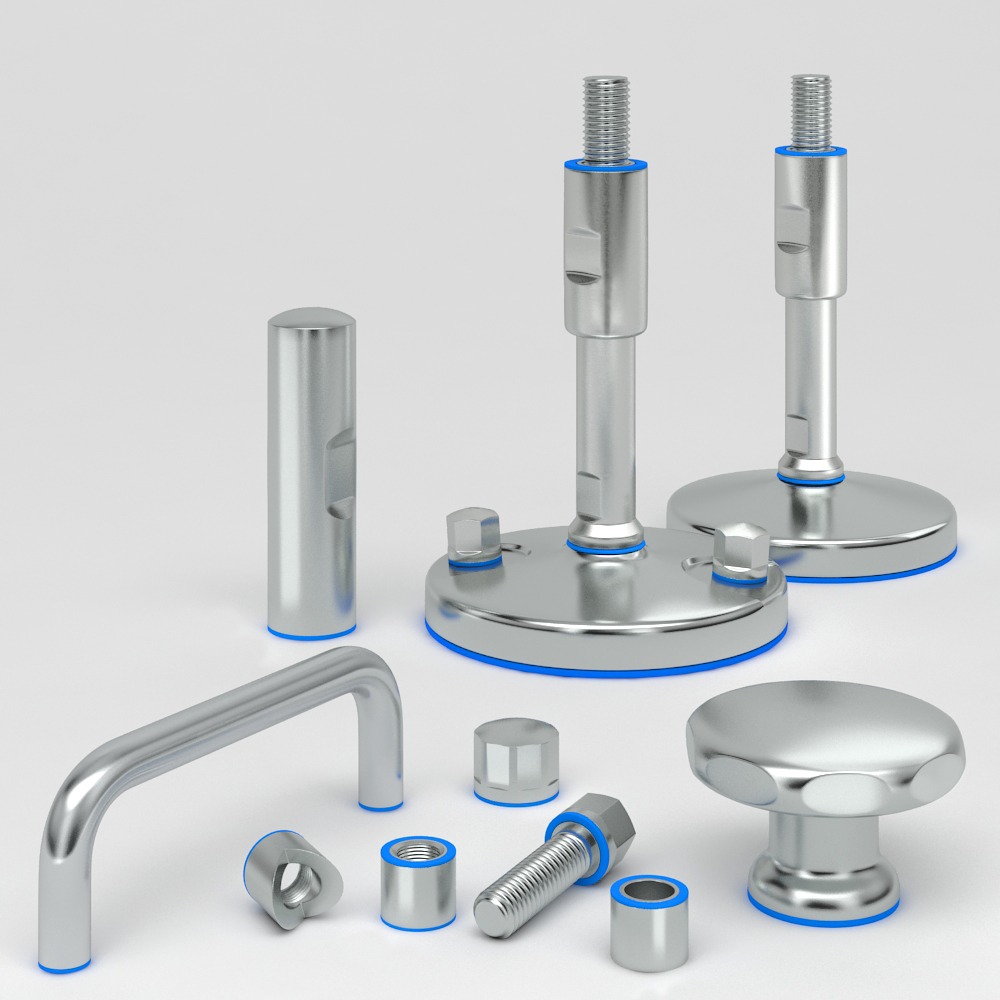
Sanitary Adjustable Feet: Where and Why to Use Hygienic Machine Feet
Compare standard, solid-base and sealed sanitary adjustable feet, see which suits each industry and zone, and get a checklist for specifying hygienic feet.
Castors and wheels
Stainless and hygienic castors, PU wheels, brakes, high-temperature and levelling castors, castors vs feet.
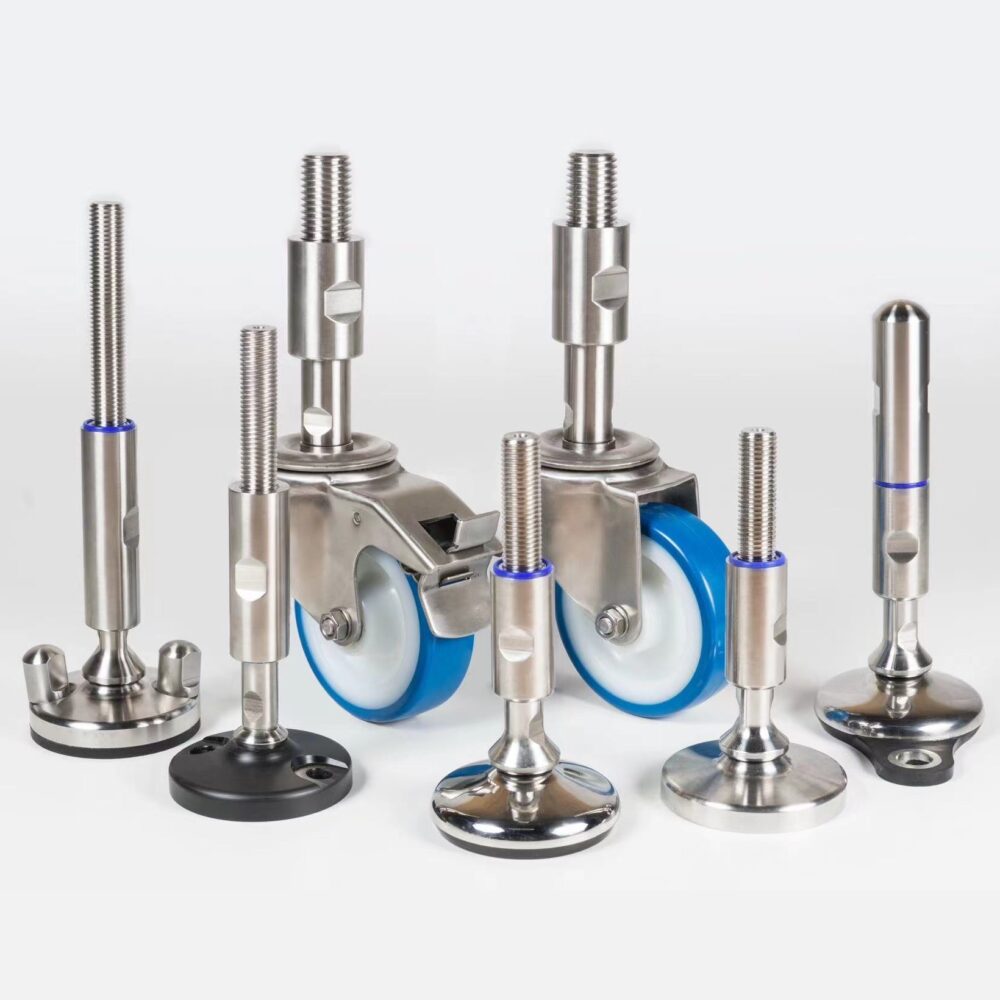
Industrial Castors: Selection Guide for Food Plants and Washdown Areas
Choose industrial castors for food plants: stainless vs zinc-plated, wheel materials, brakes, load per castor calculation, cleaning and RFQ checklist.
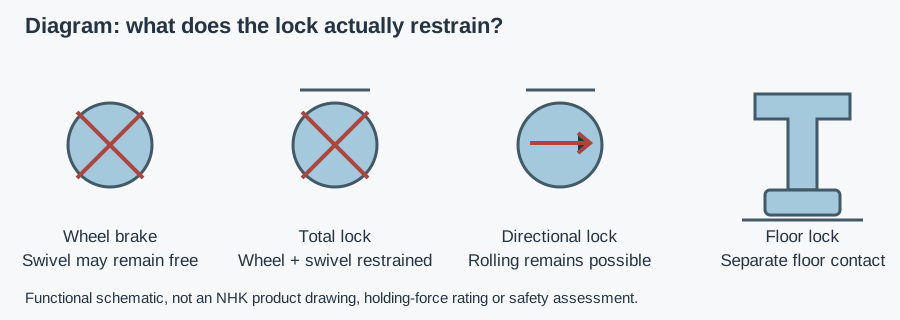
Caster Brakes and Floor Locks: Choosing Machine Restraint
Compare wheel brakes, total locks, directional locks and floor locks. Check floor contact, cleaning access and when leveling feet are needed.
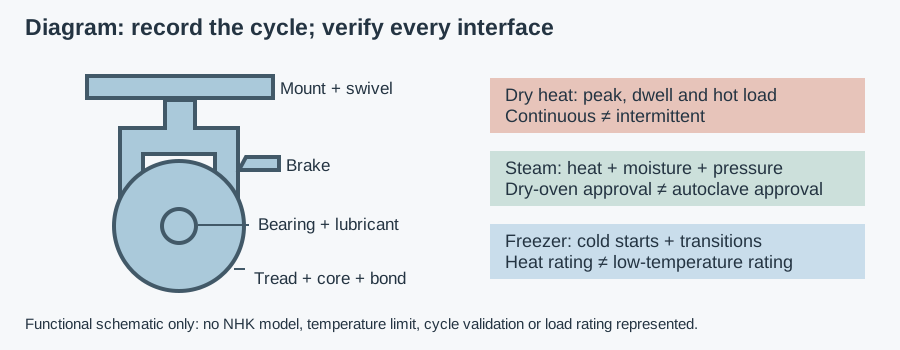
High Temperature Casters: Oven, Steam and Freezer Selection
Select caster wheels, bearings and grease for ovens, autoclaves and freezers. Check loaded temperature limits, dwell time, thermal cycling and cleaning.
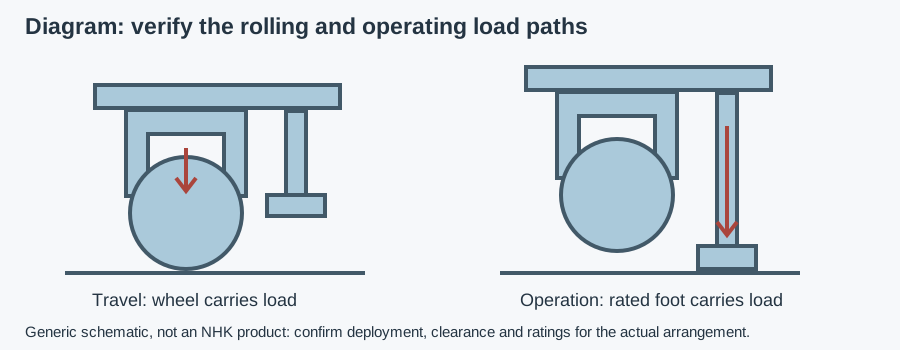
Levelling Castors: Integrated Foot Selection and Hygiene
Choose castors with levelling feet by rolling and static loads, pad travel, mounting and cleaning access. Includes deployment checks and a copyable RFQ.
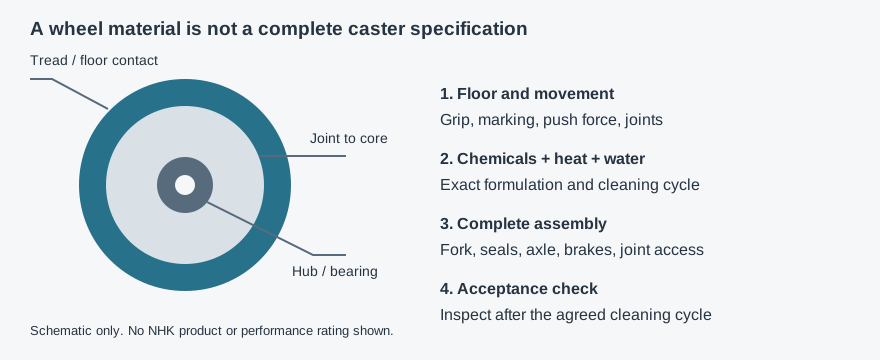
Polyurethane Caster Wheels: Materials for Food-Plant Washdown
Compare polyurethane, nylon, hard rubber, phenolic and stainless caster wheels for washdown: floor protection, chemicals, heat and inspection checks.
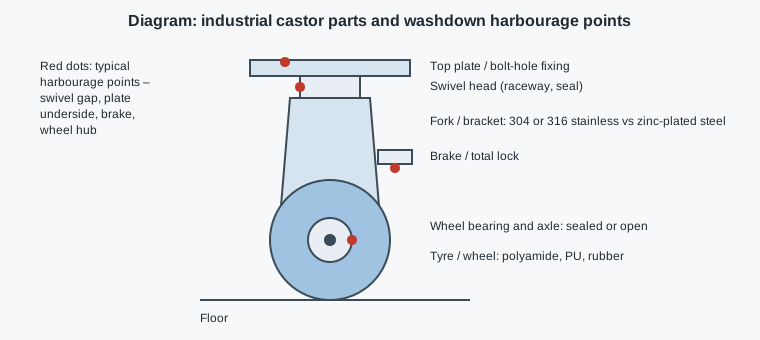
Stainless Steel Castors: Selecting a Complete Washdown Assembly
Specify stainless castors for washdown: fork grade, wheel tread, bearings, brakes, mounting, cleaning access and documents for the complete assembly.
Casters vs Leveling Feet: How to Choose for Machines in Food Plants
Casters, leveling feet or leveling castors? Compare mobility, stability, vibration, load and cleaning under the machine, with a decision table and example.
Need components for this application?
NHK Group supplies hygienic bearing units, levelling feet, castors and conveyor components for food, dairy, beverage and pharmaceutical machinery.