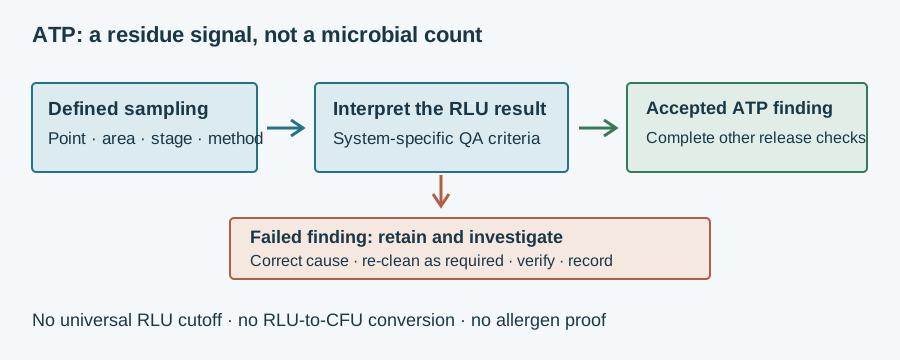
An ATP swab test measures a light-producing response associated with adenosine triphosphate recovered from a sampled surface. ATP is present in biological material, including food residue and microorganisms. The test supports rapid cleaning verification; it is not a microbiological count, pathogen identification or proof that an allergen has been removed.
Use the equipment sanitation and release-evidence framework for the overall programme. This guide addresses the decision behind an ATP result: what was sampled, whether the method and limits are suitable, and whether a repeated finding points to cleaning access or component condition. It does not prescribe universal pass/fail numbers.
What an ATP swab test measures—and what it cannot show
The swab collects material and the reagent system produces a bioluminescent response measured by a luminometer. The reported RLU—relative light units—is a system-dependent signal, not a mass of soil or a number of viable organisms. Instrument, reagent, recovery, surface and sample conditions affect its interpretation.
| Question | ATP can contribute | Evidence still needed |
|---|---|---|
| Was ATP-bearing residue recovered at this point? | Rapid signal compared with justified method-specific limits | Defined sampling area, timing and compatible method |
| Is the surface visibly free of soil? | An additional check, not a substitute for looking | Inspection of the specified surface and interfaces |
| How many viable microorganisms are present? | No direct count or universal RLU-to-CFU conversion | Appropriate microbiological sampling and analysis |
| Was a particular allergen removed? | Not an allergen-specific result | Hazard-appropriate allergen method and acceptance evidence |
| Does the whole machine meet release criteria? | One result within a broader verification programme | Required checks, corrective actions and authorised release |
Ask NHK's technicians about the component interface
CFU means colony-forming units, a result from specified microbiological methods. Do not convert RLU into CFU or compare RLU numbers across instruments as if their scales were interchangeable. A low ATP reading can occur without proving pathogen absence; a high reading can reflect food residue rather than a high microbial count.
Sampling points on machines: map risk and repeatability
A product-contact zone touches food. A splash zone receives product or cleaning liquid without intended direct contact but can still transfer contamination. Select points from the soil, hazard, equipment arrangement and cleaning procedure—not only from the surfaces that are easiest to reach with a swab.
| Location | Why inspect or sample it | Method/access question |
|---|---|---|
| Product-contact joint or nozzle interface | Residue can remain at seating edges or damaged surfaces | Can the specified area be sampled without changing its condition? |
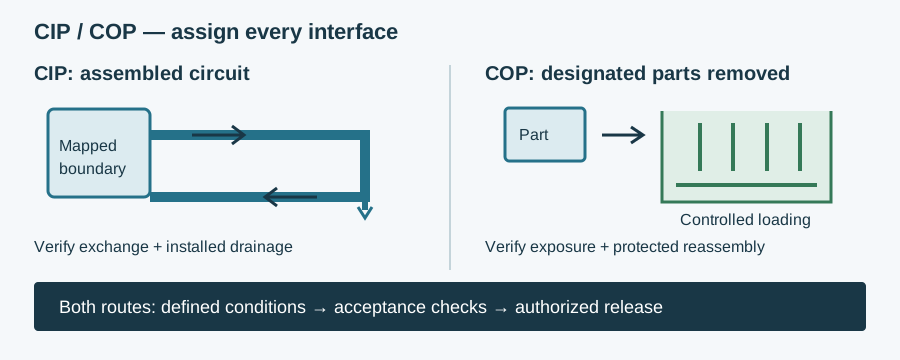
| Removed part and its machine socket | Cleaning one does not establish cleanliness of the other | Are both assigned a method and protected during restoration? |
| Cover edge, gasket and mounting joint | Hidden soil or liquid may persist at the interface | Is safe removal required, and can swabbing recover representative residue? |
| Underside or low point | Runoff, trapped deposits or poor drainage | Is timing after drainage defined, and is the point reproducible? |
| Bearing or support exterior near product | Leakage and retained residue can affect surrounding hygiene | Sample designated external surfaces, not a lubricated bearing interior by default |
Map fixed point identifiers to photographs or drawings. Record surface material, accessible area, condition and sampling stage. A flat panel and a narrow irregular joint cannot be assumed to have equivalent swab recovery. If the area cannot be sampled reliably, agree an appropriate alternative with QA and the test supplier rather than labelling a convenient nearby point representative.
Include routine fixed points and any justified rotating or investigation points. Keep trend data identifiable by point; a machine-wide average can hide a recurring problem. For internal circuits or removed parts, consult the CIP coverage and COP restoration checks to align sampling with the actual cleaning boundary.
ATP testing limits: set them with the test supplier and QA
The test supplier provides method instructions, intended uses and any recommended starting limits for its specific system. QA owns the site's acceptance and release decisions. A supplier recommendation is a starting basis to evaluate against the actual surfaces, soils and cleaning process, not a universal legal threshold.
- Identify the complete system. Record instrument, swab/reagent type, intended surface use, storage conditions and expiry. Ask about chemical interference, recovery and instrument checks.
- Define the sampling method. Fix the area or interface, swabbing pattern, pressure where instructed, activation/read timing and cleaning stage. Follow the exact instructions rather than borrowing another brand's procedure.
- Establish a defensible reference. Collect repeatable results from surfaces accepted through the approved cleaning and hazard-control programme. Do not call the existing routine clean acceptable merely because it is usual.
- Evaluate action criteria. Agree pass, investigation and fail responses where the system/program uses them. Review variability, difficult soils and locations with the supplier and QA; do not adjust the limit upward to hide repeated poor cleaning.
- Control and review. Approve the method and criteria, train operators, retain their version and reassess after changed chemicals, instrument, swab, surface, product or equipment geometry.
Cleaning chemicals can inhibit or enhance the signal in some systems; residues may also affect recovery. Follow supplier guidance about compatibility and sampling stage. There is no universal rule to sample immediately after sanitiser, on any wet surface, or only after complete drying: use the method assessed for the application and required cleaning checkpoint.
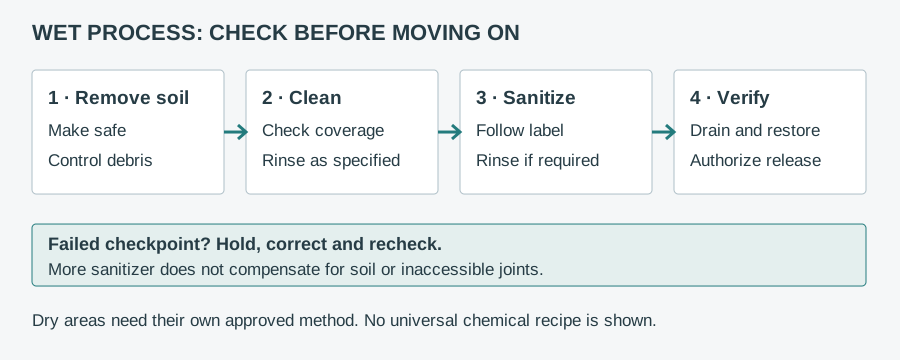
Cleaning verification: a repeatable work sequence
Make the equipment safe before opening covers or accessing moving parts. Inspect for visible residue and damage first; a visible failed clean should not be accepted because an ATP result is low. Confirm the sampling point, stage and correct method before consuming the swab.
- Check the swab identity, condition, expiry and required storage/readiness.
- Sample the defined area using the supplier's instructions; prevent handling contamination.
- Activate and read within the specified conditions and timing, with the required instrument checks.
- Record the raw result, point, asset, operator, cleaning stage, system and applicable criteria.
- Apply the approved response and release authority; record deviations, corrective action and subsequent verification.
A failed reading calls for investigation and the approved corrective action, not repeated swabbing until one result happens to pass. Re-clean or correct the cause where required, then re-test through the controlled procedure. Retain the original failure and follow-up results. If microbiological or allergen checks are required, an ATP pass does not cancel them.
Use the migrated cleaning-goal and result-metric guide to turn consistent point-level data into management targets. A faster cleaning cycle with uninvestigated recurring findings is not demonstrated improvement.
Cleaning validation in the food industry is not an ATP pass
Validation establishes evidence that a defined control or process can achieve its intended outcome. Monitoring records operation against specified conditions; verification checks implementation and effectiveness. ATP can contribute to a cleaning-verification programme but does not alone validate microbial control, allergen removal or every hidden equipment surface.
Define the difficult soil, relevant allergen changeover, locations, recovery method and acceptance criteria for the question being answered. Use suitable microbiological, allergen-specific or other evidence where required. A commissioning study and today's routine check answer different questions; neither replaces the other.
Legal requirements vary. For US human-food facilities within scope, 21 CFR 117.160 excludes sanitation controls and food-allergen controls from that section's formal validation requirement. Effective control, appropriate monitoring, applicable verification and corrective action remain necessary. Customer schemes, other jurisdictions and pharmaceutical applications may require different evidence; do not apply one food rule universally.
Repeated failed swabs: check access, seals and drainage
For persistent microbiological findings, use the hidden-niche and biofilm evidence checks rather than treating ATP as pathogen identification.
Look for crevices—narrow gaps—and dead spaces where liquid or soil remains through the approved cleaning method. These can become harborage points. Inspect damaged seals, overlapping faces, loose covers and low points before assuming the operator needs more detergent. Hygienic geometry can remove a retention mechanism, but no component change guarantees an ATP pass.
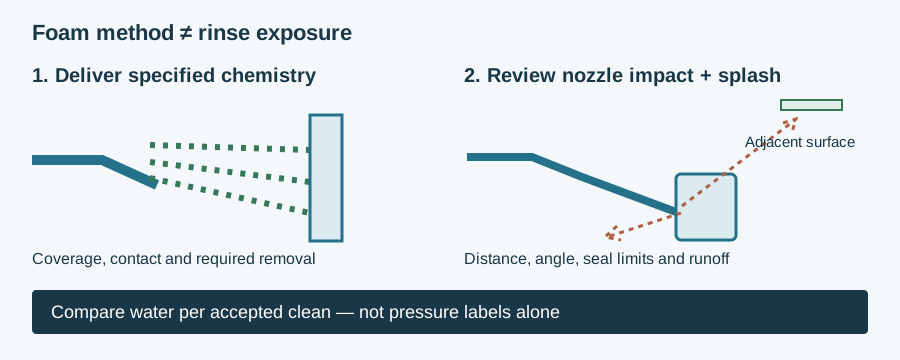
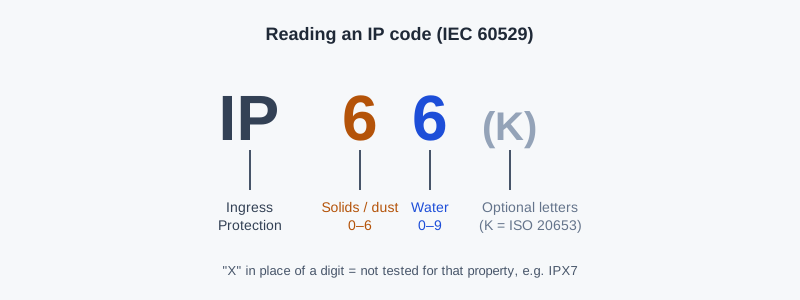
The migrated installed cleanability and access checklist helps distinguish surface appearance from reachable, drainable interfaces. For external water exposure, the related IP cluster's IP69K evidence and limits explains why ingress testing is not hygiene certification. A sealed housing can still retain soil outside.
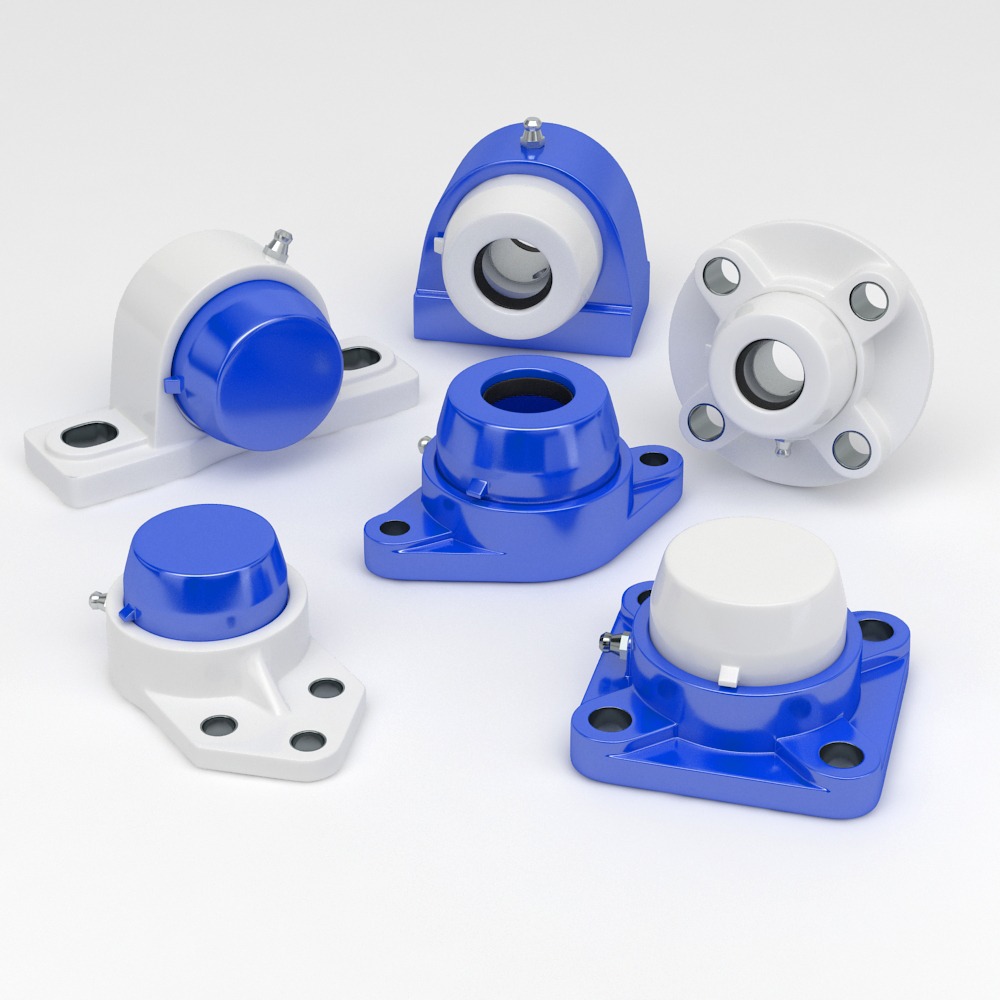
If a bearing shows leakage, noise or corrosion as well as repeated external findings, use the related reliability cluster's washdown failure evidence-preservation route. NHK's sealed bearing units for interface-condition review are a secondary component destination, not an ATP-test supplier or proof of cleaning performance. Request exact-item documents.
Example: a recurring finding at a removable cover
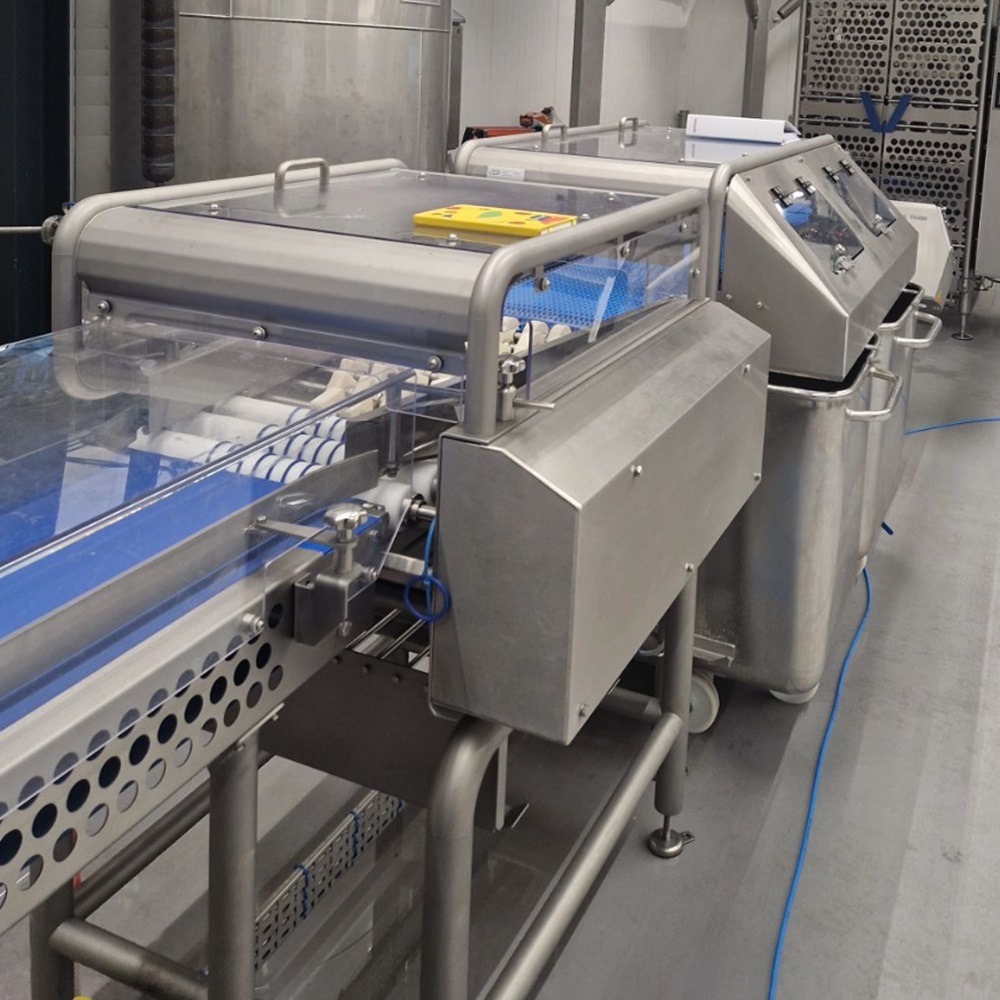
Example — hypothetical assumptions, not NHK field data. ATP results repeatedly exceed the site's approved action criterion at one conveyor cover edge, while nearby panels meet their criteria. No organism, result value or successful repair is assumed.
Check the point identity, sampling area, timing and possible chemical interference with the test supplier. Safely inspect the interface for retained soil, damaged seating and missing cleaning access. QA decides corrective action and release. If a design change is proposed, verify it with the controlled point-specific method and required hazard evidence, keeping earlier failures in the record rather than redefining the point to obtain easier results.
Specification and enquiry: send the interface finding
Copy and complete: “Component designation, drawing reference and quantity: __. Product-contact/splash/non-contact zone: __. Product, soil and allergen changeover: __. Cleaning method and chemical exposure: __. Recurring location and access/geometry: __. ATP instrument/swab and supplier-approved method: __. Sampling stage, area and QA criteria: __. Seal, cover, mounting and drainage: __. Load, speed and duty if replacement is needed: __. Required material, food-contact and exact-design evidence: __. Delivery country: __. Question: __.”
Send these details to NHK
Use the buyer’s component-document guides to organise a component request. NHK can review an interface and suggest parts or prepare a quote; the test supplier and QA team establish the ATP method and decision criteria. EHEDG certification and 3-A Symbol authorisation concern specific designs and are voluntary; neither certifies an ATP result or replaces plant release authority.