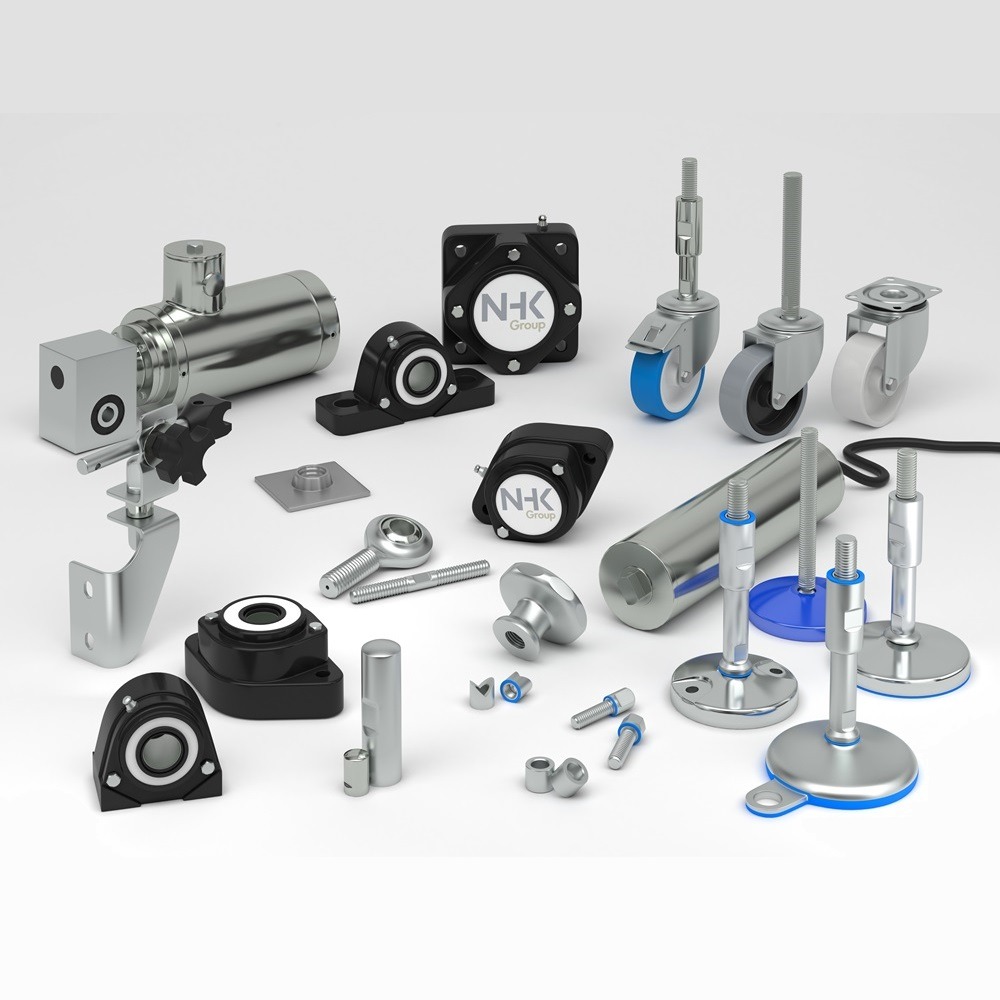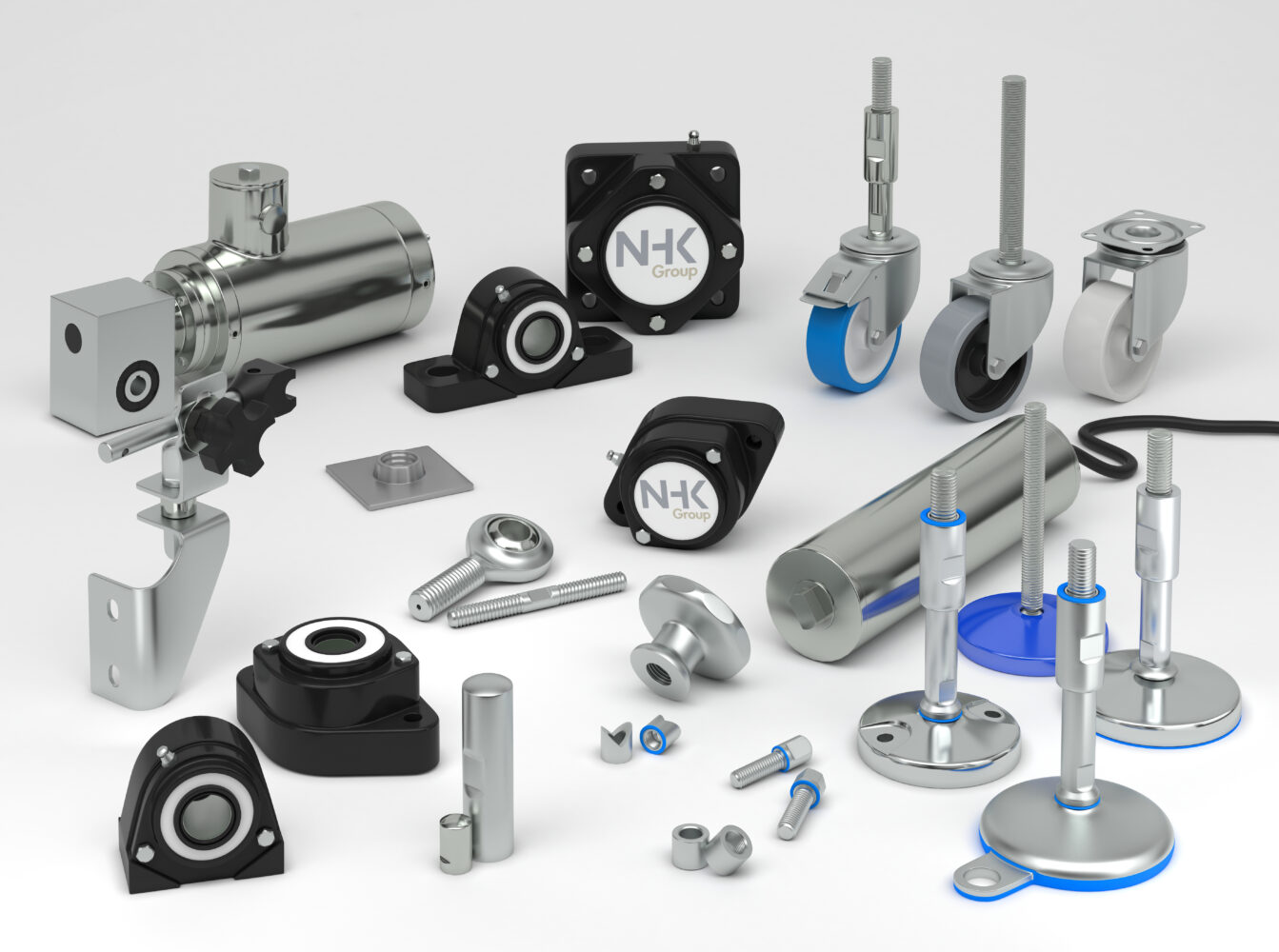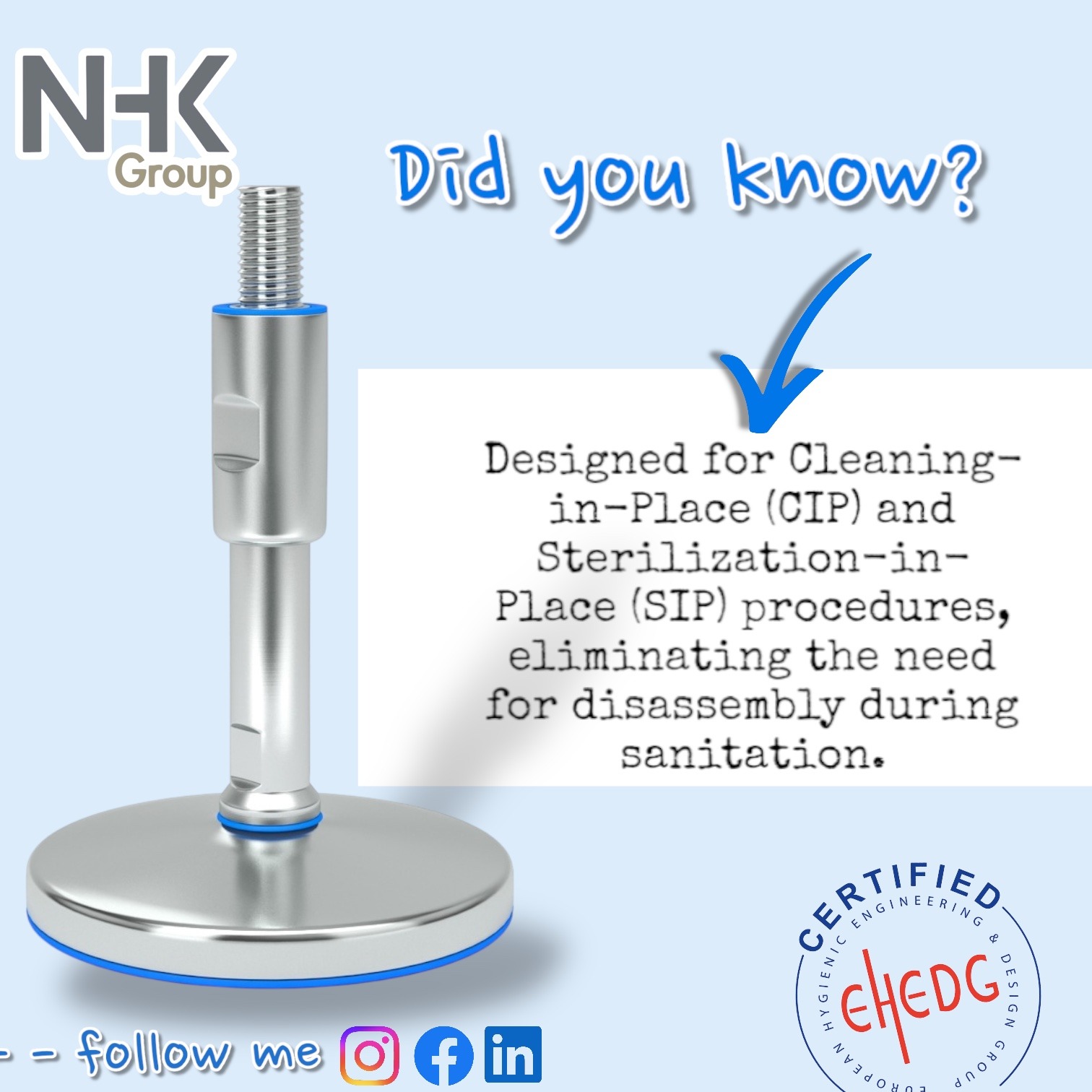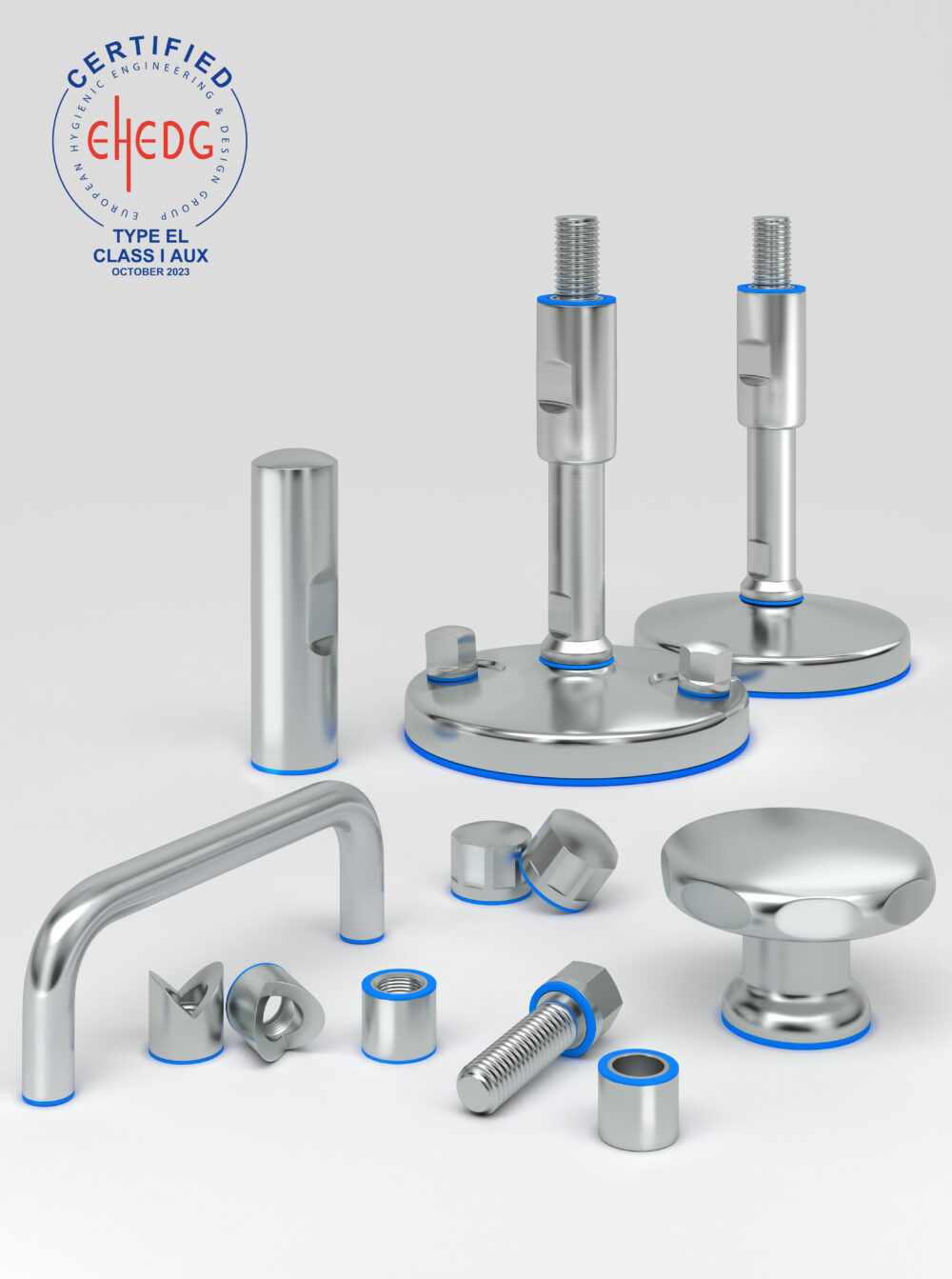
Machinery components are the individual parts a machine is built from – bearing units, shafts, feet and castors, fasteners, guides, brackets, seals and drives. In food processing, pharmaceuticals and biotechnology, "cutting-edge" machinery parts and components are those whose material, manufacturing and finishing prevent contamination by microorganisms, chemical residues and physical debris, even in harsh environments. This guide explains where that hygiene is decided during manufacturing, and how to judge which new technologies add real value.
Why machinery components decide hygiene
Contamination risks come in three forms: microbiological (bacteria, yeasts, moulds), chemical (cleaning agent or lubricant residues) and physical (metal shavings, flaking paint, broken plastic). Most of them originate at component level – a crevice where bacteria survive, a seal that leaks grease, a coating that flakes.
Regulators such as the FDA and USDA in the US, and EU legislation including EC 1935/2004 on food-contact materials, require safe materials and sanitary equipment design. Components do not "ensure compliance" by themselves, but suitable components make it achievable.
Harsh environments: what machinery parts must withstand
| Stress | Effect on machinery parts | Manufacturing answer |
|---|---|---|
| Temperature extremes (ovens, freezers, hot cleaning) | Seals harden, plastics deform, fits loosen | Material and elastomer chosen for the temperature range |
| Corrosive substances and cleaning agents | Chloride pitting (local corrosion pits from chlorides), swollen seals | 316/316L where chlorides are present; compatible EPDM, FKM or VMQ elastomers; passivation |
| Mechanical stress and wear | Abrasion, fatigue, worn surfaces that hold soil | Hardened inserts (e.g. 440C bearings), wear-resistant food-contact plastics |
| Water and washdown | Ingress into bearings, washed-out grease | Sealed designs, closed covers, ingress testing (IP67 immersion, IP69K jets) |
Machinery components manufacturing: where hygiene is decided
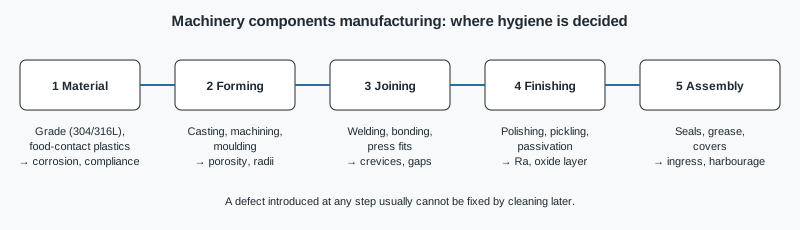
- Material selection. Stainless grade (AISI 304 for general wet areas, 316L with chlorides); plastics and elastomers with a declaration of compliance for food contact (EC 1935/2004, EU 10/2011 for plastics, FDA 21 CFR 177.2600 for rubber in the US).
- Forming. Machining gives dense surfaces; castings must be free of porosity that can hold soil; moulded plastics need generous radii and no sink marks.
- Joining. Continuous, smooth welds instead of spot welds or overlapping joints; press fits and bonded joints designed without crevices (narrow gaps) or dead spaces (areas cleaning fluid cannot reach).
- Finishing. Polishing to a controlled surface roughness – EHEDG guidance is Ra ≤ 0.8 µm for product-contact surfaces – then pickling and passivation, which restores the protective chromium oxide layer after machining or welding.
- Assembly. Seals fitted without gaps, food-grade (NSF H1) grease, covers that keep water out and do not trap it.
A defect introduced at one step – porosity, a rough weld, iron contamination from tools – usually cannot be compensated by cleaning later.
Machinery parts manufacturing: what to check at the supplier
- Material certificate per batch (EN 10204 3.1 where traceability matters).
- Food-contact declarations for every plastic and elastomer.
- Surface finish specification and measurement method.
- Pickling and passivation procedure.
- Weld quality on product-contact and splash-zone parts.
- Ingress test reports where an IP rating is claimed.
- EHEDG certificate or 3-A Symbol authorisation for the exact part number, where claimed – both are voluntary and apply to specific designs.
For buying industrial components more broadly, see industrial machinery parts and components.
Technological advancements: what delivers
| Technology | Real benefit | Limitation |
|---|---|---|
| Food-grade plastics | Corrosion-free, light, low friction | Temperature and chemical limits; must be food-contact compliant |
| High-performance stainless alloys | Better resistance to chlorides and acids | Cost; still needs correct finishing |
| Antimicrobial coatings | May slow microbial growth on surfaces | Do not replace cleaning; can wear; food-contact approval needed |
| Modular, tool-free disassembly | Faster manual cleaning (COP – cleaning out of place) | More joints – each must be hygienic |
| CIP compatibility | Automated cleaning in place, less manual handling | Only for enclosed process lines; design must be fully drainable |
| Sensors and condition monitoring | Predictive maintenance, early detection of failing bearings | Sensors and cables must themselves be hygienically designed |
Design improvements such as smooth surfaces, rounded edges and self-draining geometry remain the basis. New technologies add value only on top of them. More on design developments is in innovations in hygienic design.
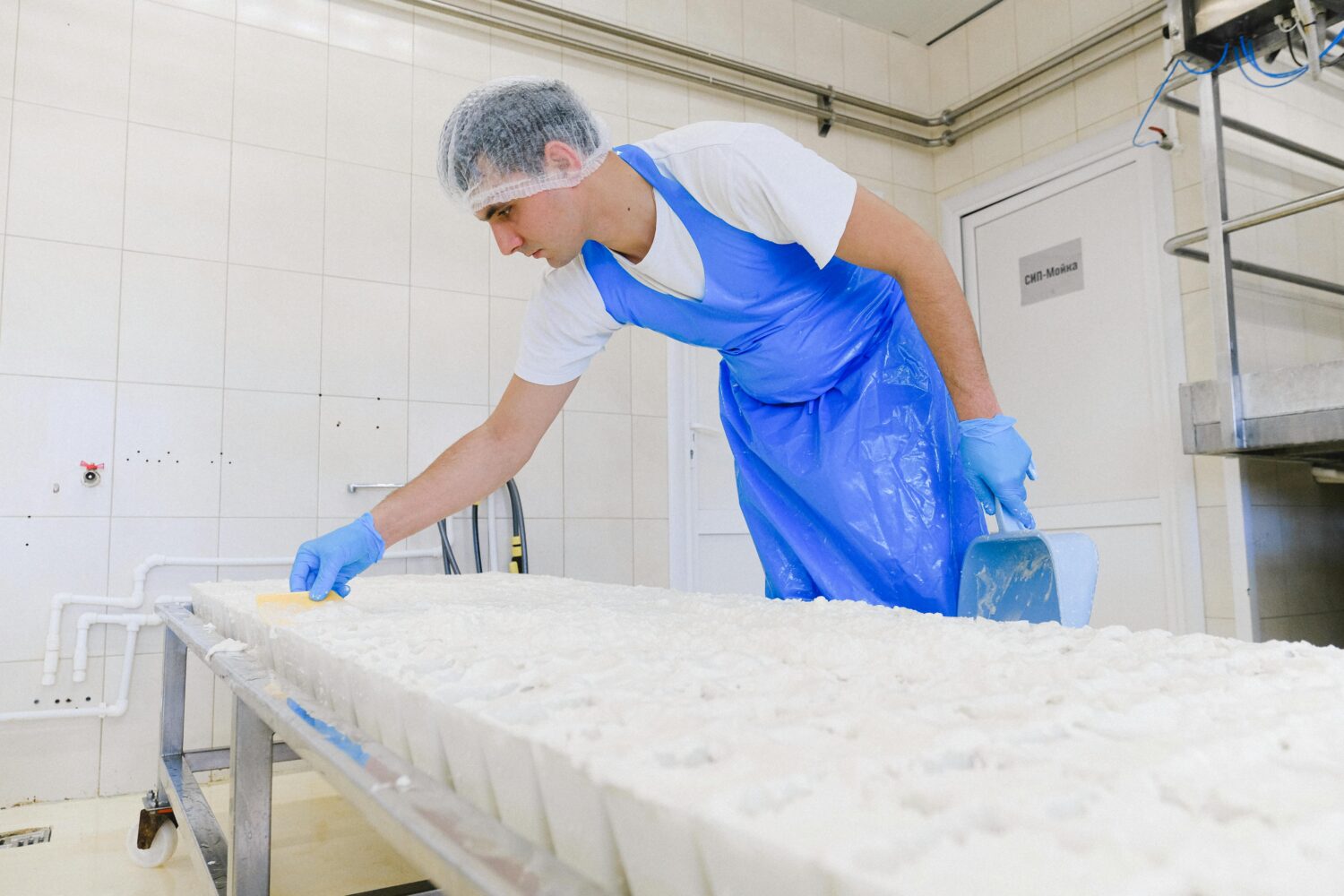
Example – assumptions stated, not a real case. A dairy plant like the one in the photo replaces painted cast-iron bearing units above a curd table. The engineer specifies stainless housings, sealed inserts with food-grade grease and closed covers, asks the supplier for the material certificate, passivation procedure and grease registration, and declines an optional antimicrobial coating because the plant's cleaning verification already shows the housings are the problem, not surface growth between cleans.
Manufacturing defects that become hygiene failures
- Casting porosity: small pores open up during polishing and hold soil that cleaning cannot reach. Prevent with dense castings, machined product-contact surfaces or inspection of polished faces.
- Heat tint and rough welds: discoloured, oxidised weld zones lose corrosion resistance and hold residues. Prevent with proper shielding gas, grinding and pickling.
- Iron contamination from tools: carbon-steel tools or shared grinding discs leave free iron that rusts on stainless parts. Prevent with dedicated tools and passivation.
- Threads left exposed after assembly: a well-made part becomes a harbourage point if the design leaves thread in the splash zone. Prevent with sealed, thread-covering designs.
- Wrong elastomer fitted: a seal swapped for an incompatible compound swells or cracks under cleaning chemicals. Prevent by stating the compound, not only the dimensions, on drawings and spare part lists.
- Unpassivated repairs: parts reworked or welded on site without re-passivation corrode first. Include passivation in maintenance procedures.
Conclusion
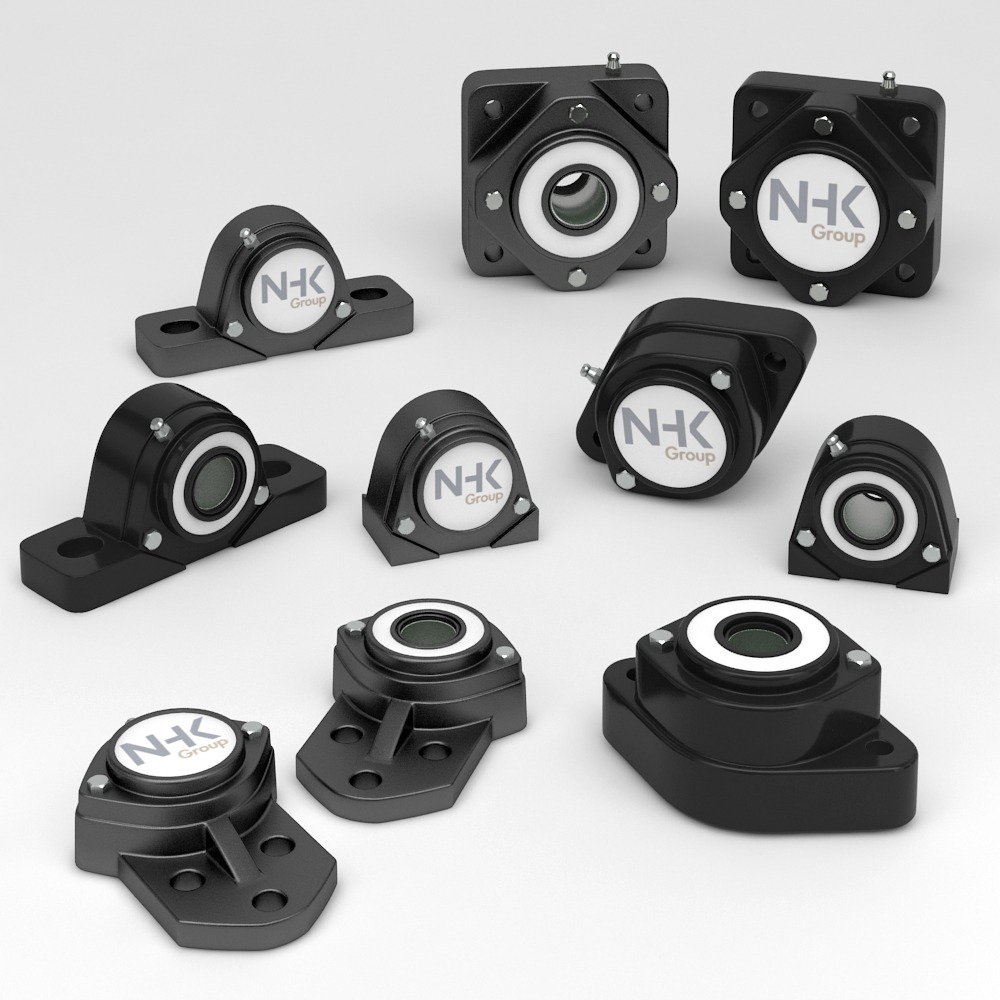
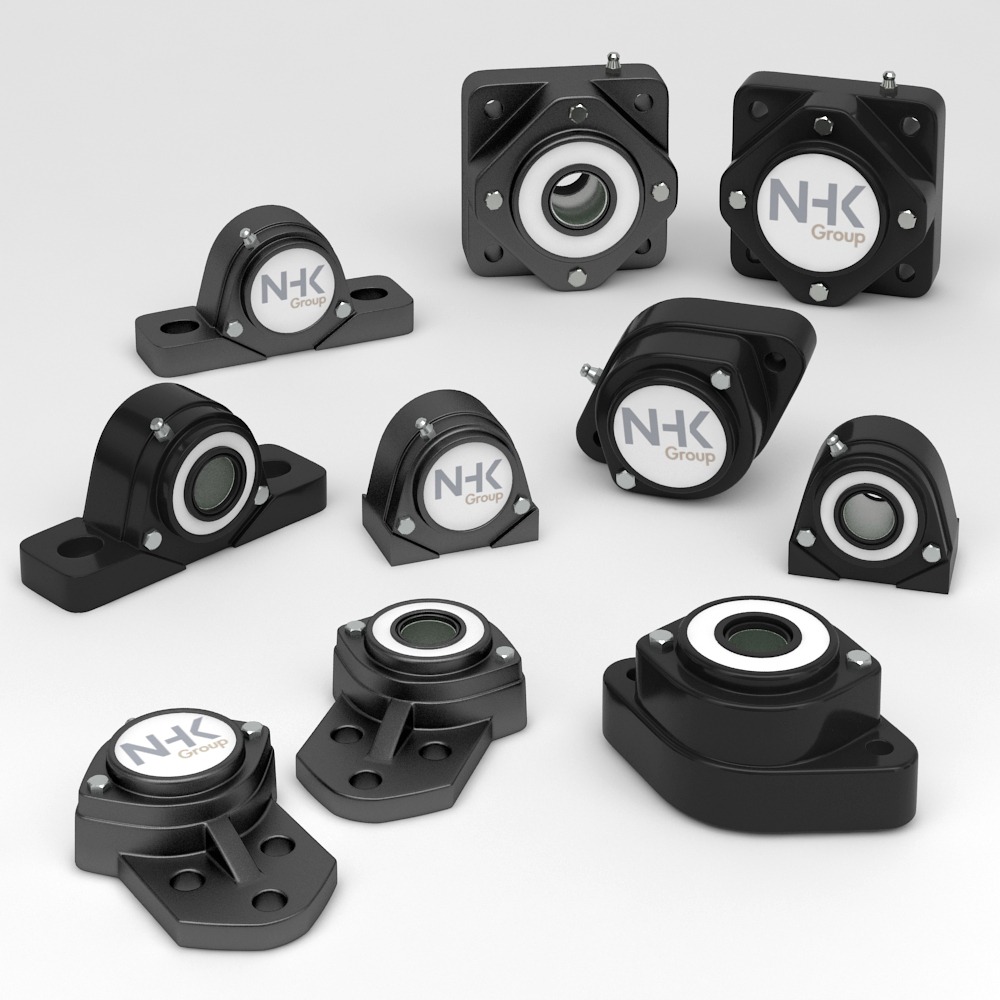
Cutting-edge machinery parts and components earn that description through how they are made, not through novelty. NHK lists certified hygienic components and sealed IP67 waterproof bearing units with spherical inserts; IP67 is an immersion test, not a hygiene certification.