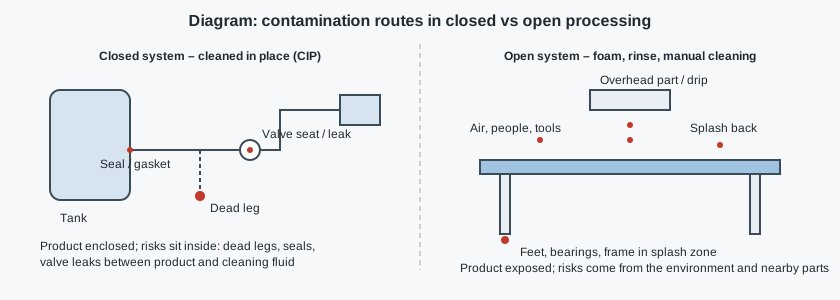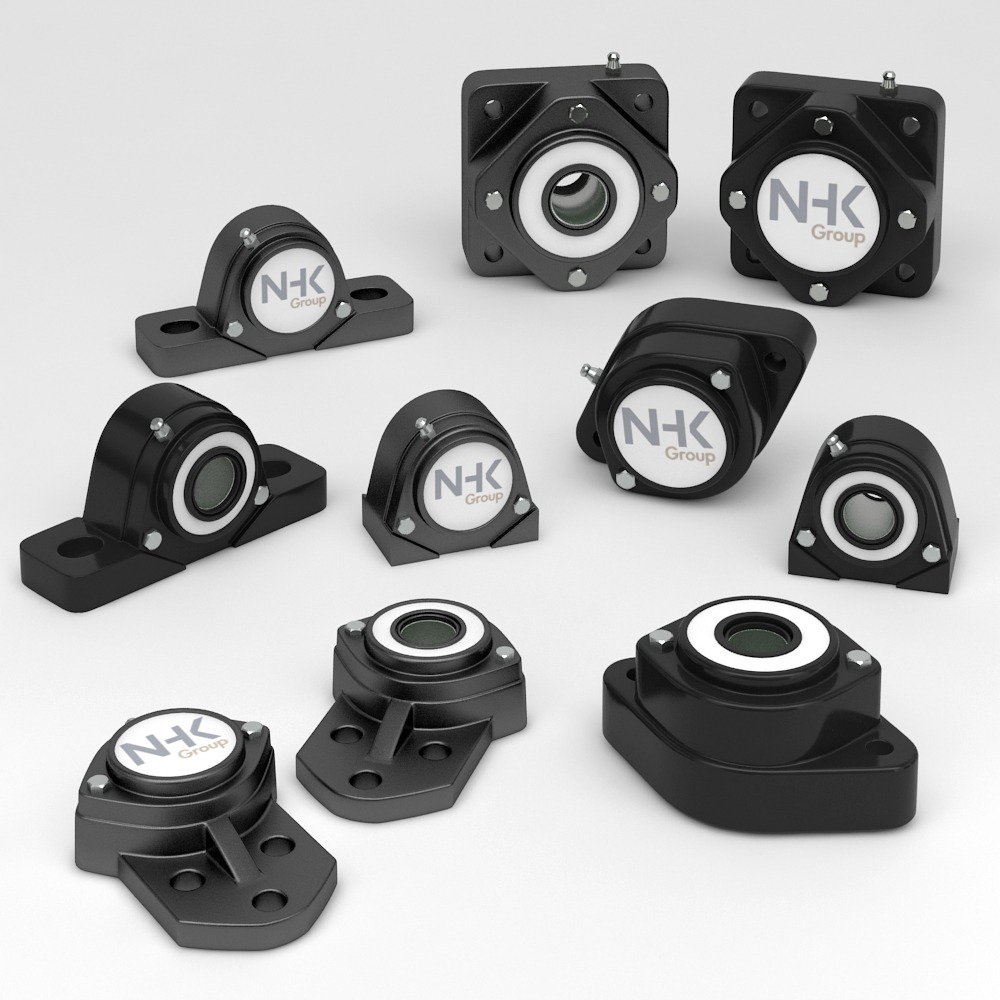
Durability in harsh and extreme environments is the ability of a machine component to keep both its mechanical function and its hygienic, cleanable condition over its intended service life – despite cleaning chemicals, heat, cold, moisture, high-pressure spray and load. In food, beverage and pharmaceutical plants these stressors act every day, often together. This guide explains how components degrade, how to specify against it, and where certification helps and where it does not.
For which certified component types suit chemical and chloride exposure, see the companion guide EHEDG certified components in harsh environments. This page focuses on service life: why parts fail and how to make them last.
What counts as a harsh or extreme environment?
An environment is harsh when it attacks components faster than normal wear. Typical conditions in processing plants:
- Chemical – alkaline and acid cleaners, chlorinated sanitisers, brine and salt in meat, fish and cheese production.
- Thermal – hot-water and steam cleaning, ovens and fryers, chillers and freezers, and the cycling between them.
- Moisture – daily wet cleaning, condensation, high-pressure washdown and foam cleaning.
- Mechanical – heavy loads, vibration, shock and abrasive products such as sugar, salt or bone fragments.
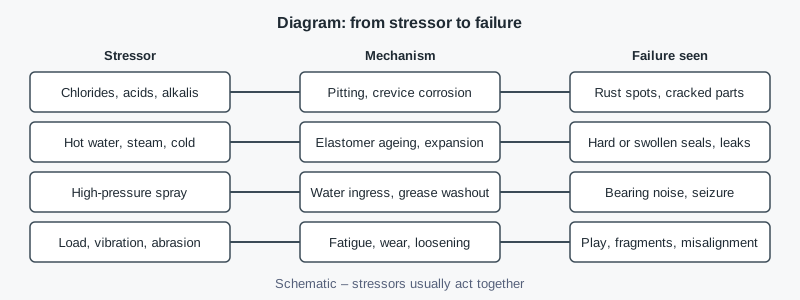
Degradation is usually combined: a hot chlorinated cleaner on a creviced joint is far more aggressive than either factor alone.
How components degrade
Corrosion
Stainless steel resists corrosion because of a thin chromium oxide layer. Chloride pitting happens when chlorides break this layer locally, creating small pits that grow. Crevice corrosion develops in narrow gaps where oxygen is depleted – under washers, in threads and under gaskets. Galvanic corrosion occurs when dissimilar metals touch in a wet environment. Passivation (a chemical treatment that restores the oxide layer after machining or welding) improves resistance; scratches from steel tools or wire brushes can damage it.
For that mixed-metal mechanism, use the galvanic corrosion screening and inspection guide to assess wetting, exposed areas and isolation before specifying replacements.
Elastomer ageing
Seals harden, crack or swell when the elastomer is incompatible with product fats, cleaning chemicals or temperatures. Elastomer compatibility in brief: EPDM tolerates hot water, steam and many cleaners but swells in fats and oils; FKM resists oils and many chemicals but some grades suffer in hot alkaline media or steam; VMQ (silicone) covers a wide temperature range but is mechanically weaker.
Water ingress into bearings
High-pressure spray can force water past seals, wash out grease and cause corrosion of the raceways – the usual reason bearings get noisy and seize in washdown zones.
Fatigue, wear and loosening
Vibration and load cycles loosen fasteners and adjust feet, wear plastic parts and cause fatigue cracks. Loose parts and fragments are also a foreign-body risk.
Selecting components for durability
| Stressor | What to specify | Typical choice | Trade-off |
|---|---|---|---|
| Chlorides, brine, chlorinated cleaners | Stainless grade, finish, no crevices | AISI 316L, smooth surface, sealed joints | Higher cost than 304 |
| Dry or mildly wet, no chlorides | Stainless grade | AISI 304 | Pitting risk if conditions change |
| Fats and oils | Elastomer | FKM or other oil-resistant compound | Check steam/alkali compatibility |
| Hot water, steam | Elastomer, temperature range | EPDM or VMQ within its stated range | EPDM poor with fats |
| High-pressure washdown | Ingress rating, seal design | Sealed units; IP69K where stated | Rating alone does not ensure cleanability |
| Immersion or flooding | Ingress rating | IP67 or higher where stated | Not a washdown rating |
| Lightweight or non-metallic parts | Composite/plastic grade | Chemically resistant thermoplastic | Lower stiffness and temperature limit |
| Heavy load, vibration | Load class, fixing | Rated feet, anchored fixing, secured fasteners | Anchoring adds crevices if poorly sealed |
Composite materials offer lightweight alternatives with good chemical resistance; their temperature limits and stiffness must be checked against the application.
Selection method
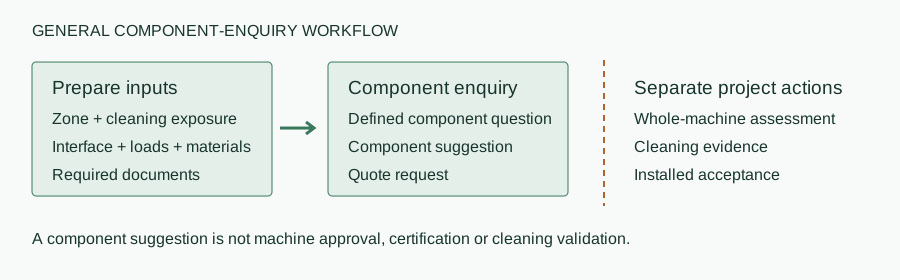
- List the stressors at the installation point: chemicals and concentration, temperature range including cleaning, cleaning method and pressure, loads and vibration.
- Define the zone – product-contact, splash zone (wetted by spray, not product) or non-contact – because hygienic requirements rise towards the product.
- Choose the stainless grade from chloride exposure, and the elastomer from product and cleaning chemistry.
- Choose the sealing concept – sealed, crevice-free designs with no exposed threads resist both corrosion and soiling.
- Check ratings on the product page or datasheet – load, temperature and IP rating – and do not assume them.
- Request documents: material certificates, declaration of compliance for food-contact materials (EC 1935/2004; EU 10/2011 for plastics; FDA 21 CFR 177.2600 for rubber), and EHEDG certificate or 3-A authorisation where claimed.
- Plan inspection and replacement of wear parts such as seals.
Example
Assumptions (illustrative only): a conveyor in a brine-injection area is cleaned daily with a chlorinated alkaline foam and rinsed at high pressure. Existing AISI 304 flange bearings with exposed bolts show rust spots and bearing noise within months.
- Stressors: chlorides, alkali, high-pressure spray, wet 24/7.
- Changes: sealed bearing units in stainless steel suited to washdown, 316L hygienic bolts, re-check of elastomer compatibility with the foam cleaner, and an instruction not to aim jets directly at seals.
- Verification: inspection after the first months to set the replacement interval from observed wear rather than assumption.
Where certification fits
The European Hygienic Engineering & Design Group (EHEDG) publishes guidelines and certifies specific equipment designs as cleanable. 3-A Sanitary Standards, Inc. (3-A SSI) is a non-profit that develops sanitary standards, widely used in North America for dairy and food equipment; a conforming design may carry the 3-A Symbol after a Third Party Verification. Both schemes are voluntary and focus on cleanability and suitable materials – including corrosion resistance – but neither is a durability or service-life rating.
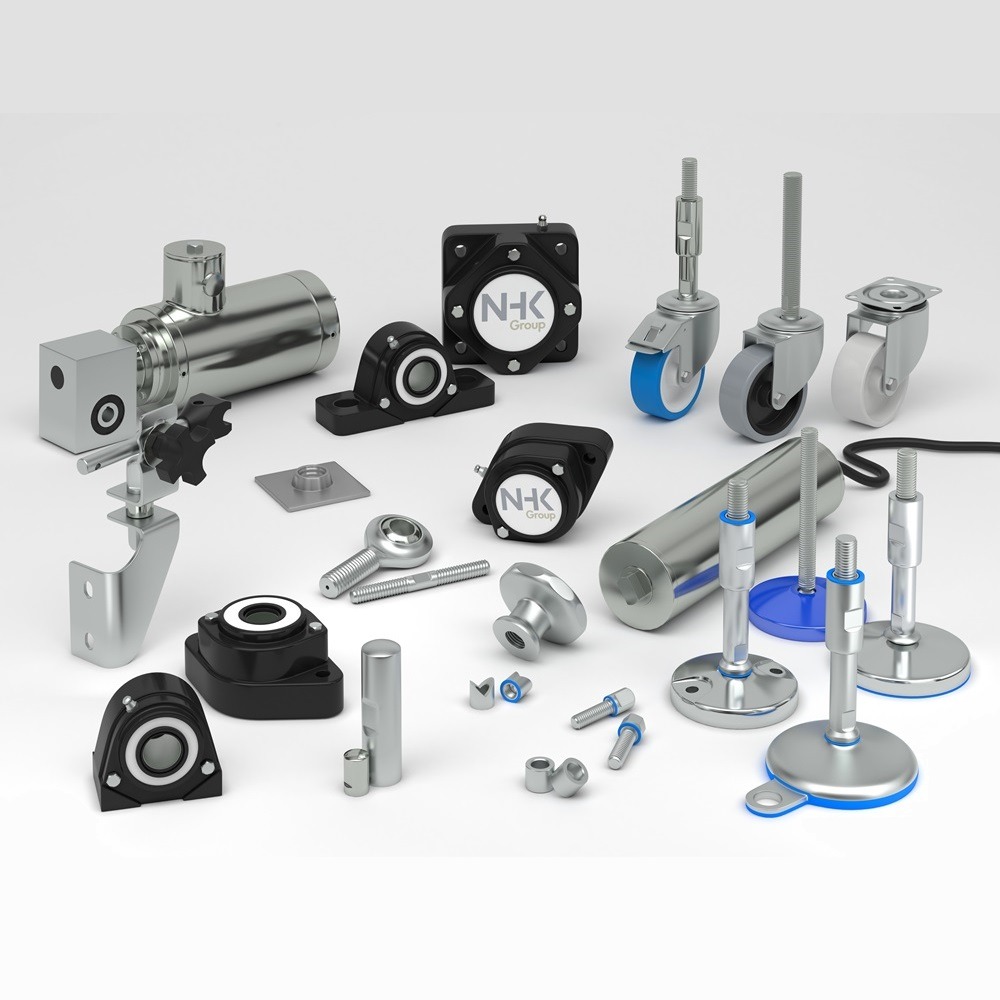
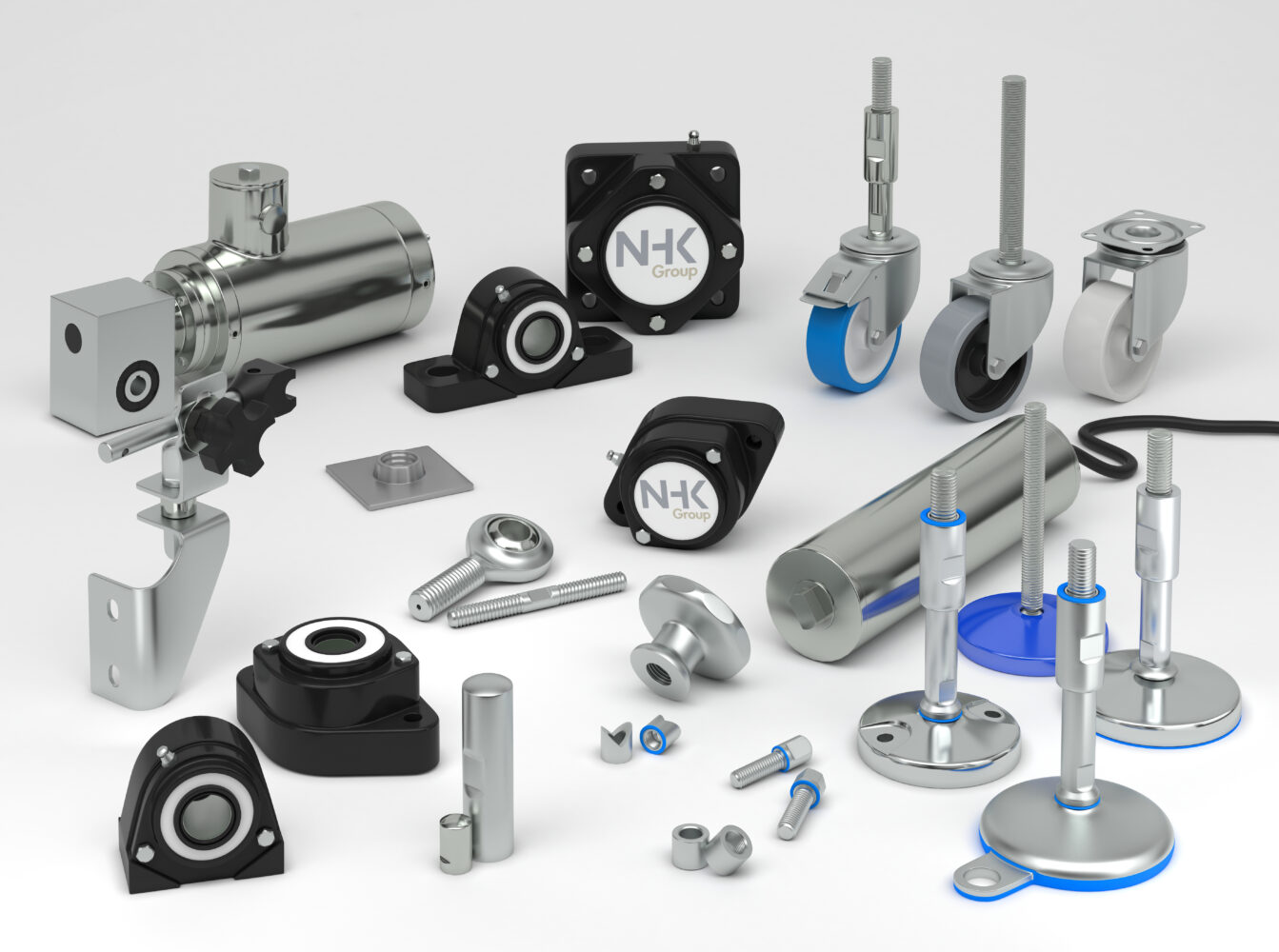
In practice, certified designs often last well in harsh areas because they avoid crevices where corrosion and soiling start. Examples include hygienic adjustable leveling feet with sealed threads, which keep machines stable and aligned – important for accurate, consistent production, also in pharmaceutical plants – and 3-A sanitary enclosure parts designed for easy cleaning. Always confirm the certificate for the exact model.
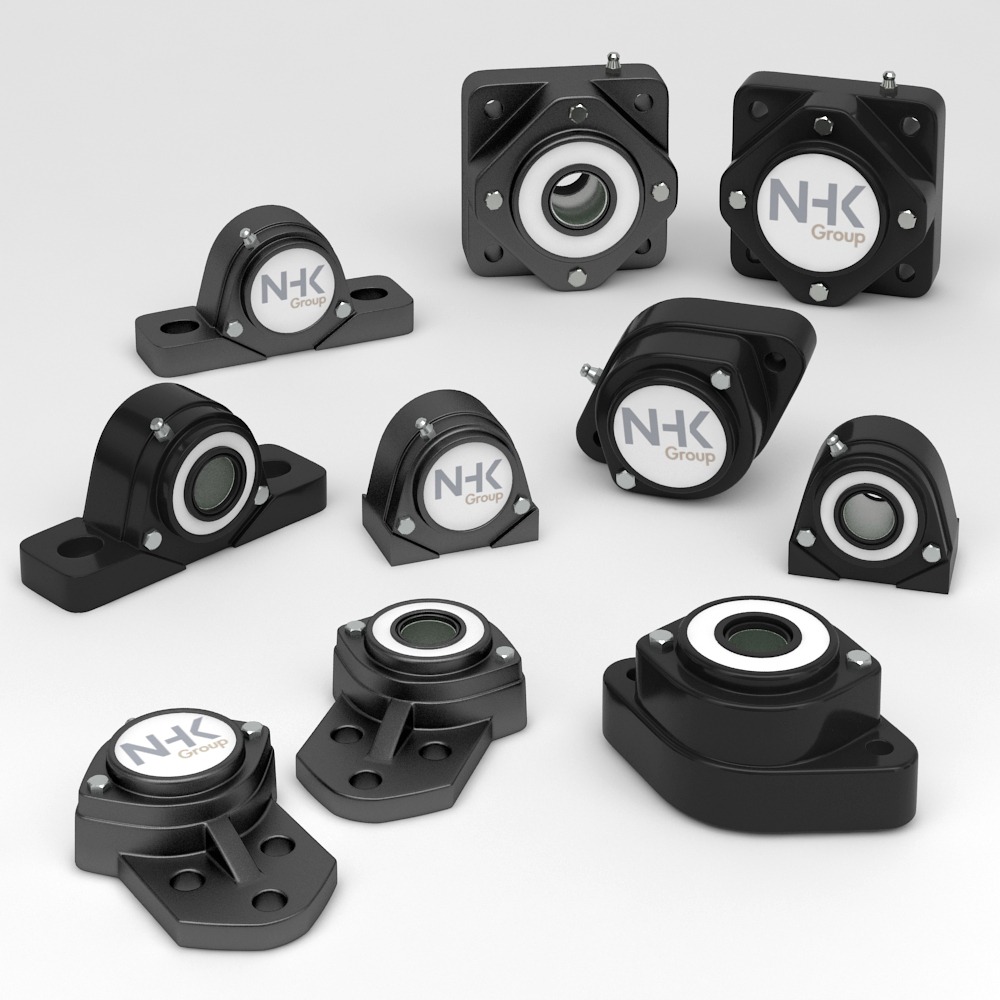
Sealed IP67 bearing units prevent ingress of moisture and contaminants during immersion, which extends bearing life in wet areas. IP67 (IEC 60529) is not a high-pressure washdown test; that is IP69K (ISO 20653). See NHK's IP67 waterproof bearing house units.
Inspection checklist
- Look for rust spots, tea staining and pits, especially at threads, welds and under washers.
- Check seals for hardening, cracks, swelling or missing pieces.
- Listen for bearing noise and check for play, heat and grease leaking or washed out.
- Check feet and fasteners for loosening and correct level.
- Check plastic and composite parts for cracks or chips.
- Record findings and adjust inspection and replacement intervals.
Why durability pays off
Hygienic, durable components may cost more initially, but fewer failures mean less maintenance, fewer replacements and less unplanned downtime. Documented materials and certificates also support audits and customer approvals. The real payoff should be checked against your own maintenance records. For the wider cost view, see manufacturing success: how and why.
NHK's article on this topic: durability in harsh and extreme environments.