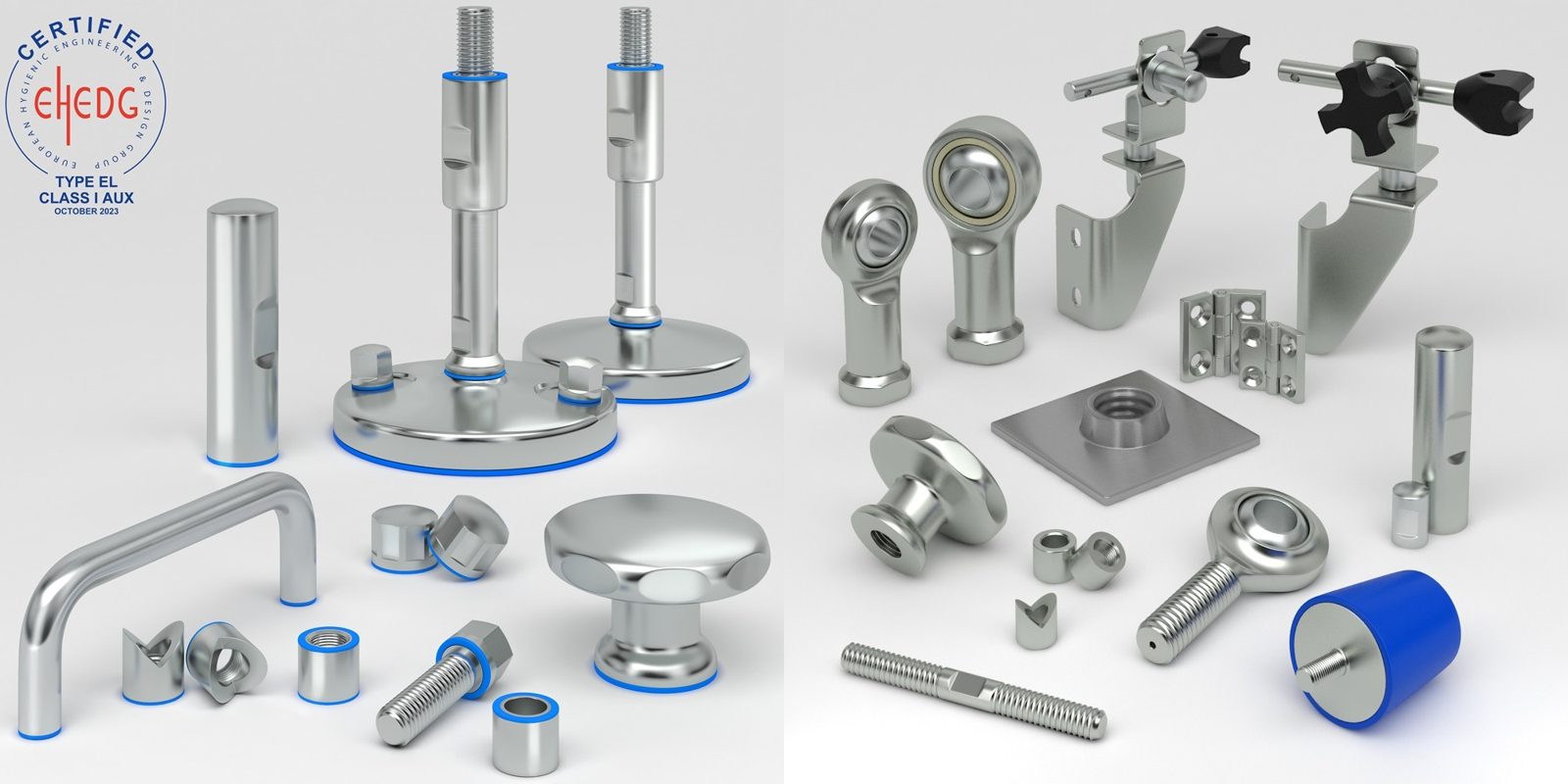
Global sustainable development and growth, at machine level, means equipment that can be sold, approved, operated and maintained in many markets over a long life without unnecessary waste. Certified components and parts influence it directly: they give machine builders recognised evidence that works across borders, and they make machines easier to keep in service. Demand for certified parts has grown as industries worldwide face higher expectations for hygiene, safety and environmental impact. This guide explains which certifications matter in which market, what each proves, and how to build a component file for export machinery.
For how hygienic design requirements differ between regions and industries, see hygienic design: a global trend.
Why certification matters across borders
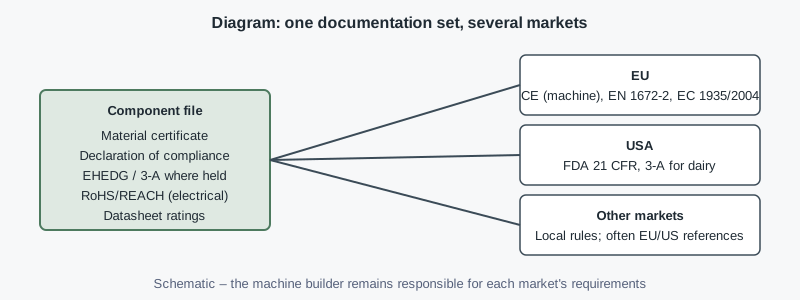
A machine built in Denmark may run in Germany, the US and Southeast Asia. Each market asks for evidence on safety, hygiene, materials and substances. When components come with recognised documents, the machine builder can:
- reuse one design and one documentation set for several markets;
- pass customer audits and approvals faster;
- substitute spare parts locally without re-approval, if the replacement has the same documents.
This is particularly useful for small and medium-sized machine builders, which can compete internationally without building separate variants for each region.
Which marks and documents apply where
| Mark or document | Region | Applies to | What it proves |
|---|---|---|---|
| CE marking | EU/EEA | The complete machine (and certain product categories) | Conformity with applicable EU legislation, including machinery hygiene requirements |
| EN 1672-2 / EN ISO 14159 | EU (harmonised standards) | Food machinery design | Presumption of conformity with hygiene requirements |
| EC 1935/2004, EU 10/2011 | EU | Food-contact materials (10/2011: plastics only) | Declaration of compliance for the material |
| RoHS | EU | Electrical and electronic equipment | Restricted substances such as lead, mercury and cadmium below limits |
| REACH | EU | Substances in all articles | Information on substances of very high concern |
| FDA 21 CFR | USA | Food-contact substances, e.g. 177.2600 for rubber | Conformity of the material |
| 3-A Symbol | Mainly USA | Dairy and food equipment designs | Conformity to a 3-A Sanitary Standard after Third Party Verification |
| EHEDG certificate | International | Specific equipment designs | Cleanability of the named design |
| ISO 9001 / ISO 14001 | International | Supplier's management system | Quality or environmental management – not a product property |
Two points are often misunderstood. Mechanical components such as feet and bearing units usually do not carry CE marking themselves – the machine does. And EHEDG and 3-A are voluntary; their value lies in being recognised by customers across markets.
Environmental sustainability
Certification supports sustainability in three concrete ways:
- Restricted substances – electrical components complying with RoHS keep lead, mercury, cadmium and other restricted substances out of the product, which protects the environment and improves end-product safety. REACH covers substances in all articles.
- Longer service life – parts with verified materials and ratings are less likely to be replaced by unsuitable substitutes that fail early.
- Cleaner operation – hygienic designs that are verified as cleanable, such as EHEDG-certified parts, need less water, detergent and energy per clean.
A certificate alone does not make a part "eco-friendly"; the environmental benefit comes from what the certified property does in use.
Quality, hygiene and global standardisation
Quality assurance
Recognised documents give a benchmark for quality. In healthcare, food processing and pharmaceuticals, where component quality affects public health, they reduce the risk of failures, recalls and liability.
Hygiene
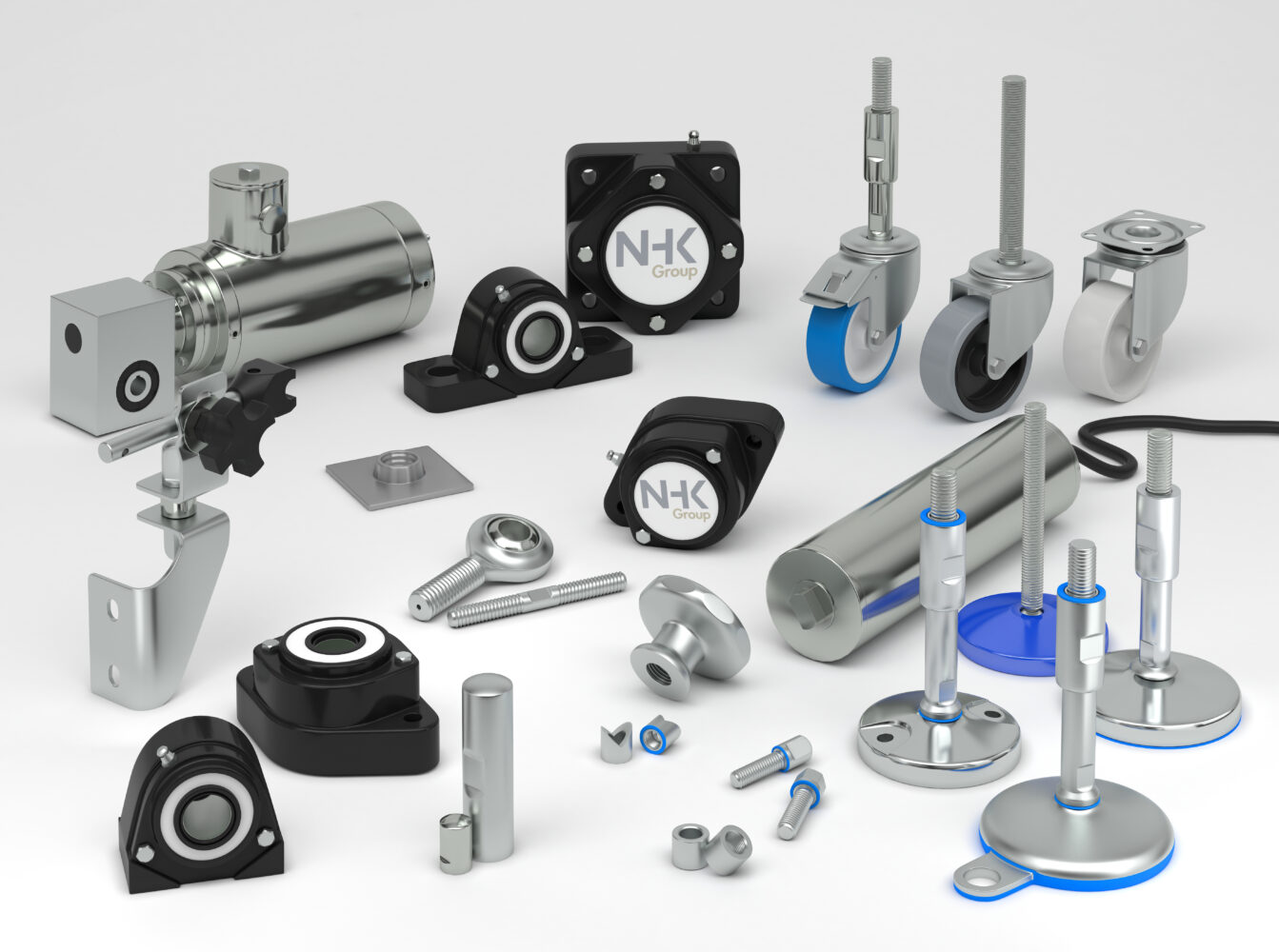
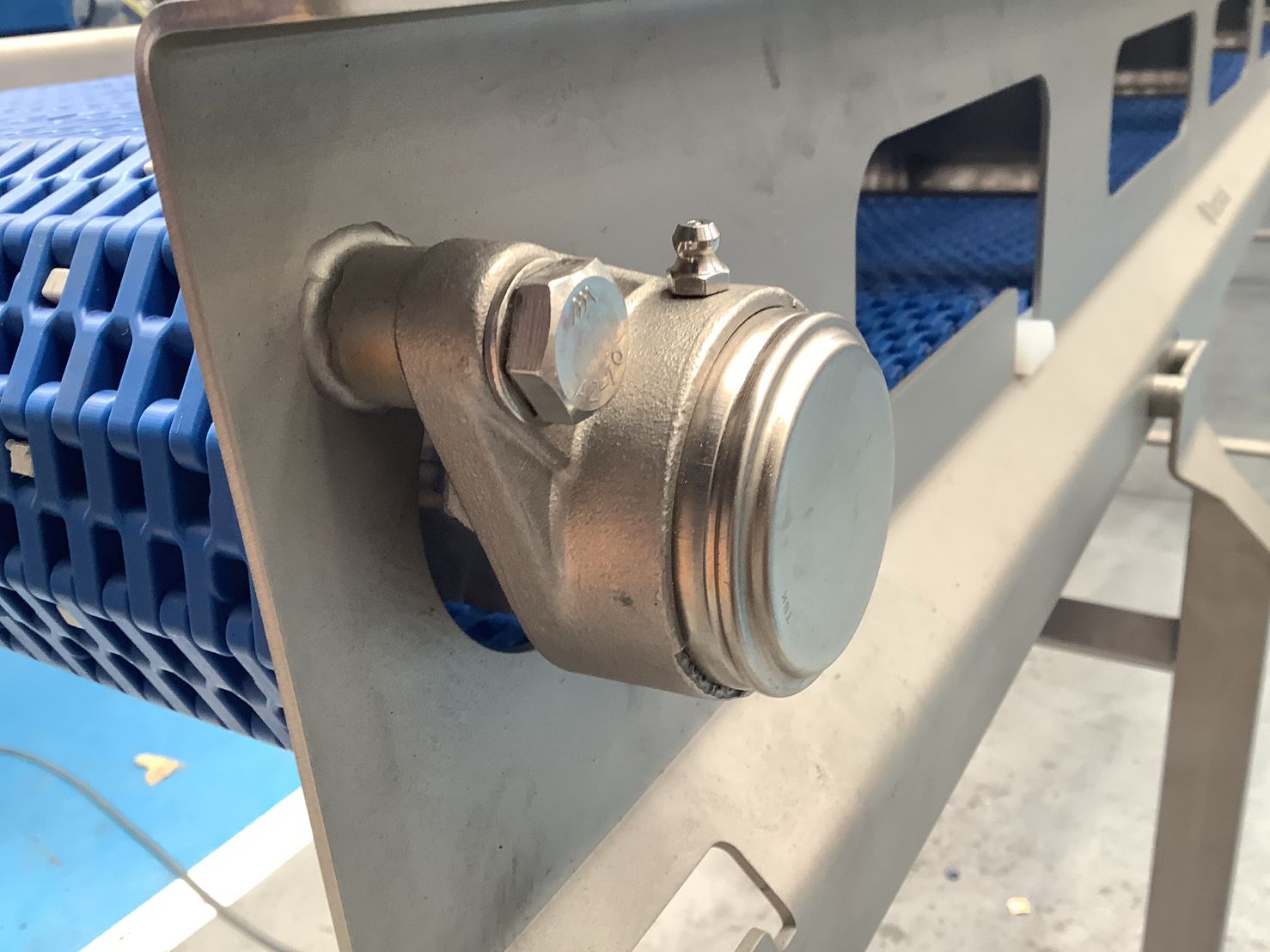
Hygienic machine leveling feet, sealed bearing units and hygienic fasteners designed to EHEDG and 3-A principles reduce contamination risk by avoiding harbourage points – exposed threads, crevices and dead spaces where residue and bacteria survive cleaning. Where certification is claimed, it applies to the named model. See NHK's EHEDG-certified and 3-A SSI standard components and the NHK site for industrial machine leveling feet.
Standardisation and interchangeability
Components built to international standards – ISO metric threads, standardised bearing and housing dimensions, common stainless grades such as AISI 304 and 316L – are interchangeable across regions. That simplifies supply chains, allows local spares and keeps machines running longer, which supports both trade and sustainability.
Economic effects
- Market expansion – meeting regional requirements opens new customer bases.
- Skills and jobs – producing and documenting certified parts requires skilled work and training.
- Investment in development – meeting certification criteria pushes suppliers and machine builders to invest in design and testing, for example in cleanable geometries and validated materials.
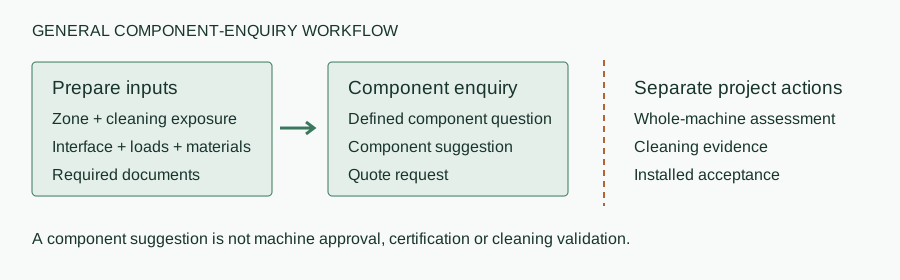
Building a component file for export machinery
- List target markets for the machine and the requirements of each (see table above).
- Classify components by zone: product-contact, splash zone (wetted by spray but not product) and non-contact; and by type: mechanical, electrical, elastomer, plastic.
- Collect material evidence: material certificates for stainless parts; declarations of compliance for food-contact materials covering both EU and FDA where relevant.
- Collect hygienic design evidence: EHEDG certificates and 3-A authorisations naming exact models, where held.
- Collect substance evidence for electrical parts: RoHS and REACH statements.
- Record ratings – load, temperature, IP rating – from datasheets.
- Approve alternatives for critical parts, with the same documents, so local spares remain compliant.
Example
Assumptions (illustrative only): a European OEM builds a cheese-portioning machine for customers in the EU and the US.
- Feet and bearing units: material certificates for 316L, EHEDG certificate for the chosen feet, 3-A authorisation sought for dairy-contact parts where available.
- Seals: one elastomer grade with both EU and FDA declarations, avoiding separate variants.
- Drive motor: RoHS statement and suitable ingress rating for washdown.
- Result: one bill of materials and documentation set for both markets, and approved spares that customers can source locally.
For a guide to choosing each component family for its environment, see secure sustainable development and growth.