Sustainable development is development that meets the needs of the present without compromising the ability of future generations to meet their own needs. It integrates three objectives – environmental protection, social equity and economic growth – so that one is not achieved at the expense of the others. This guide explains the concept and its strategies, then applies the three pillars to the decisions engineers and buyers make about machinery and components in food and pharmaceutical plants.
Related guides on this site take narrower angles: ensure sustainable development and growth covers lifecycle resource use of hygienic design, and secure sustainable development and growth maps component families to environments.
For how hygienic components reduce water, chemicals and energy per cleaning cycle, and how to measure it, see benefits of using hygienic machinery components.
What sustainable development means
The concept rests on the understanding that economic growth should not come at the expense of environmental degradation or social harm. It has three pillars.
Environmental preservation
Protecting natural resources, reducing pollution and mitigating climate change. Businesses contribute by reducing waste, using renewable energy and lowering their carbon footprint; individuals by recycling, conserving water and choosing sustainable products.
Social equity
Ensuring people have access to the resources and opportunities needed for a decent quality of life, including education, healthcare and safe working conditions.
Economic growth
Growth remains essential, but it must be environmentally responsible and socially inclusive. Businesses that innovate and adopt sustainable practices can strengthen their competitiveness and profitability.
Strategies for achieving sustainable development
- Renewable energy: solar, wind and hydroelectric power produce much lower greenhouse gas emissions than fossil fuels.
- Sustainable agriculture: crop rotation, organic farming and natural fertilisers help preserve soil health and reduce water use – relevant to food manufacturers' supply chains.
- Green building: energy-efficient design, sustainable materials and waste reduction in construction and operation.
- Corporate social responsibility (CSR): ethical practices, community support and reduced environmental impact.
For a machine builder or food plant, a fifth strategy is often the most direct: designing and selecting equipment so it uses fewer resources over its life.
Applying the three pillars to machinery decisions
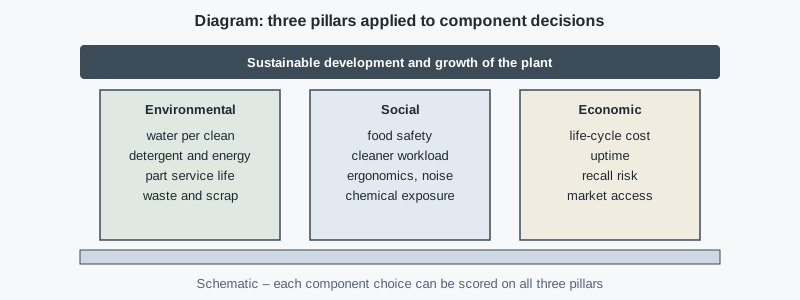
In hygienic production, cleaning is repeated every shift or day, so component design affects all three pillars every time the line is cleaned.
| Pillar | What a component decision affects | Design features that help | How to measure |
|---|---|---|---|
| Environmental | Water, detergent and hot-water energy per clean; replacement parts; waste | Crevice-free, self-draining surfaces; sealed bearings and feet; corrosion-resistant grades | Litres and kWh per clean; parts replaced per year |
| Social | Food safety; cleaner workload and chemical exposure; noise and ergonomics | Fewer harbourage points; easy access without tools; adjustable feet for correct working height | Swab and ATP results; cleaning time; incident reports |
| Economic | Life-cycle cost; uptime; recall risk; customer and export requirements | Durable materials (AISI 304, or 316L where chlorides cause chloride pitting); certified designs where required | Cost per year; downtime hours; audit findings |
A harbourage point is a place where residue and bacteria survive cleaning; a self-draining surface is shaped so water runs off rather than standing.
Trade-offs
- Purchase price vs life-cycle cost: 316L or sealed designs cost more upfront but may last longer and clean faster. Whether this pays back depends on cleaning frequency, chemicals and chloride load.
- Cleaning intensity vs resource use: high-pressure washdown cleans fast but uses water and can drive water into bearings; foam uses less water but needs longer contact time. Component design should suit the chosen method.
- Durability vs recyclability: stainless steel is durable and widely recycled; plastics may be lighter and cheaper but need a food-contact declaration of compliance (EU 10/2011) and may be replaced more often.
How to score component options
- Define the application: zone (product-contact, splash, floor), cleaning method (CIP/COP, foam, high-pressure washdown), chemicals and temperatures.
- List the options, e.g. standard versus hygienic design.
- Score environmental effects: expected cleaning time and water per clean, service life.
- Score social effects: food safety risk, cleaner effort, ergonomics.
- Score economic effects: purchase price, expected replacements, downtime.
- Check required documents: certificates by design name, material certificates, declarations of compliance.
- Decide, then measure the actual effect after installation.
Example
Assumptions (illustrative only): a bakery replaces the feet on a cooling conveyor. Option A: standard feet with exposed threads. Option B: sealed hygienic feet in stainless steel.
- Environmental: B is expected to need less spraying at floor level and to corrode less; A is expected to need replacement sooner.
- Social: B removes threads where flour and moisture collect, reducing cleaner effort and contamination risk.
- Economic: B costs more per foot; payback depends on cleaning time saved and avoided replacements.
- Decision: B chosen; cleaning time at floor level and foot condition recorded over the following months to confirm the effect.
No figures are given because they depend on the plant; use your own measurements.
Certification and sustainability claims
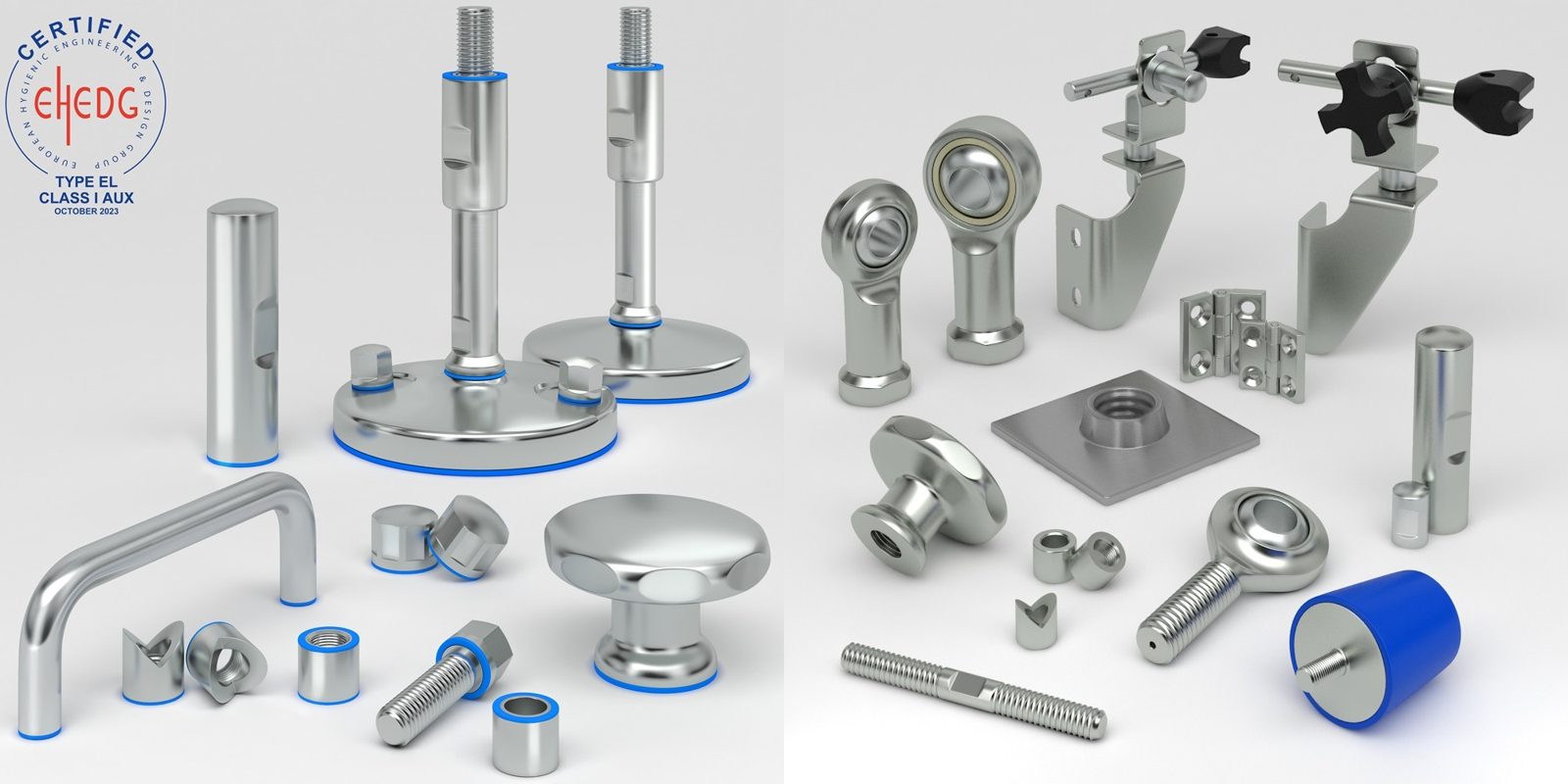
EHEDG certifies specific equipment designs as cleanable; the 3-A Symbol is authorised after a Third Party Verification. Both are voluntary and cover the named model. Neither certifies sustainability. Easier cleaning can support environmental goals, but claims should be based on measured data, not on the certificate.
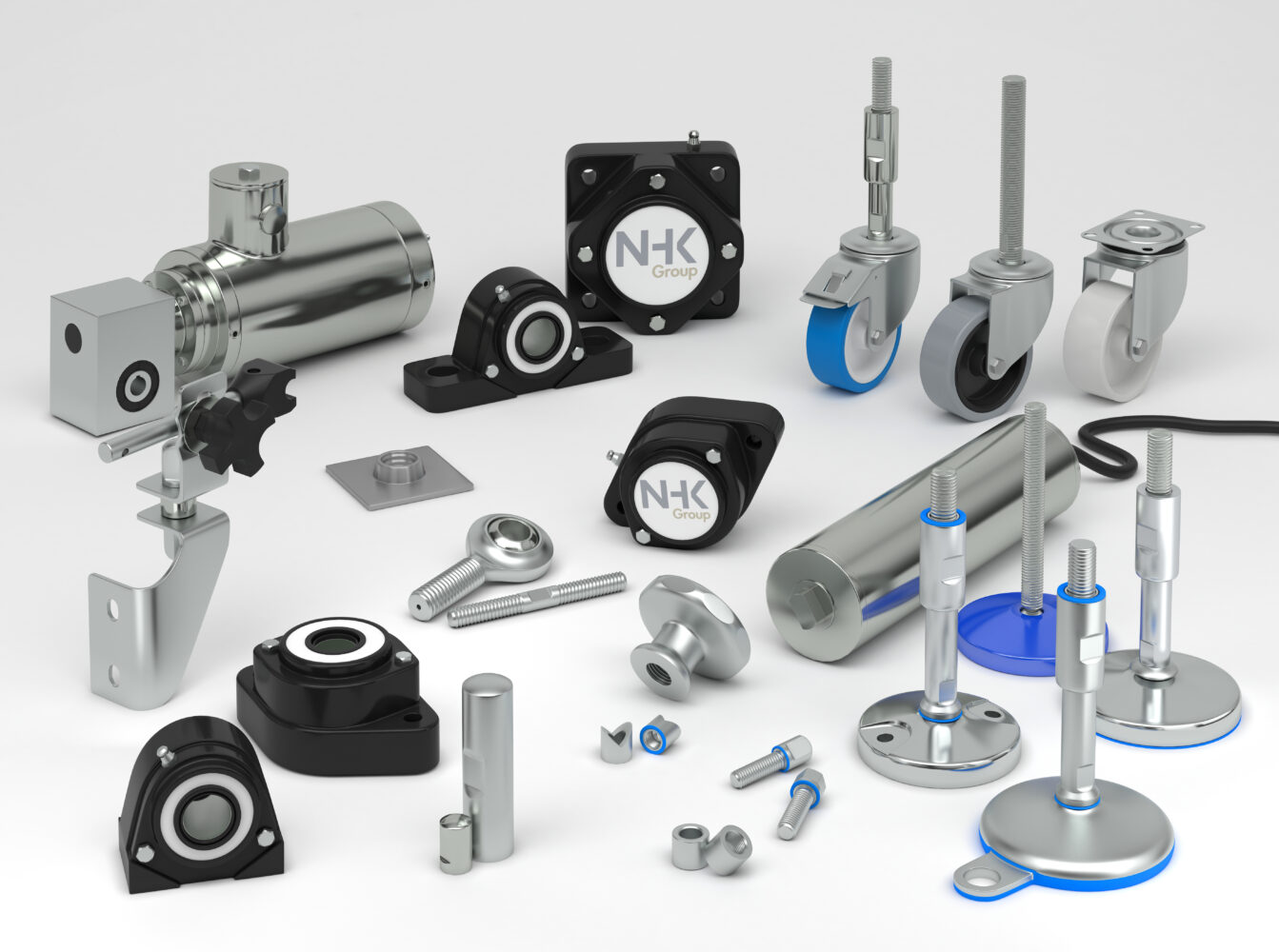
More about NHK: NHK hygienic machinery parts for advanced processing systems.
For the supply-chain drivers behind these questions, see why sustainable practices are becoming crucial.