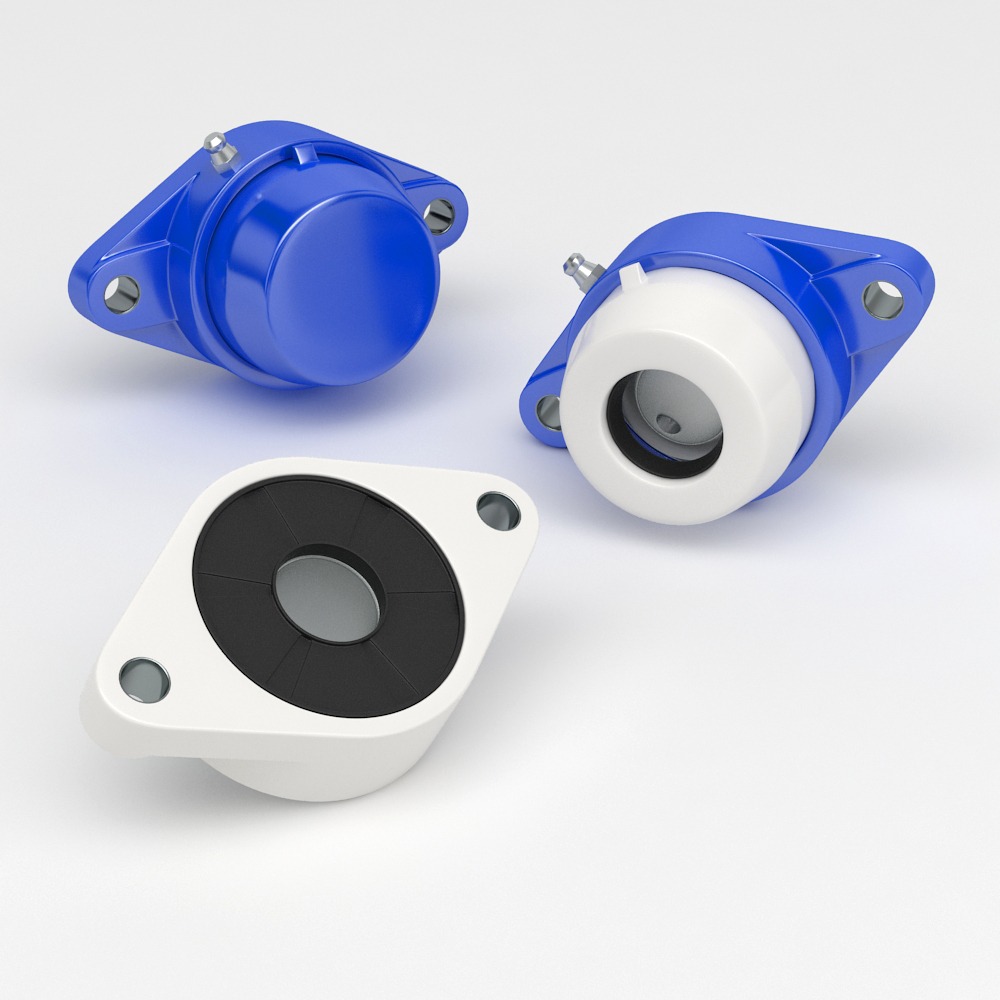
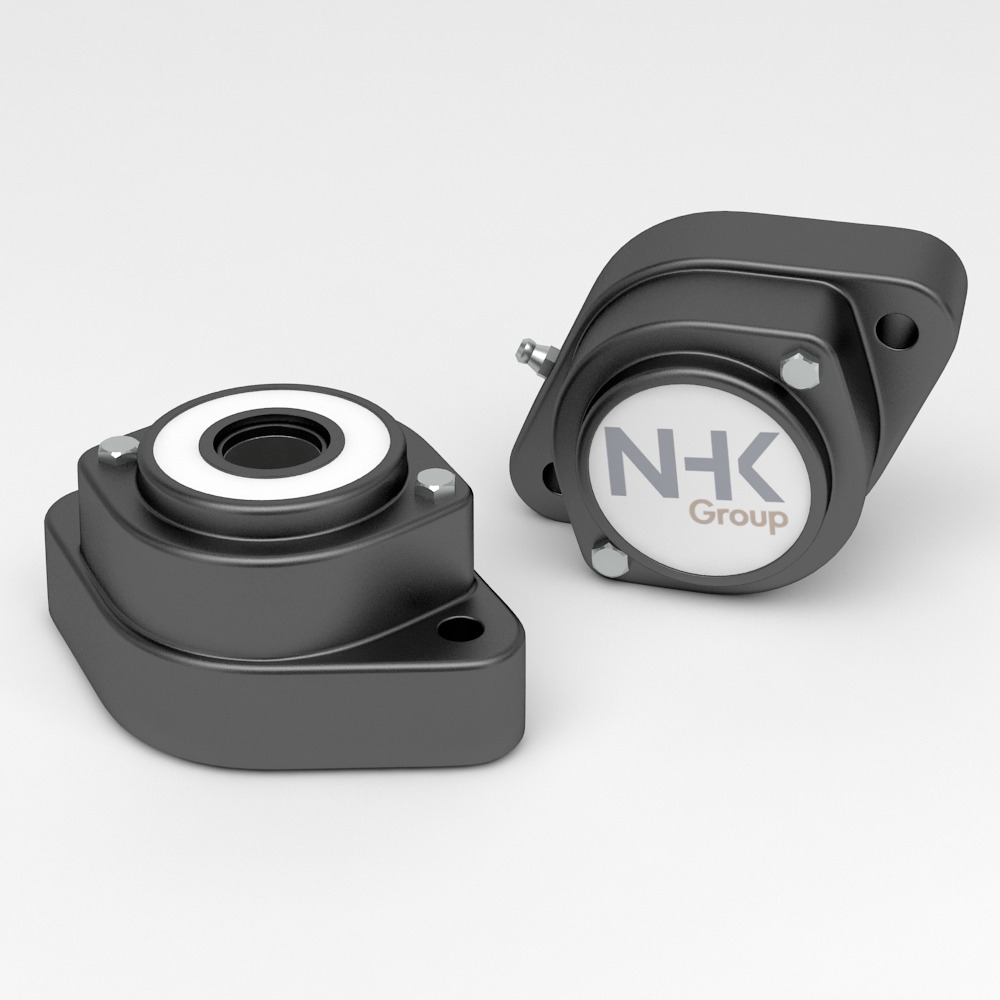
An IP67 waterproof oval bearing 2-hole flange unit is a mounted ball bearing – a stainless steel spherical Y-insert in a sealed housing with a diamond-shaped flange and two bolt holes – used where machinery is exposed to water, dust or corrosive materials. Catalogues and standards call the same housing an oval flange, rhombic flange, diamond flange or 2-bolt flange unit. This guide sorts out the names, explains when the format fits, what IP67 covers, and how to replace one correctly.
Oval, rhombic, diamond: one housing, several names
| Name you may see | Meaning |
|---|---|
| Oval flange bearing | Common English name for the 2-hole flange shape |
| Pillow type unit with rhombic flange | Term from standard bearing unit naming; "rhombic" describes the diamond outline |
| Diamond flange | Same shape, US usage |
| 2-bolt / 2-hole flange unit | Describes the bolt pattern |
| UCFL | Common series designation: Y-insert with set screws in a 2-bolt flange housing |
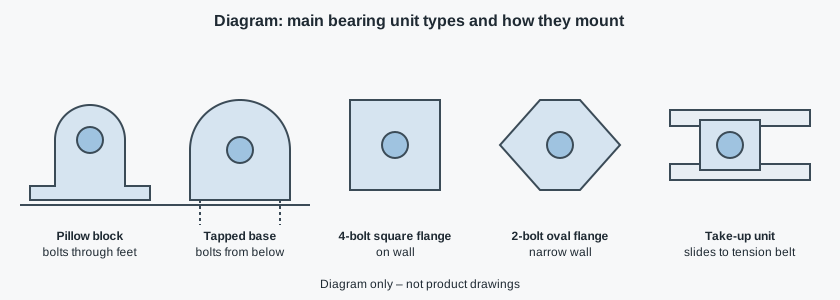
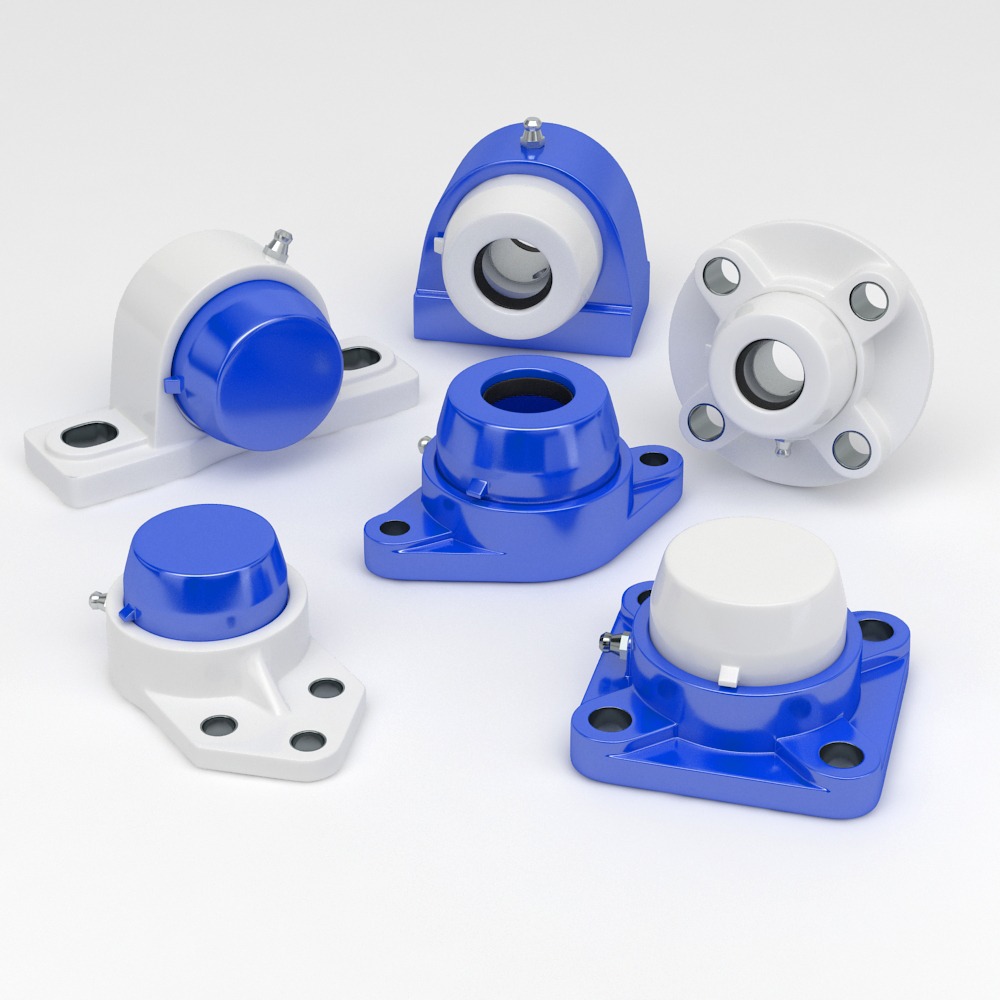
All describe a flange housing bolted to a surface perpendicular to the shaft with two bolts on one axis. Where a datasheet uses a different name, compare dimensions rather than terminology.
Pillow type unit rhombic flange: when the 2-hole format fits
The oval shape is narrower than a square flange, so it fits narrow frames and confined spaces – conveyor side frames, light drive shafts, packaging machines. Its two bolts sit on one axis:
- Loads along the bolt line are carried well.
- Loads across the bolt line put more stress on the flange and bolts.
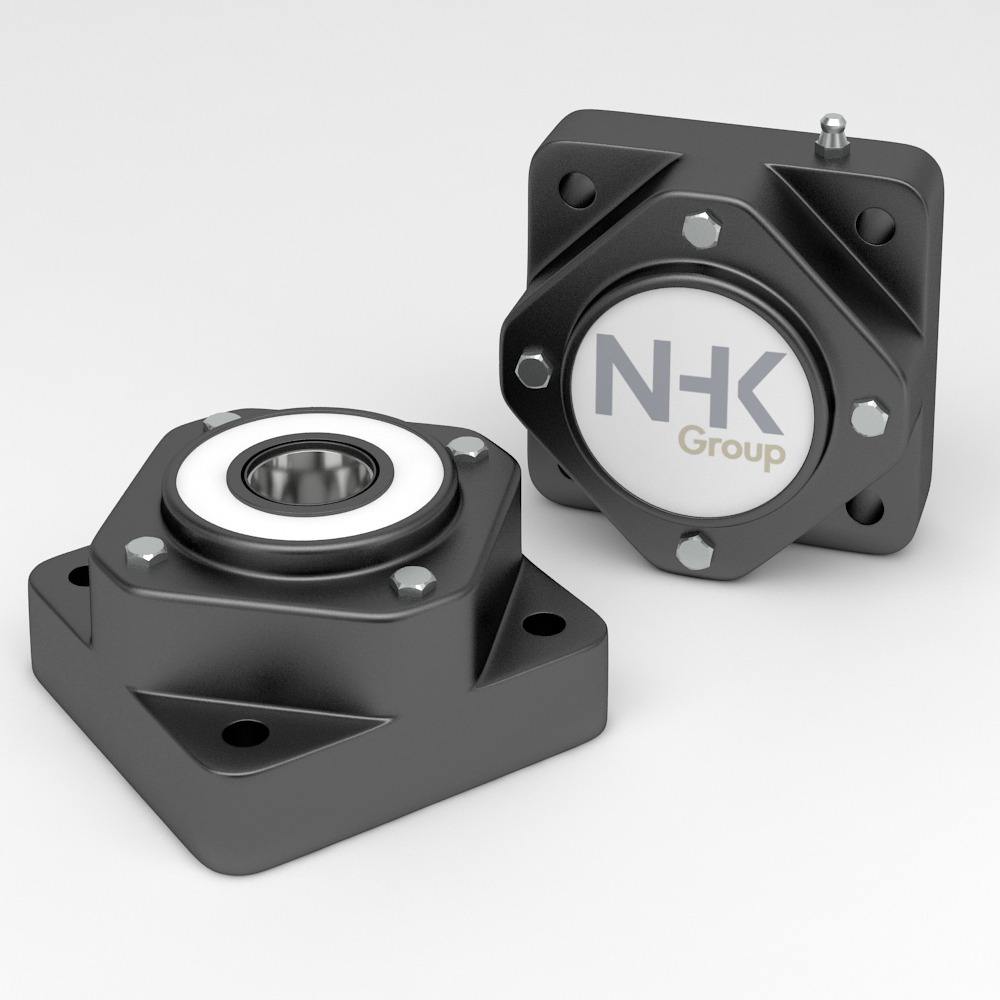
For heavier or changing load directions, a 4-bolt square flange is the safer choice – see IP67 waterproof 4-hole square flange bearing units. For application examples of the 2-bolt format, see industrial oval bearings.
Stainless steel spherical Y-inserts
The Y-insert is a deep-groove ball bearing with a spherical outer ring and an extended inner ring locked to the shaft, usually by set screws. Because the outer ring is spherical, the insert can tilt slightly in the housing and compensate small static misalignment from mounting, which reduces edge loading and protects the seal. Stainless steel resists rust in wet areas; note that stainless inserts typically carry lower load ratings than chrome-steel inserts of the same size, so check the supplier's data.
What IP67 covers – and what it does not
IP67 under IEC 60529 means:
- 6: dust-tight.
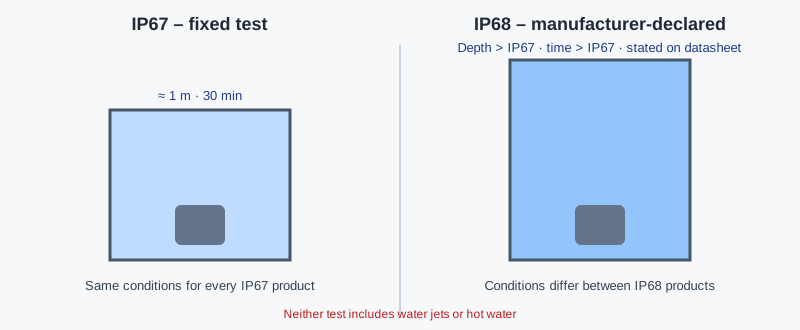
- 7: protected against the effects of temporary immersion in water under defined conditions – typically between 0.15 m and 1 m depth for 30 minutes.
That suits wet areas, splashing and occasional flooding. It is not a high-pressure jet test: hot, high-pressure jets are covered by IP69K (ISO 20653); IP69 also exists in IEC 60529. IP ratings are ingress tests, not hygiene certifications. For marine use, the source correctly points to corrosion resistance in salty, humid environments – check every material, including fasteners, against chlorides.
Selection method
- Space: is the frame too narrow for a 4-hole flange?
- Load direction: mainly along the bolt line? If not, use a square flange.
- Shaft and locking: bore matches shaft; set screws suit one rotation direction.
- Cleaning method: IP67 sealing with closed covers for foam and rinse; jet-test evidence for high-pressure washdown.
- Lubrication: food-grade (NSF H1) grease in food and pharma areas.
- Materials: housing material for load, temperature and cleaning chemicals; stainless fasteners.
- Interchangeability: match the existing unit's dimensions (below).
Replacing an existing oval flange unit
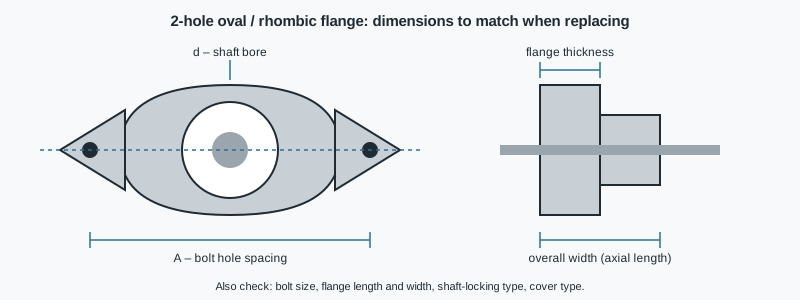
Many plants replace painted cast-iron oval flange units with waterproof units during hygiene upgrades. Match:
- Shaft bore (d).
- Bolt hole spacing (A) and bolt size.
- Overall width (axial length) – affects shaft position and guarding.
- Flange thickness and outline – must clear the frame and neighbouring parts.
- Locking type and cover type – open or closed end.
Then confirm load rating and housing strength for the position.
Example – assumptions stated, not a real case. A bakery replaces painted cast-iron 2-bolt units on a cooling conveyor that is foam-cleaned weekly. The shaft load acts vertically and the bolt line on the side frames is vertical, so the oval format remains suitable. The engineer matches bore, bolt spacing and overall width from the old units, chooses IP67 units with closed covers at the shaft ends and food-grade grease, and fits stainless bolts.
Installation and failure prevention
- Mount on a flat surface; a distorted flange loads the insert unevenly.
- Avoid gaps between flange and frame where water and soil collect.
- Tighten both bolts evenly, then set screws, to the supplier's torque.
- Do not aim cleaning jets directly at the shaft seal.
- Check set screws after initial running; vibration and reversing loads loosen them.
- Watch for grease leakage or noise – signs of water ingress.
NHK's IP67 2-hole oval flange units
According to NHK's product page, its IP67 2-hole oval flange units have a Dupolit housing, a stainless insert, NSF H1 registered grease, an oil seal ring with stainless steel spring, a stainless grease nipple, market-standard housing measurements for replacement, and a unique batch ID number for traceability. Related flange versions: IP67 waterproof bearing units with spherical inserts.