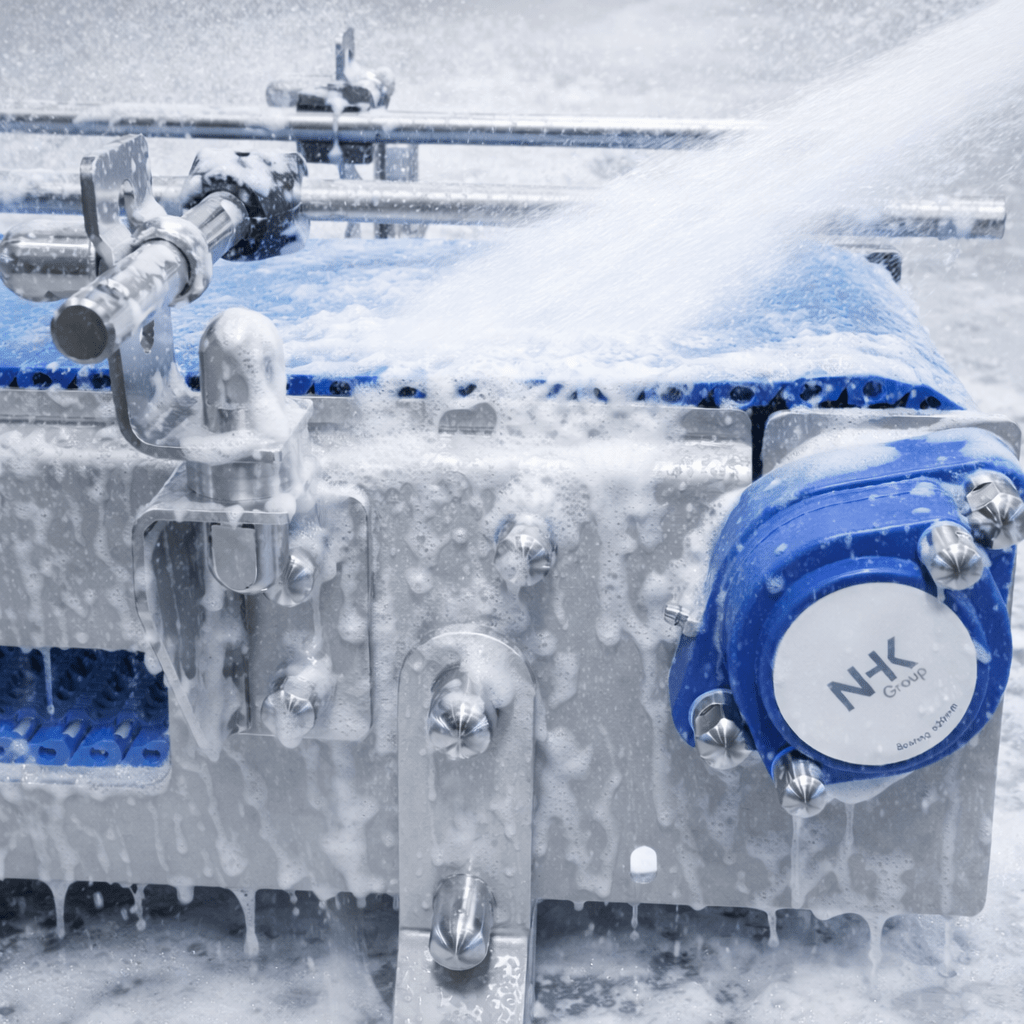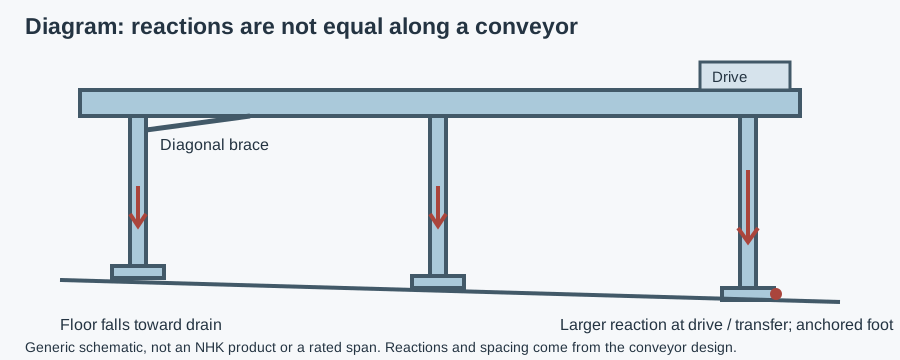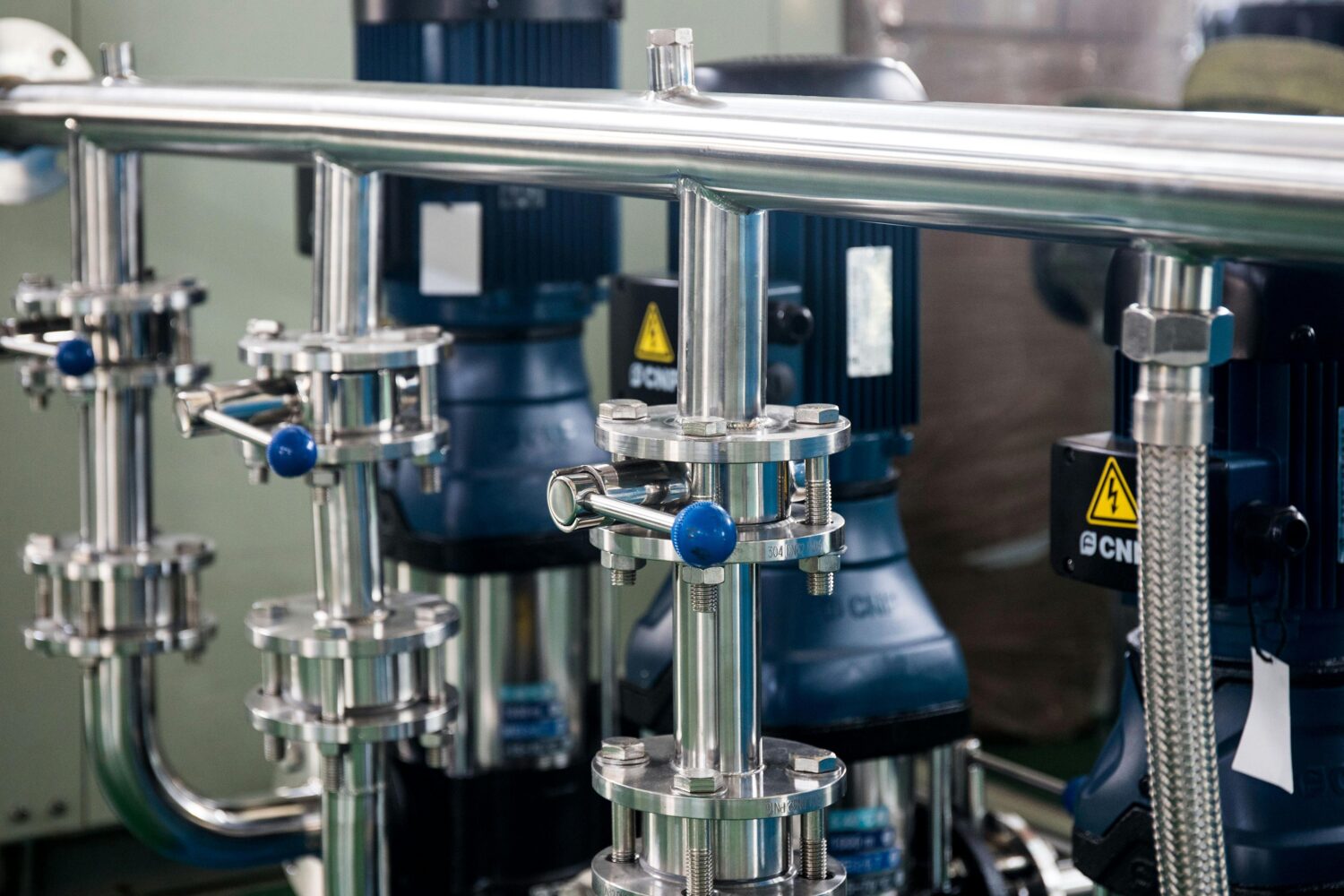
Hygienic optimization is the design of food processing machines so that they can be cleaned quickly, reliably and with less water, detergent and labour. Its importance shows up in total cost of ownership (TCO): cleaning is paid every shift, for the machine's whole life, yet it is often missing from the comparison when machines are bought.
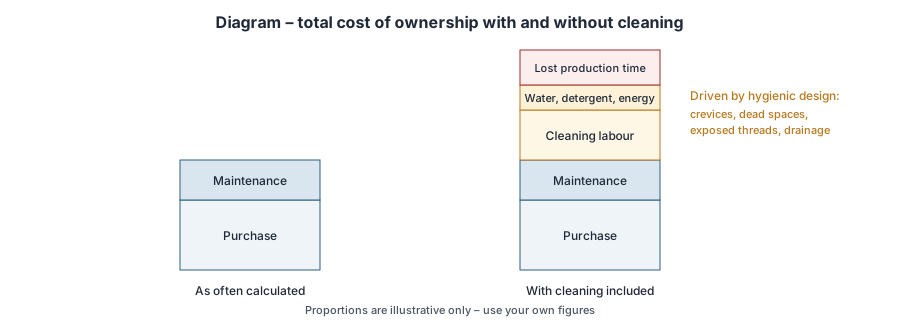
For the broader life-cycle cost and break-even method, see ensuring long-term cost savings. For reducing consumption once the machine is running, see reducing water and cleaning detergent usage. This page focuses on quantifying cleaning in TCO and the design features that drive it.
What does total cost of ownership include?
TCO covers all costs of a machine over its life: purchase price, installation, operation, maintenance, repairs, spare parts and disposal. In food processing, one of the largest operating costs is cleaning – but it typically sits in the sanitation or operations budget, not the equipment budget, so it is left out when machines are compared on price and maintenance alone.
Why is cleaning such a large part of TCO?
Because it recurs. A machine cleaned once or several times per day accumulates thousands of cleanings over its life. Each one consumes:
- Labour: cleaners' time, often at night or weekend rates.
- Water: for pre-rinse, rinse and post-rinse.
- Detergent and disinfectant: chemicals, storage and handling.
- Energy: to heat water and run pumps.
- Production time: the line is not producing while it is cleaned.
Small differences per cleaning – a few minutes, a few litres – become large when multiplied over the machine's life.
How do you calculate cleaning cost?
Cleaning cost per cleaning = (cleaning hours × crew size × labour rate) + water cost + detergent cost + energy cost + (production hours lost × cost per hour of stop)
Lifetime cleaning cost = cleaning cost per cleaning × cleanings per year × years of service
Measure the inputs on the current machine first: time a few cleanings, read water meters, record detergent use. Without a baseline, any comparison is guesswork.
Which design features drive cleaning cost?
| Design feature | Why it adds cleaning cost | Hygienic alternative |
|---|---|---|
| Crevices (narrow gaps that trap soil) | Need manual brushing; soil remains after cleaning | Continuous welds, sealed joints, crevice-free components |
| Dead spaces (areas not flushed by cleaning) | Product and water stand; repeat cleaning | Open frames, self-draining geometry |
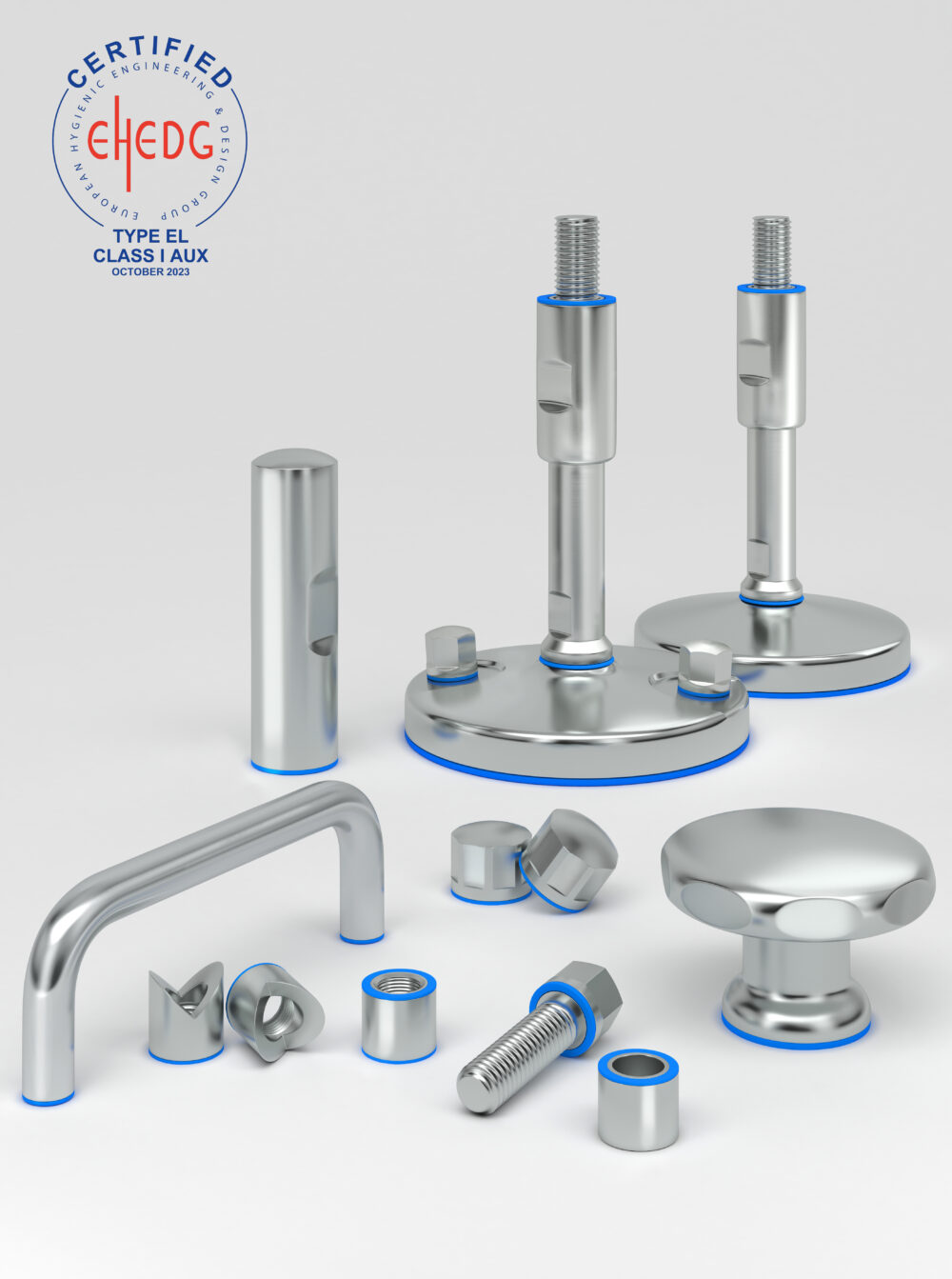
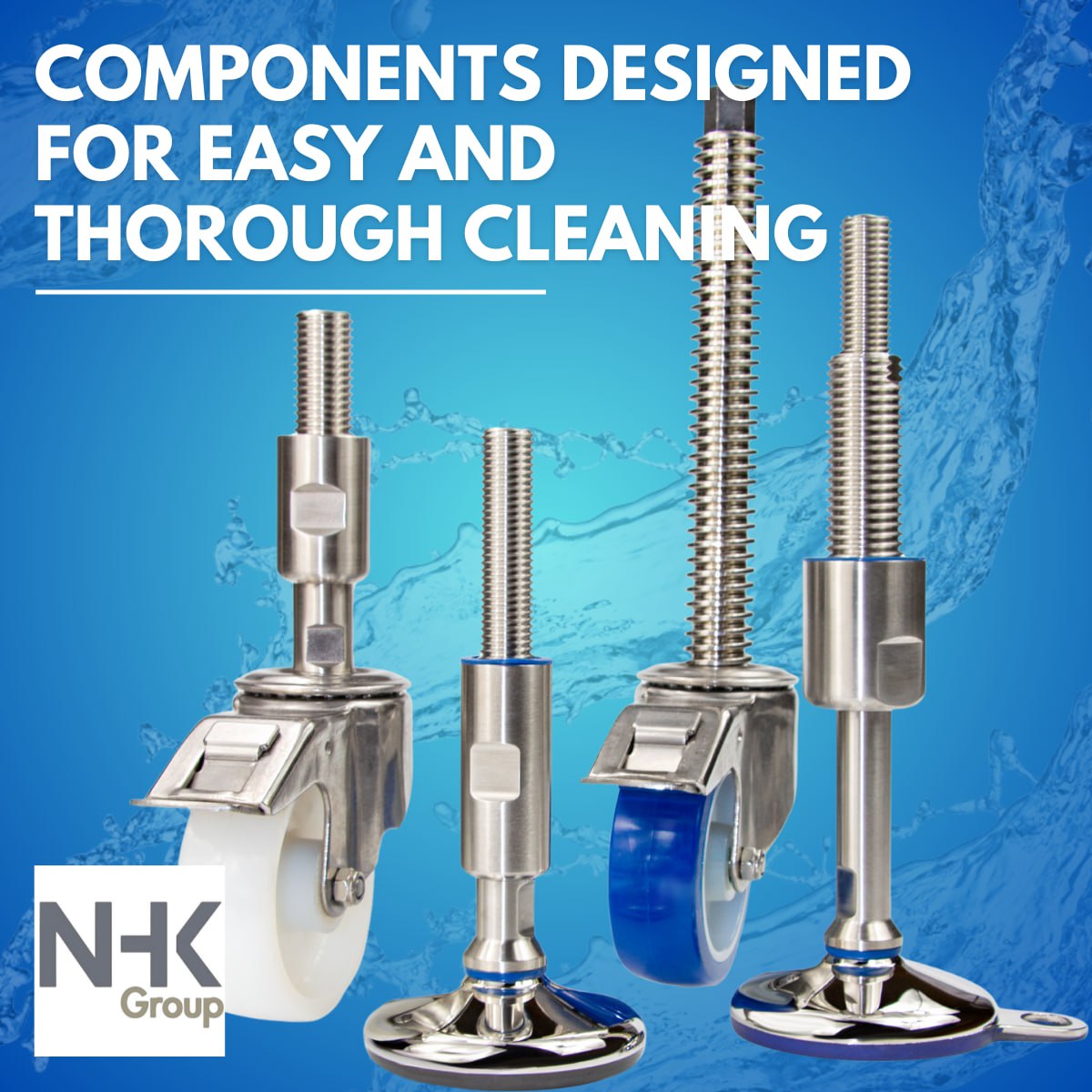
| Exposed threads on feet and fasteners | Soil packs into threads; hard to verify clean | Sealed levelling feet, hygienic bolts |
| Horizontal flat surfaces | Water and soil pool | Sloped surfaces, round or angled profiles |
| Rough surfaces | Soil adheres; more chemical and time | Smooth finish; EHEDG guidance of Ra ≤ 0.8 µm for product-contact surfaces |
| Poor access | Disassembly needed for each cleaning | Open design, tool-free removal |
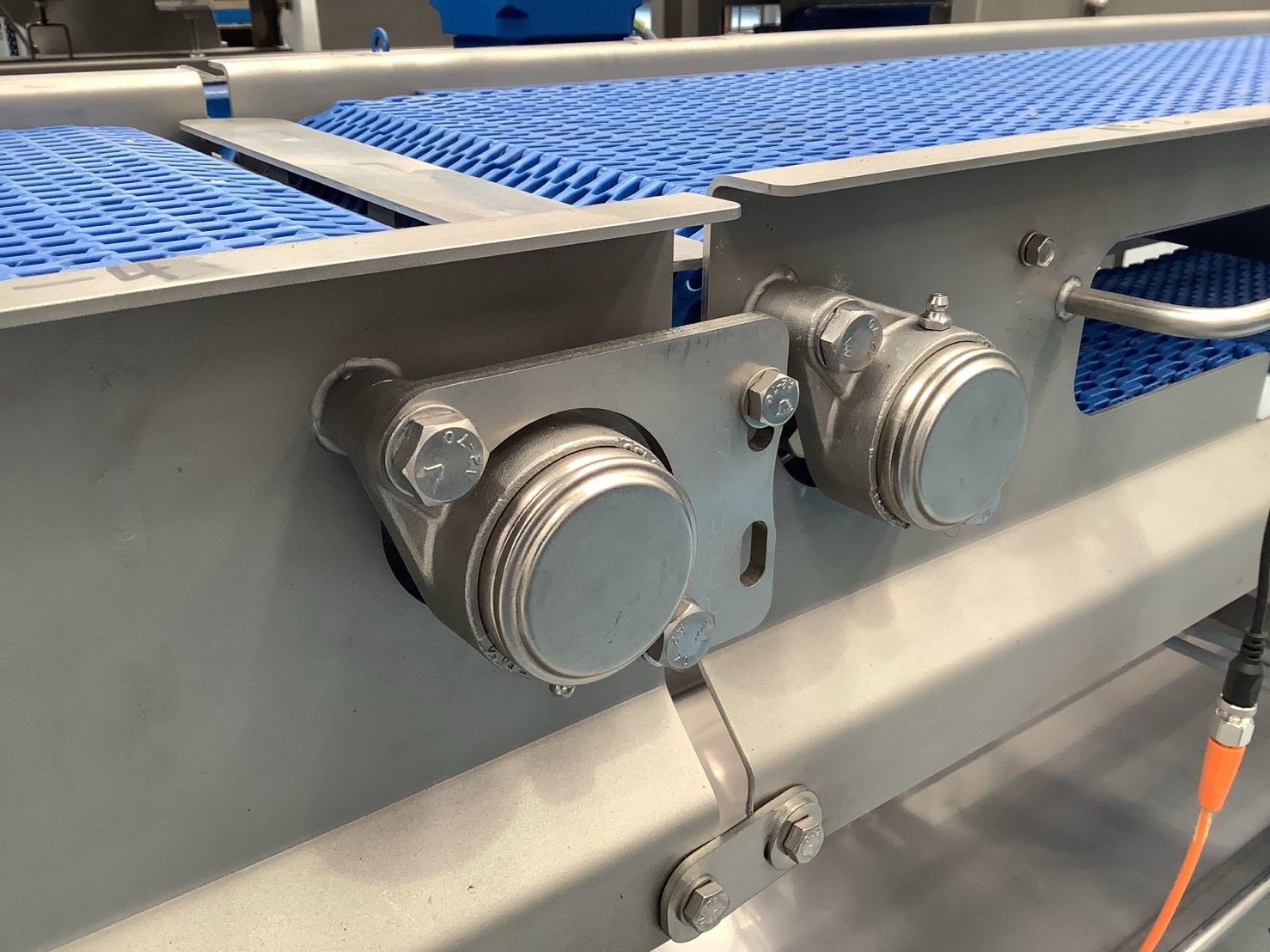
| Non-washdown bearings | Cleaners avoid them or they fail after cleaning | Sealed stainless bearing units suited to washdown |
Harbourage points – places where microbes survive cleaning – are usually found at exactly these features.
How does cleaning method change the picture?
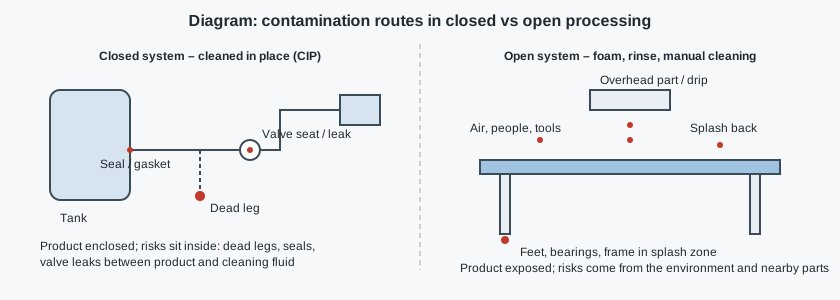
- CIP (cleaning in place): closed systems cleaned by circulating solutions; cost is mostly water, chemicals, energy and time. Internal geometry and drainability matter most.
- COP (cleaning out of place): parts removed and cleaned in a tank or washer; disassembly time dominates.
- Open-plant foam and washdown: typical for meat, poultry and many conveyors; labour dominates, and exterior design – frames, feet, bearings, fasteners – drives time.
Allergen changeover, where lines are cleaned between products with different allergens, multiplies cleaning frequency and makes design even more important.
Worked example
Example – assumptions stated, not data from a real plant.
Two conveyors are compared for a washdown area cleaned once per day, 300 days per year, over 10 years. Machine A has open frames, sealed feet and washdown bearing units; machine B has tubular frames with blind ends, feet with exposed threads and standard bearings.
Assume the plant times similar machines and finds that machine B needs longer per cleaning because of manual brushing at threads and joints. Fill in:
- Extra minutes per cleaning for B × crew size × labour rate.
- Extra water and detergent per cleaning × unit cost.
- Extra production minutes lost × cost per minute of stop.
- Multiply the sum by 3,000 cleanings (300 × 10).
- Compare with the purchase price difference.
If the lifetime extra cleaning cost of B exceeds the price difference, A has the lower TCO even though it costs more to buy. The old version of this page quoted case studies with percentage savings; those figures were not verifiable and are not used here – use your own measurements.
What to ask suppliers in the RFQ
- Intended cleaning method and compatible detergents, concentrations and temperatures
- Hygienic design basis: EN 1672-2, EN ISO 14159, designed to EHEDG guidelines, or a certificate for a specific design (EHEDG certification and 3-A Symbol authorisation are voluntary and design-specific)
- Surface finish of product-contact surfaces
- Materials (for example AISI 304 vs 316L where chlorides cause chloride pitting) and elastomer compounds (EPDM, FKM, VMQ)
- Declaration of compliance for food-contact materials under EC 1935/2004
- Access and disassembly for cleaning, and expected cleaning time if the supplier has measured it
Failure modes
- Optimising purchase price only: cleaning cost appears later in another budget.
- No baseline: savings cannot be shown, so the next investment is harder to justify.
- Hygienic machine, unhygienic add-ons: standard feet, fasteners or bearings fitted afterwards reintroduce crevices.
- Wrong chemicals for the materials: corrosion or seal swelling creates new harbourage points.
Where to start in the NHK range
For the components that most often add cleaning time on otherwise hygienic machines, the relevant NHK line is hygienic machinery components in stainless steel; other components are in the full NHK product line. Take ratings and certificates from the individual product pages, and send application questions to NHK contact.