Reducing water and cleaning detergent usage means removing soil from equipment with fewer litres of water, less chemical and fewer repeat cleans – without weakening hygiene results. In food, dairy, beverage, meat and pharmaceutical plants, sanitation is one of the largest uses of water and chemicals. How much a clean consumes depends largely on how the machine is built: components either release soil quickly or hold it where it must be flushed out repeatedly.
This page focuses on the cleaning cycle itself. For a lifecycle view of resources, see ensure sustainable development and growth.
The equipment sanitation method and rinse checks provide the broader process framework; actual chemical labeling and the approved procedure govern the rinse stages.
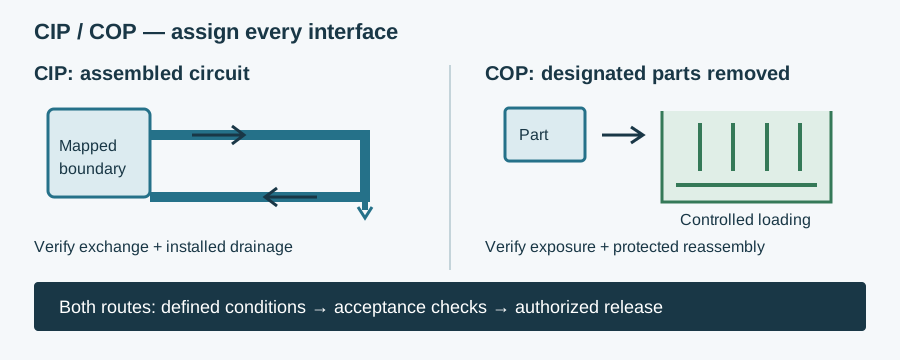
Use the cleaning-boundary comparison for circuits and removed parts before comparing resource use across different cleaning arrangements.
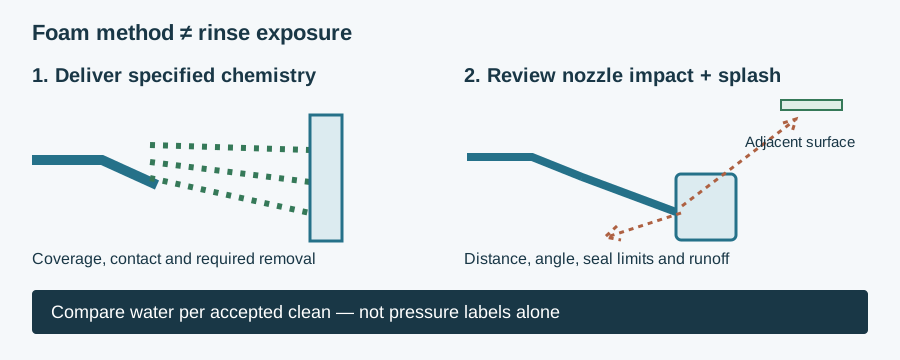
For open washdown, the complete-cycle water and rinse-method checks connect measurement with component exposure and acceptance.
Where water and detergent go in a cleaning cycle
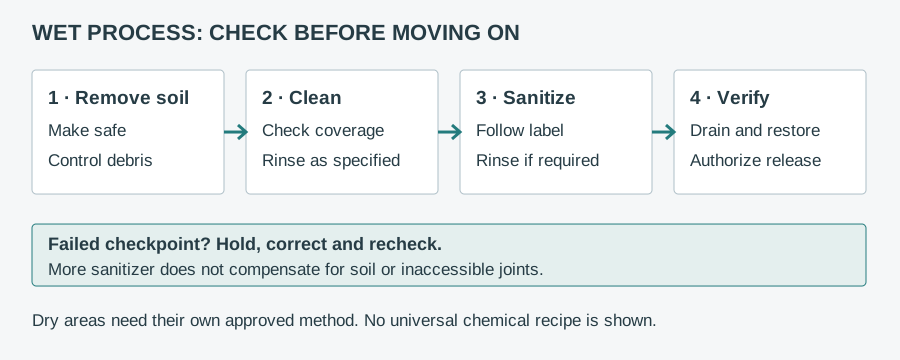
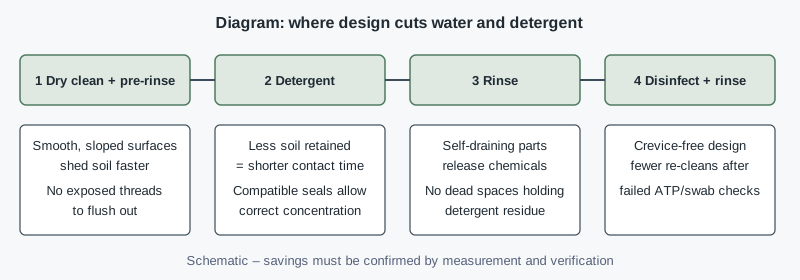
A typical wet clean of open equipment follows four steps: dry cleaning and pre-rinse, detergent application (often foam), rinse, and disinfection with a final rinse. Closed systems use CIP (clean-in-place: circulating cleaning solutions without dismantling); removable parts go through COP (clean-out-of-place: cleaning in a wash tank or cabinet).
Consumption rises when:
- soil sticks in crevices (narrow gaps) and exposed threads, so operators spray longer;
- dead spaces (pockets where liquid stands) hold detergent, so rinsing takes longer;
- horizontal surfaces do not drain, leaving pools that must be pushed off;
- verification fails and the area is cleaned again – the most expensive outcome in water, chemicals and time.
Hygienic design: why it matters for consumption
Hygienic design is the engineering and construction of equipment so that it prevents contamination and is easy to clean. The European Hygienic Engineering & Design Group (EHEDG) publishes guidelines and certifies specific equipment designs as cleanable; 3-A Sanitary Standards, Inc. (3-A SSI) develops sanitary standards, and a conforming design may carry the 3-A Symbol after a Third Party Verification. Both schemes are voluntary, widely recognised and focused on cleanability – not on water savings as such. The link is indirect: a design that cleans easily needs less to clean it.
Industries with stringent hygiene needs – food, dairy, beverage, bakery, confectionery, cosmetics, meat, fish and seafood, veterinary, chemical, medical and pharmaceutical – all benefit, but most where daily wet cleaning dominates.
Which component features reduce water and detergent
| Feature | Effect on cleaning | Resource effect | Watch out for |
|---|---|---|---|
| Sealed thread on levelling feet | No thread to flush out | Shorter rinse at floor level | Base seal must stay intact |
| Smooth surface, low Ra | Soil releases faster | Shorter detergent contact | EHEDG guidance: Ra ≤ 0.8 µm for product-contact surfaces |
| Self-draining, sloped surfaces | No standing liquid | Less rinse water | Correct levelling is needed to keep the slope |
| Sealed bearing units | No grease/water mix at housing gap | Fewer local re-cleans | Ingress rating must match cleaning method |
| Hygienic fasteners | No socket or thread crevices | Shorter spot cleaning | Correct torque and seal seating |
| Crevice-free enclosures | No hidden pockets | Fewer failed swabs | Gasket condition |
| Compatible elastomers (EPDM, FKM, VMQ) | Seals do not swell or crack | Avoids residue traps forming | Match to product fats and chemicals |
Surface roughness Ra is the average height of surface irregularities; smoother surfaces hold fewer bacteria and soil.
Sealed bearing units
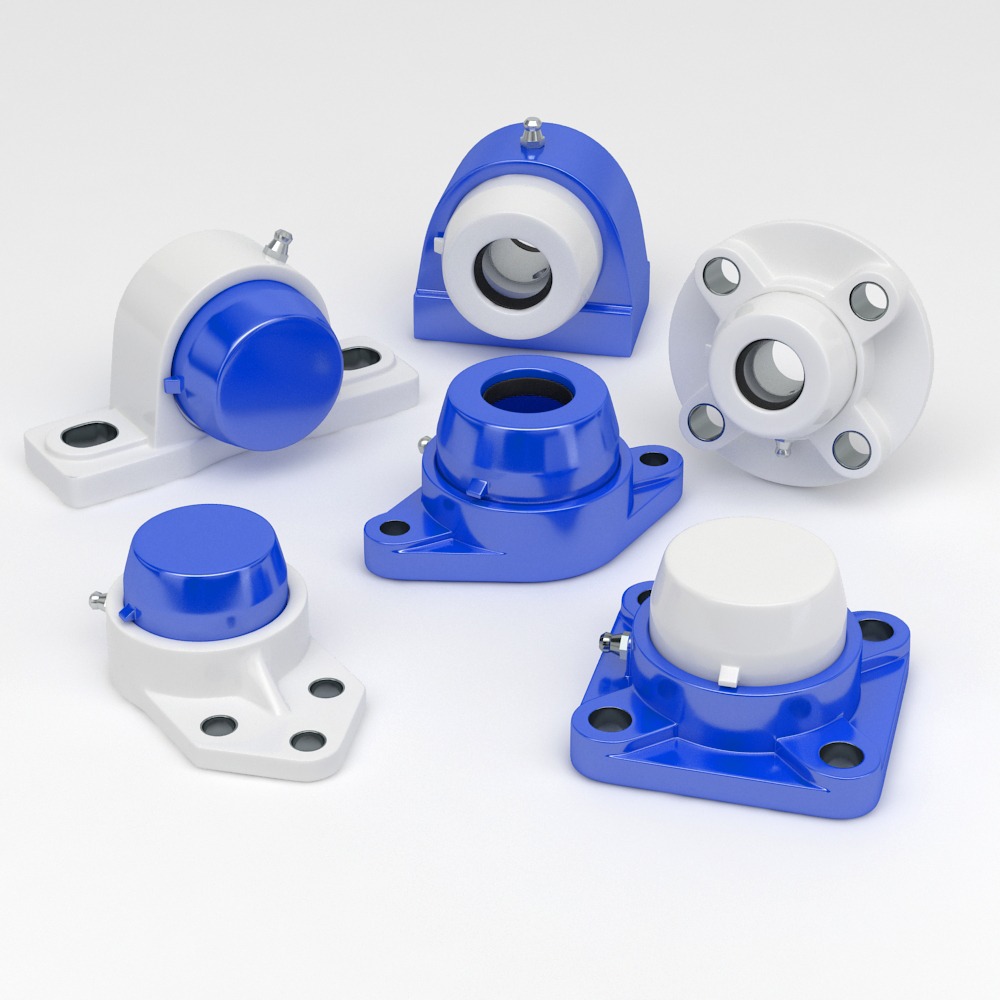
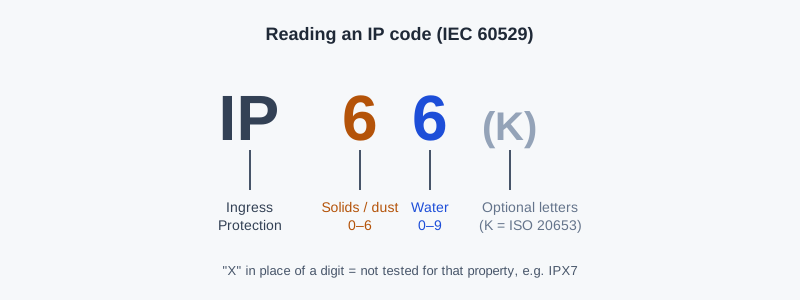
Bearings must be protected against moisture, dust and other contaminants. Sealed units prevent water ingress and keep grease inside, so there is no contaminated grease-water mix to clean away. IP67 (IEC 60529) means dust-tight and protected against temporary immersion – commonly tested at 1 m depth for 30 minutes. It is an immersion test, not a high-pressure washdown rating (that is IP69K in ISO 20653), and it says nothing about cleanability. See NHK's EHEDG and 3-A SSI certified components.
Sanitary enclosure parts
Sanitary enclosures house electrical components and stop them becoming a contamination source. Parts designed to 3-A principles use easy-to-clean, corrosion-resistant materials and minimise crevices where contaminants accumulate, reducing the frequency and intensity of cleaning. Their robustness also means a longer life and less waste.
Hygienic adjustable leveling feet
Adjustable leveling feet keep machinery stable and aligned. Hygienic designs in stainless steel use smooth surfaces, rounded edges and sealed threads to prevent build-up of dirt and bacteria. A correctly levelled machine also lets sloped surfaces drain – an often overlooked water saving. Where EHEDG certification is claimed, it applies to the specific foot design named on the certificate.
How to measure and reduce usage
- Baseline: fit a flow meter at the hose station or supply line and record litres, detergent volume and time per clean for each machine or zone.
- Walk-down: during cleaning, note where operators spray longest – threads, housings, gaps, pools.
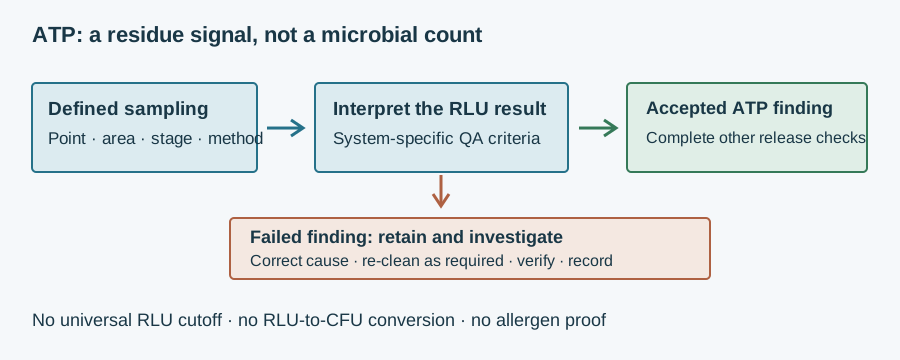
- Rank the hotspots by time spent and by failed ATP or swab results.
- Fix procedure first: dry clean before wetting, correct nozzle and pressure, correct detergent concentration and contact time.
- Fix design: replace hotspot components with sealed, crevice-free, self-draining designs.
- Re-measure over several weeks, together with verification results.
- Standardise the new procedure and update the cleaning instructions.
Never cut detergent below the supplier's recommended concentration to save chemicals – failed cleans cost more than they save.
Example
Assumptions (illustrative only; replace with your measured values): a packing machine is cleaned once per shift. The baseline shows 400 litres and 2 litres of detergent concentrate per clean, with frequent re-cleaning around threaded feet and open bearing housings.
- Changes: sealed-thread levelling feet, sealed stainless bearing units, re-levelling so the frame drains, and a dry-clean step before wetting.
- Calculation: saving per year = (baseline litres per clean − new litres per clean) × cleans per year. With 3 cleans per day and 250 production days, every 50 litres saved per clean equals 37,500 litres per year; detergent follows the same formula.
- Verification: ATP results must stay at or below the baseline; otherwise the saving does not count.
Benefits
- Hygiene and safety: fewer harbourage points lower contamination risk.
- Lower environmental impact: less water, chemicals and effluent, especially in water-intensive food and beverage processing.
- Cost: lower water, detergent and effluent costs; durable parts are replaced less often.
- Efficiency: shorter cleaning time returns production time.
For the energy side of the same effect, see EHEDG certified design and energy savings. NHK's article: reduce water and cleaning detergent usage.
To put cleaning cost into the total cost of ownership when comparing machines, see the importance of hygienic optimization.