Open vs closed processing systems is the difference between product that is exposed to the room – on conveyors, slicers, tables and fillers – and product that stays enclosed in pipes, tanks, pumps and valves from inlet to outlet. Each has its own contamination routes and cleaning method, and therefore different requirements for components and hygienic zones. This guide compares the two for food plants and shows what each means for feet, bearings, fasteners and seals. It builds on the core principles of hygienic design in food processing machinery.
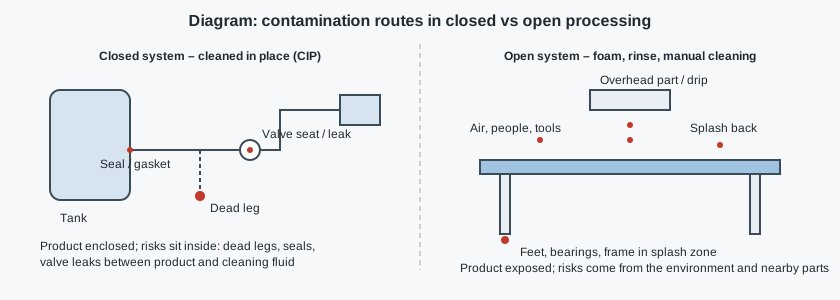 contamination routes in closed vs open processing. Schematic, not a product test report.
Open and closed systems compared
| Aspect | Closed processing system | Open processing system |
|---|---|---|
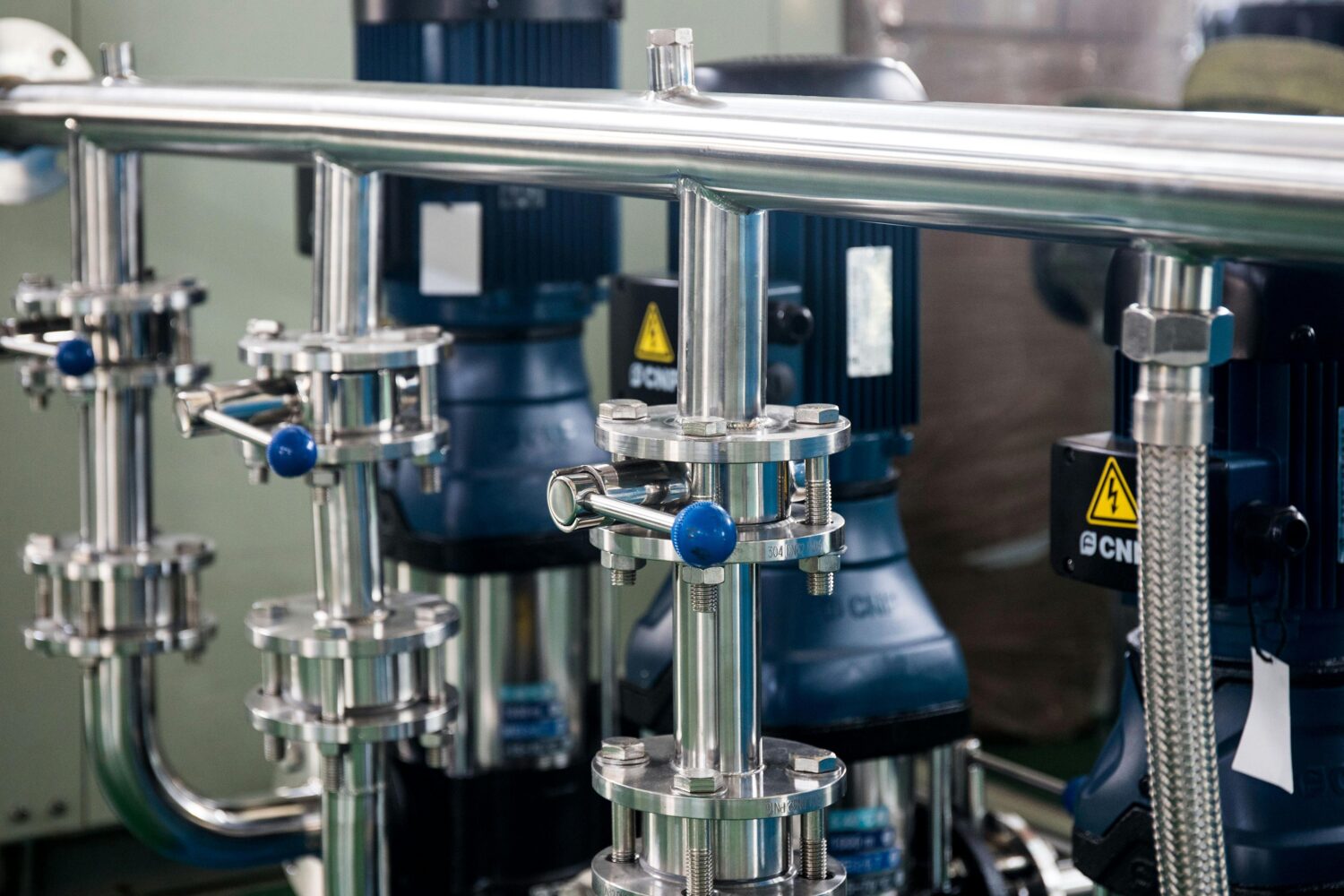
| Product | Enclosed in pipes, tanks, pumps, valves | Exposed on belts, tables, cutting and filling equipment |
| Typical equipment | Dairy and beverage lines, sauces, liquid egg, CIP-able tanks | Meat and poultry cutting, bakery make-up, packaging, fresh produce |
| Main contamination routes | Dead legs, seals and gaskets, valve leaks, biofilm inside the system | Air, people, tools, splash, condensation, drips from overhead parts |
| Cleaning | Cleaning in place (CIP) with validated flow, chemicals, temperature and time | Foam and rinse, manual cleaning, cleaning out of place (COP) |
| Verification | Flow and conductivity records, inspection of opened points, swabs | Visual inspection, ATP and microbiological swabs on surfaces |
| Where components matter | Valves, pumps, seals, instrumentation; supports and fasteners outside | Every part in or near the product path: bearings, guides, feet, bolts |
CIP (cleaning in place) means circulating cleaning solutions through the closed system without dismantling it. COP (cleaning out of place) means removing parts and washing them in a separate washer or tank. Dead legs are branches where liquid stands and cleaning flow does not reach.
Send your application data and get a component recommendation for open or closed lines
Contamination routes in closed systems
Use the circuit drainage and removable-part acceptance checks to distinguish product enclosure from demonstrated cleaning access.
A closed system protects the product from the room, so the risks move inside:
- Dead legs and blind ends where cleaning flow is too low to remove soil.
- Seals and gaskets that are over-compressed, extruded into the product path, or chemically attacked – creating gaps where residues and microbes stay.
- Valve leaks between product and cleaning solution, especially on valves that separate product from a line under CIP.
- Biofilm – a layer of microbes protected by their own matrix – in places where CIP does not reach full flow or temperature.
- Poor drainability: pipes and tanks that do not drain fully leave water that supports growth between production runs.
Closed systems are still surrounded by open surfaces. Tank legs, skid frames, pump bases and fasteners on the outside are cleaned by foam and rinse, and they sit in the same room as open operations. Treat them as splash-zone parts.
Contamination routes in open systems
In open processing the product is exposed, so the environment and nearby components become the risk:
- Splash back from floors and drains onto equipment and product during cleaning or production.
- Drips and condensation from overhead structures, cable trays and cold surfaces.
- People and tools moving between zones.
- Components next to the product path – bearing units, side-guide brackets, bolts, feet – with crevices, exposed threads or open housings where residues collect.
The product-contact zone in open equipment is large and directly exposed; the splash zone around it – everything reached by product splash or cleaning water – is larger still. Most component choices in open systems are splash-zone decisions.
What it means for component choice
| Component | Closed system | Open system |
|---|---|---|
| Seals and gaskets | Flush, defined compression; elastomer compatible with product, CIP chemicals and temperature (EPDM, FKM, VMQ by duty) | Compatible with foam chemicals; no gaps at guards and covers |
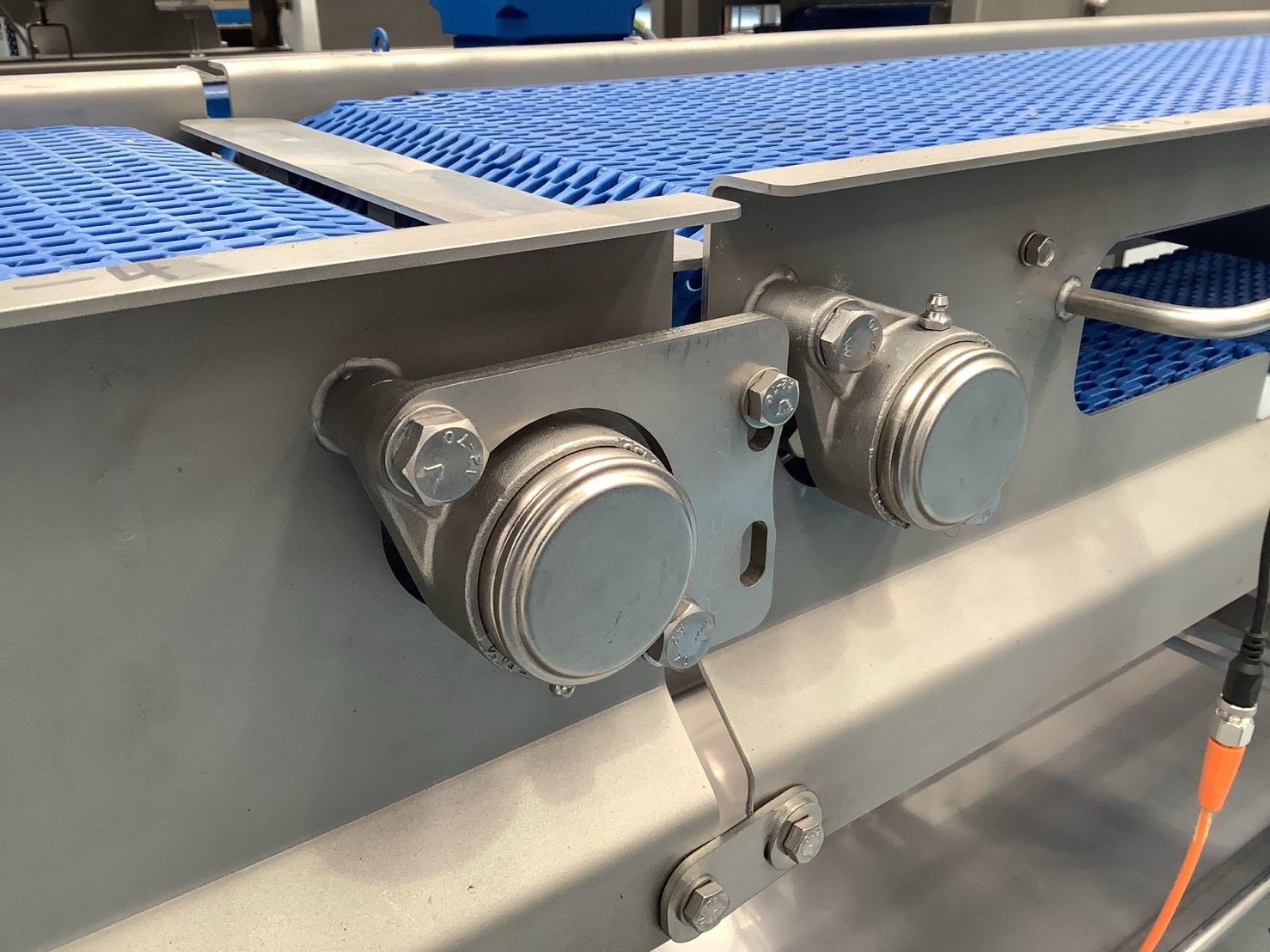
| Bearing units | Usually outside the product path (pumps, agitators); protect from external washdown | On conveyors and machines next to product: sealed stainless or hygienic units, closed covers, H1 grease |
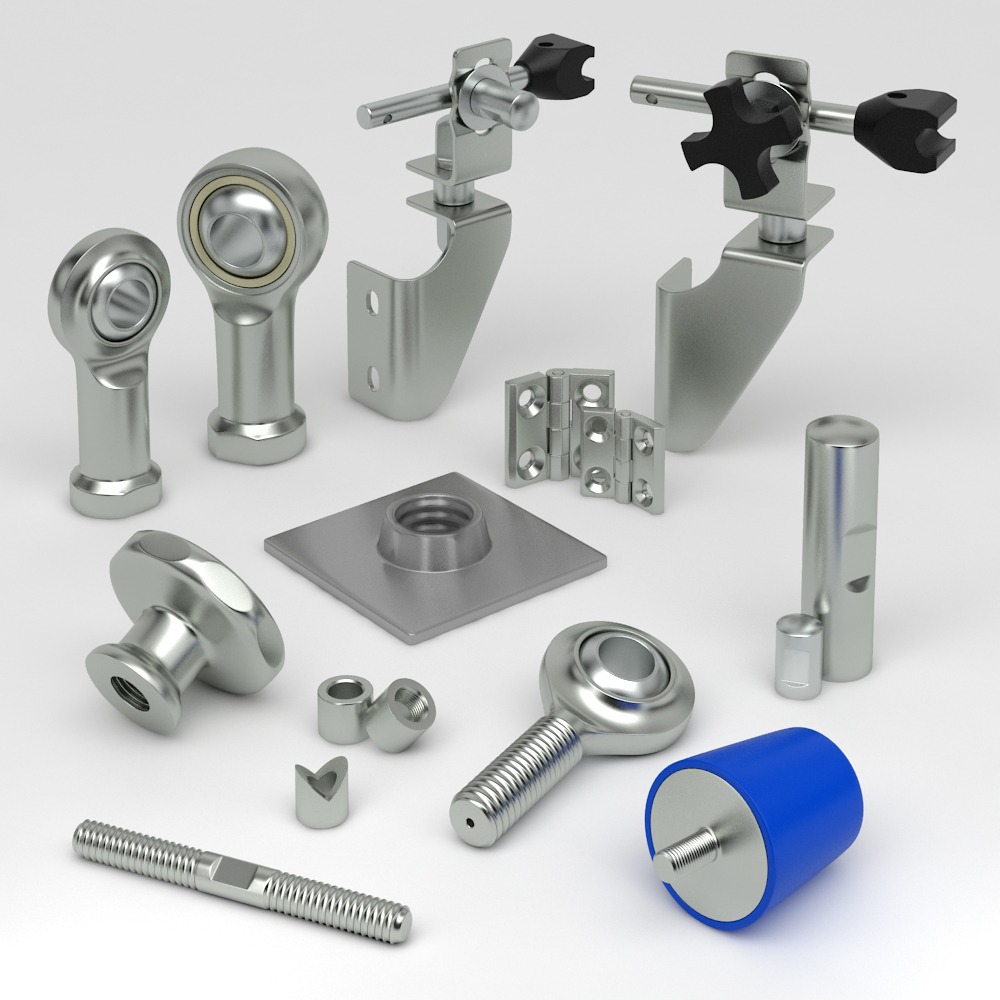
| Fasteners | Outside: hygienic bolts on skids and supports in wet areas | Close to product: hygienic bolts without recesses; fewer fasteners in the splash zone |
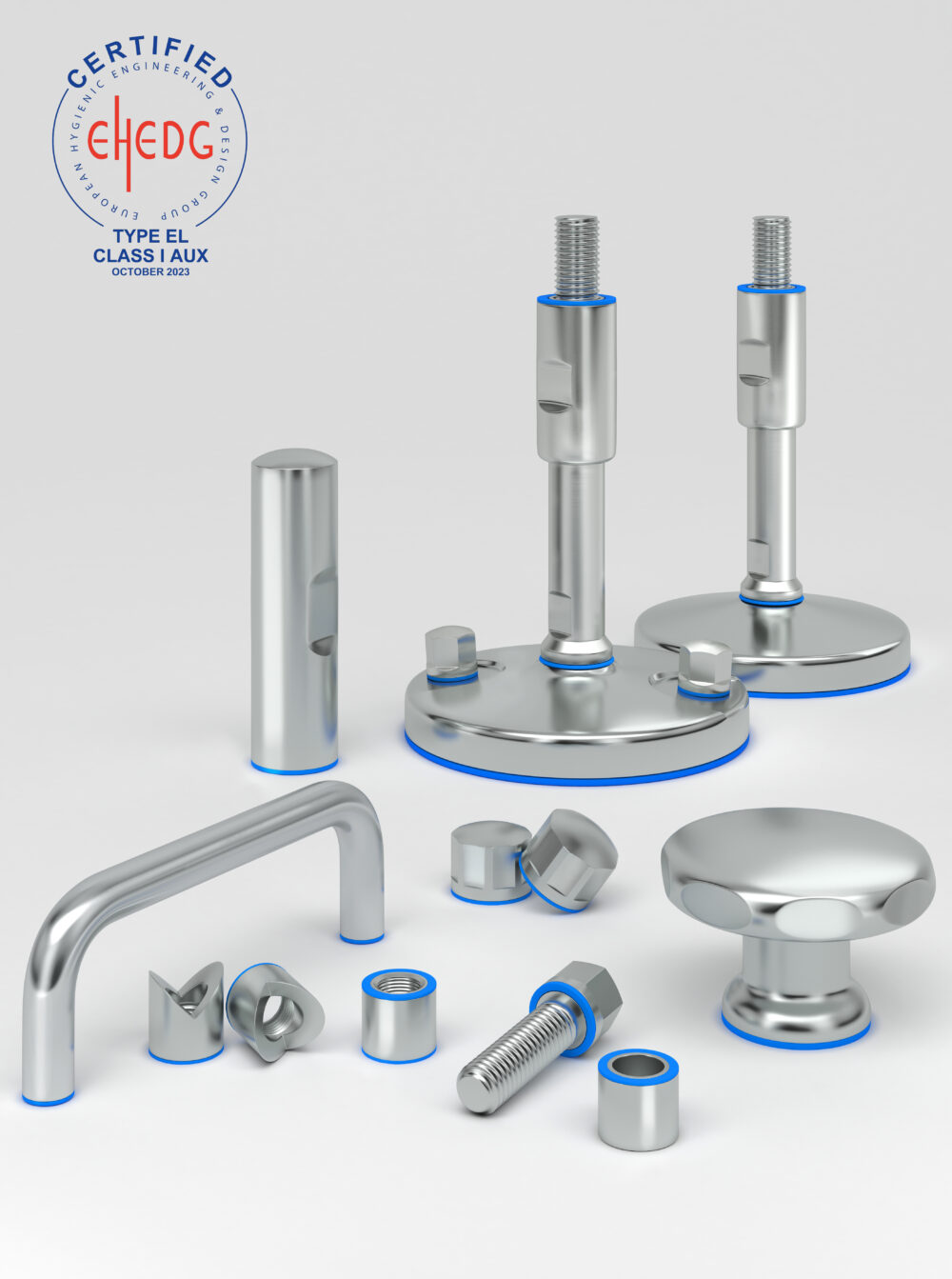
| Feet | Under tanks and skids: enclosed thread, sealed base, sized for heavy static loads | Under conveyors and machines: enclosed thread; swivel base for sloped floors |
| Surfaces | Internal product surfaces smooth and drainable; EHEDG guidance gives Ra ≤ 0.8 µm for product-contact surfaces | Open surfaces sloped and self-draining; no ledges |
| Materials | 316L common in contact with aggressive product or CIP; 304 for supports | 304 baseline; 316L near brine, seawater or chlorinated cleaners |
NHK's hygienic machinery components in stainless steel category is an enquiry destination; check the documentation of each proposed component against the application's requirements. Which catalogue parts can stay and which need hygienic substitutes is set out in standard parts in hygienic design.
Choosing between open and closed processing
The product usually decides: liquids and pumpable products go closed; solid pieces, cut products and packaged goods are processed open. Where there is a choice – for example enclosing a conveyor, or moving from batch tanks to an inline system – weigh:
- Product sensitivity: ready-to-eat and high-care products benefit most from enclosure.
- Cleaning capability: closed systems need CIP design, validation and records; open systems need cleaning staff, time and access.
- Changeover frequency: frequent product or allergen changeovers favour designs that are quick to dismantle and inspect.
- Inspection: closed systems are harder to inspect visually; plan inspection points.
- Hybrid areas: many lines are closed upstream and open at filling or packing – the transition is where most hygiene findings occur.
Example
Assumed situation, for method only: a soup plant cooks in closed kettles, pumps through a closed line and fills open pots on a conveyor. Review result: the closed part needs attention to valve seals, a dead leg at a removed sensor port and drainability of the transfer line. Kettle legs and pump skids outside the closed system get hygienic levelling feet and hygienic bolts because they are foamed daily. At the open filler, the conveyor's open-end bearings are replaced by sealed stainless units with closed covers, and an overhead cable tray above the filling point is moved to stop drips. The transition point – the filler nozzle area – gets the most frequent swab sampling.
Common mistakes
- Treating everything outside a closed system as out of hygiene scope.
- Leaving a dead leg after removing a sensor or branch.
- Using one elastomer for every seal regardless of product fat and CIP chemicals.
- Mounting cable trays, lights or drives above open product.
- Applying CIP thinking to open equipment – open equipment needs access and dismantling, not just flow.
What EHEDG certification does and does not cover for closed and open equipment is explained in the EHEDG certification guide; the layout side is covered in hygienic design in factory layouts.
For a machine-builder improvement programme, use how to optimise machines hygienically.
What to send for a recommendation
Before asking for certification evidence, use the certificate checks for the selected line components.
- Line description: which parts are closed, which open
- Cleaning method for each part: CIP, foam and rinse, COP
- Components to review: seals, bearings, feet, fasteners – sizes and loads
- Product type (fat, acid, salt) and chemicals used
- Material grade and any certificate needed (EHEDG class, 3-A)
- Quantities and delivery country
Send these details to NHK
An NHK technician suggests suitable components for the closed and open parts of the line and sends a quote.