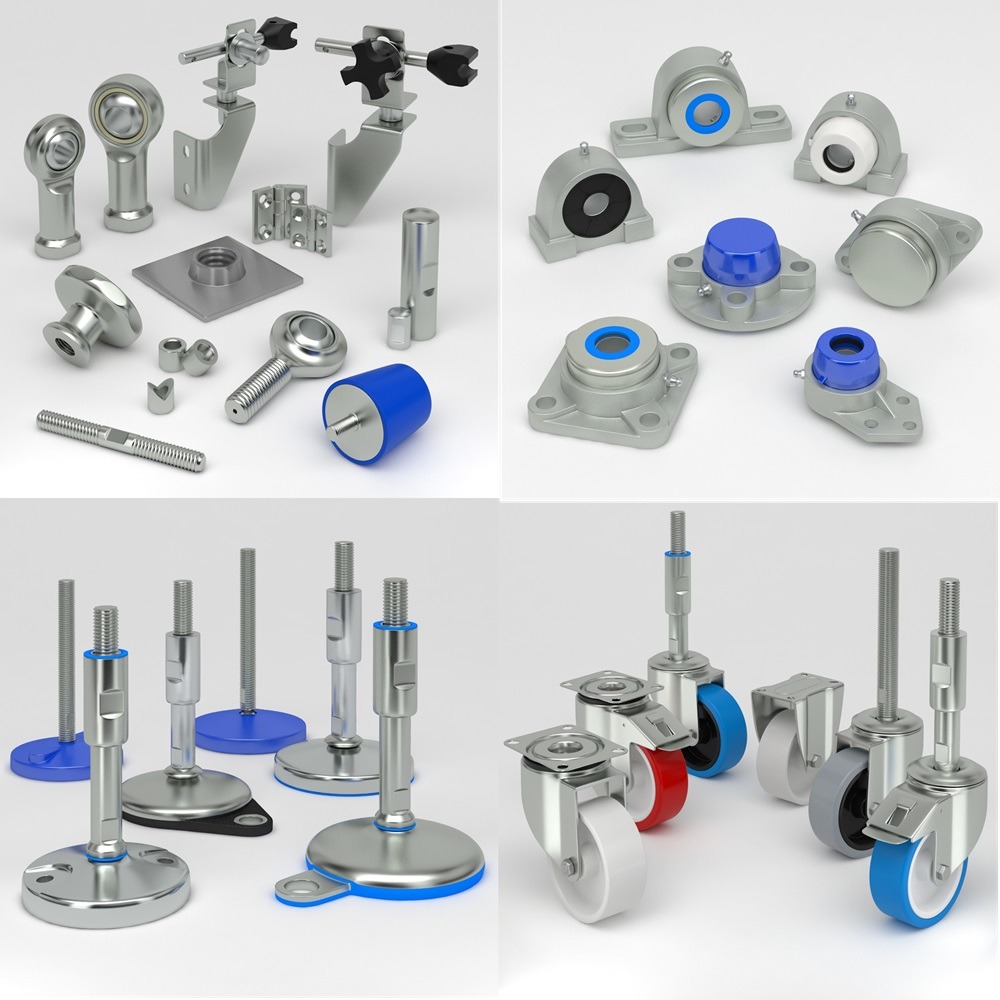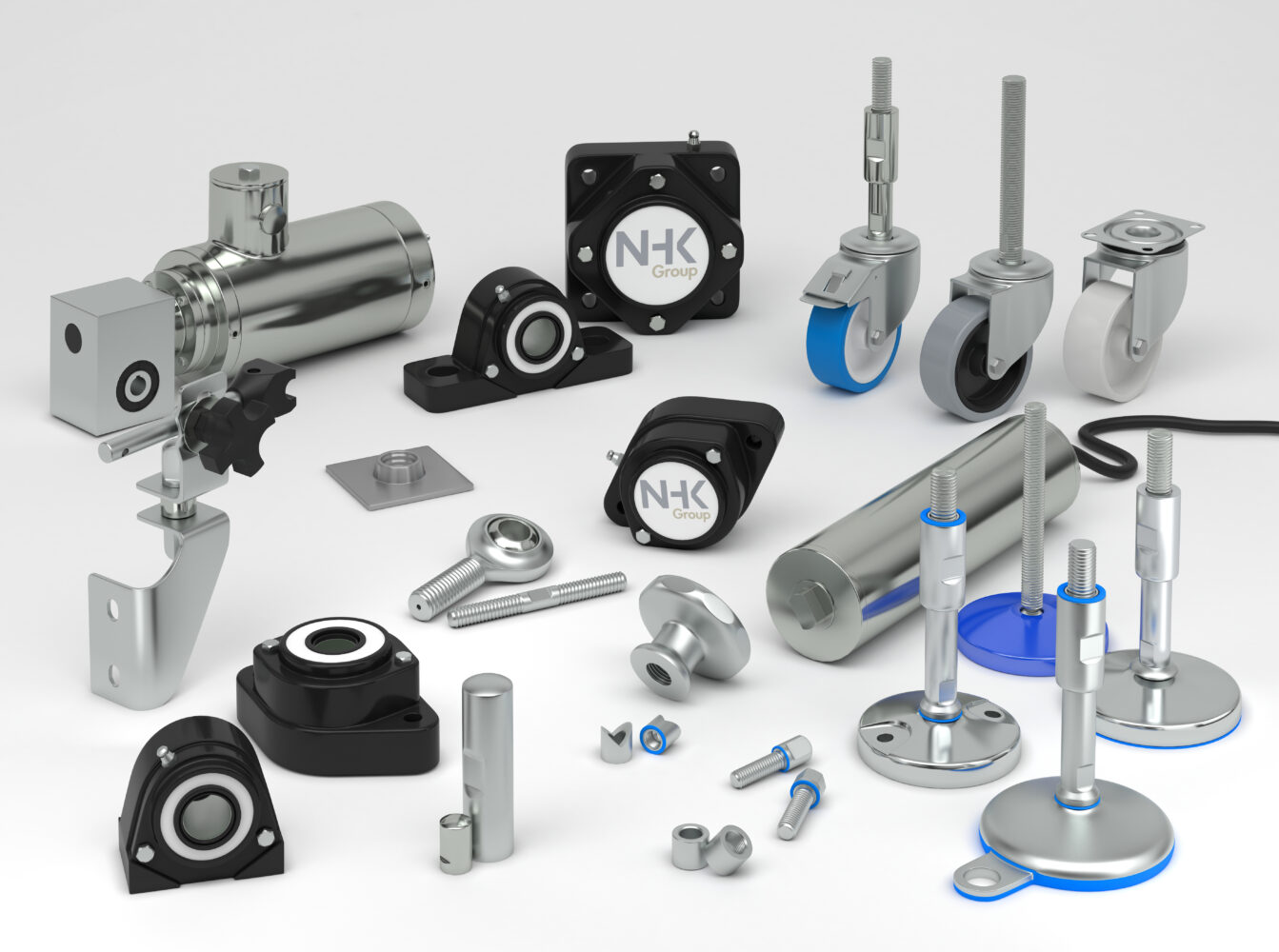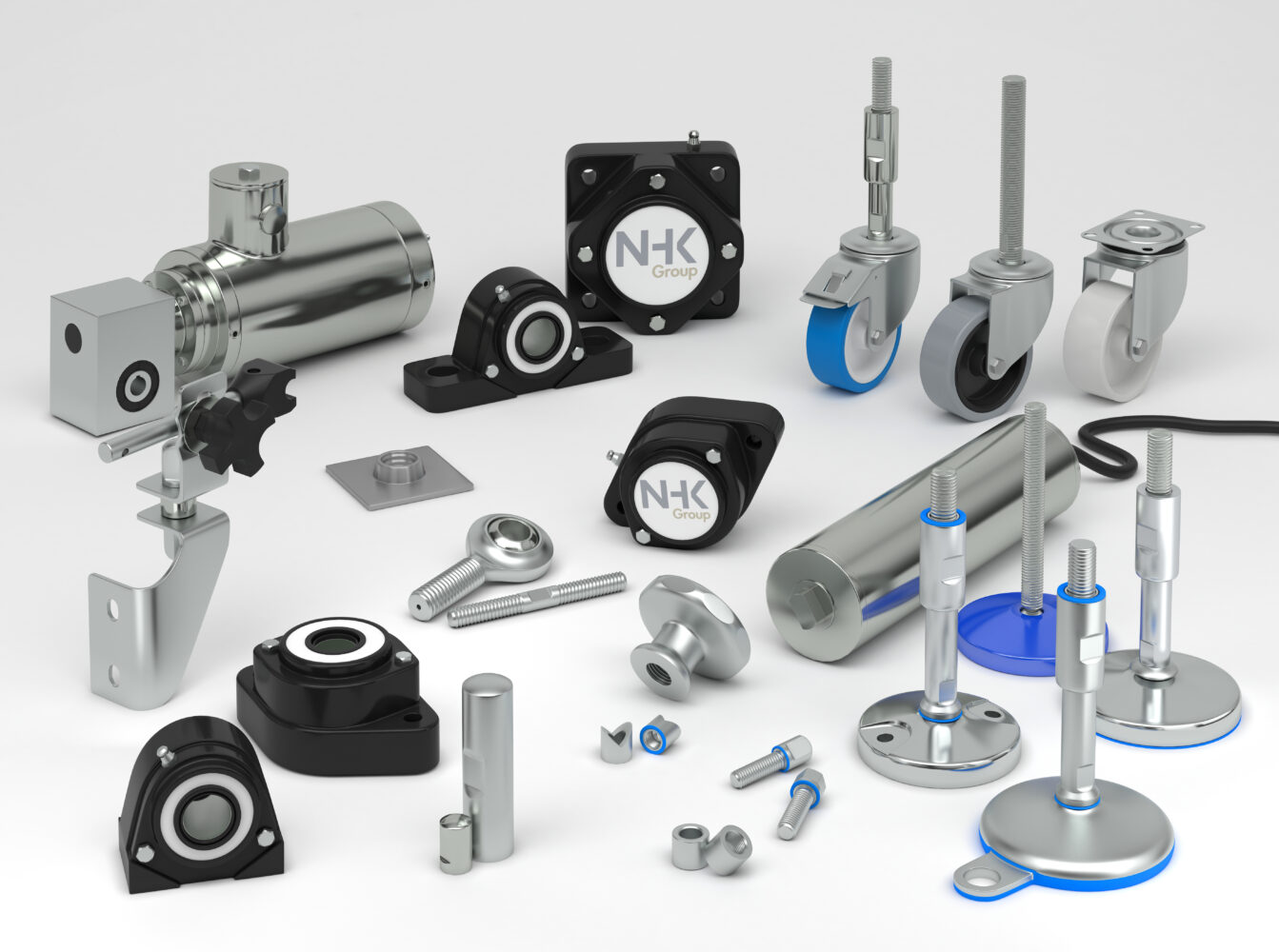
Hygienic machine parts are components – feet, castors, bearing units, fasteners, guides, drives and seals – designed to be cleaned completely, without crevices, exposed threads or corroding surfaces. For producers of food, beverages, pharmaceuticals and cosmetics, their strategic importance is less about any single part than about when they are decided: when buying new processing systems or upgrading an existing plant. This guide covers those decision points and what to write down at each.
Why the decision is strategic
Hygienic machine parts affect four things a producer competes on:
- Compliance and product safety: regulators such as the FDA in the US, and EU legislation supported by the European Food Safety Authority (EFSA)'s scientific advice, require safe food-contact materials and hygienically designed equipment. Contamination leads to recalls, legal issues and damaged reputation.
- Operational efficiency: parts that are easier to clean need less sanitation downtime, so lines run longer.
- Product quality: lower contamination risk protects product quality and shelf life.
- Flexibility: lines that can be cleaned reliably handle more products, allergen changeovers (cleaning between products with different allergens) and future requirements.
These effects last as long as the machine – often decades. That is why the moment of decision matters more than the part.
Decision points in the equipment life cycle
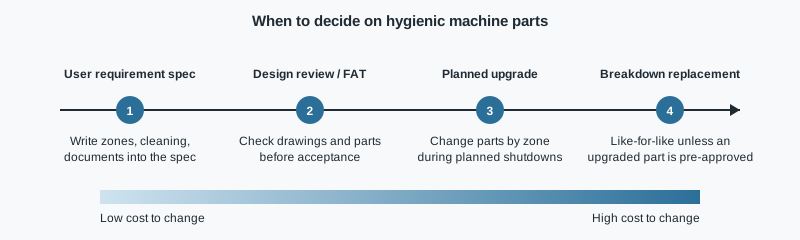
| Decision point | What you can influence | Cost of change | Typical mistake |
|---|---|---|---|
| 1. User requirement specification (URS) | All parts, materials, documents | Lowest | Writing only “hygienic design” |
| 2. Design review / factory acceptance test (FAT) | Parts still visible on drawings and machine | Moderate – variation orders | Not checking feet, fasteners, bearing covers |
| 3. Planned upgrade | Parts zone by zone in existing lines | Moderate – shutdown time | Upgrading randomly instead of by risk |
| 4. Breakdown replacement | Single parts under time pressure | Highest – only like-for-like is fast | Reintroducing exposed threads and open bearings |
New equipment: what to write in the specification
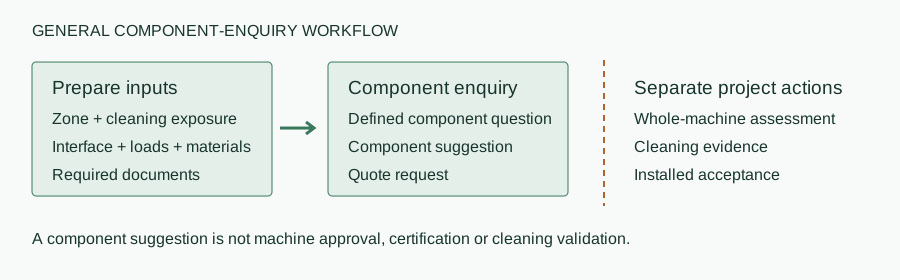
A URS that only says “hygienic design” leaves the choice of parts to the machine builder's standard catalogue. State instead:
- Zones: which parts are in the product-contact zone (touching food), the splash zone (reached by product or cleaning spray) and the non-contact zone.
- Cleaning method: dry, foam, high-pressure washdown, CIP (cleaning in place) or COP (cleaning out of place), plus chemicals and temperatures.
- Materials: stainless grade (304 or 316/316L where chlorides are present); food-contact plastics and elastomers with a declaration of compliance to EC 1935/2004 (and EU 10/2011 for plastics).
- Design rules: no exposed threads, no crevices or dead spaces, self-draining surfaces; Ra ≤ 0.8 µm for product contact following EHEDG guidance.
- Bearing units: sealed, with closed covers in wet zones and food-grade (NSF H1) grease; IP test reports where an ingress rating is claimed – remembering IP67 is an immersion test, not a washdown rating.
- Documents: material certificates, declarations, IP reports, and EHEDG certificates or 3-A authorisations where you require them for named critical parts.
Engineering standards to reference include EN 1672-2 and EN ISO 14159. For the business case behind such investment decisions, see hygienic design: a strategic competitive advantage.
Design review and factory acceptance
At design review and FAT, check the parts machine builders most often substitute:
- Levelling feet with exposed threads instead of sealed hygienic feet.
- Open bearing covers or painted cast-iron units in splash zones.
- Standard hex bolts with crevices in product-contact areas.
- Plastic parts without a food-contact declaration.
Any deviation found here is still a drawing change; found after installation, it becomes a retrofit.
Existing lines: upgrade by zone, not by breakdown
For existing plants, a planned approach works better than waiting for failures:
- Inspect after cleaning and record residues, rust and grease leakage.
- Rank positions by zone and consequence: product contact first, then splash, then floor.
- Bundle upgrades into planned shutdowns.
- Pre-approve upgraded spare parts so the next breakdown replacement is the hygienic version, not like-for-like.
- Measure cleaning time and failures before and after.
A phased plant-level programme is described in the transitioning into a hygienically optimized production.
Example – assumptions stated, not a real case. A cosmetics producer orders a new filling line and, separately, keeps an older line running for five more years. For the new line, the URS lists zones, foam cleaning with an alkaline detergent, 316L in product contact, sealed feet and sealed stainless bearing units, and requests EHEDG certificates for feet and fasteners in the filling area. For the older line, the team pre-approves hygienic replacement feet and sealed bearing units as spares and upgrades the filling zone in the next planned shutdown, leaving the dry packing area unchanged.
Sustainability and future expansion
Easier cleaning reduces water, detergent and hot-water energy per cleaning cycle, and longer-lasting parts reduce replacements – benefits that should be measured per plant rather than assumed. Lines built with hygienic parts are also easier to adapt to new products, stricter customer audits or new markets, because the components do not have to be replaced first.
Conclusion
The strategic importance of hygienic machine parts lies in deciding them early and writing them down precisely. NHK lists its certified hygienic components and sealed units such as IP67 waterproof bearing units with spherical inserts for comparison against a specification.