Effective hygiene management is the system by which a plant plans, carries out, verifies and improves cleaning and sanitation so that equipment and products stay free from contamination. In food processing, pharmaceuticals, cosmetics and healthcare, it protects consumers and patients, keeps the operation compliant and avoids the financial, legal and reputational damage that follows contamination.
This page looks at hygiene management from the plant floor: how managers link protocols, people, verification – and the equipment itself. For the operator and design-error side, see 3-A sanitary design and human error.
Why hygiene needs active management
Public safety
Poor hygiene in food and pharmaceutical production can lead to contamination, infections and outbreaks. The consequences include recalls, financial losses, legal action and lost trust.
Regulatory compliance
Plants that produce consumables are bound by hygiene rules. In the EU, Regulation (EC) 852/2004 requires food businesses to apply procedures based on HACCP (Hazard Analysis and Critical Control Points). Pharmaceutical plants follow GMP (Good Manufacturing Practice). Audits check not only that the plant is clean, but that the system keeping it clean works.
The hygiene management cycle
Effective management treats hygiene as a cycle, not a schedule:
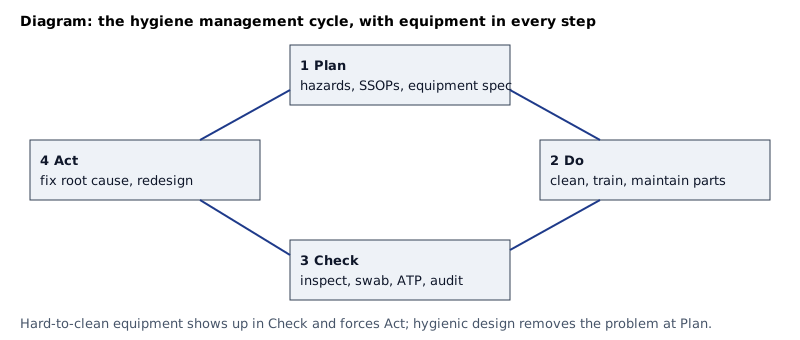
| Step | Management task | Equipment question |
|---|---|---|
| Plan | Hazard analysis, protocols, cleaning schedules, equipment specifications | Can this machine be cleaned to the required level? |
| Do | Cleaning, training, maintenance | Can operators reach and disassemble what must be cleaned? |
| Check | Inspection, ATP and swab tests, audits | Where does residue keep appearing? |
| Act | Root cause analysis, corrective action, redesign | Should a component be replaced with a hygienic design? |
Establishing clear protocols
Management is responsible for written protocols for each area and machine – usually as SSOPs (sanitation standard operating procedures). A complete protocol covers:
- Cleaning schedule: frequency per shift, per product changeover and per week.
- Method: CIP (cleaning in place, without disassembly), COP (cleaning out of place, parts removed and cleaned separately), foam or high-pressure washdown.
- Chemicals: product, concentration, temperature and contact time.
- Disassembly steps: which guards, covers and parts to remove.
- Allergen changeover: additional cleaning and verification between products with different allergens.
- Personal hygiene and waste disposal rules for the area.
- Inspection points and records.
Protocols must match the equipment. A protocol that requires removing a part that cannot be removed without tools in the time allowed will not be followed.
Training and education
For the cleaner's view of these problems, see challenges faced by cleaners in food production. Operators need to know not just the steps but the reasons: why residue in a crevice matters, why high-pressure water can drive soil into bearing seals, why chemical concentration matters. Train on the specific machines, include maintenance staff, and repeat training when equipment or chemicals change.
Monitoring and verification
Regular monitoring confirms that protocols are followed and work:
- Visual inspection after cleaning, with a checklist per machine.
- ATP bioluminescence tests, which detect organic residue within minutes.
- Microbiological and allergen swabs at defined sampling points.
- Audits of records and practice.
Place sampling points where residue is most likely: harbourage points (places where microorganisms can survive cleaning), such as crevices, seal edges, exposed threads, machine feet and the underside of frames.
Equipment as a management decision
Many hygiene problems that appear as "people problems" are equipment problems. If swabs keep failing at the same spot, the cause is often a design feature:
| Recurring finding | Likely equipment cause | Corrective option |
|---|---|---|
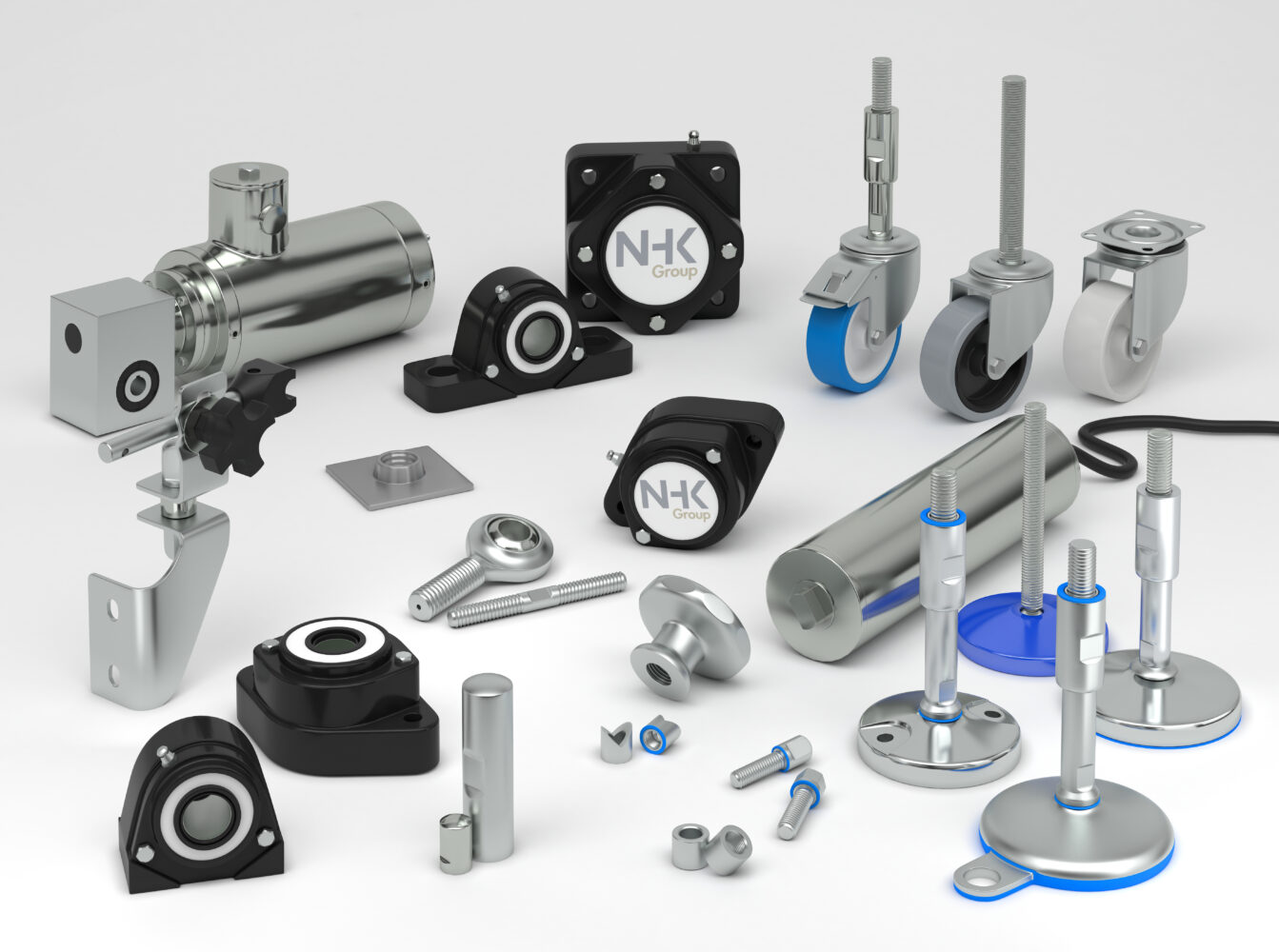
| Residue at machine feet | Exposed adjustment thread, gap at floor | Sealed hygienic feet with no exposed thread |
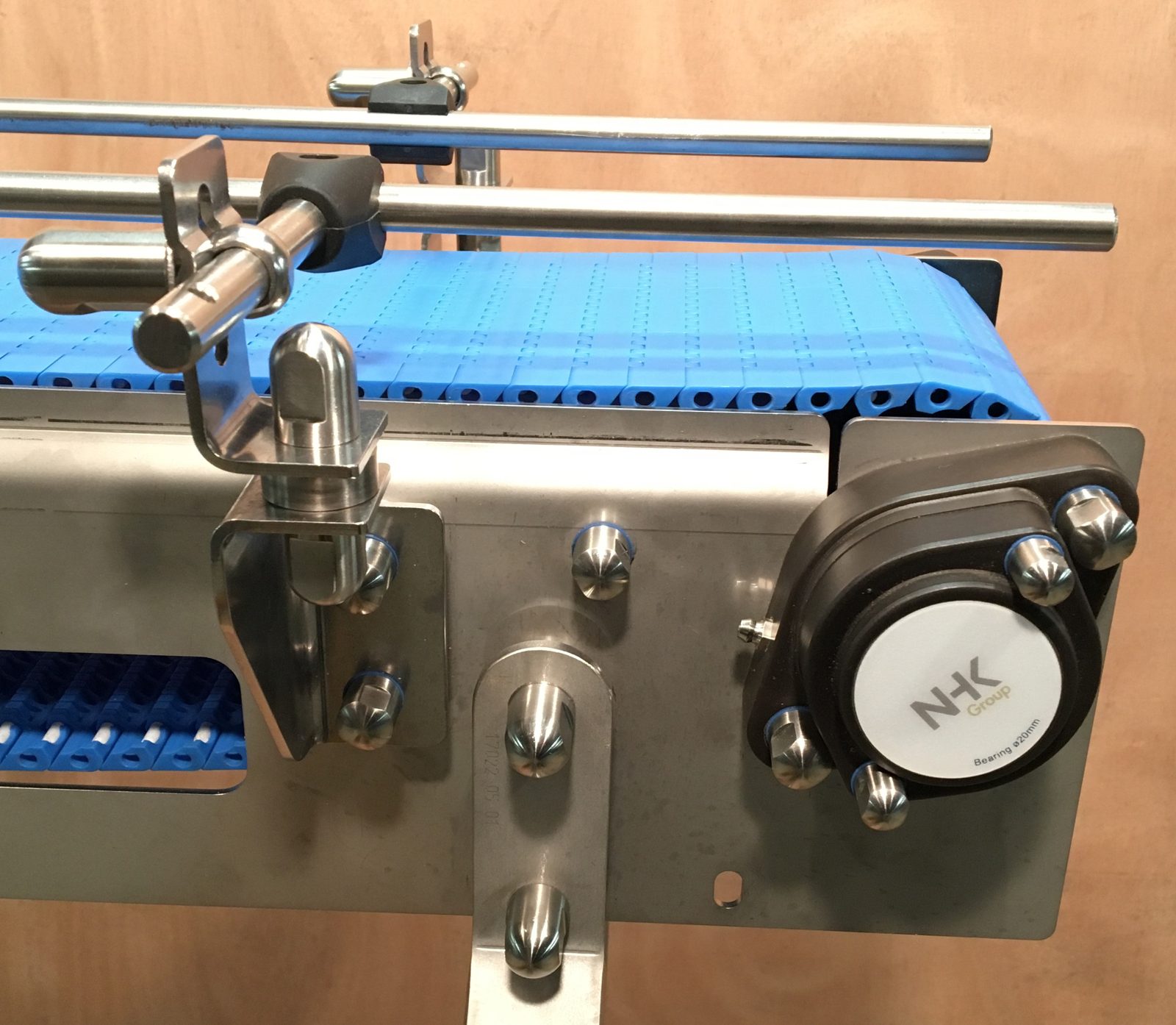
| Residue around fasteners | Hex heads and washers forming crevices | Hygienic bolts and domed nuts with integrated seals |
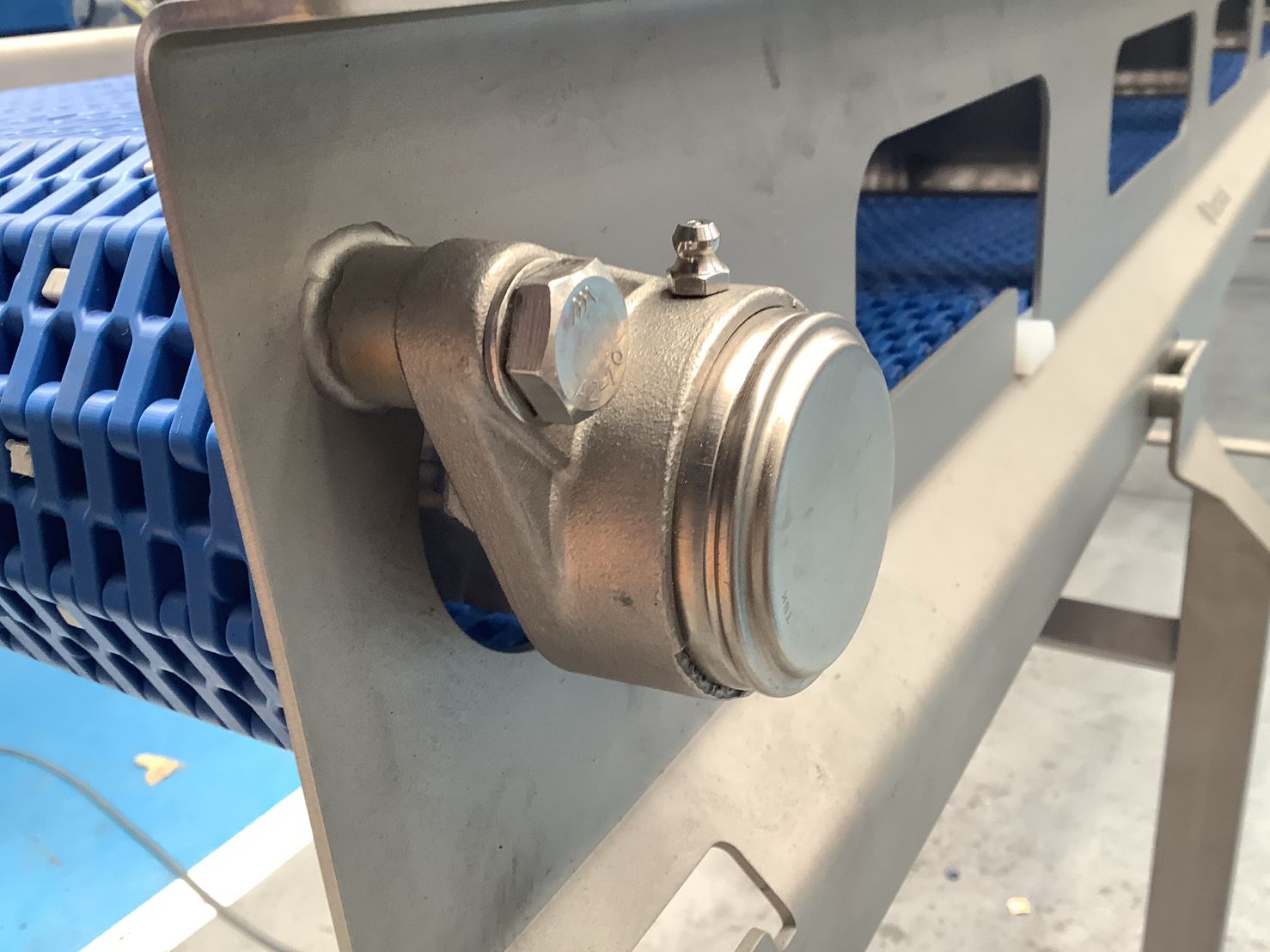
| Water or soil inside bearing housings | Unsuitable housing or worn seals for washdown | Sealed stainless or thermoplastic bearing units; seal replacement interval |
| Pooled water on frames | Flat, horizontal surfaces; dead spaces | Sloped, self-draining surfaces; open profiles |
| Corrosion spots | Chlorides, unsuitable grade, missing passivation | AISI 316L in chloride exposure; correct cleaning chemicals |
Explanations: dead spaces are areas where liquid stagnates; self-draining surfaces shed water; passivation restores the protective oxide layer on stainless steel; chloride pitting is local corrosion caused by chlorides in water and cleaners.
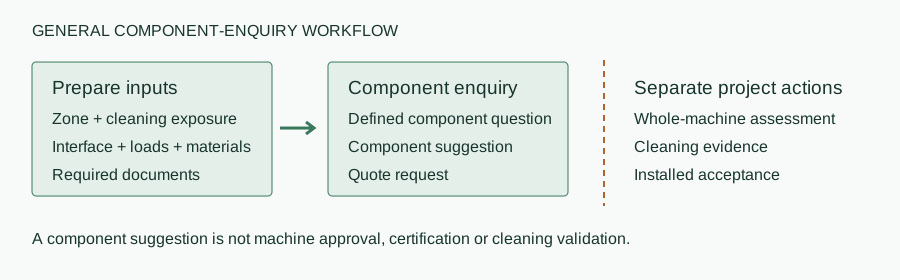
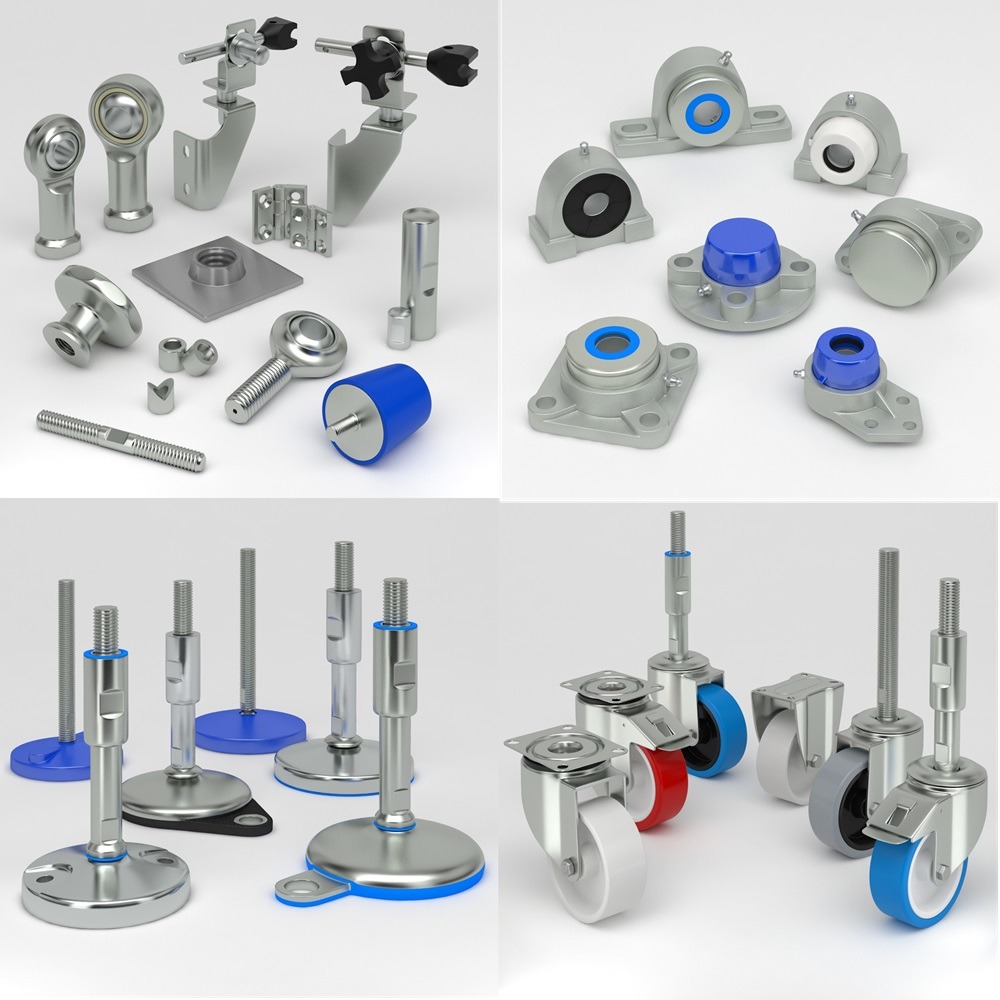
Management controls this through purchasing and maintenance: specify hygienic machinery components when buying new equipment and when replacing parts, and require documents such as declarations of compliance for food-contact materials (EC 1935/2004). Feet are a common example – see stainless steel machine feet in reliable food production.
Leveraging technology
Automated cleaning systems, sensors and digital checklists improve consistency. CIP systems repeat the same cycle every time; digital records make trends visible. Sensors on equipment add parts that must themselves be cleanable – mount them hygienically.
Building a hygiene culture
Managers set the standard by example: walking the line after cleaning, responding promptly to lapses and recognising teams that maintain standards. Involving operators in changes reduces resistance – they often know which part of a machine is hardest to clean.
Common challenges and how to address them
- Resistance to change: explain the reason for each change and involve teams in decisions.
- Budget constraints: compare the cost of hygienic equipment and training with cleaning time, chemical use, downtime and the cost of a failure.
- Consistency across shifts: use machine-specific SSOPs, automated systems where practical, and periodic retraining.
- Recurring failures: treat repeated swab failures at one location as an equipment issue and investigate the design.
Example: recurring swab failures on a filling line
Assumptions (illustrative): a dairy filling line where environmental swabs repeatedly fail at the machine base after the night clean.
- Check: the hygiene manager trends the results – always the same four locations, all at the feet.
- Root cause: the feet have exposed adjustment threads and lock nuts that hold residue; foam does not reach the thread roots.
- Act: short term, add the feet to the SSOP with a brush step; long term, replace them with sealed hygienic feet at the next planned stop.
- Verify: continue swabbing the same points to confirm the change worked.
Hygiene management by industry
- Food processing: frequent cleaning of production lines and sanitation between shifts and allergen changeovers to prevent cross-contamination.
- Pharmaceutical manufacturing: GMP protocols for equipment cleaning, air filtration and personnel hygiene, with documented cleaning validation.
- Healthcare: sterilisation of instruments and hand hygiene to prevent infections.
- Cosmetics: cleaning procedures that protect product integrity and prevent microbial contamination.
For the full contamination-control programme from equipment design to recall plan, see avoiding contamination and product recall.
Inspection checklist for managers
- Are SSOPs written per machine and up to date?
- Are training records current for all operators and maintenance staff?
- Are verification results trended, and are repeat failures investigated?
- Are worn seals, damaged feet and corroded parts replaced on schedule?
- Do new equipment and spare-part specifications require hygienic design and documentation?