Where and why to use oval bearings and machine feet depends on two things: the industry, which sets the cleaning regime, and the zone on the machine where the part sits. This guide maps both components to typical industries and machine positions, and explains what changes in the specification from one industry to the next.
For load paths, sizing and the selection table by environment, see the companion guide industrial components: machine feet and oval bearings. This page focuses on the industry and placement decision.
What are oval bearings and machine feet?
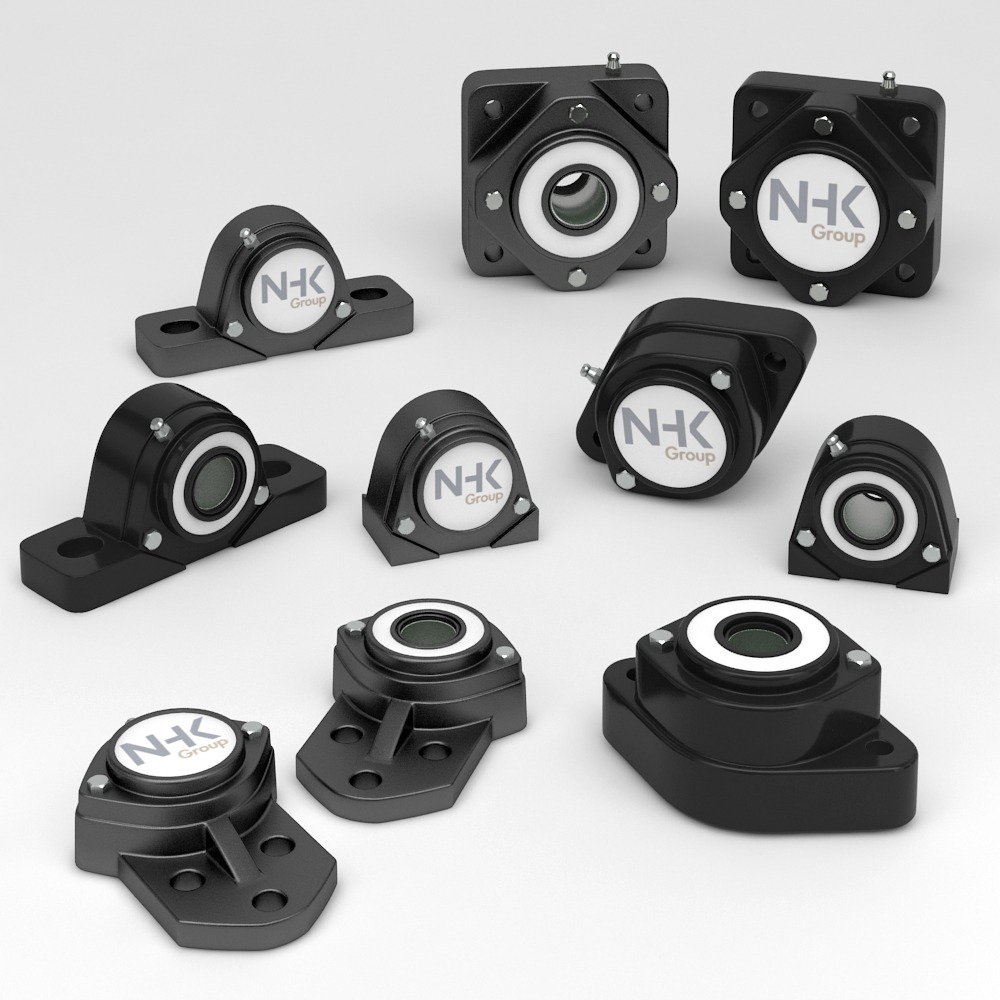
An oval bearing, in machine building, is an oval two-bolt flange unit: an insert ball bearing in a housing with an oval flange and two bolt holes. It carries a rotating shaft through a frame wall. A machine foot is the adjustable support between frame and floor; it carries the machine's weight and lets it be levelled.
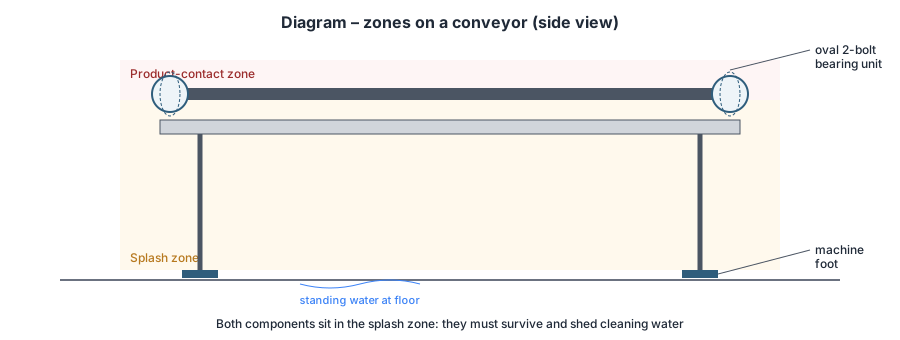
Both are usually outside the product-contact zone (surfaces that touch food or drug product) but inside the splash zone – where product, water and detergents reach the part and drain back. That is why their design matters to hygiene even though they never touch product.
Where are oval bearings used?
Conveyor systems
The main application. Oval units support drive and idler shafts on belt, modular and roller conveyors, where frame side members are narrow and loads moderate. In food plants, they are typically stainless or thermoplastic housings with stainless inserts and seals selected for washdown.
Manufacturing and packaging equipment
Light-to-moderate shafts in packaging, filling and processing machines: feed rollers, film unwinds, agitator ends. Where loads or moment loads rise, a four-bolt square flange or a pillow block is the safer choice.
Where oval insert units are not the right part
The old version of this page listed engines, transmissions, aircraft and robotics. Those use purpose-designed bearings integrated into the mechanism, not bolt-on insert units. Insert units are designed for general shaft support on frames.
Where are machine feet used?
Food processing
Machines stand on wet floors and are cleaned with foam and water, sometimes high-pressure washdown. Feet must avoid exposed thread, crevices (narrow gaps that trap soil) and harbourage points (places where microbes survive cleaning), and should be self-draining. Stainless steel and a base material with a declaration of compliance are standard.
Pharmaceuticals
Cleaning is usually wipe-down with disinfectants rather than washdown. Smooth stainless surfaces and compatibility with disinfectants matter more than resistance to water jets.
Electronics manufacturing and laboratories
Vibration control is the priority: anti-vibration bases or elastomer pads protect sensitive processes and measurements. Hygiene requirements are usually about dust and wipe-cleanability, not washdown.
Heavy industrial machinery
High static loads and vibration: larger stems and bases, and floor anchoring through one or two fixing holes so the machine cannot walk.
Selection matrix: industry by component
| Industry | Typical cleaning | Oval bearing unit | Machine feet | Priority |
|---|---|---|---|---|
| Meat, poultry, fish | Daily foam + high-pressure washdown, chlorinated detergents | Stainless or thermoplastic housing, washdown sealing | AISI 316L, sealed, crevice-free, anchored | Corrosion and cleanability |
| Dairy, beverage | CIP inside, foam outside | Stainless housing, compatible elastomers | Stainless, sealed thread | Cleanability, chemical resistance |
| Bakery, dry food | Dry cleaning, occasional wet | Standard or stainless housing | AISI 304 or plated, adjustable | Dust, allergen changeover |
| Pharmaceuticals | Wipe-down with disinfectants | Stainless, smooth housing | Smooth stainless, hygienic design | Disinfectant compatibility |
| Electronics, labs | Dry wipe | Standard | Anti-vibration bases | Vibration control |
| Heavy machinery | Little or none | Consider 4-bolt or pillow block | Large stem, anchored | Load capacity |
CIP is cleaning in place without dismantling; allergen changeover is the cleaning between products with different allergens, where dry-cleanable designs reduce risk.
Why use them: what each solves
- Oval bearing units give a compact, bolt-on shaft support that is easy to replace and align. Their limits are moderate load and two-bolt fixing.
- Machine feet give level, stable stance on imperfect floors and leave a cleanable gap under the machine. Their limits are load per foot and, for articulated bases, reduced stiffness.
How to choose by industry: step by step
- Identify the industry's cleaning regime: dry, wipe-down, foam, CIP or high-pressure washdown.
- Mark the zone for each part: product-contact, splash or non-contact.
- Pick material: AISI 304 for mild conditions; AISI 316L where chlorides cause chloride pitting.
- Check elastomer compatibility (EPDM, FKM or VMQ) with detergents and product fats.
- Size loads: load per foot on the feet that actually carry it × safety factor; shaft load and speed for the bearing.
- Decide fixing: free-standing, one or two holes, or anchored.
- List documents: model certificates if claimed, declaration of compliance, material certificates.
Example – assumptions stated, not product data. A poultry conveyor is cleaned daily with foam and high-pressure water using a chlorinated detergent. Matrix row: stainless or thermoplastic oval units with washdown sealing at the shaft ends; AISI 316L sealed feet, anchored. For a dry bakery conveyor of the same size, plated or AISI 304 parts would usually be adequate, and dry-cleanable surfaces matter more for allergen changeover.
Inspection checklist for feet and oval units in wet industries
- No water or grease emulsion leaking from bearing seals.
- No noise, heat or play at the shaft.
- Feet level, locknuts tight, no movement under load.
- No corrosion under feet bases or at fixing bolts.
- No visible soil in threads, joints or under bases after cleaning.
Certification claims
The old page described the products as having "adherence to stringent hygiene standards". EHEDG certifies specific designs and 3-A Symbol authorisation follows a Third Party Verification; both are voluntary. IP ratings (IEC 60529; IP69K in ISO 20653) are ingress tests, not hygiene certificates. Ask for the certificate for the exact model.
NHK examples
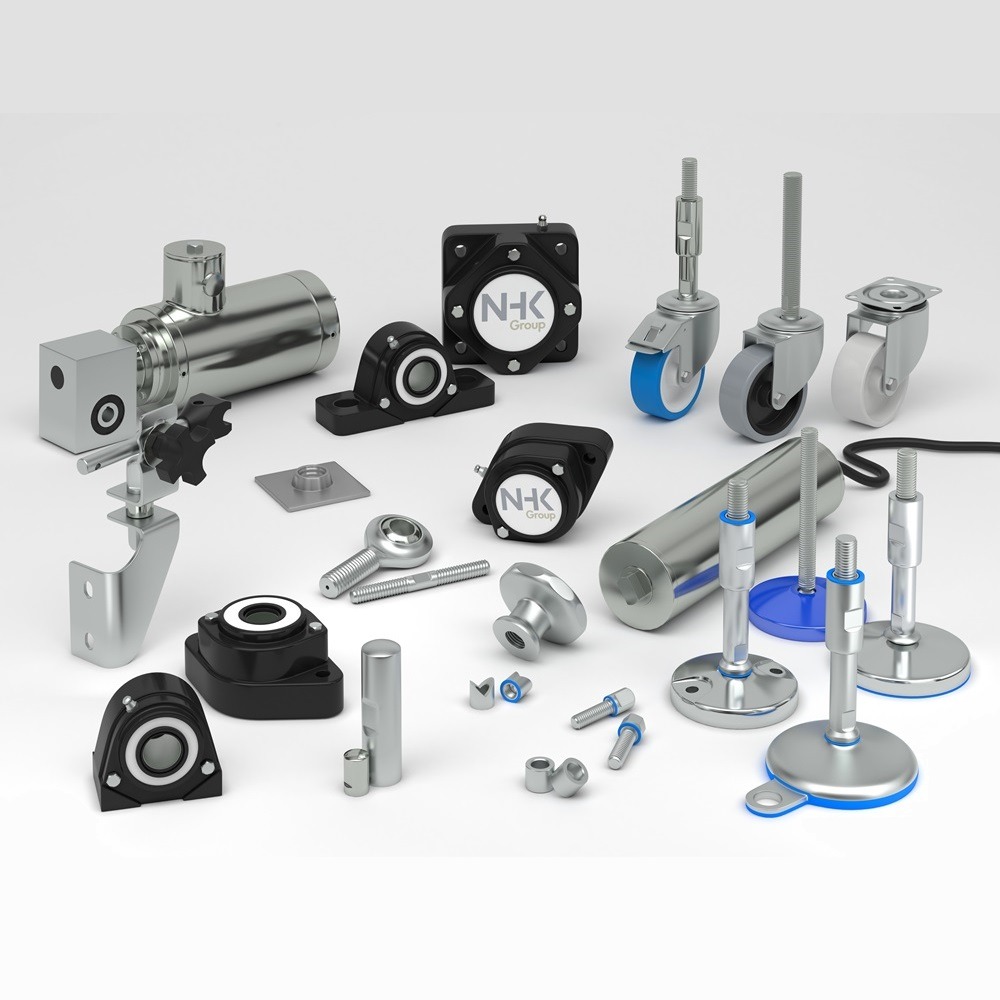
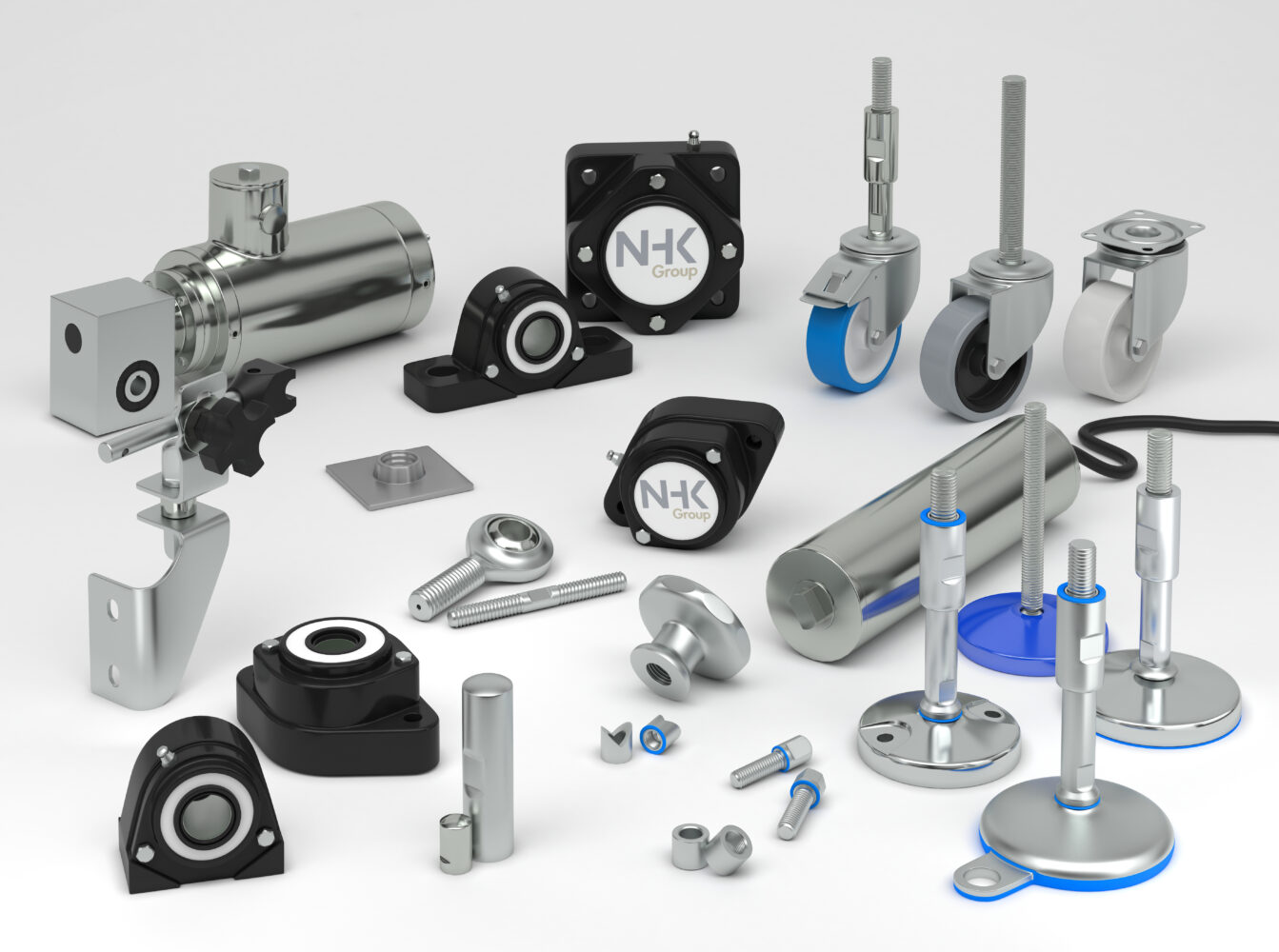
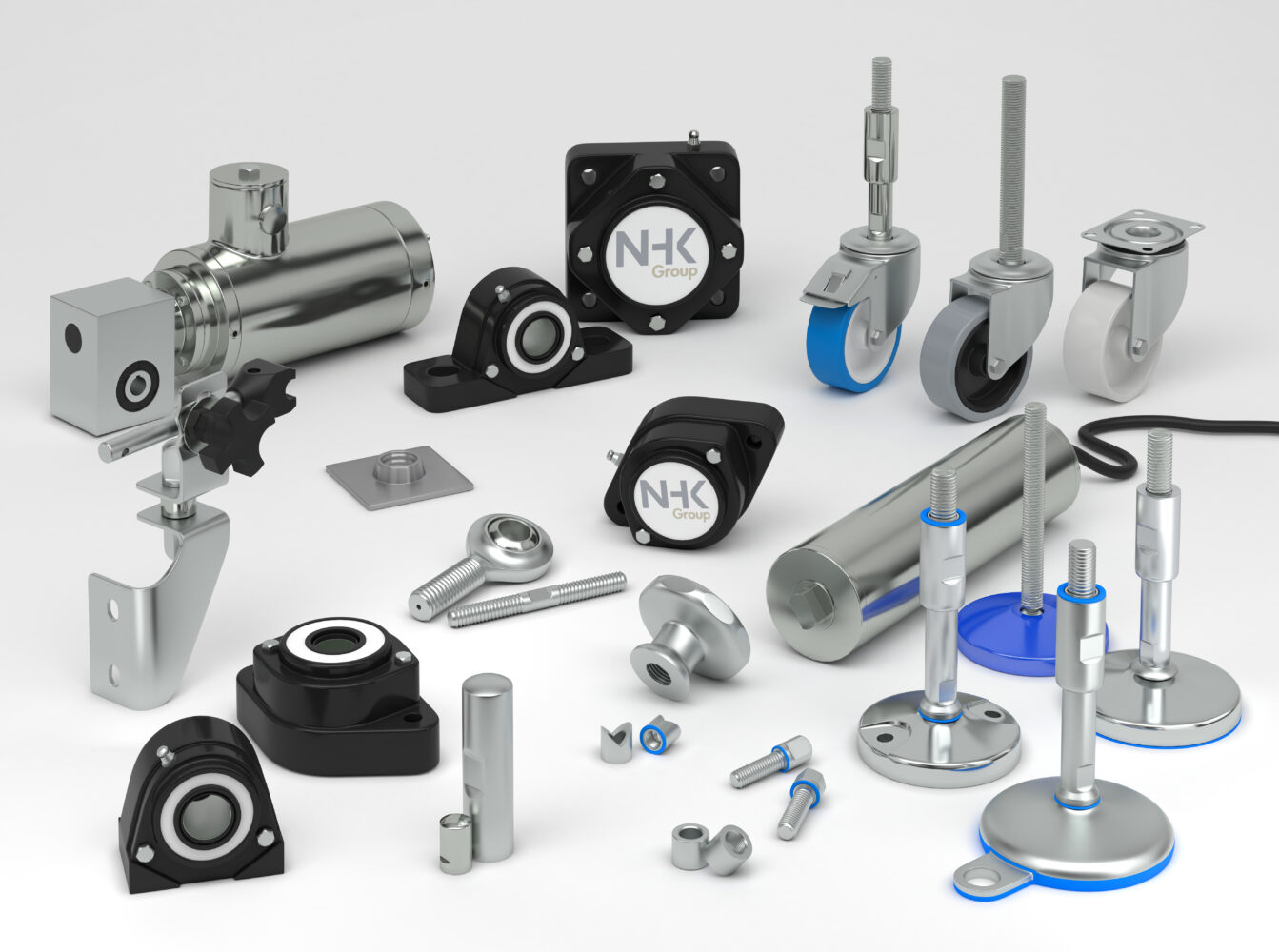
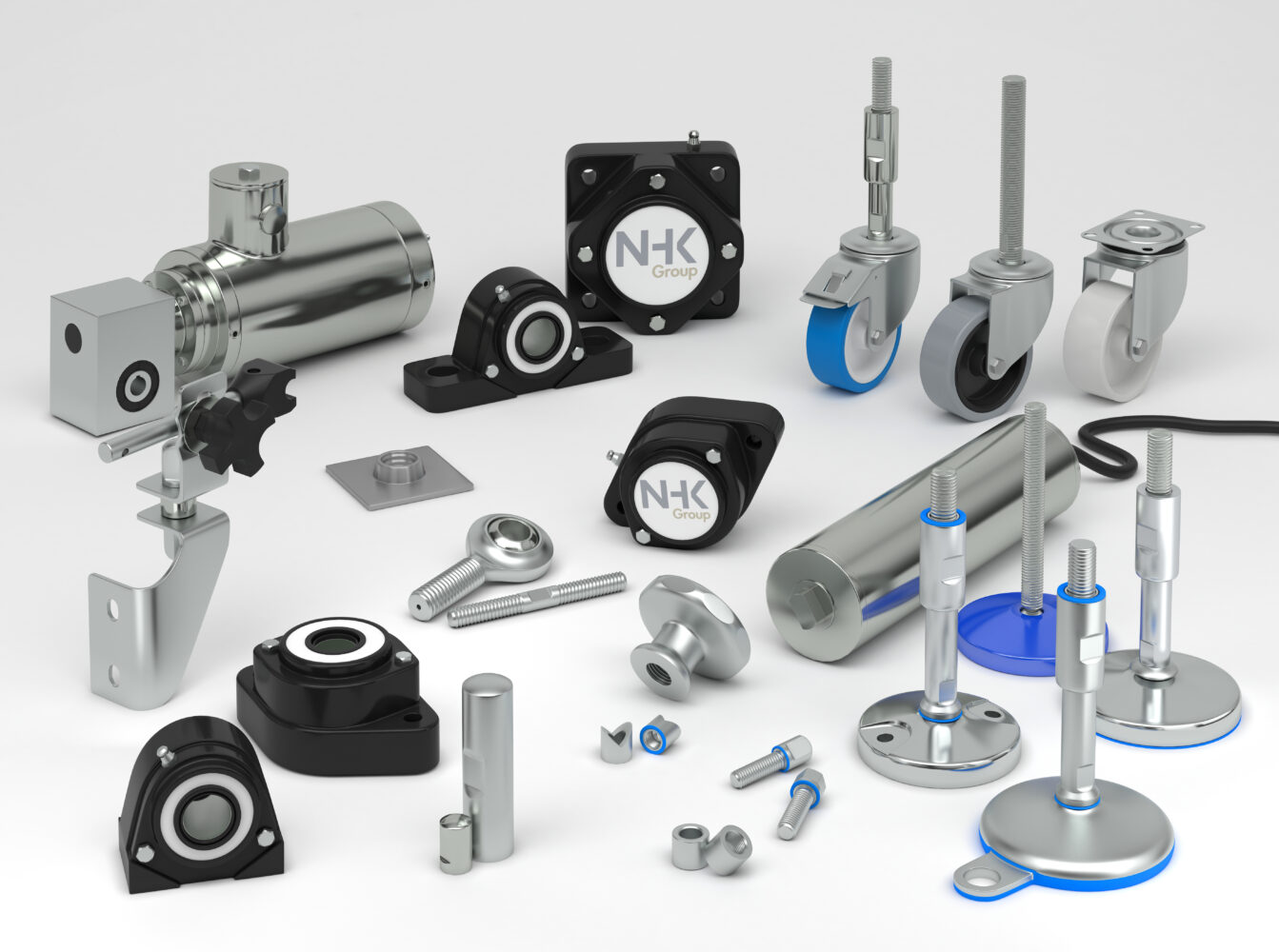
Examples of these components are NHK's machine feet in sealed hygienic design with floor lock plate and oval 2-bolt flange unit. For levelling feet in general see stainless steel machine levelling feet, and for application questions NHK contact. The oval bearing guide on this site is industrial oval bearings.