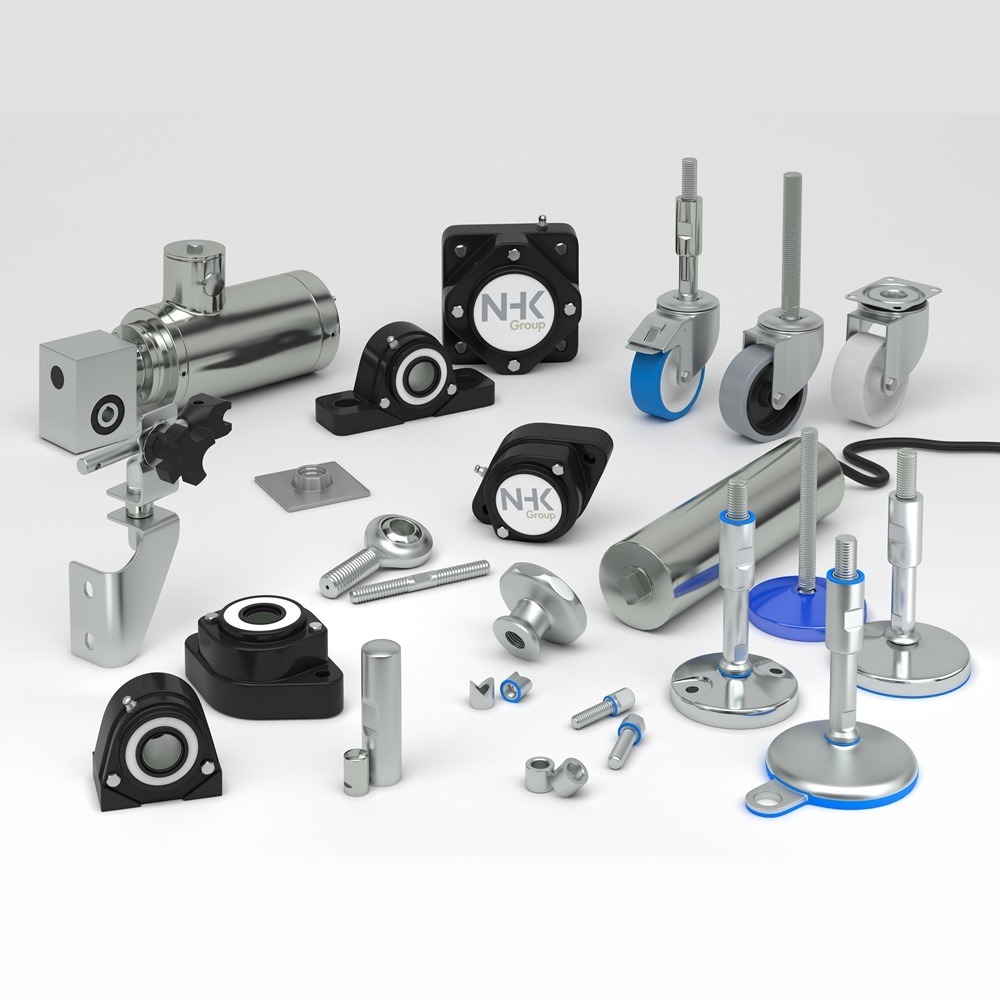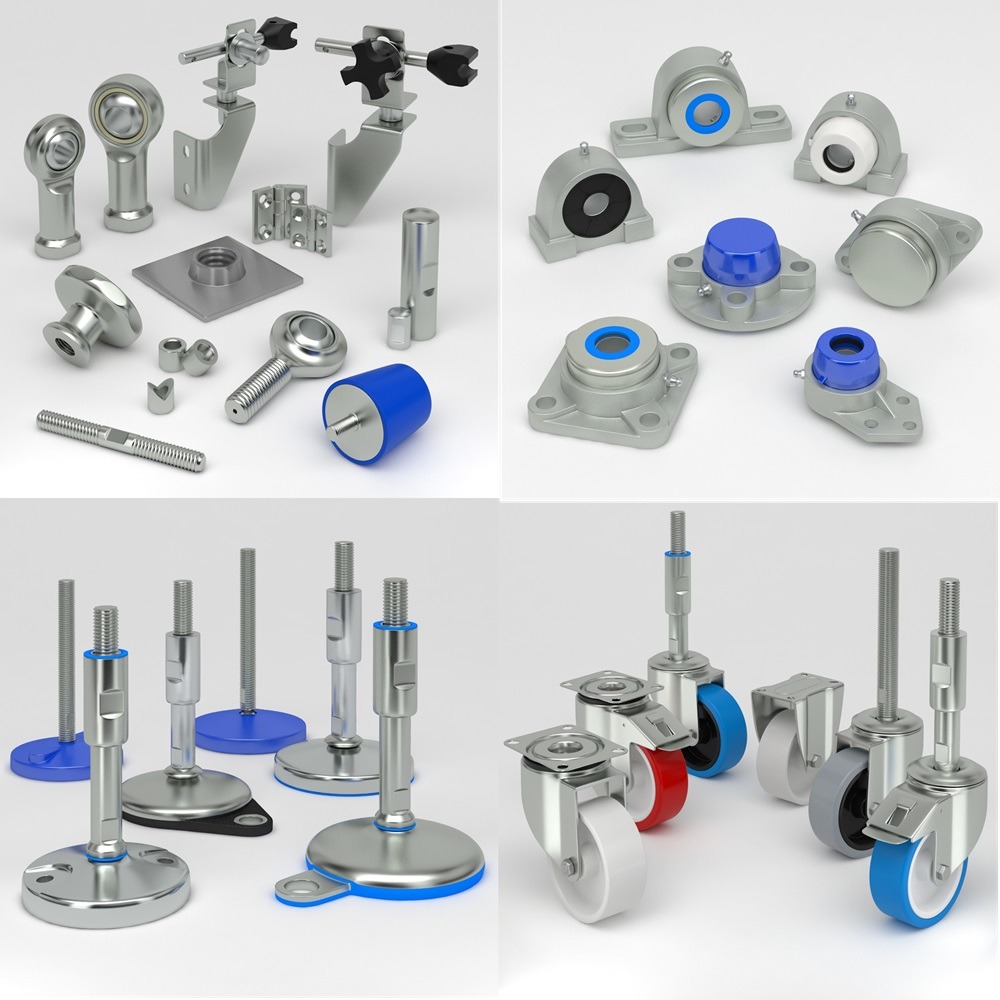
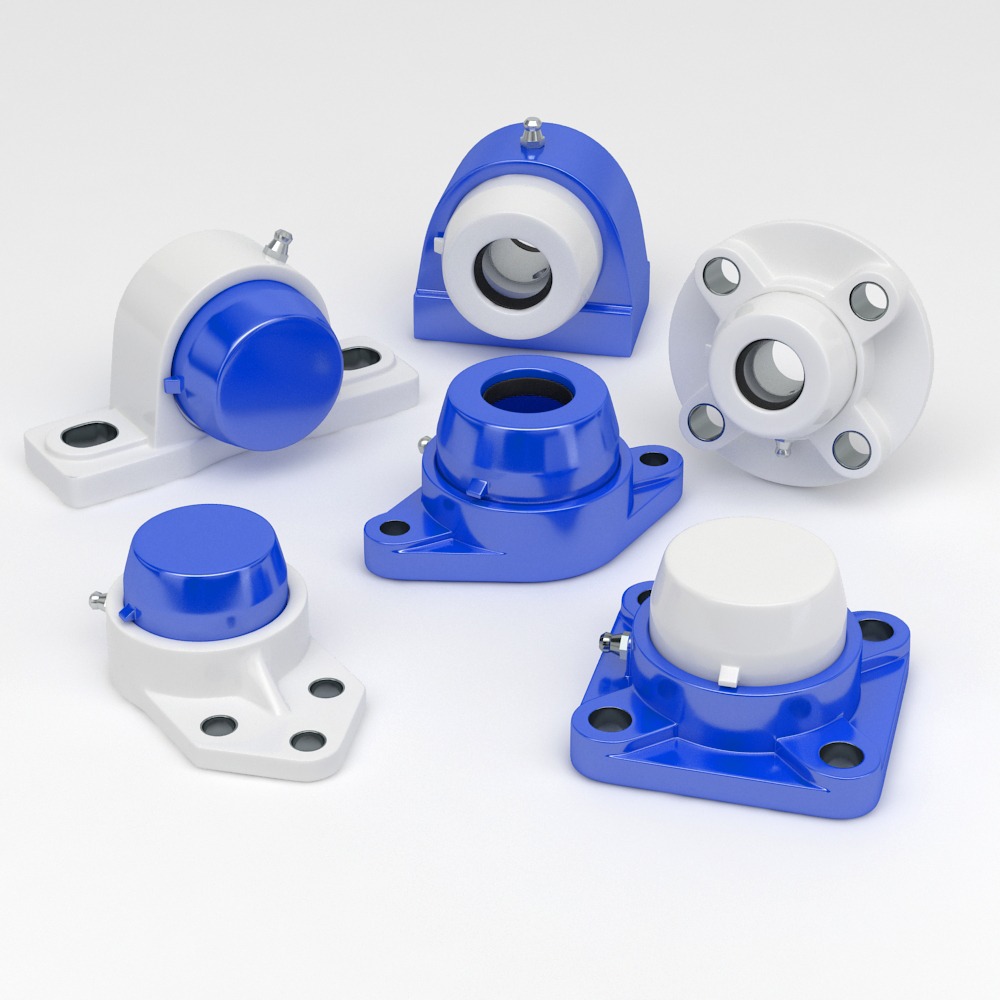
Bearing units in IP54 thermoplastic housing are mounted bearings that support and position rotating shafts while protecting the bearing against limited dust ingress and splashing water. For less demanding tasks, they are an economical and reliable solution – but only where the conditions match what IP54 and a plastic housing can handle. This guide gives the decision criteria: where they fit, where they do not, and how to choose.
What IP54 thermoplastic bearing units are
A bearing unit combines a housing (pillow block or flange) with a bearing insert, usually a self-aligning Y-insert locked to the shaft. In thermoplastic units, the housing is moulded from a plastic or composite material instead of cast iron or stainless steel. NHK's bearing units in IP54 thermoplastic housing page lists variants with open cover, closed cover and back seal.
IP54, under IEC 60529, means:
- First digit 5: dust-protected – ingress is not entirely prevented, but not enough to interfere with operation.
- Second digit 4: protected against splashing water from any direction.
That is the full scope. IP54 says nothing about water jets, pressure washdown or immersion, and as an ingress test it says nothing about hygiene or cleanability.
Where they are an economical and reliable choice
The thermoplastic housing brings four practical advantages:
- No rust: the housing does not corrode in moist conditions or with many common cleaning agents, so there is no rust or flaking paint to contaminate the area.
- Low weight: lighter than cast iron or stainless housings, which makes handling and installation easier.
- Lower cost: usually more economical than stainless steel units.
- Less upkeep: no paint to touch up and no corrosion to remove.
These advantages pay off in typical applications such as:
- Food and beverage: non-contact areas, frames and drives away from washdown, humid rooms cleaned by wiping or low-pressure rinse.
- Packaging machines: where light weight and corrosion resistance matter and cleaning is mostly dry.
- Agricultural machinery: conveyors and balers exposed to dust and moisture.
- Textile machinery: dusty conditions without heavy water exposure.
- HVAC systems: fans and dampers that need dust and splash protection.
Where they are not enough
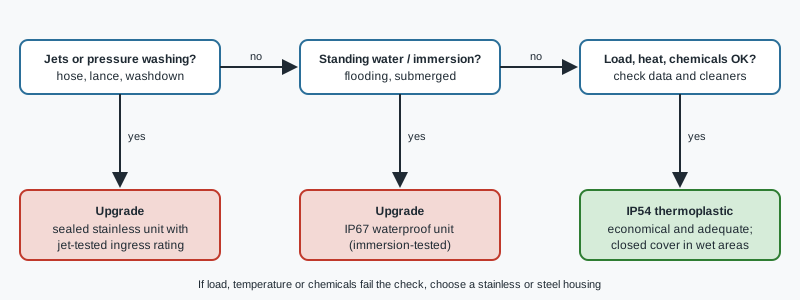
Three conditions rule out IP54 thermoplastic units, and a fourth needs checking:
- Water jets and pressure washing. Hoses, lances and washdown exceed the splash test. Choose sealed units with a jet-tested ingress rating (IPX5/IPX6, or IP69K for hot high-pressure washdown).
- Standing water or immersion. Choose IP67 waterproof units, tested for temporary immersion.
- High load or shock. Plastic housings are less stiff and strong than metal; check the supplier's load data.
- Temperature and chemicals. Plastics lose strength at elevated temperature, and some cleaners or solvents attack them. Check data sheets and chemical resistance against the actual agents and temperatures.
Comparison of housing options
| Housing | Water protection | Strengths | Limits | Typical place |
|---|---|---|---|---|
| IP54 thermoplastic | Limited dust, splashing water | No rust, light, economical | Load, temperature, chemicals; no jets | Non-contact, light splash, dry cleaning |
| IP67 waterproof housing | Dust-tight, temporary immersion | Handles flooding and wet areas | Immersion test is not a jet test | Wet areas, foam and rinse |
| Sealed stainless housing | Depends on seals and covers; check ingress test | Strength, corrosion resistance, cleanable surfaces | Higher cost | Splash zone, washdown |
| Cast iron | Depends on seals | High strength, low cost | Rusts; paint can flake | Dry industrial areas |
For waterproof composite housings and how they differ from steel and cast iron, see bearing units in waterproof composite housing. For a square-flange example in IP54 composite housing, see square ball bearing unit in IP54 composite housing.
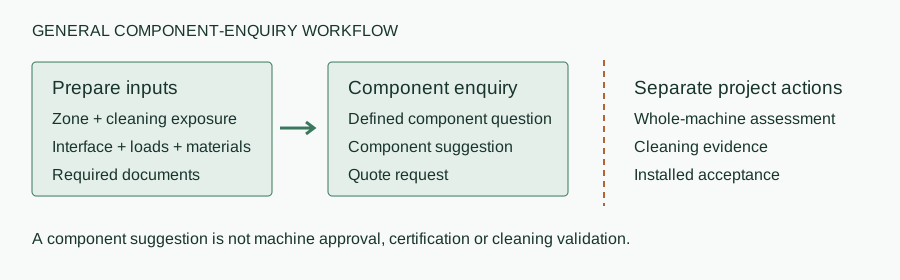
How to select: a step-by-step method
- Locate the unit: product-contact zone (surfaces product touches or drains back from), splash zone (wetted by product or cleaning spray) or non-contact zone. Thermoplastic IP54 units belong in the non-contact or lightly splashed areas.
- Describe cleaning at that position: dry, wipe, low-pressure rinse, foam, high-pressure washdown, CIP/COP (cleaning in place, or out of place after dismantling). Any jets or washdown hitting the unit means upgrade.
- Check for standing water. Any immersion means an IP67 or higher unit.
- Check load and speed against the supplier's data, including shock loads at start-up.
- Check temperature and chemicals, including hot water and sanitisers.
- Choose the cover: open cover for dry areas; closed cover or back seal where splash reaches the unit, to keep water and dust away from the shaft end and the seal.
- Plan inspection: look for cracked housings, worn seals, noise and play.
Example – assumptions stated, not a real application. A packaging line has a carton conveyor in a dry hall and a tray-washing section further down. The carton conveyor sees dust and occasional splashes when the floor is mopped; loads are light. Steps 1–6 point to IP54 thermoplastic units with closed covers. The tray-washing section is rinsed with a hose after each shift: step 2 rules out IP54, so the specifier selects sealed stainless units with a jet-tested ingress rating there. One machine uses two bearing types, each matched to its position.
Installation and inspection checklist
- Mount on flat, clean surfaces; uneven mounting stresses plastic housings.
- Tighten fixing bolts to the supplier's torque; over-tightening can crack the housing.
- Use washers where specified to spread the clamping load.
- Align shafts so the insert's self-alignment is not used up by installation error.
- Fit the cover type chosen for the position.
- Inspect regularly for cracks, discoloration from chemicals, seal wear and running noise.
Failure modes to avoid
- Using IP54 units in washdown areas – water passes the seals and washes out grease.
- Cracked housings from overload or over-torqued bolts.
- Chemical attack from cleaners not checked against the housing material.
- Open covers where splash reaches the shaft end.
- Treating IP54 as a hygiene rating – it is an ingress test only.
Conclusion
Bearing units in IP54 thermoplastic housing are an economical and reliable solution for dust and splashing water in less demanding positions. Check cleaning method, water exposure, load, temperature and chemicals first – and upgrade only the positions that need it.