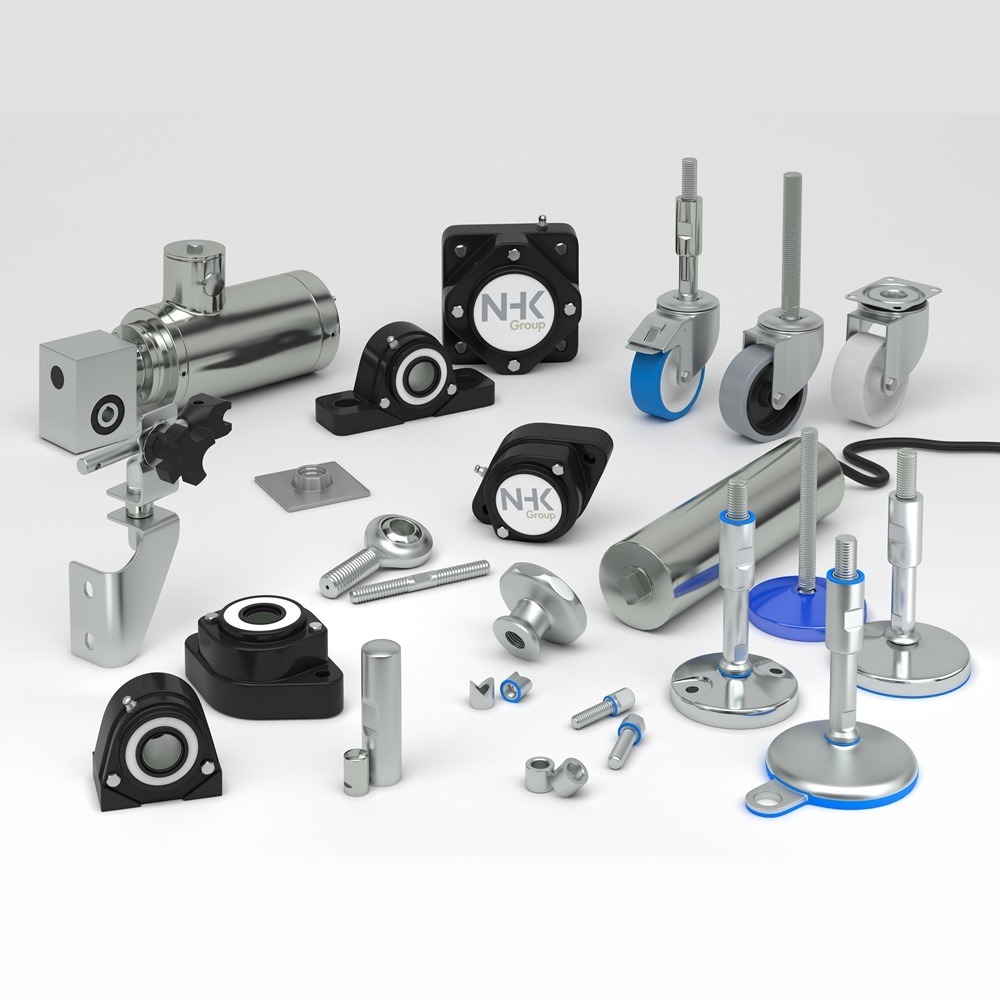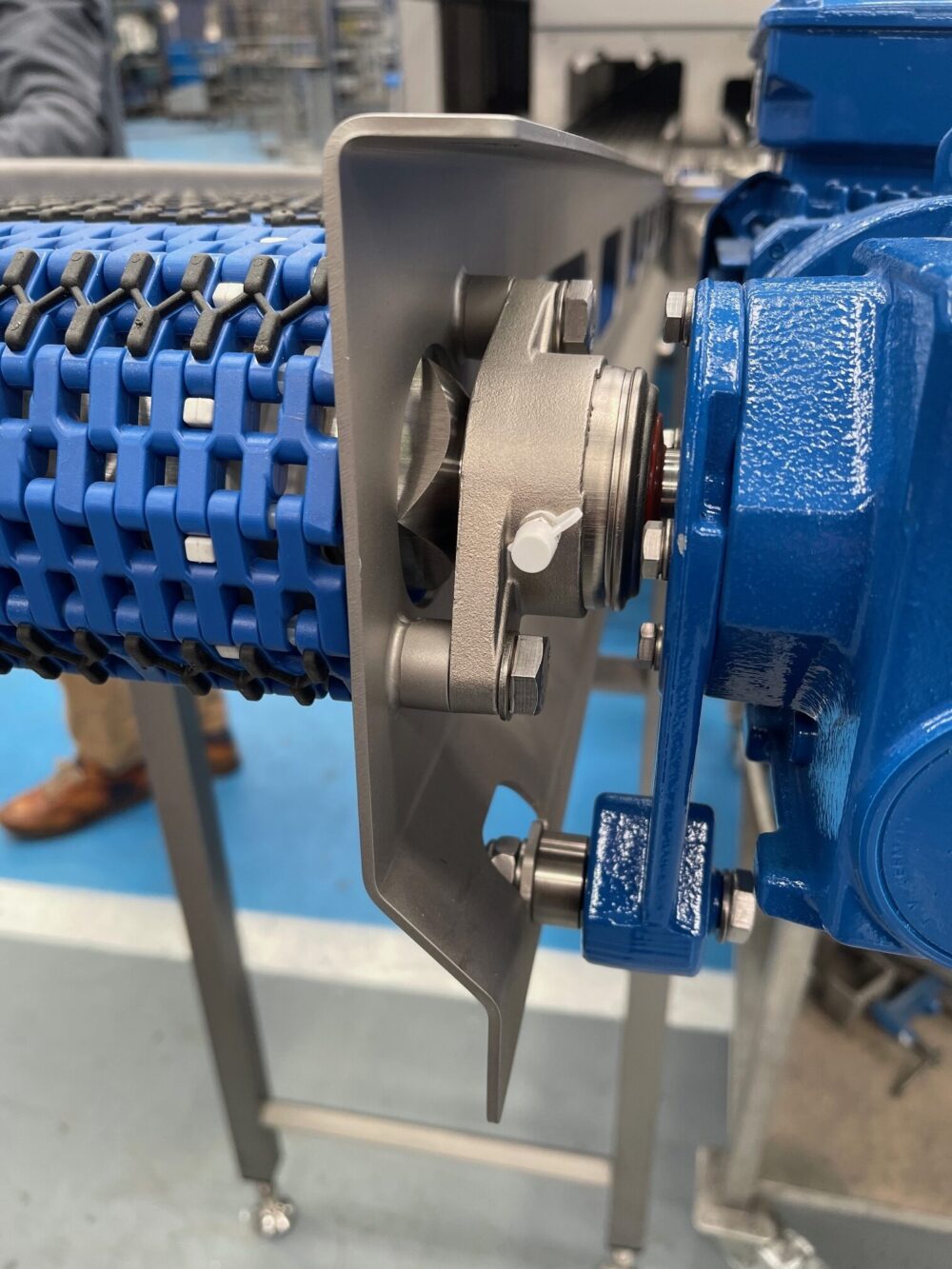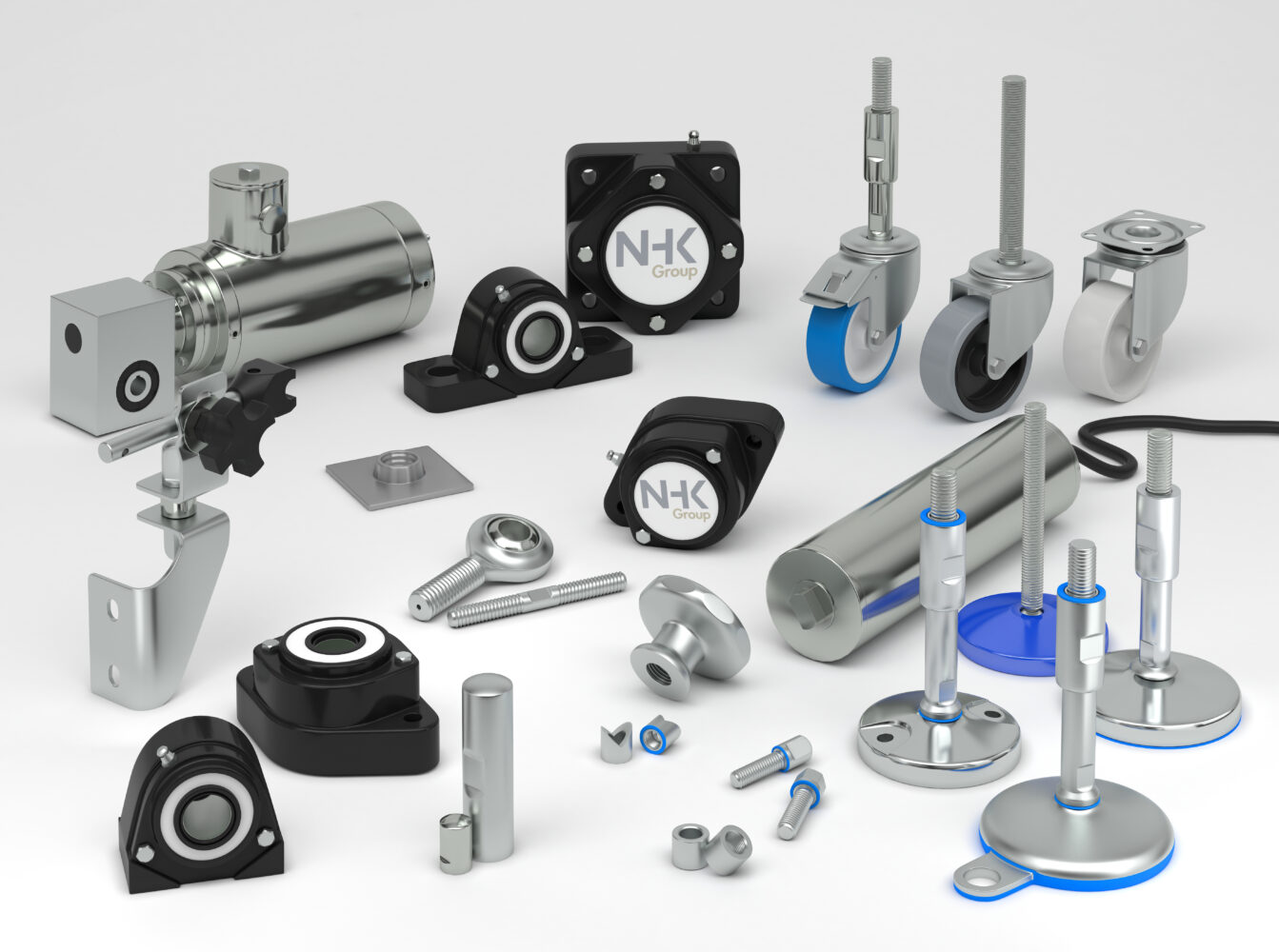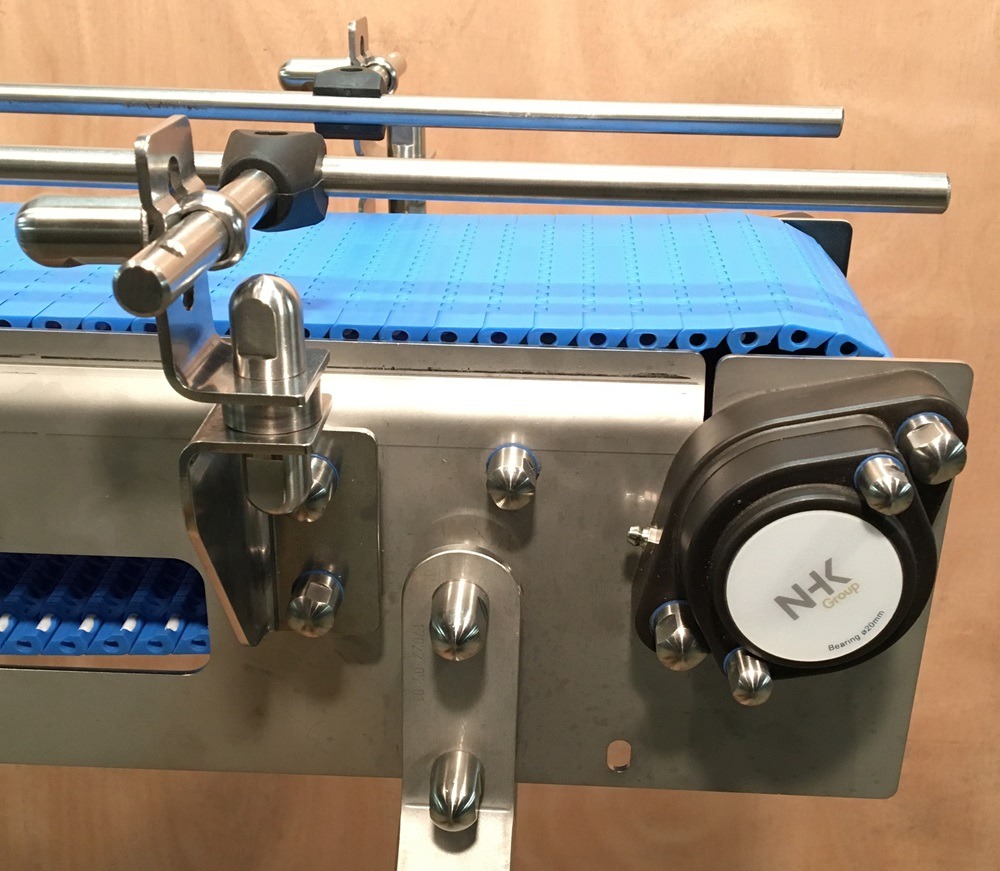
In a competitive manufacturing landscape, the conveyor components on a production line – bearing units, guides, frames, fasteners, feet and castors – determine much of its uptime, cleaning time and product safety. Conveyors connect every process step and pass through product-contact and splash zones, so one weak component type is repeated along the whole line. This guide explains how to select conveyor components so they support reliable, hygienic and cost-efficient production in food and pharmaceutical plants.
For how harsh-environment stresses translate into component failures and specification criteria, see the vital role of high-quality conveyor components.
Why conveyor components matter for competitiveness
A conveyor is typically the longest machine in a hygienic area, with many repeated parts: dozens of bearing units, metres of guides and hundreds of fasteners. Each component type affects four things that decide a plant's competitiveness:
- Contamination risk: crevices and exposed threads become harbourage points – places where residue and bacteria survive cleaning – and can lead to product holds and recalls.
- Cleaning time: parts that are hard to reach or dismantle extend sanitation, often daily.
- Reliability: harsh conditions – moisture, temperature swings, cleaning chemicals – cause corrosion, seal failure and bearing damage.
- Resource use: easy-to-clean parts need less water and detergent per clean.
For how these effects add up across the line, see optimizing industrial machinery performance. For side guides, guide rods and brackets in detail, see hygienically optimized conveyor components.
Component groups and hygiene zones
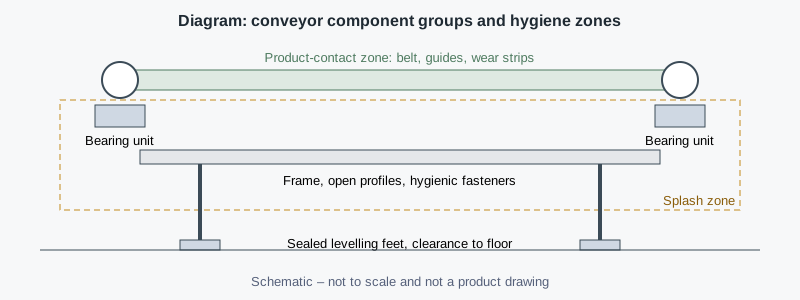
The product-contact zone is where surfaces touch product: belt, guides and wear strips. The splash zone is wetted by product or cleaning spray but does not touch product: bearing units, frame and fasteners. Feet sit in the floor zone, which is cleaned with high-pressure water or foam. Requirements are highest where product touches, but in practice the splash zone causes many hygiene problems because it is cleaned less carefully.
What to look for in each component group
| Component group | Typical hygiene or failure problem | What to choose | Key selection attributes |
|---|---|---|---|
| Belt, guides, wear strips | Scratched, porous plastics; joints that trap product | Food-contact compliant plastics, removable without tools | Material declaration (EC 1935/2004, EU 10/2011), wear resistance, temperature |
| Bearing units | Water and detergent entering open housings; grease washout | Sealed stainless or IP-rated units with closed covers | Housing material, seals, lubrication, IP rating, load and speed |
| Frame | Closed hollow sections, horizontal ledges, overlapping joints | Open, self-draining profiles, continuous welds | Grade (304 or 316L), surface finish, access for cleaning |
| Fasteners | Hex sockets, exposed threads, washer gaps | Hygienic bolts with rounded heads and seals | Grade, thread size, seal material |
| Feet and castors | Exposed threads, flat bases trapping water | Sealed levelling feet; stainless castors with sealed wheel bearings | Load per foot, thread size, base material, fixing |
| Seals and gaskets | Swelling or cracking from fats and chemicals | Elastomer matched to product and chemicals | EPDM, FKM or VMQ compatibility, food-contact compliance |
Self-draining means surfaces are sloped or shaped so water runs off rather than standing. IP ratings (IEC 60529; IP69K in ISO 20653) describe ingress protection; they are not hygiene certifications, and IP67 is an immersion test, not a washdown rating.
How to select conveyor components
- Map the zones along the conveyor: product-contact, splash and floor.
- Define the cleaning regime: dry clean, foam, high-pressure washdown or CIP/COP (cleaning in place / out of place), with chemicals, concentrations and temperatures.
- Define the environment: product (fat, salt, sugar, acid), temperature range, humidity and chlorides.
- Choose materials: AISI 304 for mild conditions; 316L where chlorides cause chloride pitting; avoid mixing metals that cause galvanic corrosion.
- Choose design features: sealed bearings, open frames, hygienic fasteners, sealed feet with floor clearance.
- Check mechanical requirements: shaft size, load and speed for bearings; load per foot = total load ÷ number of feet that actually carry it × safety factor (on uneven floors fewer feet carry the load).
- Compare life-cycle cost: purchase price plus cleaning time, replacements and downtime over the expected life.
- Request documents and verify them before ordering.
Example
Assumptions (illustrative only): a 12 m conveyor in a cheese slicing area, cleaned daily with foam and high-pressure water, with salty product and chlorinated cleaning agents.
- Zones: belt and guides in product contact; bearing units and frame in the splash zone; feet on a wet floor.
- Choices: food-contact compliant belt and guides removable without tools; sealed stainless bearing units; open 316L frame because of salt and chlorine; hygienic bolts in the splash zone; sealed levelling feet.
- Mechanical check: load per foot calculated assuming only three of four feet per section carry the load on the sloped floor.
- Cost: higher purchase price accepted against expected reductions in cleaning time and replacements, to be verified by measurement.
What to put in the RFQ
- Hygiene zones and the parts in each zone.
- Cleaning method, chemicals, concentrations, temperatures and frequency.
- Product type and environment (chlorides, fats, temperature range).
- Material grade and surface finish requirements; EHEDG guidance refers to Ra ≤ 0.8 µm for product-contact surfaces.
- Load, speed and shaft data for bearings; load and floor conditions for feet.
- Documents: EHEDG certificate or 3-A authorisation by design name where certification is required, material certificates, and declarations of compliance for food-contact materials.
EHEDG certifies specific equipment designs, and the 3-A Symbol is authorised after a Third Party Verification; both are voluntary and apply only to the named model. Certification does not replace correct installation and validated cleaning.
For the business case behind these choices, see ensuring long-term cost savings and competitive edge. More from NHK: EHEDG certified components and 3-A SSI standard parts and hygienicmachineryparts.eu. Packaging machinery parts and processing equipment components are also covered by NHK Group (nhkpackagingmachinery.com).