Adaptable machinery is equipment designed to respond to changes in product, size, format or volume with minimal downtime and investment. In poultry processing that means handling variable bird sizes, a shifting mix of whole birds, cuts and portions, and frequent packaging changes – all in an environment that is washed down every day. This guide covers what adaptability means for a poultry machine, how to design it in, and how to keep it hygienic.
Why adaptability matters in poultry processing
Poultry lines share the process steps described in our overview of food processing equipment by process step, but demand changes faster here than equipment is replaced. Three drivers stand out:
- Customisation – retailers and food-service customers specify their own cuts, portion weights and packs. Machines must move between specifications without long resets.
- Sustainability – customers and regulators push for less waste, lower energy use and recyclable packaging materials, which the machine must be able to run.
- Technology – sensors, connectivity and data analysis support automated adjustment and decision-making, but only on machines built to accept them.
Poultry adds its own variation: birds within a flock differ in weight, and average weights change over time. For the effect of heavier birds and faster lines on equipment, see navigating challenges in poultry processing.
What makes machinery adaptable
Modular design
Modular machines are built from sections – infeed, process module, outfeed – that can be reconfigured, replaced or upgraded. This extends equipment life and reduces the need for full replacement. The engineering challenge is the interface: how modules are located, fixed, sealed and cleaned.
Quick changeovers
In food and pharmaceutical production, variety and speed both matter, so changeovers must be quick and repeatable. Typical means are tool-less clamps, locating pins, pre-set format parts and marked adjustment scales.
Scalability
A scalable machine can grow in capacity or add functions without a major overhaul. That requires spare structural, drive and control capacity designed in from the start.
Adaptability versus hygiene: the design conflict
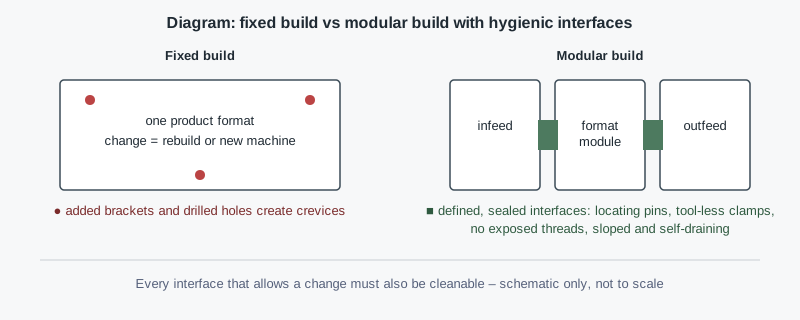
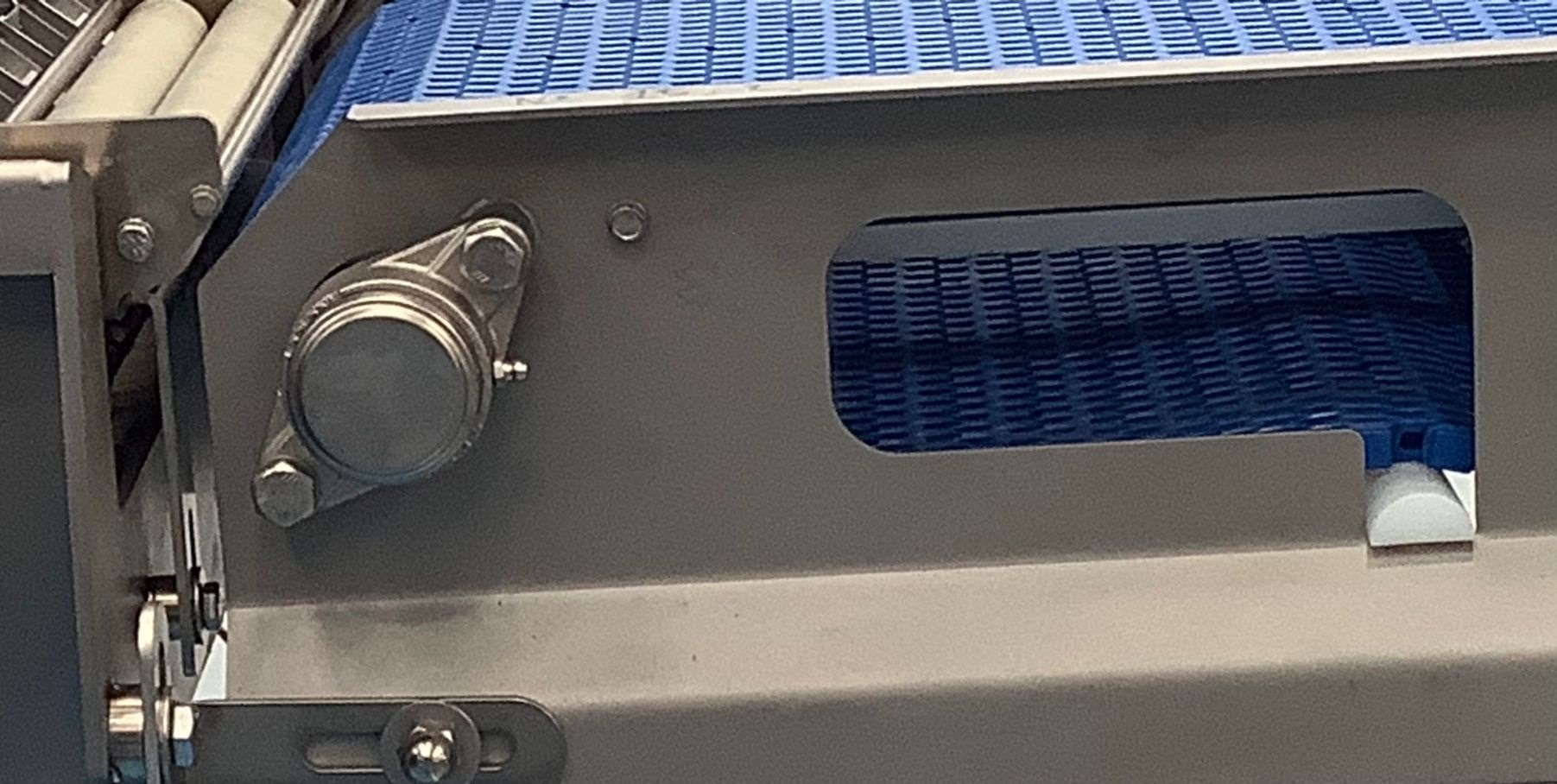
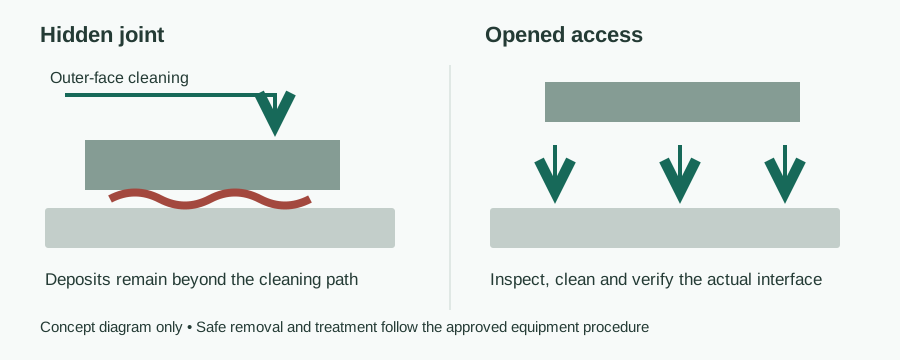
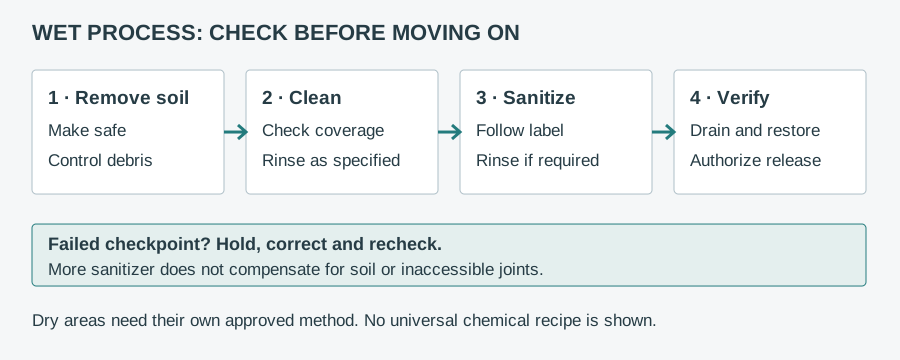
Every feature that makes a machine changeable – a joint, a clamp, an adjustment slot – is a potential harbourage point: a place where fat, protein and water collect and bacteria survive cleaning. Poultry plants clean with daily high-pressure washdown and foam using alkaline and chlorinated agents, so these features are tested hard.
| Adaptability feature | Hygiene risk | Hygienic design approach |
|---|---|---|
| Module joints | Gaps and overlapping plates trap residue | Sealed or open, cleanable gaps; sloped surfaces that drain |
| Format-change parts | Contact parts mixed up or stored dirty | Coded parts, clean storage racks, product-contact materials with a declaration of compliance |
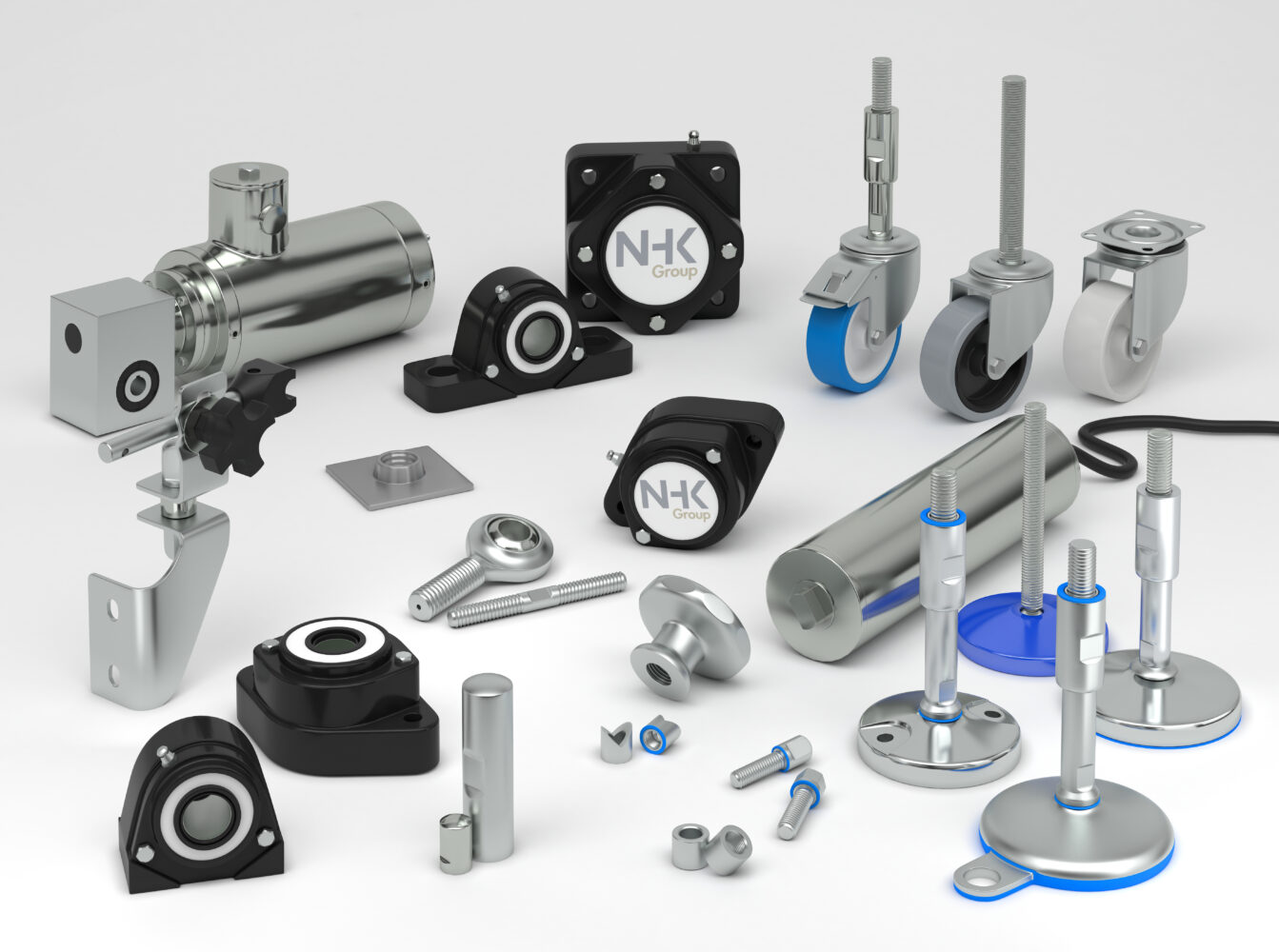
| Height and width adjustment | Exposed threads and slotted holes | Sealed adjustment, covered threads, scales instead of slots |
| Added sensors and brackets | Drilled holes and crevices in the frame | Pre-planned mounting points, flush-sealed sensor mounts |
| Tool-less clamps | Springs and hinges that cannot be cleaned | Open, removable clamps in stainless steel |
| Mobile modules | Exposed wheel axles, hollow frames | Sealed castors, closed or self-draining frame sections |
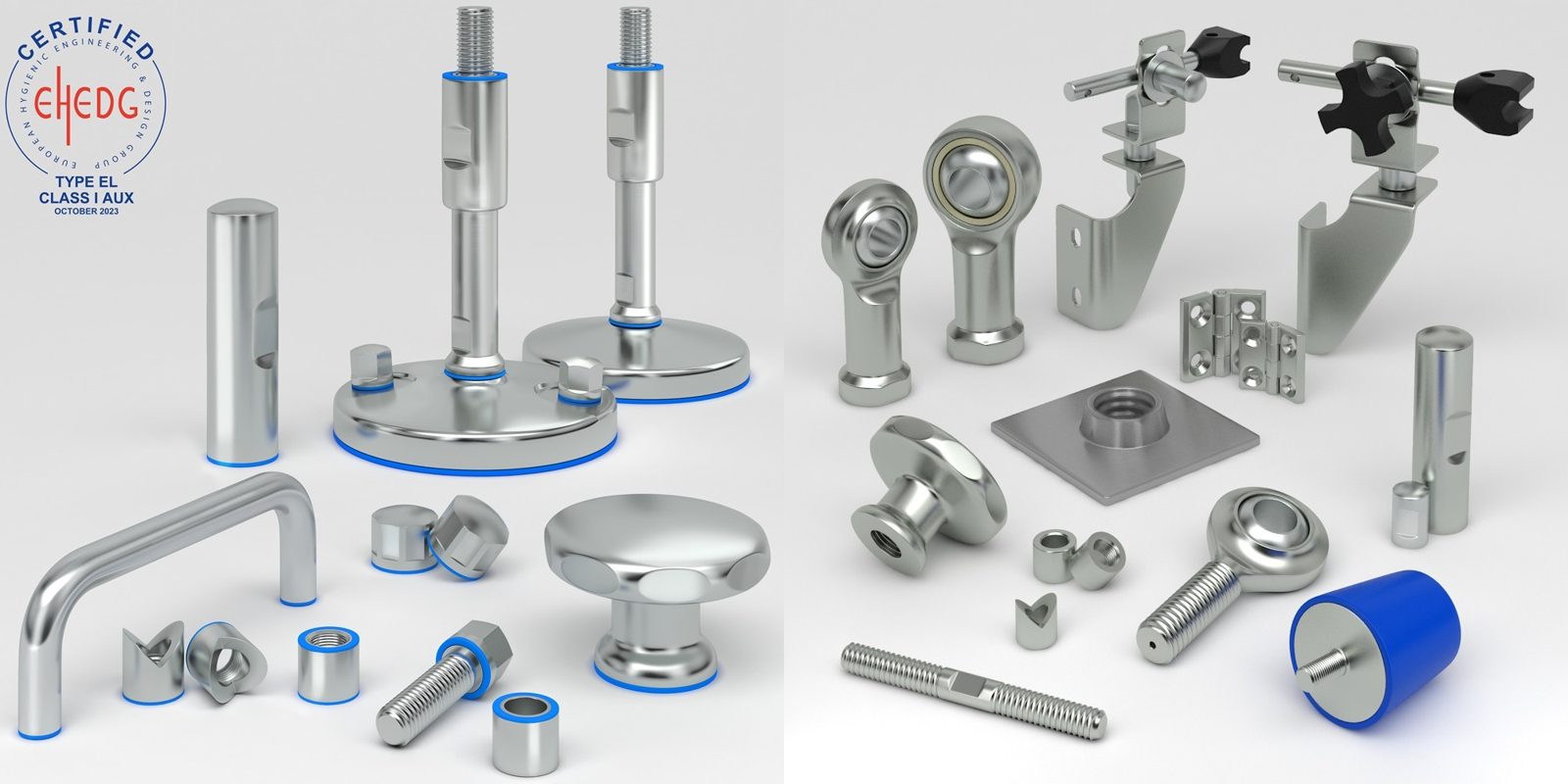
Product-contact parts must meet EC 1935/2004 (and EU 10/2011 for plastics). Designing to EHEDG guidelines and EN 1672-2 gives a recognised basis for the interfaces; the hygienic design principles for food equipment are the starting point.
Designing for adaptability: best practices
Integrate smart technology deliberately
IoT, AI and machine learning support predictive maintenance, real-time monitoring and automated adjustment, such as setting cutters from measured bird weight. Plan sensor positions, cable routes and controls capacity at the design stage so later additions do not require drilling into a cleaned frame. See innovations enhancing equipment precision and efficiency.
Design for the operator
Clear interfaces and intuitive controls shorten the learning curve. Changeover parts should be light enough to handle safely, marked, and impossible to fit wrongly.
Build for durability
Adaptable machines are reconfigured many times, so locating features wear. Use stainless steel suited to chlorinated cleaning (AISI 316L where chlorides and residues stay on surfaces; AISI 304 often suffices in drier, less aggressive areas), hardened or replaceable locating parts, and seal materials compatible with fats and cleaning chemicals.
Involve end users
Operators, maintenance and hygiene staff know where changeovers stall and where dirt collects. Include them in design reviews and trial changeovers. For the wider OEM perspective, see strategies to lead the poultry processing industry.
How to design a quick, hygienic changeover
- Record the current changeover step by step, with times.
- Classify each step as internal (needs the machine stopped) or external (can be prepared while running).
- Move external steps out of the stop – prepare format parts, tools and recipes in advance.
- Shorten internal steps – tool-less fixings, locating pins, pre-set positions, recipe-driven adjustments.
- Define the cleaning step – does the changeover cross an allergen or product-family boundary that requires full cleaning?
- Check every new interface for crevices, exposed threads and drainage.
- Standardise and train – written procedure, marked parts, trial runs with operators.
Example
Assumptions (illustrative only): a tray-packing module on a poultry portion line changes between two tray sizes several times a week. The current changeover requires loosening guide rails with tools, measuring positions and test packs.
- External work: the second set of guides is stored clean and ready next to the machine.
- Internal work: guide rails are fitted on locating pins with tool-less stainless clamps; positions are fixed, so no measuring or test packs are needed.
- Hygiene check: the old slotted adjustment plates are replaced by solid plates with pins, removing slots where residue collected.
- Result to verify: changeover time and swab or visual inspection results before and after – measured on site, not assumed.
Industries that benefit
- Food and beverage – variety from organic beverages to gluten-free snacks without loss of quality.
- Pharmaceutical and biotechnology – complex formulations and quick adaptation to regulatory changes or new products.
- Packaging – switching between materials, sizes and designs, including recyclable materials.
Benefits of designing for adaptability
- Operational efficiency – less downtime during transitions and fewer set-up errors.
- Capital cost – one multipurpose machine can replace separate equipment for different tasks, if the extra complexity stays cleanable.
- Time to market – shorter set-up times let processors respond to new customer specifications faster.
- Future-proofing – equipment stays useful as demand and technology change.
What to specify in an RFQ
- Product range: bird weights, cuts, portion sizes and pack formats, now and expected.
- Target changeover time and which changeovers require full cleaning.
- Hygienic design basis (EN 1672-2, EHEDG guidelines) and cleaning method and chemicals.
- Materials and declarations of compliance for product-contact parts.
- Reserved capacity: drive power, frame load, control I/O and mounting points for future modules.
Future trends
Robotics and AI will let machines adjust themselves with less operator input. Adaptable machinery will support sustainability through energy-efficient processes and recyclable materials, and will make customised products at scale more practical. The hygienic interface remains the limiting factor: flexibility is only an advantage if the machine can still be cleaned and verified.