
The choice between manual labor and automation in poultry processing is the decision, for each processing step, whether people or machines do the work – based on volume, product variety, workforce, cost and hygiene. Poultry processing has changed significantly as demand for efficiency, hygiene and scale has grown, and both approaches have clear strengths and limits.
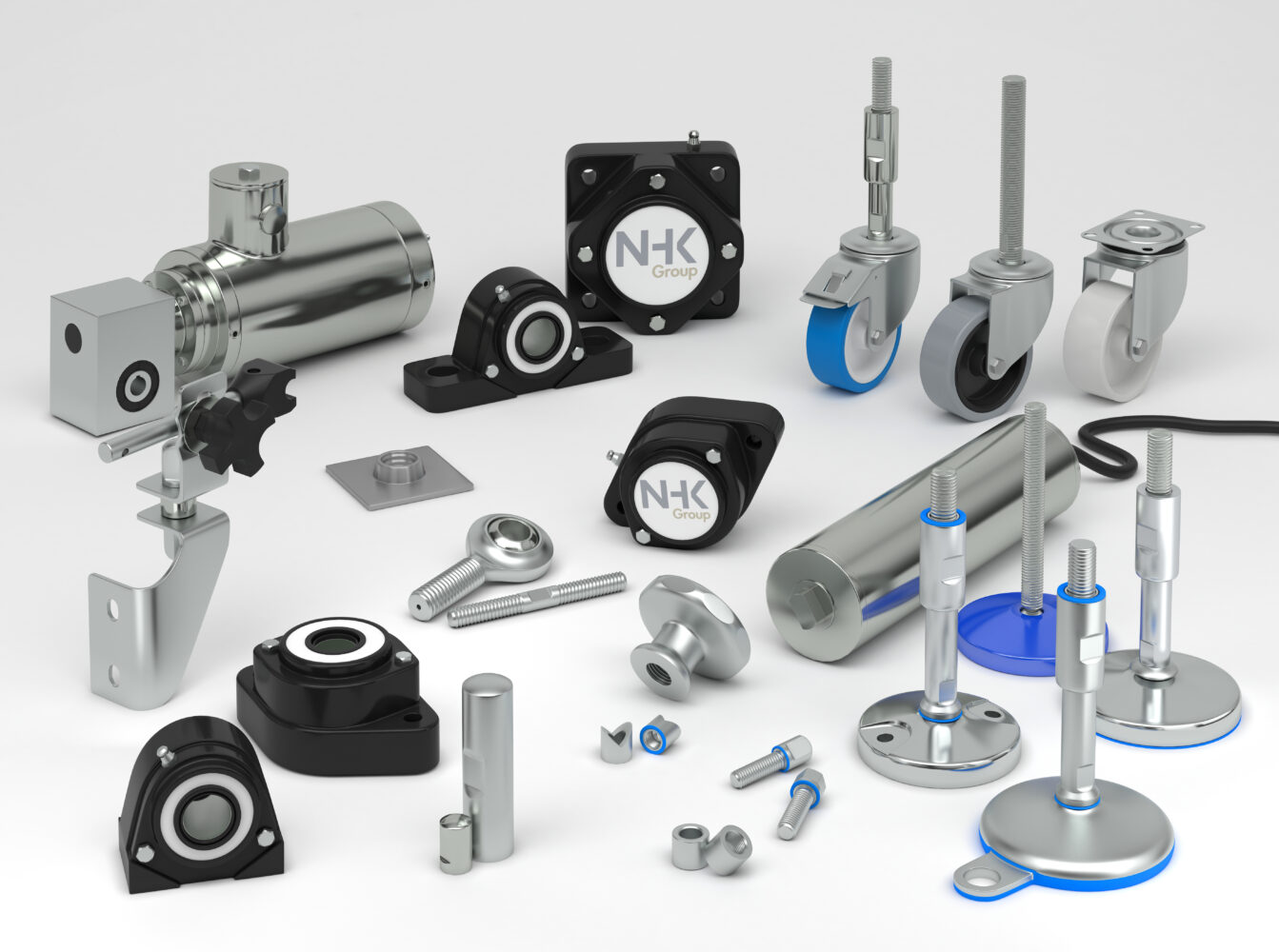
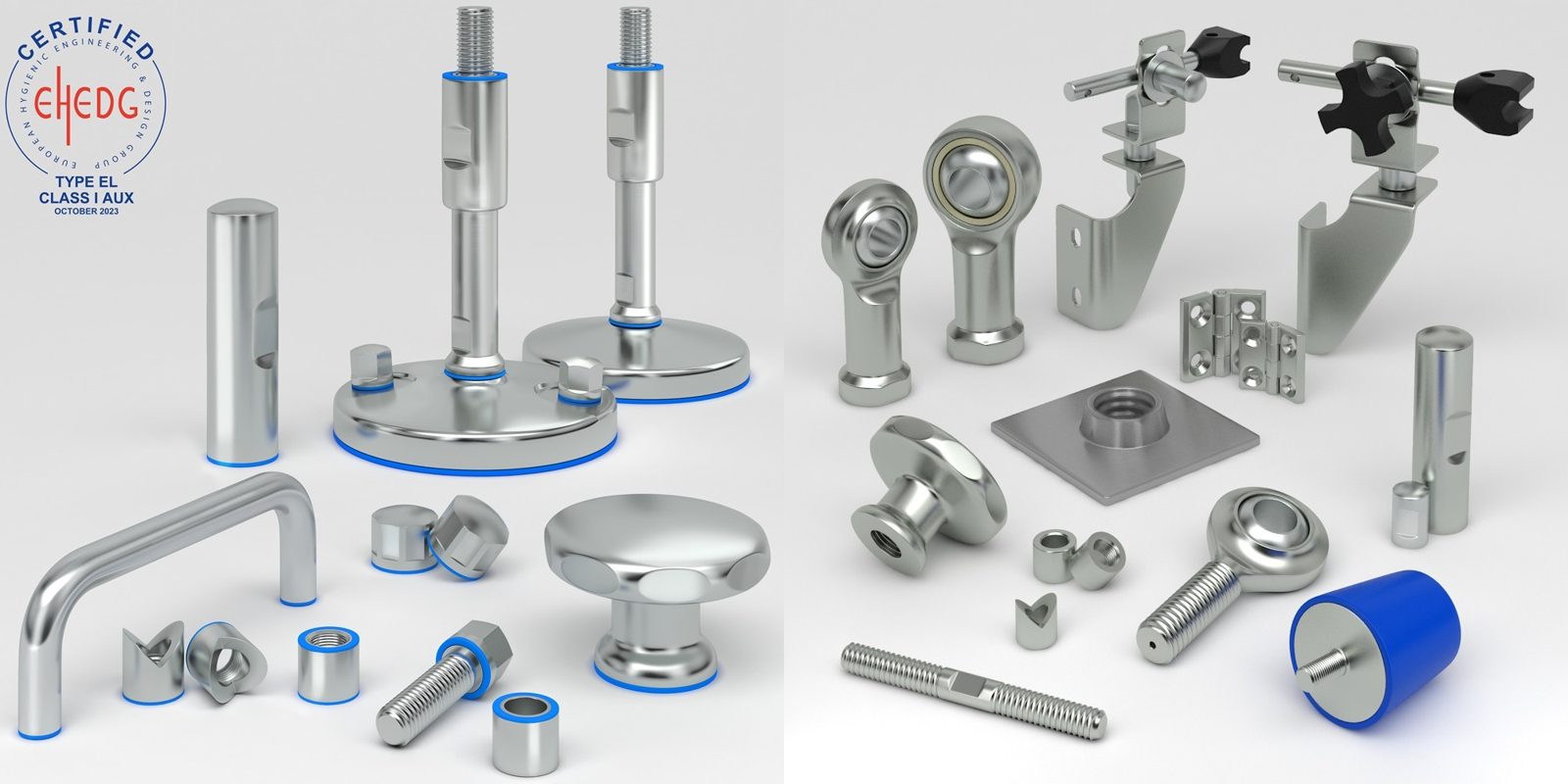
This page gives a decision method by station and covers what automation means for hygiene and equipment. For component requirements in meat and poultry, see EHEDG components in meat processing. An overview of components for the industry is on the NHK product line.
Manual labor in poultry processing
Advantages
Manual labor remains common, particularly in smaller plants and niche markets. People bring flexibility and dexterity to tasks such as deboning, trimming and sorting, where carcasses vary in size and shape. Manual work also provides employment, often in rural communities.
Limitations
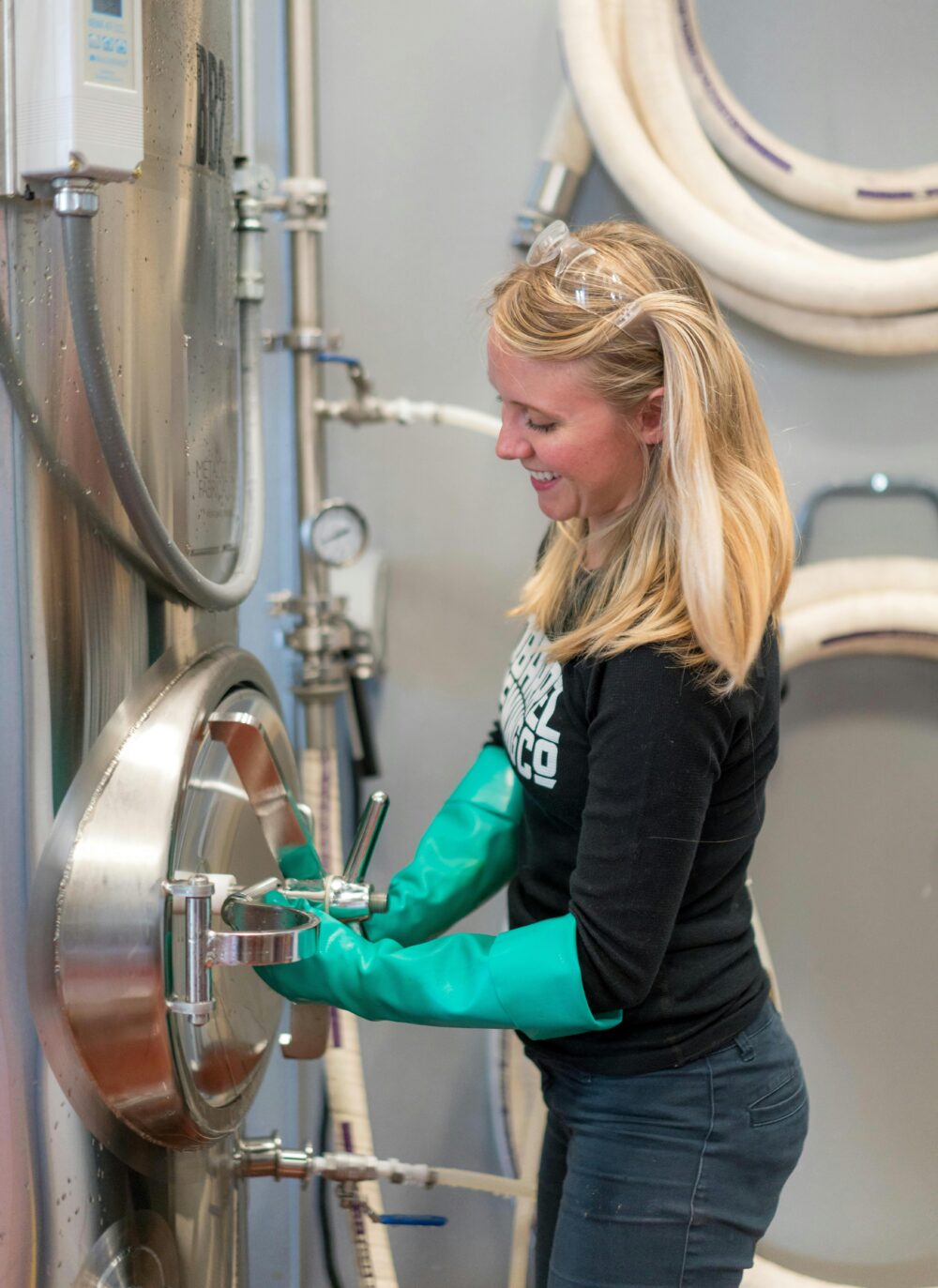
Manual processes are labour-intensive and slower. Consistency varies with skill, fatigue and turnover. Labour costs and shortages of skilled workers in many regions make full reliance on manual work difficult. Every hand that touches product is also a potential contamination route, so personal hygiene, gloves, knife sterilisation and changing procedures become critical.
Automation in poultry processing
Advantages
Automated equipment performs repetitive tasks such as evisceration, portioning and packaging at high speed and with consistent results. It reduces hand contact with product and allows data collection for process control. For large operations, automation supports scale and can reduce labour cost per unit over time.
Limitations
Automation requires high initial investment, training and regular maintenance. Smaller businesses may not have the volume to justify it. Automated lines are less flexible for specialty products, and a breakdown can stop the whole line.
Comparison: manual, automated and hybrid
| Criterion | Manual | Automated | Hybrid |
|---|---|---|---|
| Volume | Low to moderate | High | Moderate to high |
| Product variation | Handles high variation | Best with standardised products | Machines for standard flow, people for exceptions |
| Consistency | Varies with people | High | High on automated steps |
| Hand contact with product | High | Low | Reduced |
| Equipment surfaces to clean | Few (tables, knives, conveyors) | Many (drives, guides, shackles, sensors) | Moderate |
| Investment | Low | High | Medium |
| Maintenance skill needed | Low | High | Medium to high |
| Flexibility | High | Low | Medium |
How to decide, station by station
- List the stations: for example evisceration, chilling, cut-up, deboning, trimming, sorting, weighing, packing.
- Score each station on volume, product variation and the skill or judgement it needs.
- Check workforce availability in the region for the skills required.
- Assess hygiene: how much hand contact does the manual option involve, and how cleanable is the automated option?
- Estimate costs, including cleaning time, maintenance, spare parts and downtime – not only labour and investment.
- Plan a fallback: can a station run manually if the machine is down?
- Decide and review as volumes and products change.
Key factors behind the scores:
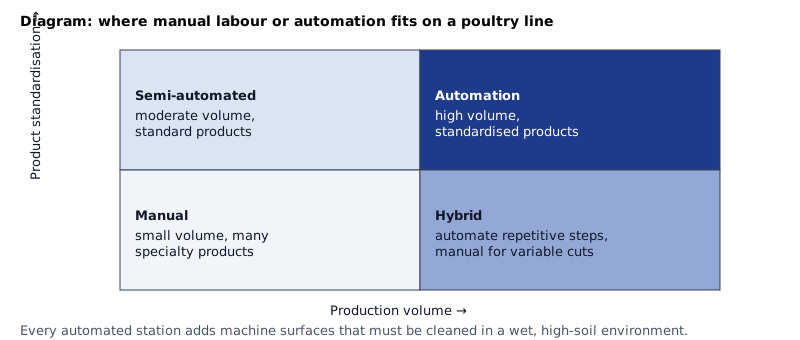
- Scale of operations: high-volume plants usually benefit from automation; smaller plants often find manual work more practical.
- Product complexity: specialty cuts and unusual packs need the adaptability of people; standardised products suit machines.
- Workforce availability: where skilled labour is scarce, automation maintains output.
- Budget and return: automation's upfront cost must be weighed against labour savings and efficiency over the equipment's life.
What automation means for hygiene and equipment
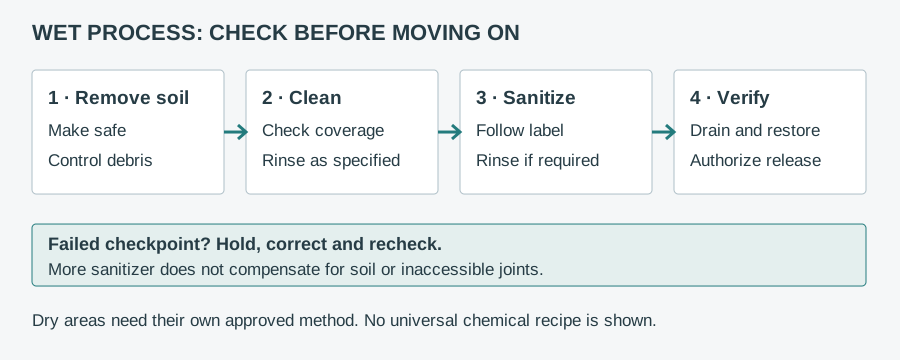
Poultry processing is wet, with heavy organic soil – blood, fat, feathers, skin – and daily intensive cleaning, often with foam, sanitisers and in some areas high-pressure water. Automated equipment in this environment must be designed for it:
- Materials: stainless steel – AISI 304 or, where chlorinated cleaners or brine raise the risk of chloride pitting, 316/316L. Plastics and elastomers documented for food contact (EC 1935/2004; EU 10/2011 for plastics; FDA 21 CFR 177.2600 for rubber).
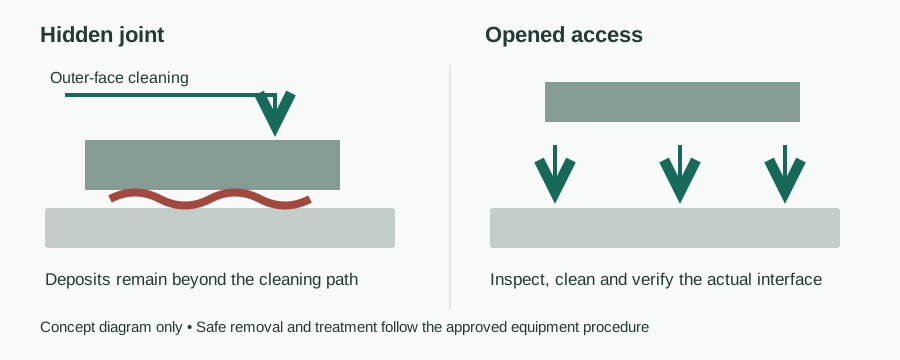
- Crevice-free design: no exposed threads, overlapping joints or crevices (narrow gaps cleaning fluid cannot flush) in the product-contact zone and splash zone – surfaces the product touches or splashes onto.
- Self-draining surfaces so water runs off; no dead spaces where liquid stagnates.
- Bearings and drives sealed for washdown. IP69K (ISO 20653, often written IP69) tests resistance to high-pressure, high-temperature jets; IP67 (IEC 60529) is an immersion test and says nothing about washdown.
- Seals: elastomer compatibility matters because poultry fat and cleaning chemicals attack unsuitable seals; EPDM is weak against fats, FKM resists oils, VMQ covers wide temperatures but is mechanically weaker.
- Machine feet: sealed hygienic levelling feet with no exposed thread at floor level, where water and soil collect.
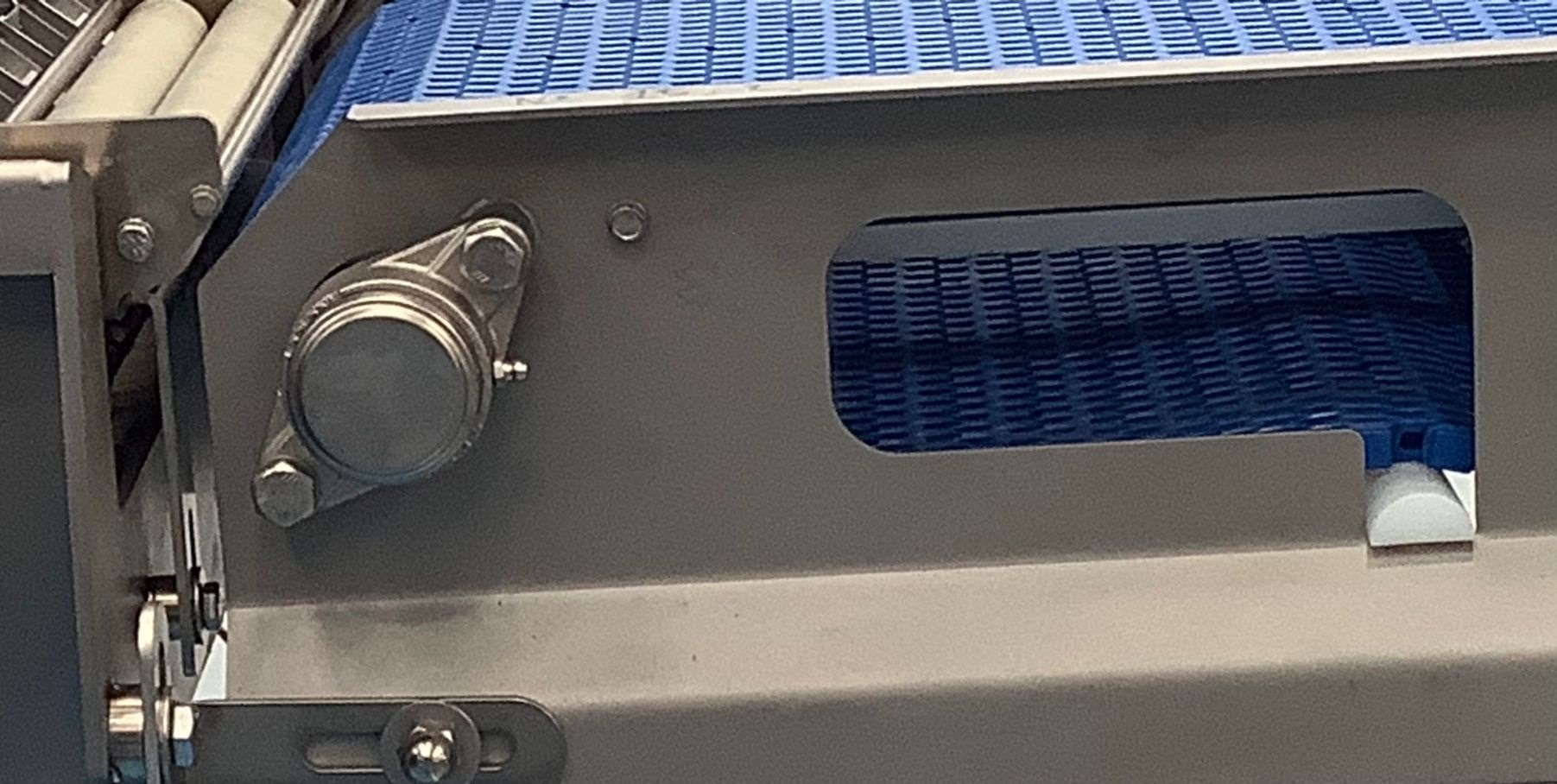
Component options include sealed stainless bearing units and conveyor components.
Example: automating a cut-up and packing area
Assumptions (illustrative): a mid-size plant with manual cut-up and packing faces labour shortages and wants to automate.
- Station review: portioning and weighing of standard breast fillets – high volume, standardised – automated. Trimming of variable pieces and specialty cuts stays manual. Packing automated for standard packs, manual for small orders.
- Hygiene: new portioning machine specified with stainless frame, open design, washdown-suited sealed bearings and hygienic feet; seals selected for fat and the plant's sanitiser.
- Costs: business case includes cleaning time for the new machines and spare seals and bearings, not only labour saved.
- Fallback: manual portioning tables kept in reserve for breakdowns.
The hybrid approach
Many poultry processors combine both: automated systems handle repetitive tasks, while people focus on quality control, variable products and tasks that need judgement. This uses the strengths of each and keeps jobs where human skill adds value.
Trends
- Smart automation: sensors and data analysis that adjust to changing production and support process control.
- Robotics: robots are increasingly used for delicate tasks such as deboning, which require complex movements.
- Sustainability: equipment designed to reduce product waste, water and energy use – cleanable design reduces cleaning water and chemicals.
For how heavier birds and faster lines affect equipment loads and bearing life, see navigating challenges in poultry processing.