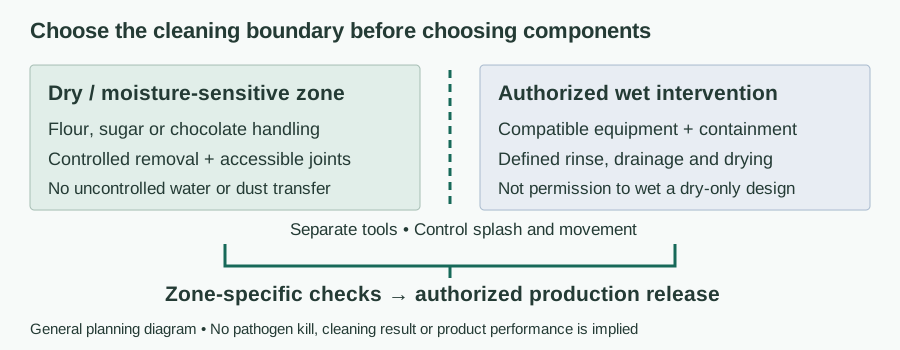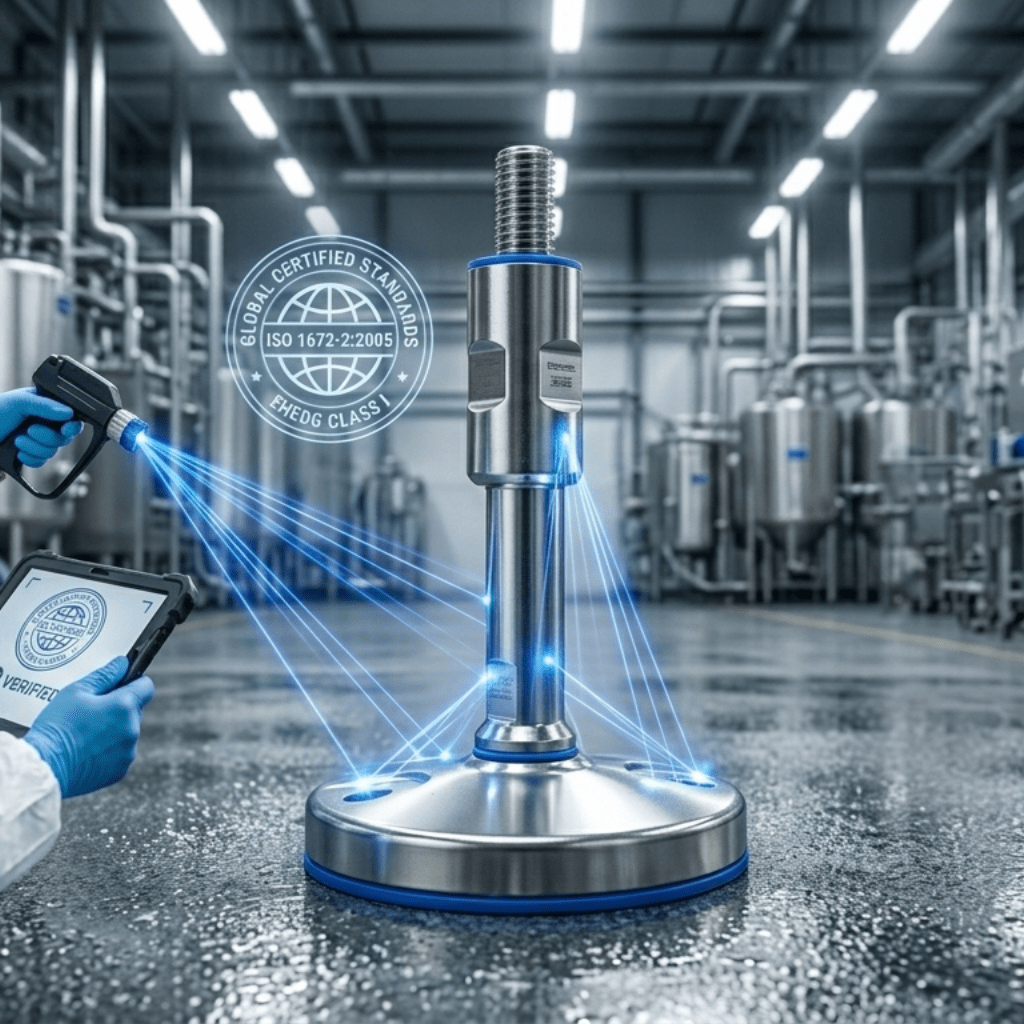
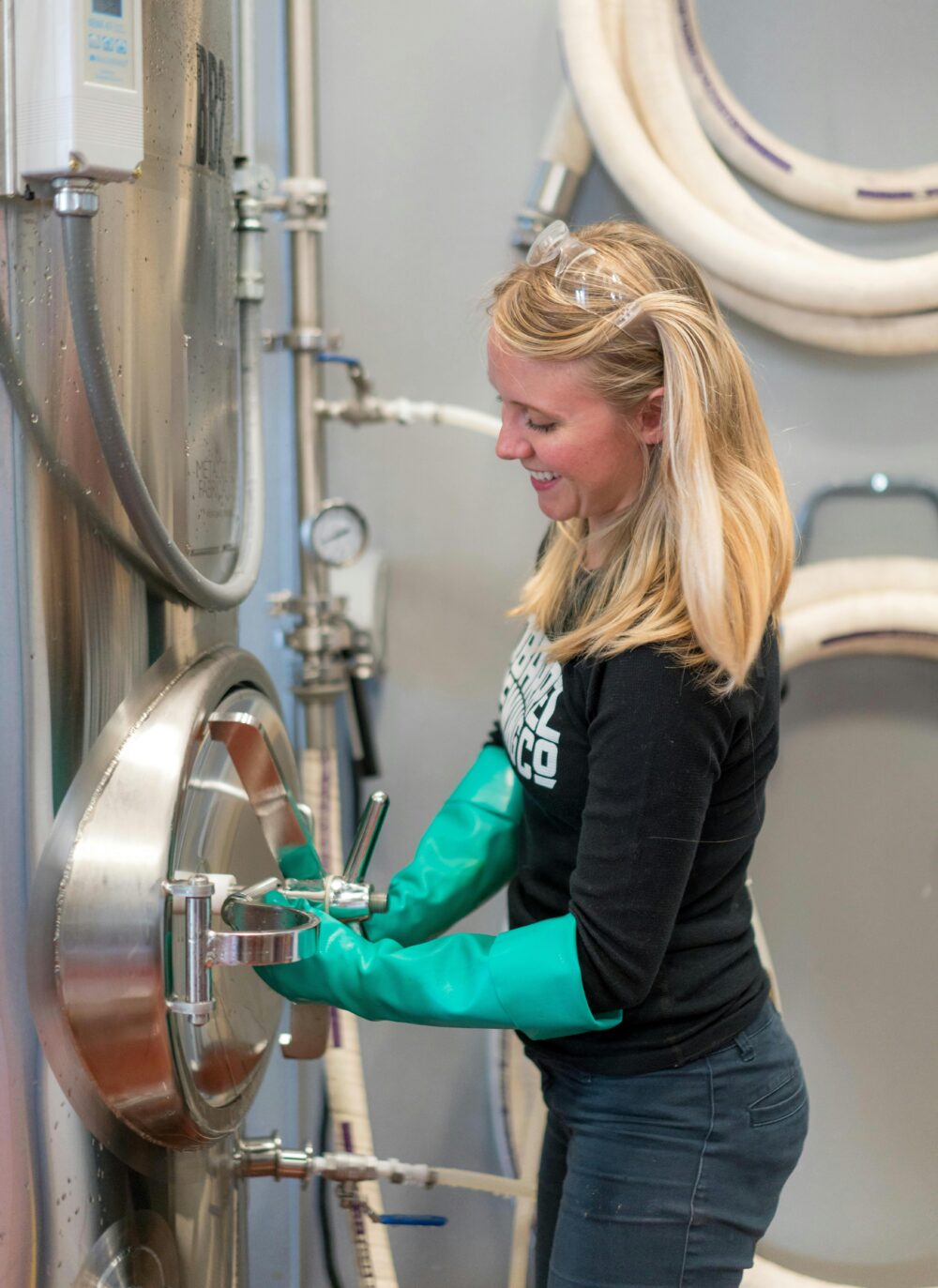
High-quality components ensuring hygienic production are machine parts whose design and materials allow a validated cleaning procedure to remove soil and microorganisms reliably, shift after shift. In pharmaceuticals, food and beverage and chemical manufacturing – often harsh environments with corrosive chemicals, temperature extremes and heavy soiling – the quality of a component is ultimately proven not by its datasheet but by hygiene verification results. This guide explains how to read those results and trace them back to components.
What "high quality" means for hygienic production
For hygienic production, a component is high quality when it does three things over its service life:
- Allows cleaning: smooth surfaces, no crevices (narrow gaps where soil collects), no dead spaces (areas cleaning fluid does not reach), and parts that can be dismantled where cleaning in place is not possible.
- Resists the environment: materials that withstand chemicals, temperature and moisture without corroding or degrading. Stainless steel is favoured for corrosion resistance and ease of cleaning.
- Stays intact: seals, covers and surfaces that keep their condition, so the component does not become a contamination source itself.
Each property can be checked on the drawing and in documents, but the decisive test is what remains on the part after cleaning.
How component quality shows up in hygiene results
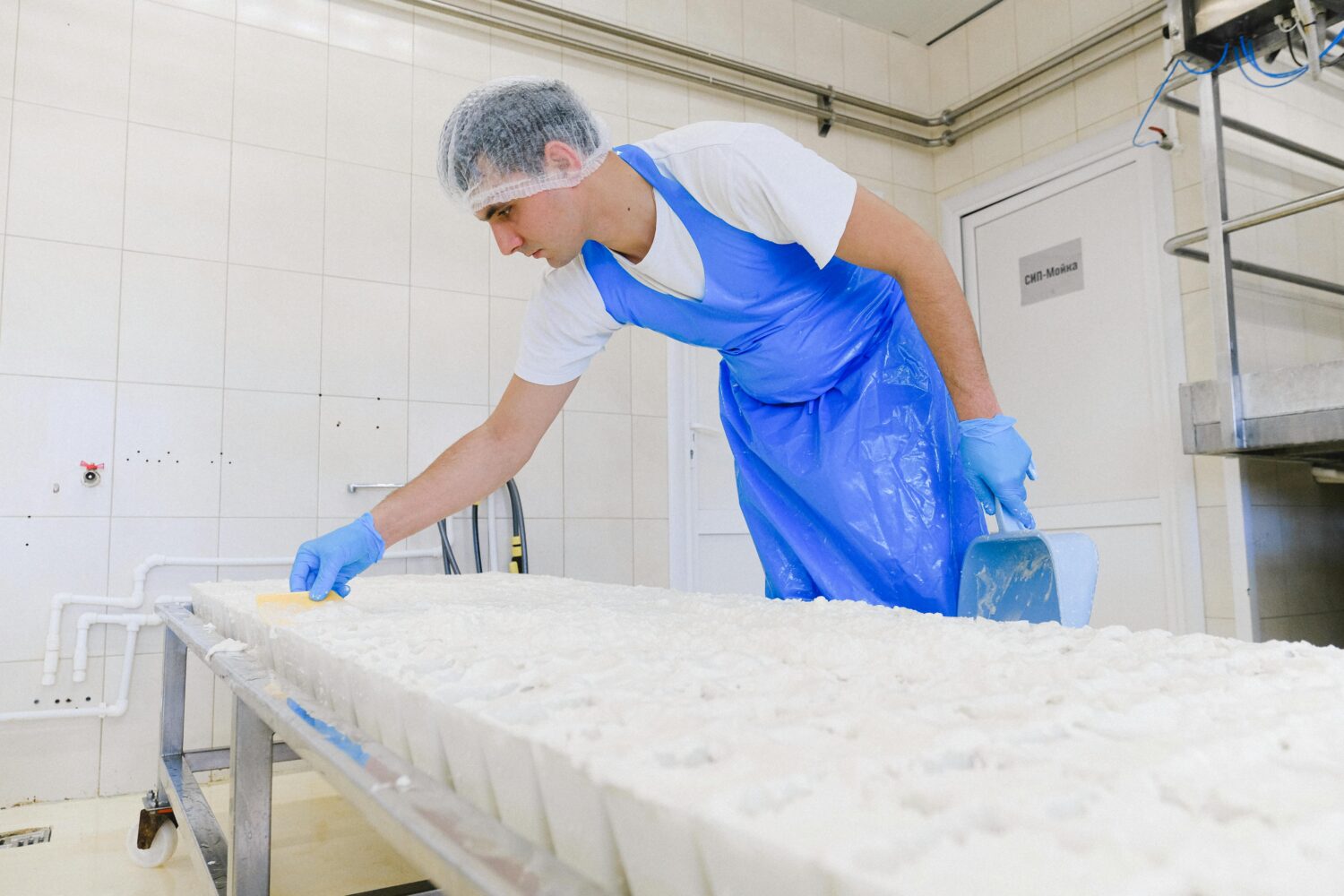
Plants verify cleaning in three main ways. Each says something different about components:
| Method | What it shows | What it says about components | Limitation |
|---|---|---|---|
| Visual inspection (with torch) | Visible residues, rust, grease, damage | Crevices holding soil, corrosion, leaking bearings | Misses invisible films and microorganisms |
| ATP swab | Organic residue on a surface, in minutes | Areas cleaning does not reach consistently | Does not identify bacteria; readings vary by surface |
| Microbiological swab | Presence of specific organisms (e.g. Listeria in environmental monitoring) | Harbourage points – places where microorganisms survive cleaning | Results take days |
| Allergen swab | Allergen residue after changeover | Whether parts are cleanable enough for allergen changeovers | Specific to each allergen |
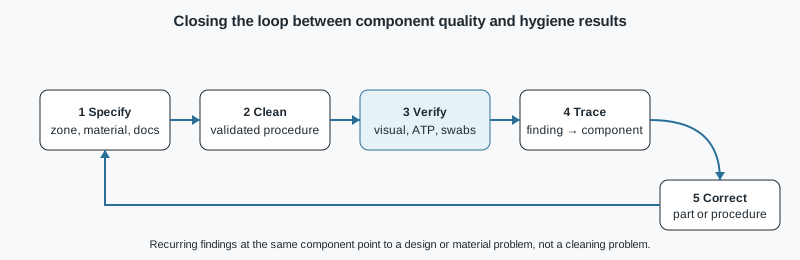
The key signal is recurrence. A single failed swab may be a cleaning error. The same location failing repeatedly, after a correctly performed clean, points to the component: its geometry, material or condition.
Tracing a finding back to the component
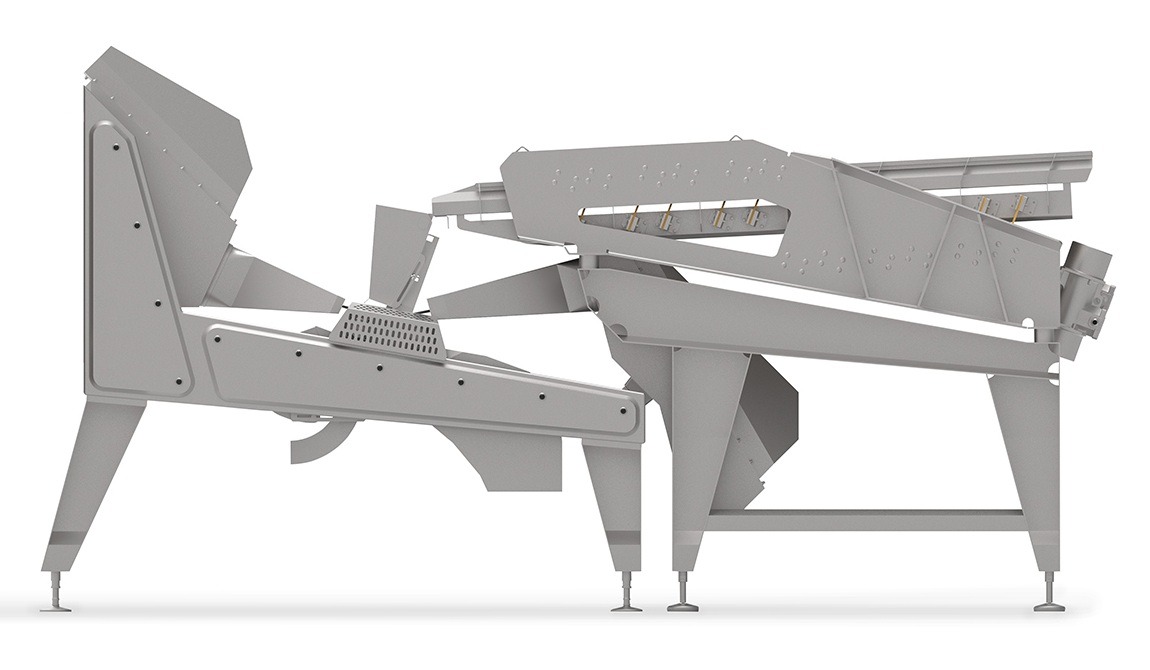
- Map swab points to components. Record not only "conveyor 3, frame" but the specific part: foot, bearing unit, bracket, fastener, guide.
- Log results per point over time to see recurrence.
- Inspect the part that fails repeatedly, with it dismantled if possible.
- Classify the cause using the table below.
- Correct the part or the procedure, then verify again with the same method.
Typical component causes and corrections
| Finding at the part | Likely component cause | Correction |
|---|---|---|
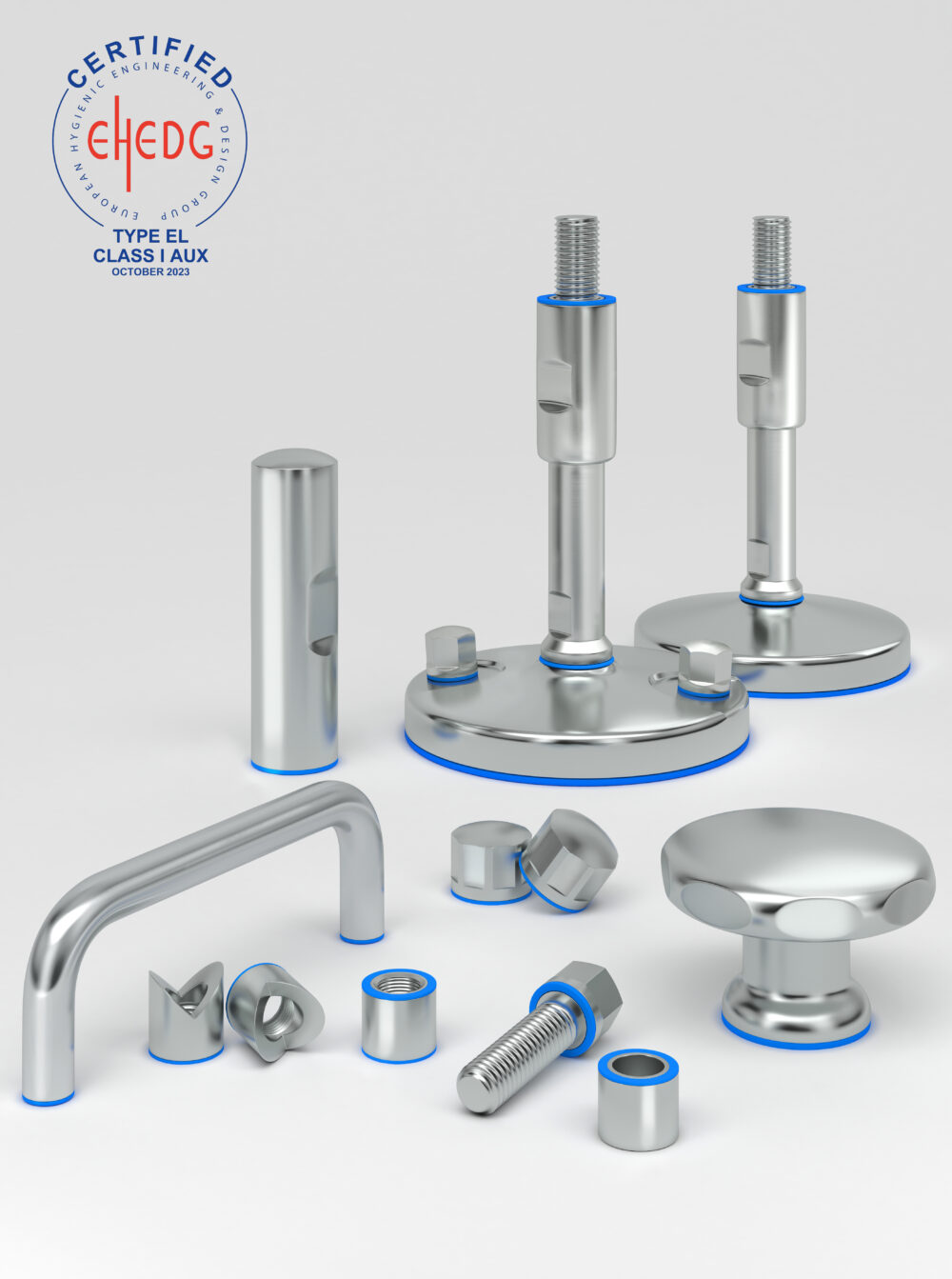
| Residue around feet threads | Exposed thread, open joint under base | Sealed hygienic foot without exposed thread |
| Grease or black residue below bearings | Open covers, washed-out grease | Sealed unit with closed covers; food-grade (NSF H1) grease |
| Rust staining, pits | Unsuitable steel grade; chloride pitting (corrosion pits caused by chlorides) | 316/316L where chlorides are present; check passivation (the protective oxide layer) |
| Positive swabs at bolted joints | Crevices under bolt heads and washers | Hygienic bolts with sealing washers |
| Cracked or swollen seals | Elastomer not compatible with chemicals or temperature | EPDM, FKM or VMQ selected for the cleaning chemistry |
| Water pooling on brackets | Non-self-draining geometry | Sloped or round profiles; re-orientation |
| Rough, dull product-contact surface | Surface finish too coarse or worn | Finish to Ra ≤ 0.8 µm (EHEDG guidance for product contact) |
Example – assumptions stated, not a real case. A ready-meal plant's environmental monitoring shows repeated positive microbiological swabs at the base of a packing conveyor, though ATP readings elsewhere are stable. Mapping the points to components shows all positives at the four levelling feet. Inspection finds exposed threads and a gap under each base. The feet are replaced with sealed hygienic feet; follow-up swabs are taken at the same points for the next weeks to confirm the correction.
Harsh environments: durability as a hygiene requirement
In harsh environments, durability is part of hygiene. A seal that hardens after months of hot cleaning, or a housing that starts to corrode, becomes a harbourage point long before it fails mechanically. That is why material choice must be checked against the actual chemicals, concentrations and temperatures, and why galvanic corrosion – when dissimilar metals touch in a wet environment – should be avoided in fastener and bracket choices.
Process control and automation
The source article noted that high-quality machines offer precise process control – temperature, mixing, closed containers – and that automation and sensors reduce human contact with product. Both help product safety. Every sensor, cable and actuator added is also a new component that must be hygienically designed and cleanable; poorly placed instrumentation can create new harbourage points.
Cost over time
Higher-quality components usually cost more initially. They pay back through fewer repairs and replacements, shorter and more reliable cleaning, and fewer failed verifications and their consequences – rework, held product, investigations. The size of the saving depends on the plant; verification records give the data to calculate it.
For supplier quality, certification scope and incoming inspection, see ensuring quality and reliability. For conveyor-specific stresses and specification criteria, see the vital role of high-quality conveyor components.
Conclusion
High-quality components ensure hygienic production only if the results confirm it. Map verification points to components, look for recurrence and correct the part when cleaning cannot fix the finding. NHK lists its certified hygienic components and sealed IP67 waterproof bearing units with spherical inserts; IP67 is an immersion test, not a hygiene certification.