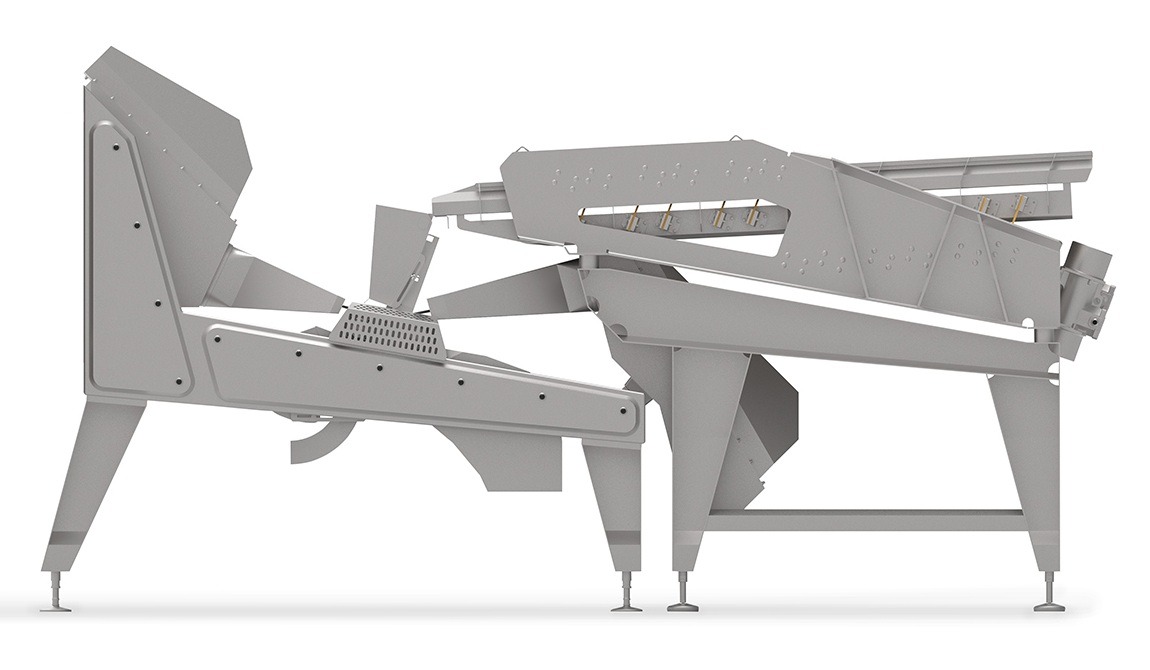
Machine conversion for hygienic use is the upgrade of existing equipment so that it can work in a zone with stricter hygiene requirements – typically moving from low-risk to high-risk production. In food processing, pharmaceuticals and biotechnology, growing regulatory demands and customer expectations push more equipment into high-risk roles, and its design, materials and function must follow.
This page covers the engineering decision: what changes between low- and high-risk use, when to retrofit and when to replace, and which components to convert first. For component reliability in general, see optimizing industrial machinery performance.
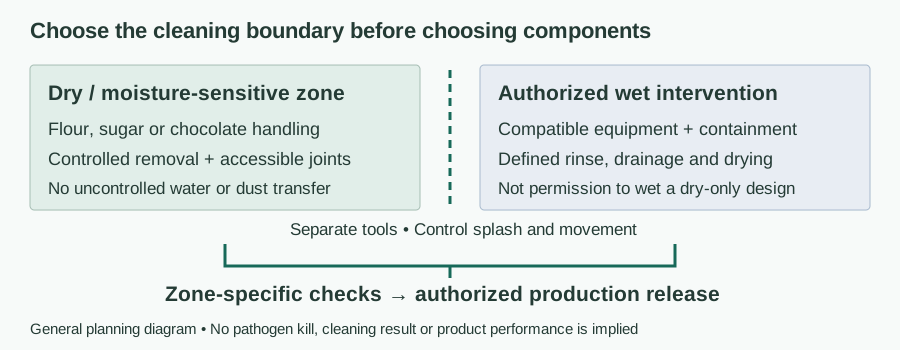
For chilled meal assembly, use the product-specific ready-meal process and zone assessment to establish intended use, exposure and scheme criteria before applying the retrofit checklist.
Low-risk vs high-risk machinery
Low-risk machinery
Low-risk machinery is used in processes with limited contamination risk: storage systems, basic conveyors for packed goods and non-contact equipment. It has limited exposure to product at critical stages and is typically cleaned less intensively.
High-risk machinery
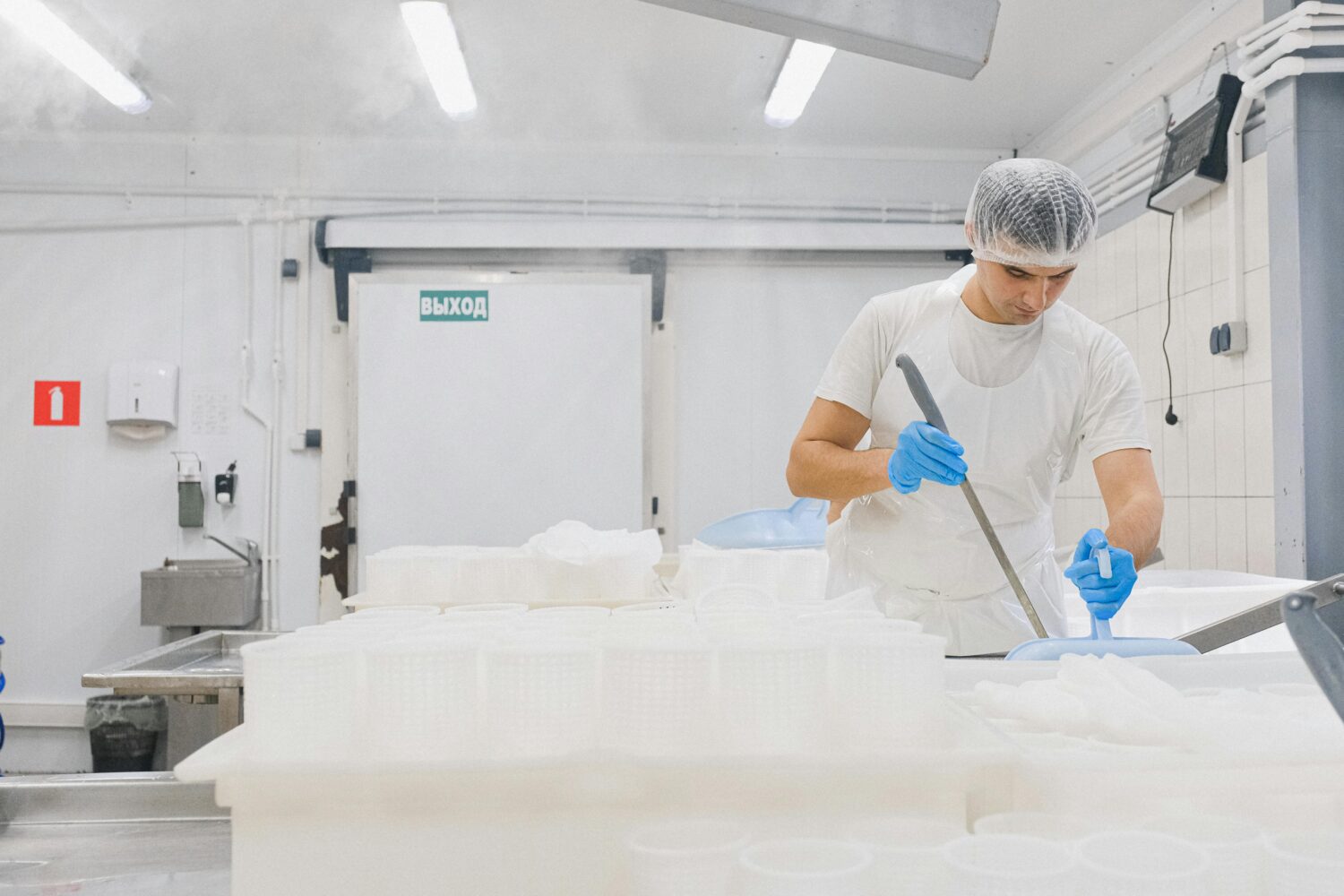
High-risk machinery handles exposed product where contamination could reach the consumer – filling, sealing, cutting or mixing, especially of ready-to-eat food and pharmaceuticals. Contamination here can lead to recalls, health risks and regulatory penalties.
| Aspect | Low-risk use | High-risk use |
|---|---|---|
| Product exposure | Packed or protected product | Exposed product, often ready-to-eat |
| Cleaning | Periodic, often dry or light wet cleaning | Frequent, intensive wet cleaning and sanitising |
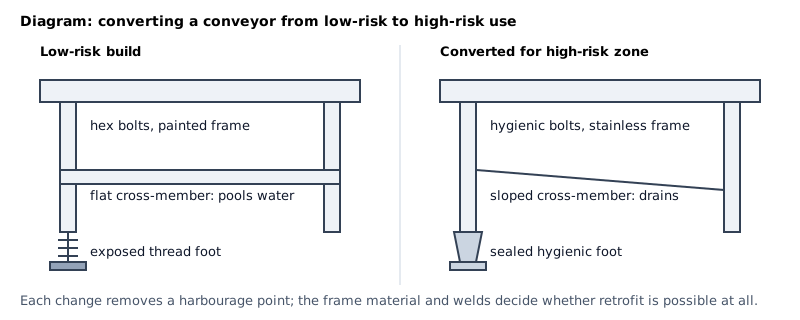
| Surfaces | Painted steel may be acceptable in non-contact areas | Stainless steel or documented materials; smooth, self-draining |
| Fasteners | Standard hex bolts | Hygienic bolts and domed nuts in product-contact and splash zones |
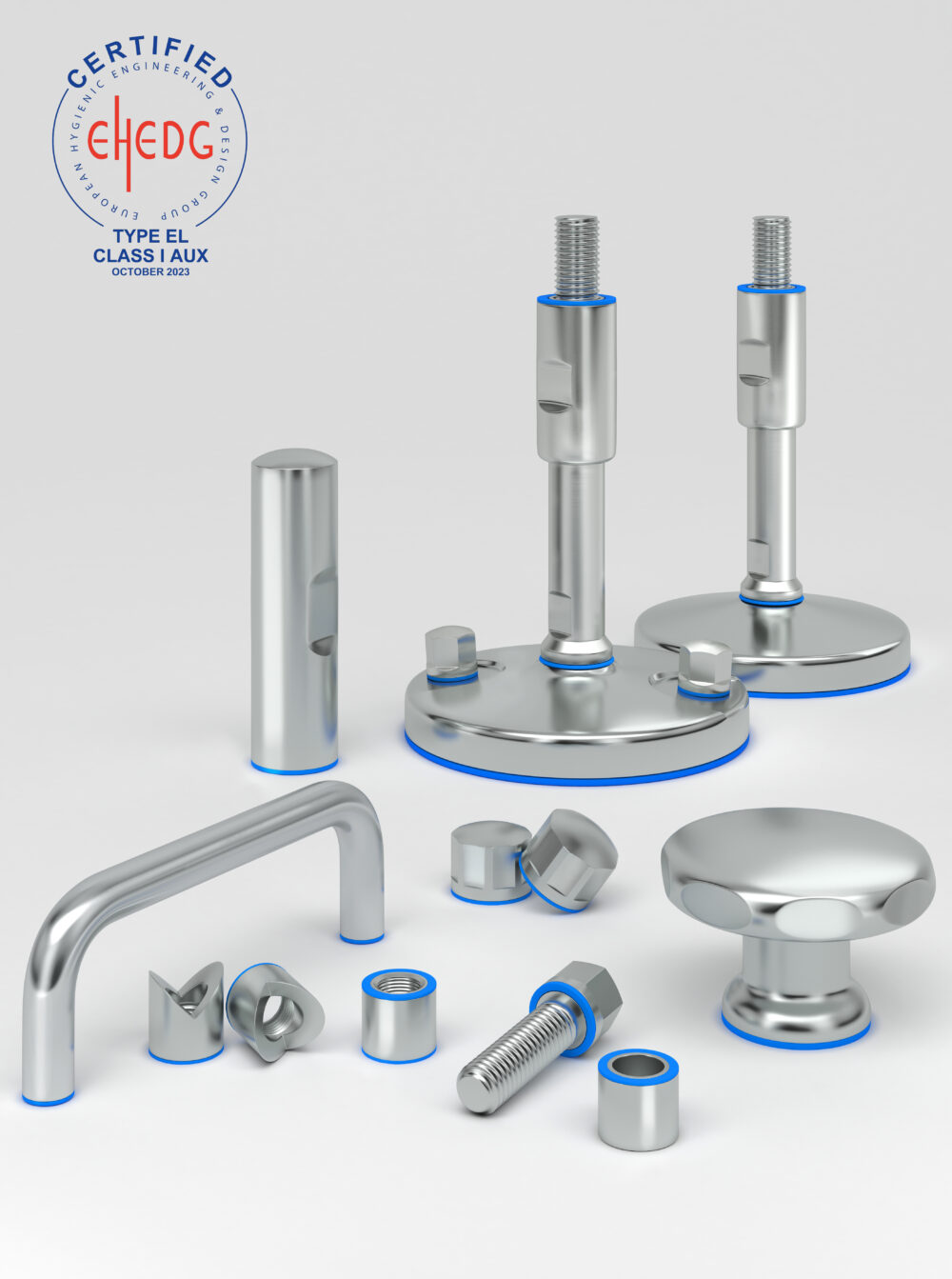
| Feet | Standard adjustable feet | Sealed hygienic feet with no exposed thread |
| Bearings | Standard housings | Housings and seals suited to washdown |
| Verification | Visual | Visual, ATP and swabs at defined points |
What hygienic efficiency means in high-risk machinery
Hygienic efficiency is the ability of a machine to be cleaned to the required level quickly and reliably, with limited water, chemicals and downtime. In high-risk settings it serves to:
- Prevent contamination by pathogens, allergens and foreign matter.
- Meet requirements: food hygiene law (in the EU, Regulation (EC) 852/2004; in the US, FDA rules), machinery hygiene standards such as EN 1672-2, and voluntary EHEDG and 3-A guidelines.
- Protect product quality at every stage.
- Reduce downtime by shortening and simplifying cleaning.
Design features required for high-risk use
- Materials: stainless steel – AISI 304 for general use, 316/316L where chlorides raise the risk of chloride pitting (local corrosion). Product-contact surfaces are finished smooth; EHEDG guidance gives Ra ≤ 0.8 µm.
- Seamless construction: continuous welds and rounded corners instead of cracks, crevices (narrow gaps cleaning fluid cannot flush) and overlapping joints.
- Self-draining design: sloped surfaces so water runs off and surfaces dry after cleaning; no dead spaces where liquid stagnates.
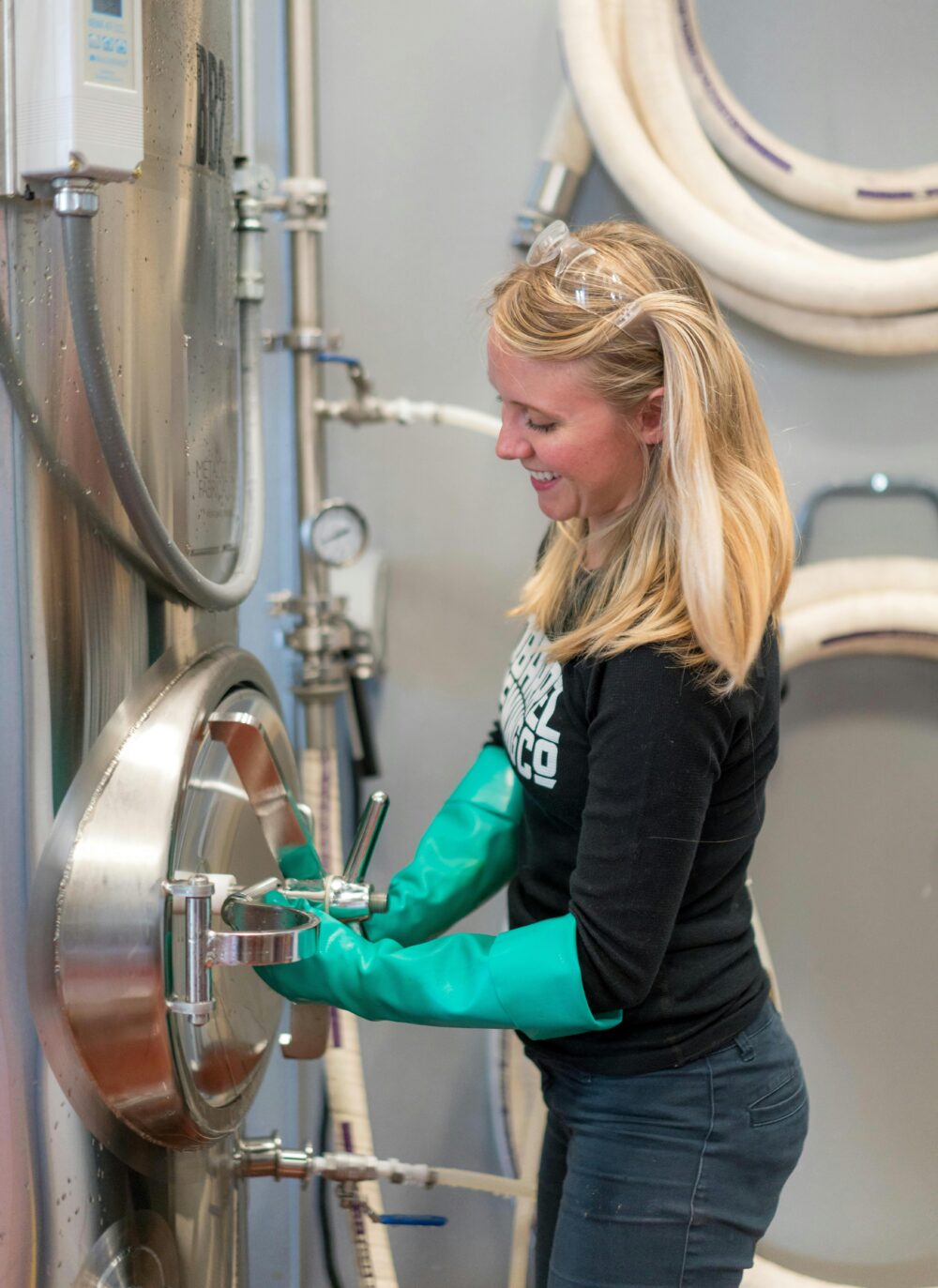
- Washdown-suited components: IP ratings describe ingress resistance, not cleanability. IP67 (IEC 60529) is a temporary immersion test; IP69K (ISO 20653, also written IP69) tests high-pressure, high-temperature jets. Choose bearing units and seals designed for the actual cleaning method.
Retrofit or replace?
Replacing all low-risk machines is often not feasible. Retrofitting existing equipment with hygienic components – sanitary leveling feet, seals, fasteners, bearing units, conveyor parts – can close the gap, but only if the machine's structure allows it.
| Check | Retrofit is realistic if… | Replace if… |
|---|---|---|
| Frame material | Stainless steel or suitable for the cleaning chemicals | Painted or galvanised steel in splash or product zones |
| Welds and joints | Continuous, smooth welds | Stitch welds, overlapping plates, bolted joints with gaps |
| Profiles | Open or fully sealed sections | Hollow profiles with openings that take in water |
| Geometry | Few horizontal surfaces; access for cleaning | Closed housings, inaccessible areas |
| Documentation | Materials known or can be determined | Materials unknown, no drawings |
How to convert a machine step by step
- Define the new use: zone, product, cleaning method (CIP – cleaning in place, foam, high-pressure washdown), chemicals and temperatures.
- Assess the structure against the retrofit-or-replace table.
- Map zones on the machine: product-contact zone (surfaces the product touches), splash zone (surfaces from which product can return to the product) and non-contact zone.
- Replace components in order of risk:
- product-contact and splash-zone fasteners, seals and covers;
- bearing units – washdown-suited housings and seals;
- machine feet – sealed hygienic designs with no exposed thread;
- drainage – slopes and drain holes in horizontal members.
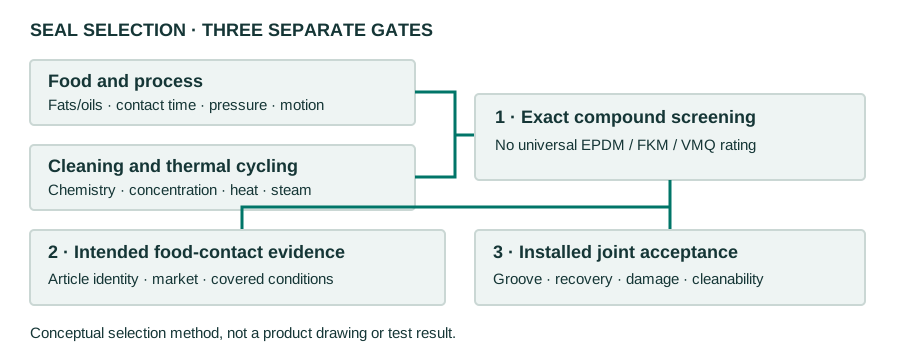
- Check materials and seals: stainless grade for the chemicals; elastomers chosen for compatibility (EPDM, FKM, VMQ each resist different media); declarations of compliance for food-contact materials.
- Verify: visual inspection, ATP and swabs at former problem spots after cleaning.
- Document the conversion and update the risk assessment and technical file if the intended use has changed.
Component options include EHEDG and 3-A components, sealed stainless bearing units and hygienic levelling feet.
Example: converting a conveyor for a ready-to-eat line
Assumptions (illustrative): a stainless steel conveyor used for packed goods is moved into a high-risk zone handling sliced cooked meat, cleaned daily with foam and sanitiser.
- Structure: stainless frame with continuous welds – retrofit is realistic; one flat cross-member is replaced with a sloped one.
- Fasteners: hex bolts in the splash zone replaced with hygienic bolts with sealing washers.
- Bearings: standard cast housings replaced with sealed stainless bearing units.
- Feet: exposed-thread feet replaced with sealed hygienic feet; load per foot = total load ÷ number of feet that actually carry it × safety factor, assuming fewer feet carry the load until levelled on an uneven floor.
- Verification: ATP at feet, bearings and fasteners before and after conversion.
Training and supplier collaboration
High-risk machinery needs more demanding cleaning procedures and operating knowledge. Train operators and cleaners on the converted machine, including new disassembly steps. Work with component and equipment suppliers experienced in hygienic design, and request drawings, materials documentation and certificates for specific parts.
Digital monitoring
- Data collection: sensors that record cleaning cycles, temperatures and operating data.
- Predictive maintenance: wear data helps replace seals and bearings before they fail and create harbourage points.
- Traceability: digital records support audits and investigation of contamination incidents.
Industries converting equipment
- Food processing: dairy, seafood, bakery and confectionery move equipment into high-care roles; hygienic conveyors, washdown-suited bearings and stainless components are central.
- Pharmaceuticals: clean-room machinery with seamless design, automated cleaning and monitoring.
- Biotechnology: equipment designed to prevent cross-contamination in the production of vaccines and biologics.