Hygienic machine design standards are the laws, standards and guidelines that define how food, pharmaceutical and biotechnology machinery must be designed so that it can be cleaned effectively and does not contaminate the product. Food processing, pharmaceutical and biotechnology producers face increasing pressure to meet them, and hygienic design has become a core part of compliance, product safety and efficient operation.
The difficulty for engineers is not the principles – those are well established – but knowing which hygienic standard is mandatory, which is voluntary and how they fit together. This page maps them and shows how they translate into component choices. For a practical view of the 3-A scheme, see 3-A sanitary design and human error.
How hygienic machine design standards fit together
For practical use of the guidance layer, see the Doc 8 scope and engineering review checklist without treating guidelines as a certificate.
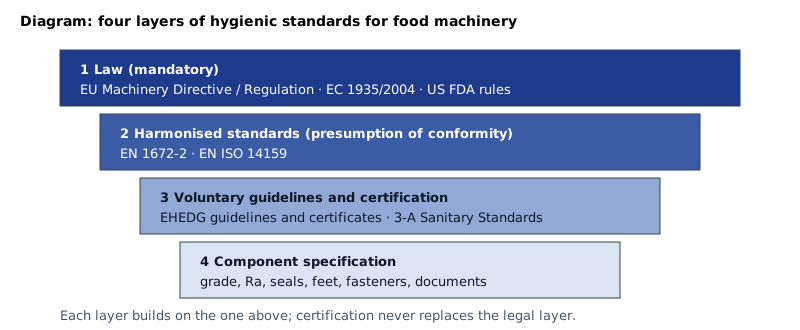
| Layer | Examples | Status | What it does |
|---|---|---|---|
| Law | EU Machinery Directive 2006/42/EC (Machinery Regulation (EU) 2023/1230 from 20 January 2027); EC 1935/2004; US FDA rules | Mandatory | Sets essential requirements: food machinery must be cleanable; food-contact materials must be safe |
| Harmonised and international standards | EN 1672-2; EN ISO 14159 | Voluntary, but give presumption of conformity when harmonised | Turn the legal requirements into design rules |
| Guidelines and certification | EHEDG guidelines and certificates; 3-A Sanitary Standards and Symbol authorisation | Voluntary | Detailed design guidance and certification of specific designs |
| Component specification | Material grade, surface finish, seals, feet, fasteners | Contractual | How the machine builder implements all of the above |
Which hygienic standard is mandatory?
EU: machinery law
The EU Machinery Directive 2006/42/EC includes specific hygiene requirements for machinery intended for food, cosmetics and pharmaceuticals: surfaces must be smooth and cleanable, without ridges or crevices, and designed to drain. The Machinery Regulation (EU) 2023/1230 replaces the directive and applies from 20 January 2027; as a regulation it applies directly in all member states.
EU: food-contact materials
EC 1935/2004 covers all materials and articles intended to contact food: they must not transfer substances in quantities that endanger health or change the food. Plastics are additionally covered by EU 10/2011. Suppliers confirm compliance with a declaration of compliance.
US
In the US, FDA rules cover food-contact substances – for example 21 CFR 177.2600 for rubber articles. 3-A Sanitary Standards are widely used in dairy.
Voluntary hygienic standards and certification
EN 1672-2 and EN ISO 14159
EN 1672-2 sets hygiene requirements for food processing machinery. It distinguishes the product-contact zone (surfaces the product touches), the splash zone (surfaces where product can splash and return to the product) and the non-contact zone, with stricter requirements closer to the product. EN ISO 14159 gives general hygiene requirements for machinery design. When harmonised under EU machinery law, applying them gives a presumption of conformity with the corresponding requirements. Background: EN 1672-2 hygiene requirements.
EHEDG
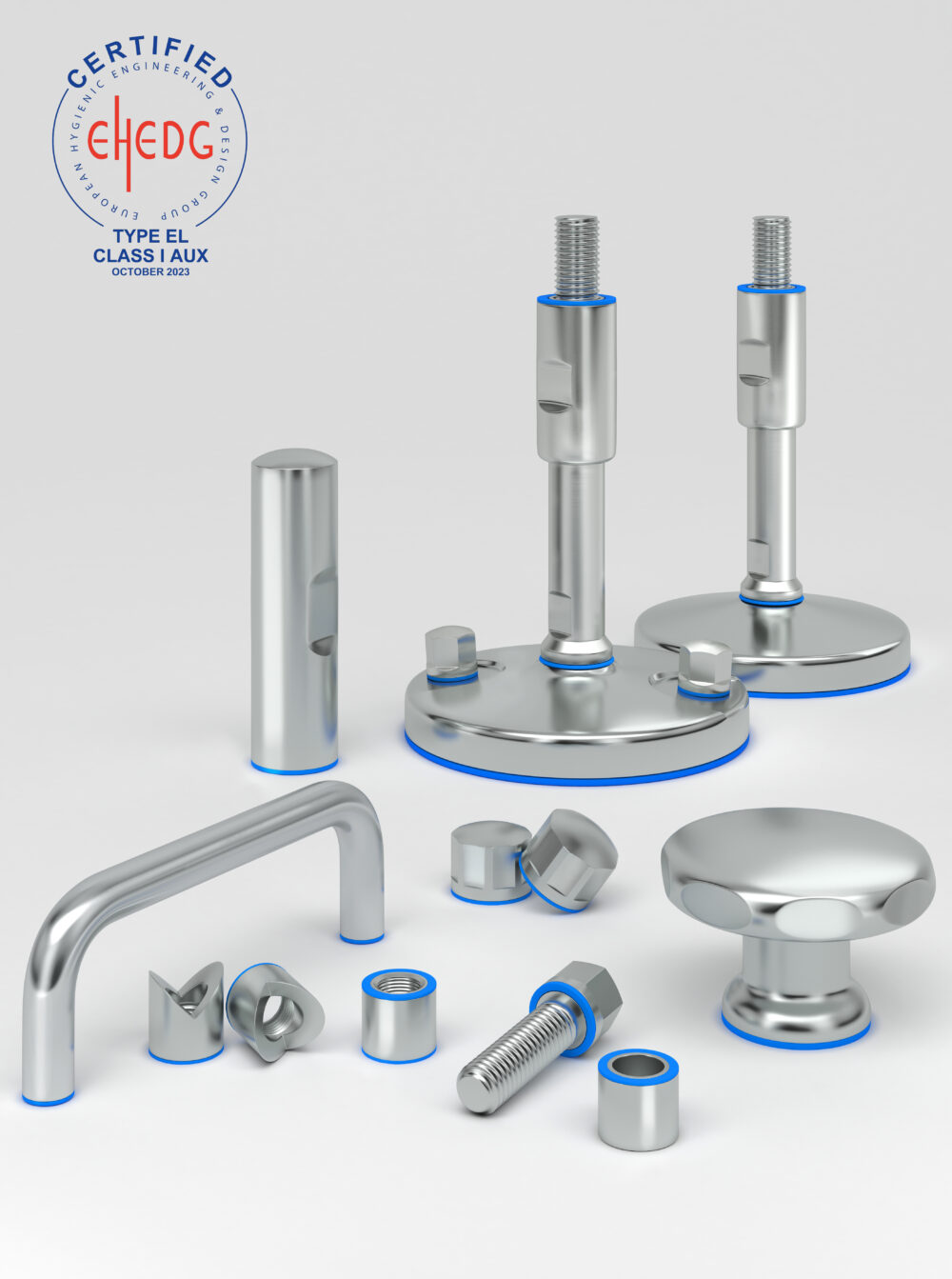
The European Hygienic Engineering & Design Group publishes detailed guidelines and certifies specific designs of equipment and components, often including a cleanability test. Certification is voluntary and applies to the certified design only – not to the manufacturer or its range. See EHEDG certified components.
3-A Sanitary Standards
3-A Sanitary Standards are US-based standards, widely used in dairy. 3-A Symbol authorisation confirms a specific design meets the applicable standard, following a Third Party Verification. Voluntary.
| Scheme | Origin | Scope | Certifies |
|---|---|---|---|
| EN 1672-2 | European standard | Food processing machinery | Nothing – design standard |
| EN ISO 14159 | International standard | Machinery with hygiene risks | Nothing – design standard |
| EHEDG | European consortium | Food equipment and components | Specific designs |
| 3-A | US organisation | Dairy and food equipment | Specific designs (Symbol authorisation) |
Core principles behind every hygienic standard
- Smooth, crevice-free surfaces: prevent residue build-up and make cleaning effective. A crevice is a narrow gap cleaning fluid cannot flush.
- Surface finish: EHEDG guidance gives Ra (average surface roughness) ≤ 0.8 µm for product-contact surfaces.
- Self-draining design: sloped surfaces, no pockets or dead spaces where liquid stagnates.
- No exposed threads in product-contact and splash zones.
- Suitable materials: stainless steel – typically AISI 304, or 316/316L where chlorides are present because it resists chloride pitting better – and documented food-contact plastics and elastomers.
- Accessibility: parts that must be cleaned can be reached or removed.
How these principles apply to machine feet and bearing units is covered in the core of hygienic design in food processing machinery.
Translating hygienic standards into component choices
| Component | What the standards imply | What to specify |
|---|---|---|
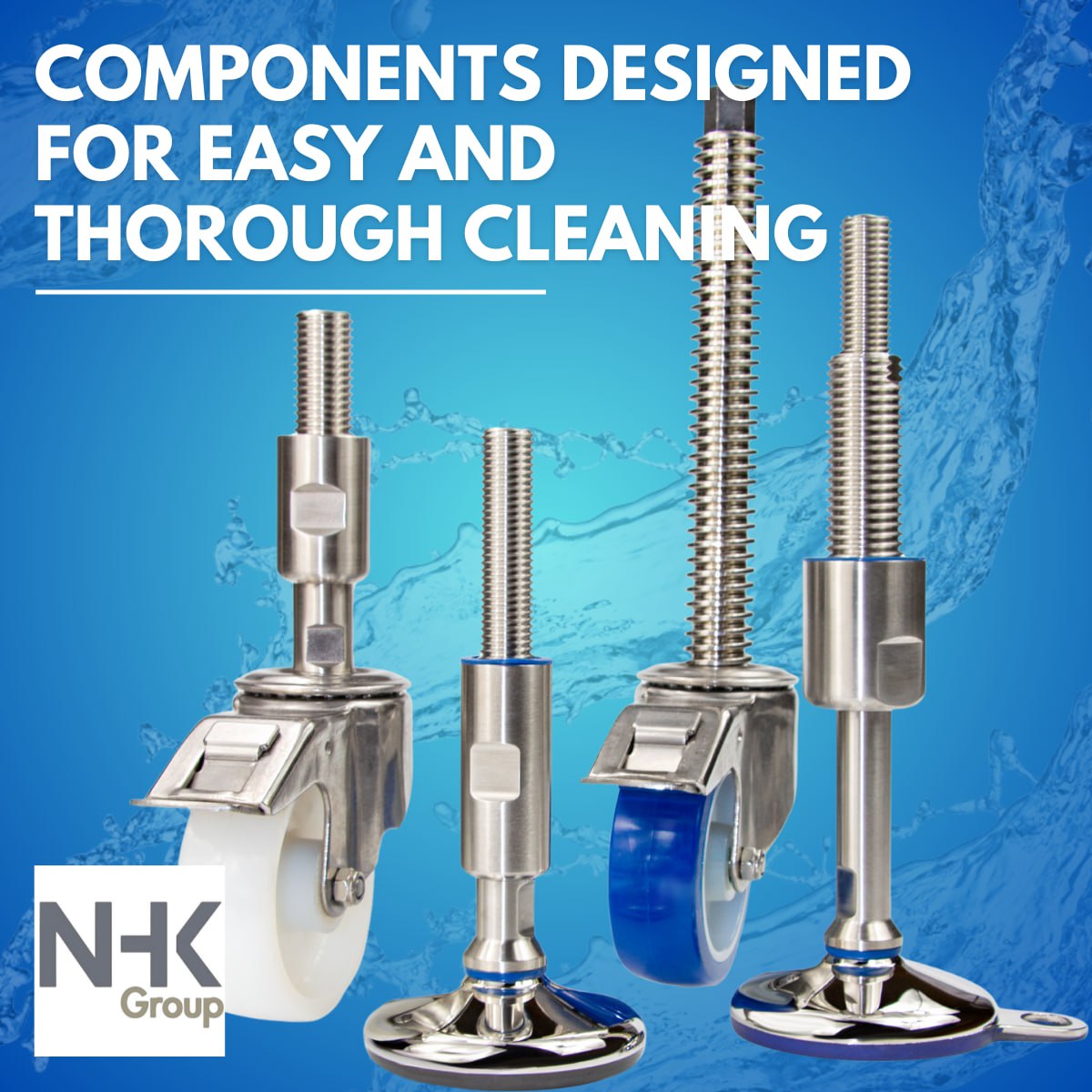
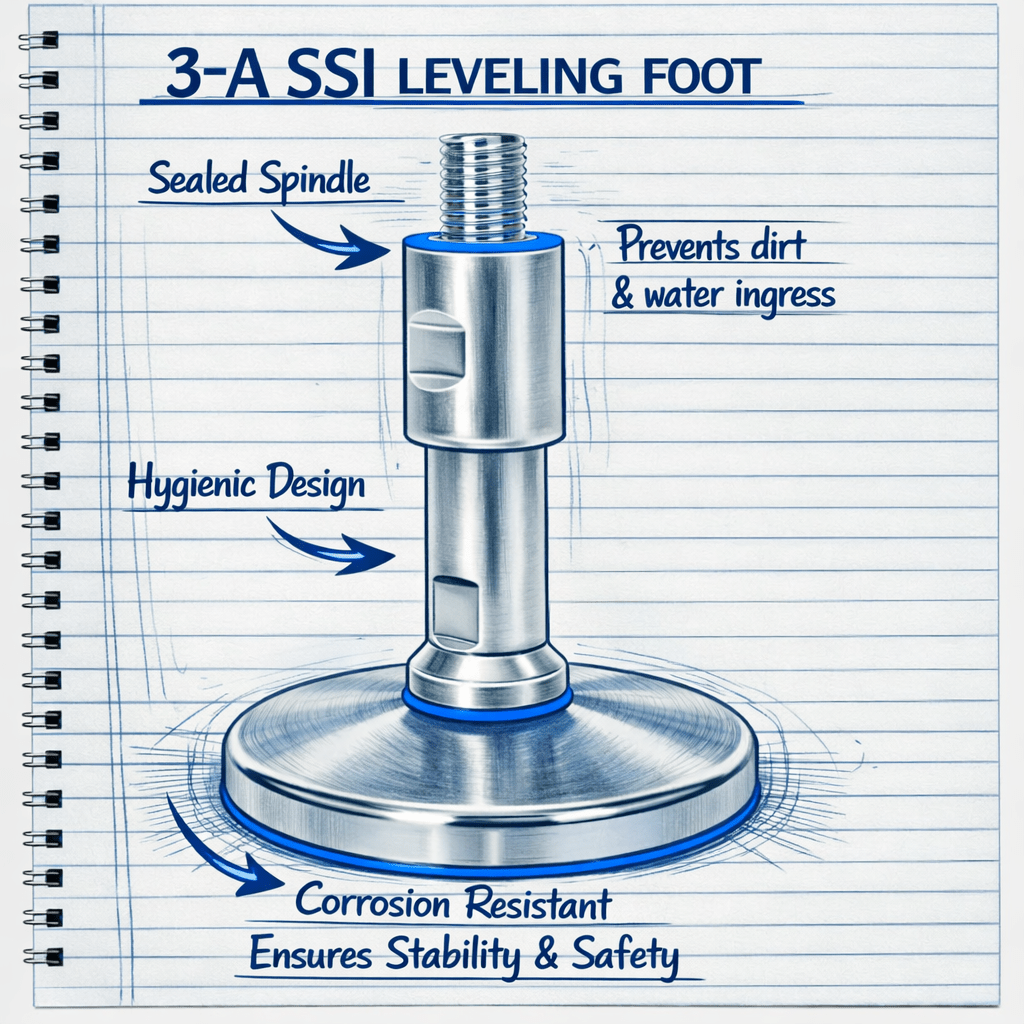
| Hygienic feet | No exposed thread, smooth and self-draining at floor level | Sealed spindle, stainless steel, load per foot with margin, base material |
| Fasteners | No recesses or crevices in splash zone | Hygienic bolts with sealing washers, domed nuts |
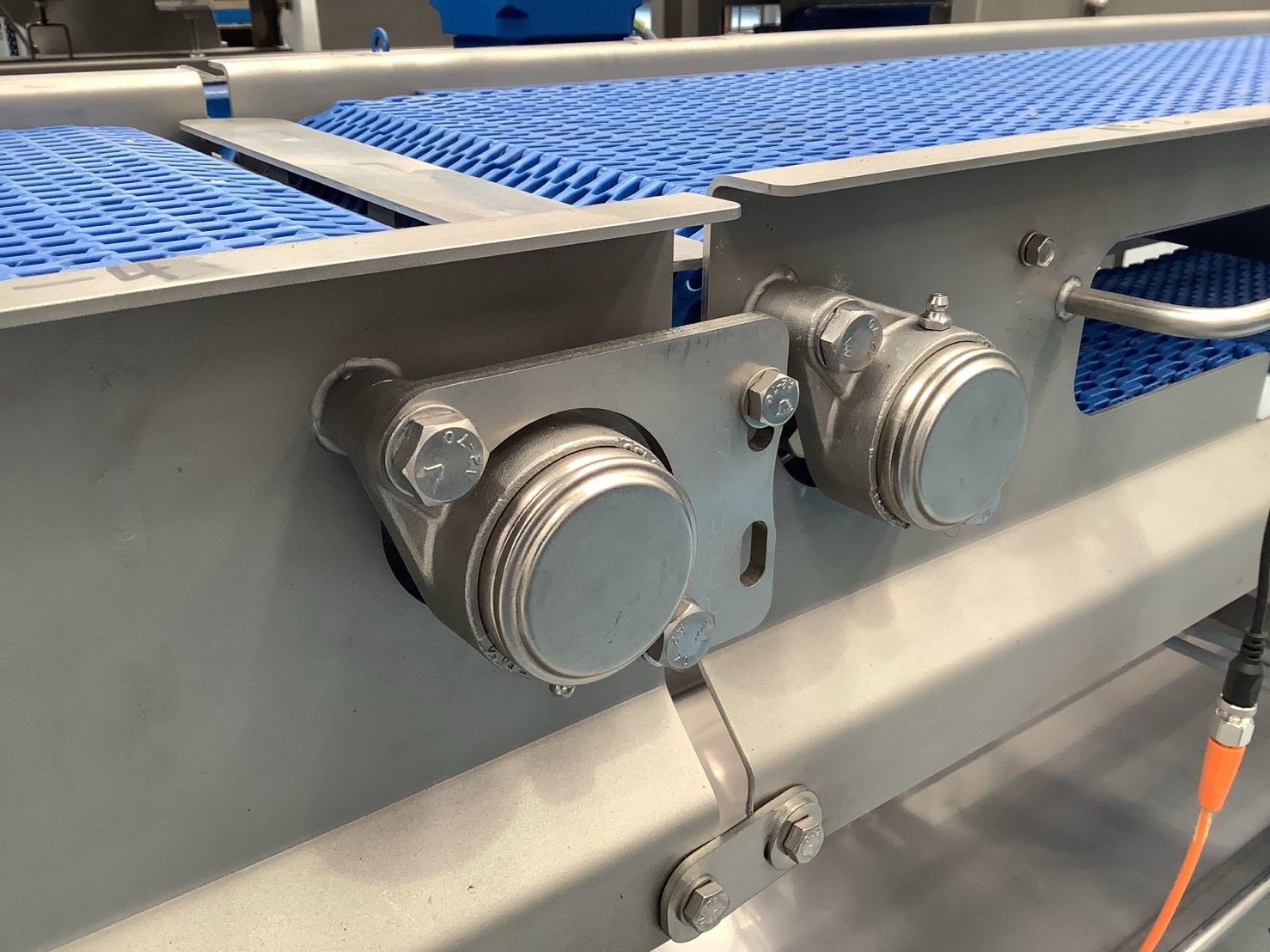
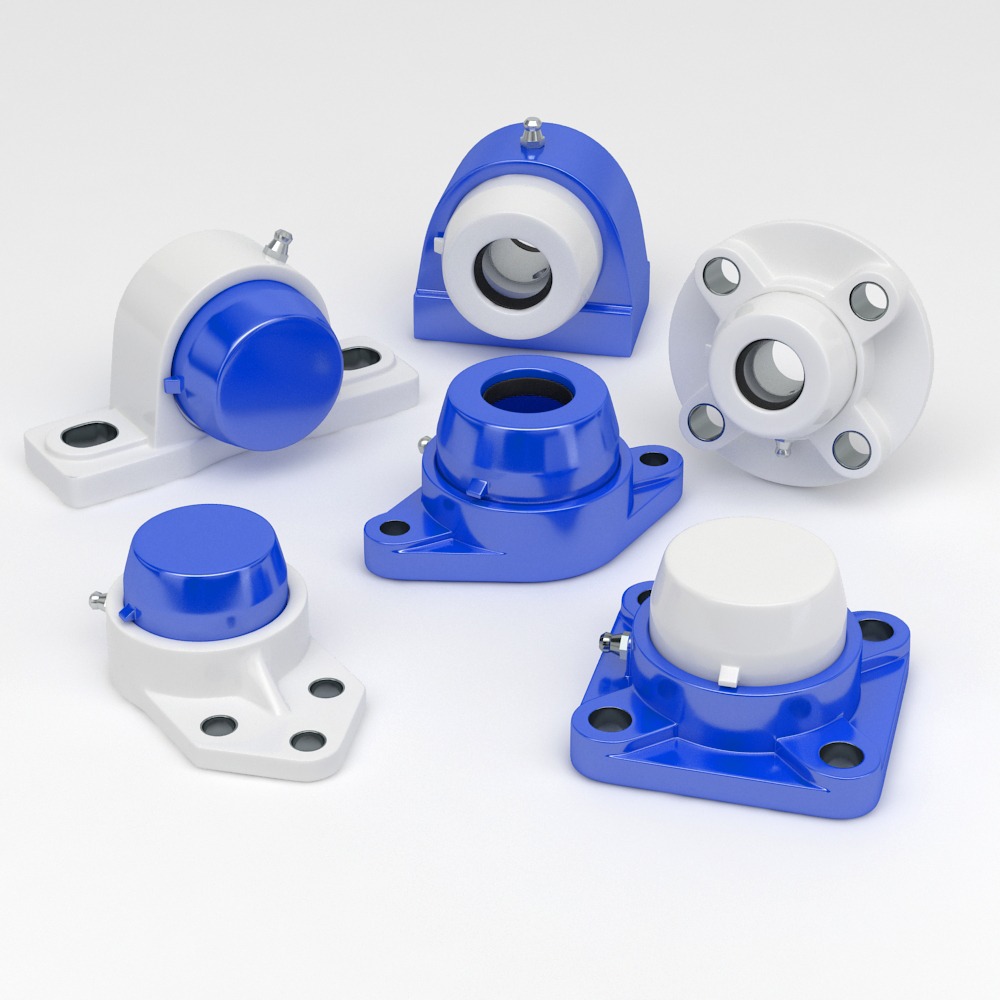
| Bearing units | Cleanable outer surfaces, no water traps | Sealed stainless or thermoplastic housings, closed covers |
| Seals | Food-contact compliant, compatible with cleaning chemicals | EPDM, FKM or VMQ chosen by chemicals; declaration of compliance |
| Stainless steel parts | Corrosion resistant, cleanable | Grade, surface finish (Ra), passivation after fabrication |
Passivation restores the protective chromium oxide layer of stainless steel after machining or welding. Elastomer compatibility matters because EPDM swells in fats, FKM resists oils and many chemicals, and VMQ (silicone) handles wide temperatures but is mechanically weak.
Ingress ratings are not hygienic standards: IP67 (IEC 60529) is an immersion test; IP69K (ISO 20653, also written IP69) tests high-pressure, high-temperature water jets. Use them alongside hygienic design, not instead of it.
How to apply hygienic standards to a new machine
- Identify the legal framework for the target market: EU machinery law and EC 1935/2004, US FDA rules, or both.
- Choose the design standards: EN 1672-2 for food machinery, EN ISO 14159 as general reference.
- Decide whether certification is needed: customer requirement for EHEDG-certified or 3-A authorised equipment or components?
- Map the zones on the machine: product-contact, splash, non-contact.
- Specify components per zone: material, finish, seals, hygienic feet and fasteners.
- Collect documents: declarations of compliance, material certificates, EHEDG or 3-A certificates for the specific parts.
- Record it in the technical file with the risk assessment.
Example: a conveyor for the EU and US markets
Assumptions (illustrative): a conveyor for raw vegetables, sold in the EU and the US; customer asks for EHEDG-certified components where available.
- Legal: EU machinery law hygiene requirements and EC 1935/2004; US FDA food-contact rules.
- Design standard: EN 1672-2, with zones marked on the drawing.
- Components: hygienic levelling feet with sealed spindle; hygienic bolts in the splash zone; sealed bearing units; EPDM seals (no fat-heavy soil).
- Documents: declarations of compliance for plastics and elastomers (EU and FDA), EHEDG certificate numbers for the certified parts, material certificates.
Trends to watch
- Machinery Regulation: the transition to Regulation (EU) 2023/1230 by 20 January 2027.
- Monitoring: sensors that record cleaning parameters to support verification – see automated hygienic components.
- Modular designs: machines built so hygienic components – feet, fasteners, bearing units – can be upgraded without redesign.
- Training: hygienic design only works if operators clean and maintain machines correctly; clear manuals and training matter.
For how these standards combine with environmental requirements and which documents to request per component, see meeting rigorous hygiene and environmental standards.