Grain processing equipment – intake and cleaning machines, conveyors and elevators, mills, sifters, mixers, extruders and packers – handles dry, dusty product, so its hygiene is built around dry cleaning, dust control, explosion safety and allergen changeover rather than wet washdown. This guide follows cereal and grain processing step by step and explains what those conditions mean for component design: no ledges, sealed bearings, cleanable feet and fasteners. It is part of our overview of food processing equipment.
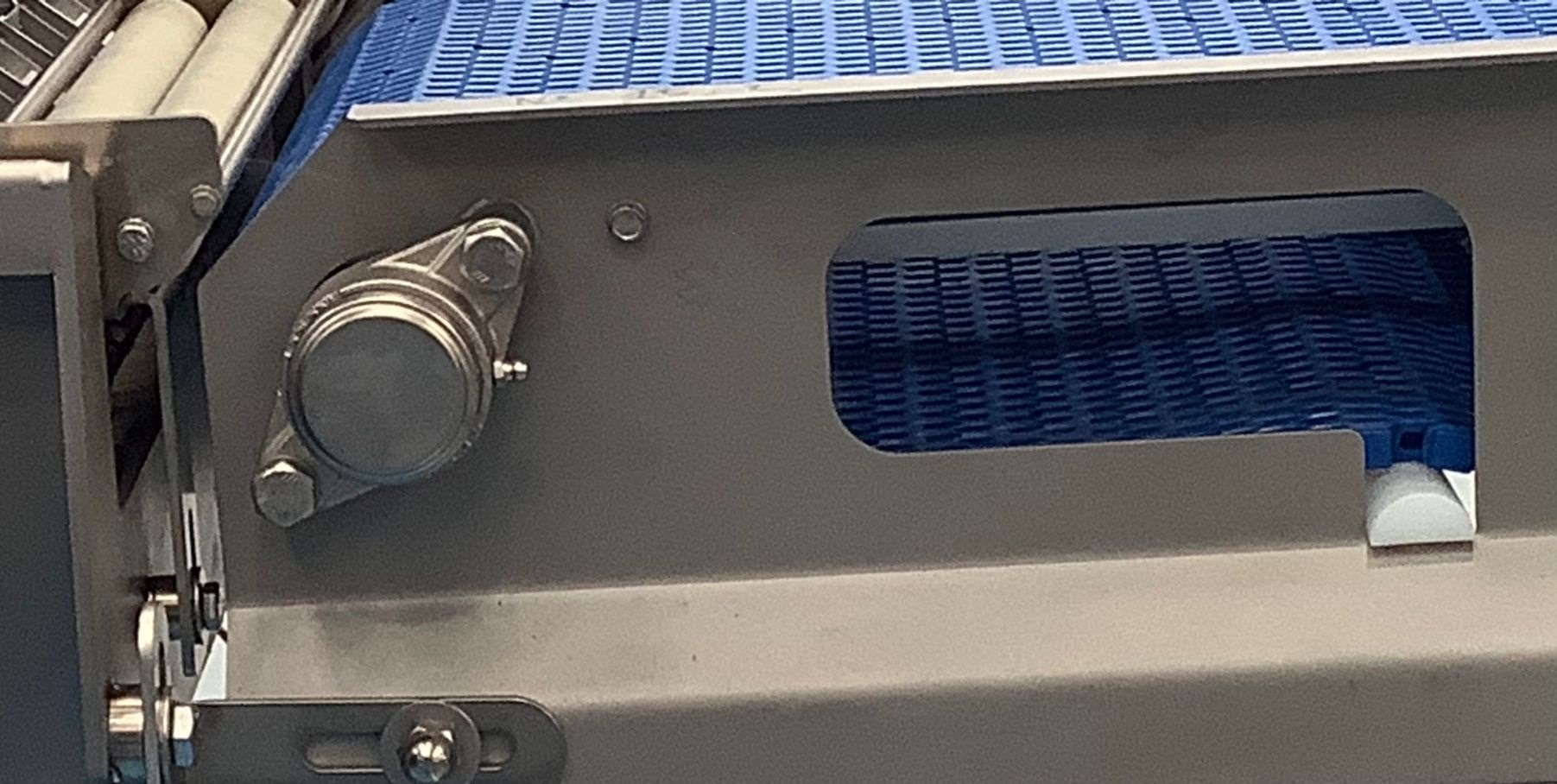
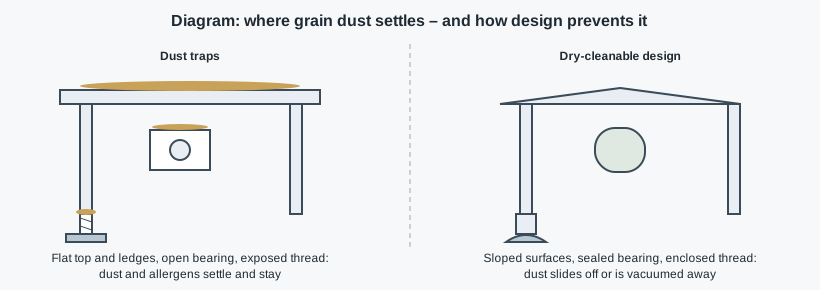 where grain dust settles and how design prevents it. Schematic, not a product test report.
Wet produce lines face the opposite problem to dry grain; see fruit processing and potato washing lines.
Cereal and grain processing steps, risks and component needs
| Process step | Typical equipment | Hygiene and safety risk | What it means for components |
|---|---|---|---|
| Intake and storage | Pits, silos, bucket elevators | Dust, insects, moisture pockets | Sealed bearings on elevators; no ledges on frames |
| Cleaning and conditioning | Separators, aspirators, dampeners | Dust; local moisture during tempering | Corrosion-resistant parts where water is added |
| Milling | Roller mills, hammer mills | Fine dust, heat, vibration | Stable, anchored feet; bearings protected from dust |
| Sifting and blending | Plansifters, mixers | Fine flour dust, allergen carry-over | Few horizontal surfaces; cleanable, accessible joints |
| Extrusion, flaking, toasting | Extruders, flaking mills, ovens | Heat, steam, sticky residues | Materials and seals rated for local heat and steam |
| Packing | Fillers, conveyors, palletisers | Dust at filling points, changeovers | Quick-clean guides, sealed bearings, cleanable feet |
Allergen changeover means cleaning between products with different allergens – for example from a wheat product to an oat or gluten-free line, or to a product without sesame or soy. In dry plants it is often the most demanding cleaning task.
For downstream dough, baking and chocolate handling, use the bakery-line cleaning and component map to separate dust, sticky deposits and local heat exposure.
Send your grain application data and get a component recommendation
Why dry cleaning changes the rules
Most grain and flour plants are cleaned dry: by vacuum, brushes and scrapers, with wet cleaning only occasionally or locally. Water in a dry plant is a risk in itself – damp flour supports microbial growth and forms paste that hardens in corners. That changes what "hygienic" means for components:
- Ledges and horizontal surfaces are the main problem, because dust settles and stays. Slope top surfaces, turn flat bar on edge and avoid shelves.
- Crevices and hollow sections fill with fine dust that a vacuum cannot reach. Closed tubes must be fully sealed; open profiles must be fully open.
- Exposed threads on feet and bolts collect dust in the thread flanks.
- Compressed air blows dust – and allergens – onto other surfaces. Vacuum cleaning is preferred.
EHEDG's certification scheme includes dedicated classes for dry-cleaned equipment (ED). A component certified for wet cleaning is not automatically suited to dry cleaning, and vice versa – check the class. The EHEDG certification guide explains the classes.
Dust and ATEX awareness
Fine grain and flour dust can form explosive atmospheres. In the EU, Directive 1999/92/EC requires employers to assess and classify areas with explosive dust atmospheres into zones (20, 21 and 22), and Directive 2014/34/EU (ATEX) covers equipment intended for use in those zones. For components this means:
- Know the zone before choosing parts. The plant's explosion protection document defines it.
- Ask whether a component is suitable for that zone and request the supplier's documentation. Do not assume that a hygienic or IP-rated part is suitable for an explosive atmosphere.
- Hot surfaces are ignition sources. Bearings running hot because of dust ingress, misalignment or lack of grease are a known risk; sealing and maintenance matter for safety as well as hygiene.
- Avoid dust layers on equipment – layers can ignite and add fuel to an explosion. This is the same design rule as for hygiene: no ledges.
IP ratings describe protection against dust ingress (IP5X dust-protected, IP6X dust-tight under IEC 60529). They are not ATEX approvals and not hygiene certifications.
Bearings in grain plants
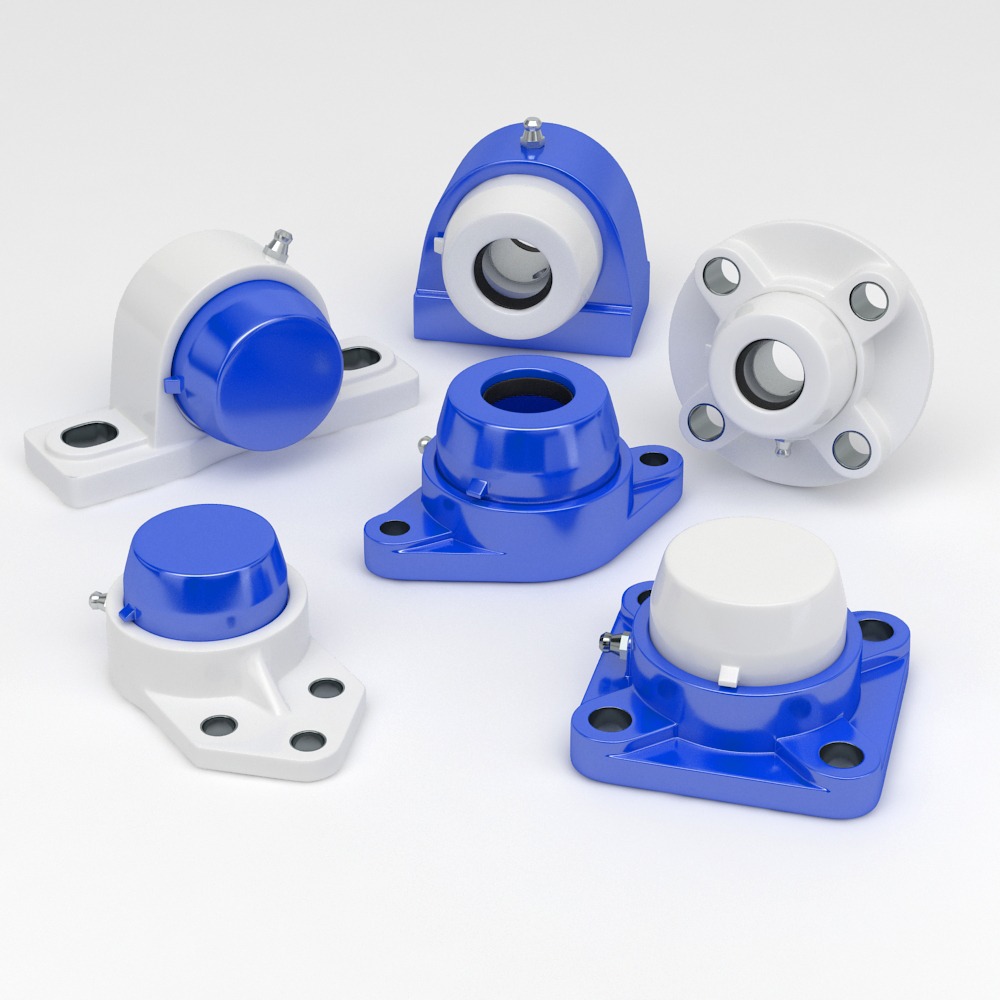
Dust is abrasive; once it enters a bearing it mixes with grease into a grinding paste. In dry areas, thermoplastic or stainless bearing units with effective seals and closed end covers keep dust out and leave no open shaft end for dust to collect. Where wet cleaning or tempering water is present, use stainless inserts. For supplier enquiries, NHK lists sealed stainless bearing units; establish dust protection and zone suitability from the selected unit's documentation; see when an IP54 thermoplastic bearing is enough for the limits.
Feet, frames and fasteners
- Feet: levelling feet with enclosed thread and sealed base, so dust cannot collect in the thread. Mills, sifters and mixers vibrate; anchor them with feet that have one or two fixing holes, and size each foot as if only three of four carry the load. See adjustable vs levelling feet.
- Frames: sloped tops, no shelves, open or fully sealed profiles, brackets on stand-offs.
- Fasteners: hygienic bolts or domed heads in dusty areas; avoid socket recesses that fill with flour.
Example
Assumed situation, for method only: a flour mill adds a gluten-free oat packing line next to a wheat line and must show allergen control. The review of the new packing conveyor finds flat frame tops, open-end cast iron bearings at the drive and return shafts, and exposed-thread feet. Changes: sloped frame covers, bearing units with closed covers and dust seals in a housing suited to the zone classification, hygienic levelling feet with enclosed threads, and vacuum points at the filling station instead of compressed air. The plant's explosion protection document is checked before the bearings are ordered.
Common mistakes in cereal and grain processing
- Cleaning with compressed air during allergen changeover.
- Choosing wet-cleaning hygienic parts and washing a dry plant "to be safe", creating paste in corners.
- Leaving flat frame tops where dust layers build up.
- Assuming IP6X or hygienic design means suitability for an ATEX zone.
- Ignoring bearings that run warm – a hygiene, maintenance and ignition issue at once.
For other sectors, see dairy processing equipment and how food processing machinery is built.
What to send for a recommendation
Before asking for certification evidence, use the checking component certificates before procurement.
- Process step and equipment (elevator, mill, sifter, conveyor, packer)
- Cleaning method: dry, occasional wet, allergen changeover frequency
- ATEX zone, if any, from the explosion protection document
- Components to review: bearings, feet, fasteners – sizes and loads
- Material and any certificate needed (EHEDG ED class, 3-A)
- Quantities and delivery country
Send these details to NHK
An NHK technician suggests suitable components and sends a quote. ATEX suitability is confirmed with the supplier's documentation for each part.