Downtime in hygienic processing is any time a line cannot produce – for planned cleaning, for re-cleaning after a failed hygiene check, or because a component has failed – and maintenance cost is the labour and parts needed to keep it running. In food, dairy, beverage, bakery, confectionery, cosmetics, meat, fish, seafood, veterinary, chemical, medical and pharmaceutical production, cleaning is frequent and aggressive, so component design affects both numbers directly. This guide shows where the hours go and which component choices reduce them.
For condition monitoring and spare-parts strategy in general machinery, see optimizing industrial machinery performance.
Where downtime comes from in hygienic plants
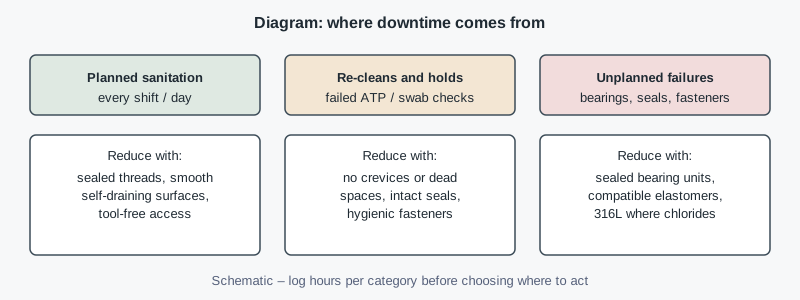
- Planned sanitation – daily or per-shift cleaning, plus allergen changeover (cleaning between products with different allergens). Its length depends on how quickly soil can be removed.
- Re-cleans and holds – when visual checks, ATP (a rapid test for organic residue) or swabs fail, the area is cleaned again and product may be held.
- Unplanned failures – bearings seizing, seals leaking, fasteners loosening, feet corroding or cracking.
Most plants track the third category; the first two are often larger and are just as much influenced by component design.
How hygienic design shortens cleaning
Hygienic design means building equipment so that it can be cleaned easily and does not harbour contamination. Components designed to EHEDG and 3-A principles minimise dead spaces (pockets where liquid stands), cracks and crevices (narrow gaps) where bacteria accumulate. In practice this means:
- no exposed threads on levelling feet and fasteners;
- smooth surfaces – EHEDG guidance refers to Ra ≤ 0.8 µm for product-contact surfaces;
- self-draining shapes, so water and chemicals run off;
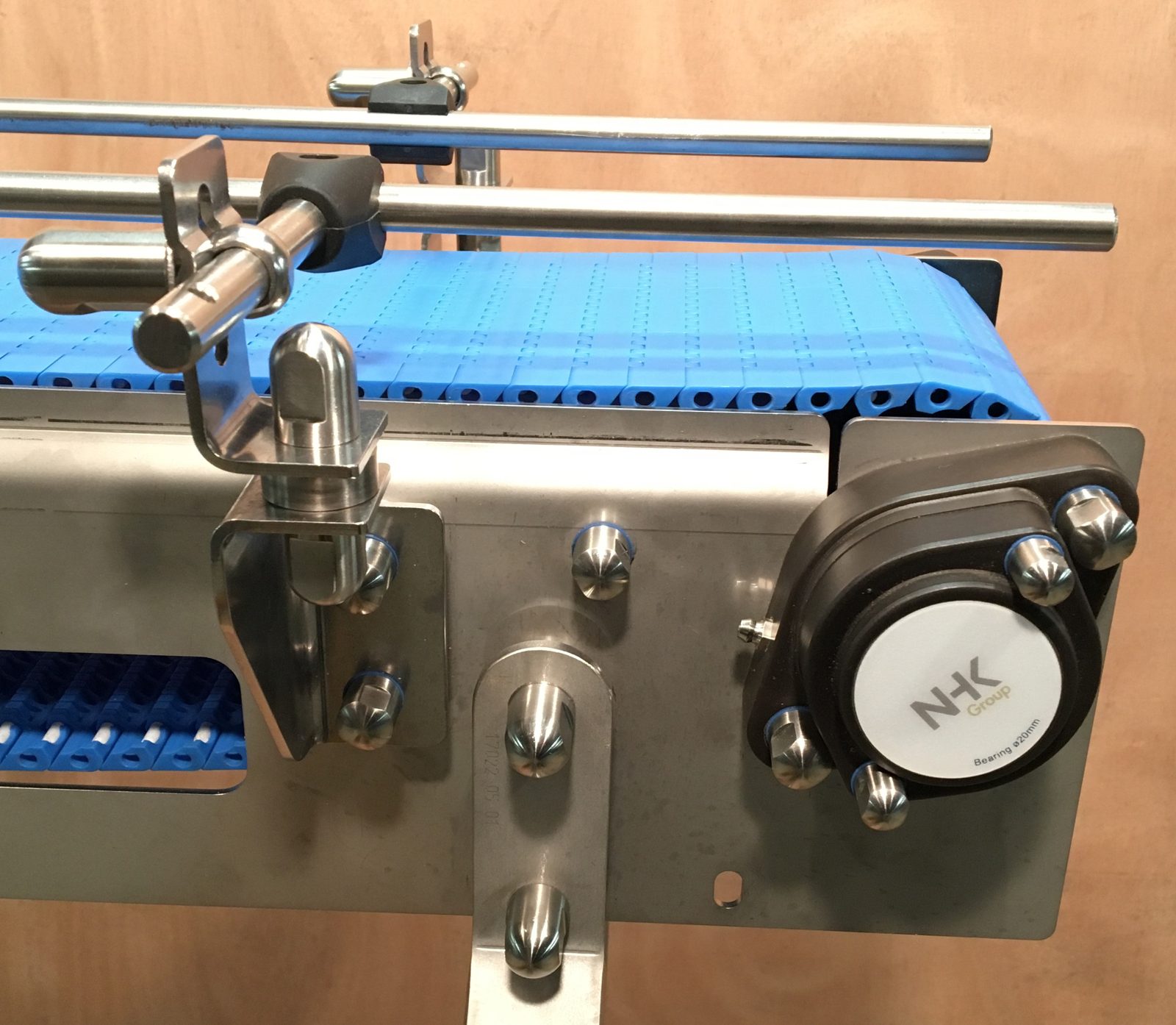
- sealed joints and bearing housings that do not hold grease and water.
Each feature removes a spot operators otherwise scrub and re-rinse, and a spot where swabs fail.
Why components fail – and how that becomes downtime
| Component | Typical failure | Root cause | Downtime effect | Prevention |
|---|---|---|---|---|
| Bearing units | Noise, seizure | Water ingress, grease washout | Unplanned stop, bearing change | Sealed units; rating matched to cleaning method |
| Seals and gaskets | Swelling, cracking | Incompatible elastomer | Leaks, fragments, re-cleans | Elastomer matched to chemicals (EPDM, FKM, VMQ) |
| Levelling feet | Thread corrosion, soiling | Exposed thread, wrong grade | Longer cleaning, re-levelling | Sealed thread, AISI 316L with chlorides |
| Fasteners | Loosening, crevice soil | Vibration, socket heads | Spot cleaning, foreign-body risk | Hygienic bolts, correct torque |
| Plastic parts | Cracking | Chemicals, impact, temperature | Replacement, foreign-body risk | Suitable grade, inspection |
| Stainless frame | Pitting | Chlorides, damaged passive layer | Rework, hygiene risk | 316L where needed, passivation after welding |
Passivation is a chemical treatment that restores the protective oxide layer on stainless steel after machining or welding. Chloride pitting is local corrosion where chlorides break that layer.
Sealed bearing units
Bearing units sealed against water and debris last longer in wet areas. IP67 (IEC 60529) means dust-tight and protected against temporary immersion; it is not a high-pressure washdown test (that is IP69K, ISO 20653) and not a hygiene certificate. Match the unit to the actual cleaning method.
Sanitary enclosure parts
Enclosure parts designed for easy cleaning reduce spot cleaning around electrics. Check whether a 3-A authorisation or EHEDG certificate covers the specific part, and whether its materials have a declaration of compliance where food contact is possible.
Hygienic adjustable leveling feet
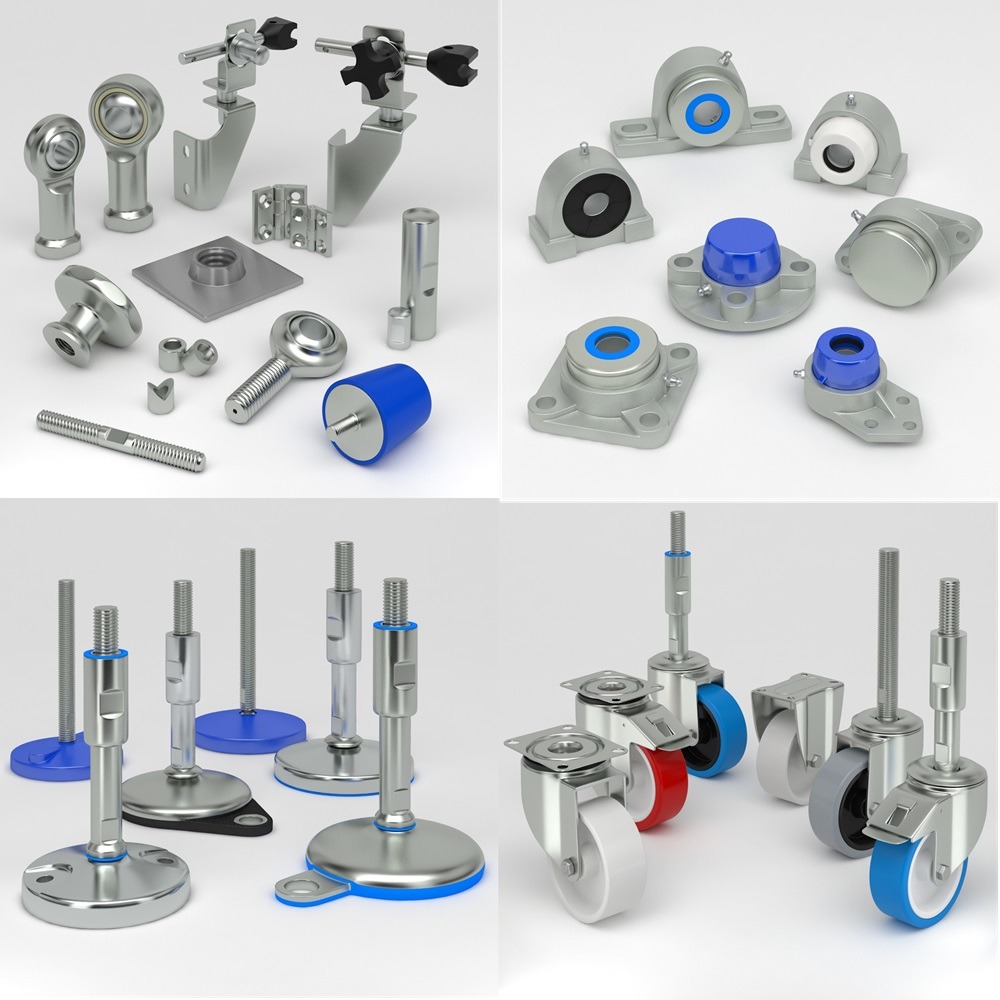
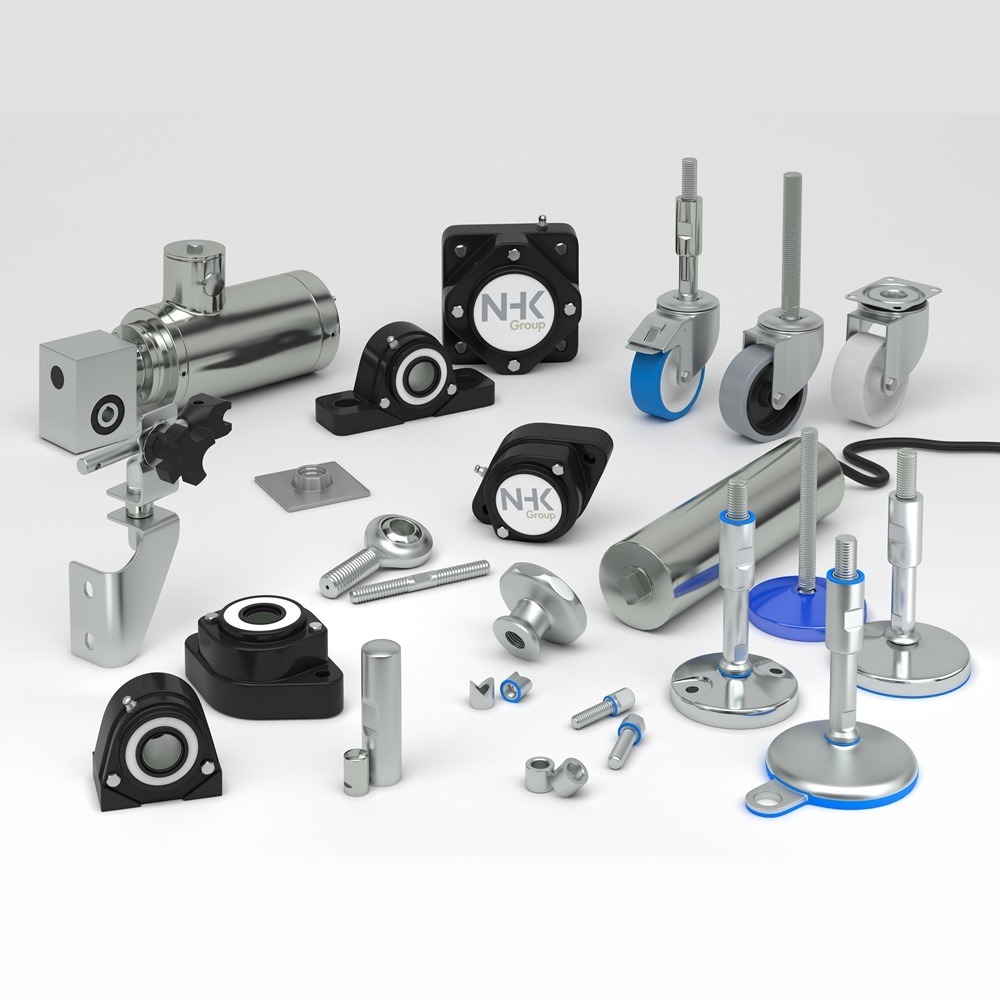
Feet keep machinery level and easy to clean beneath. EHEDG-certified designs, such as NHK's SHAF feet in sealed hygienic design, remove the exposed thread that otherwise collects soil and corrodes.
Certification: what it does and does not cover
The European Hygienic Engineering & Design Group (EHEDG) is a consortium of equipment manufacturers, food companies, research institutes and public health authorities working to improve hygiene in food processing and packaging. It certifies specific designs as cleanable. 3-A Sanitary Standards, Inc. (3-A SSI) develops sanitary standards for dairy and food equipment, widely recognised in North America; conforming designs may carry the 3-A Symbol after a Third Party Verification.
Both are voluntary. They support compliance and export, but they certify cleanability, not durability, load capacity or service life – those must be checked on the product data.
Calculating the cost of downtime
Annual cost = (sanitation hours + re-clean hours + failure hours) × cost per lost production hour + maintenance labour + spare parts + scrapped product.
Example
Assumptions (illustrative only; use your own records): a conveyor in a meat plant loses 0.5 hours per day to cleaning around threaded feet and open bearings, has two bearing failures per year of 3 hours each, and runs 250 days per year. Lost production is valued at a fixed amount C per hour.
- Cleaning-related hours: 0.5 × 250 = 125 hours per year.
- Failure hours: 2 × 3 = 6 hours per year.
- If sealed feet and sealed bearing units cut the extra cleaning time by half and remove the failures, the hours saved are 62.5 + 6 = 68.5, worth 68.5 × C plus avoided parts and labour.
- Compare this with the extra purchase and installation cost to find the payback period. Confirm the saving by logging hours after the change.
For why individual small parts carry so much weight, see a small contribution can make a big difference.
The maintenance strategy comparison for washdown components helps decide which checks stay scheduled and where measured condition can guide intervention.
A step-by-step plan
- Log downtime by category for at least a month: sanitation, re-cleans, failures.
- Walk the line during cleaning and note where time is spent.
- Review failure records by component and root cause.
- Rank changes by hours saved per cost.
- Specify replacements: sealed, crevice-free design; stainless grade by chloride exposure; elastomers by chemicals; ratings and certificates per model.
- Set inspection intervals for seals, bearings and fasteners.
- Re-measure and adjust.
For the full cost-of-ownership view, see manufacturing success: how and why. NHK's related pages: EHEDG and 3-A SSI certified components and reducing downtime and maintenance costs.