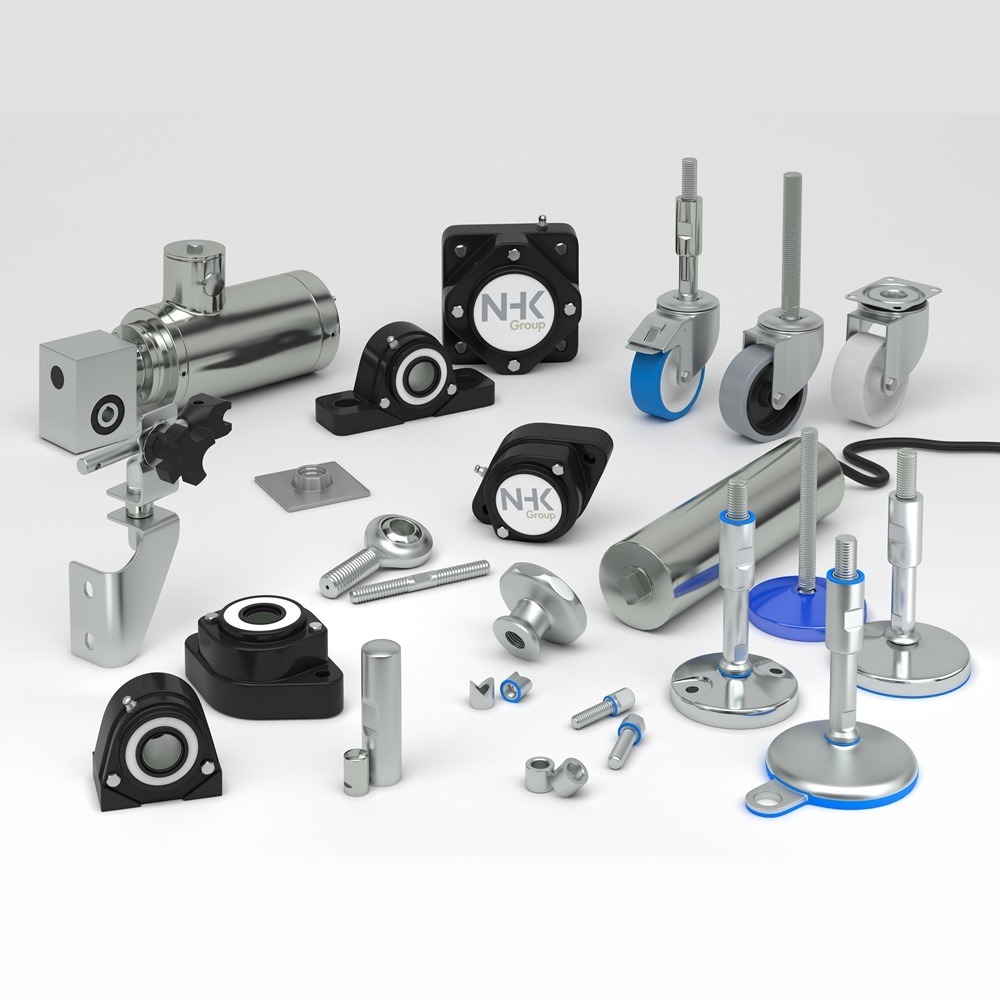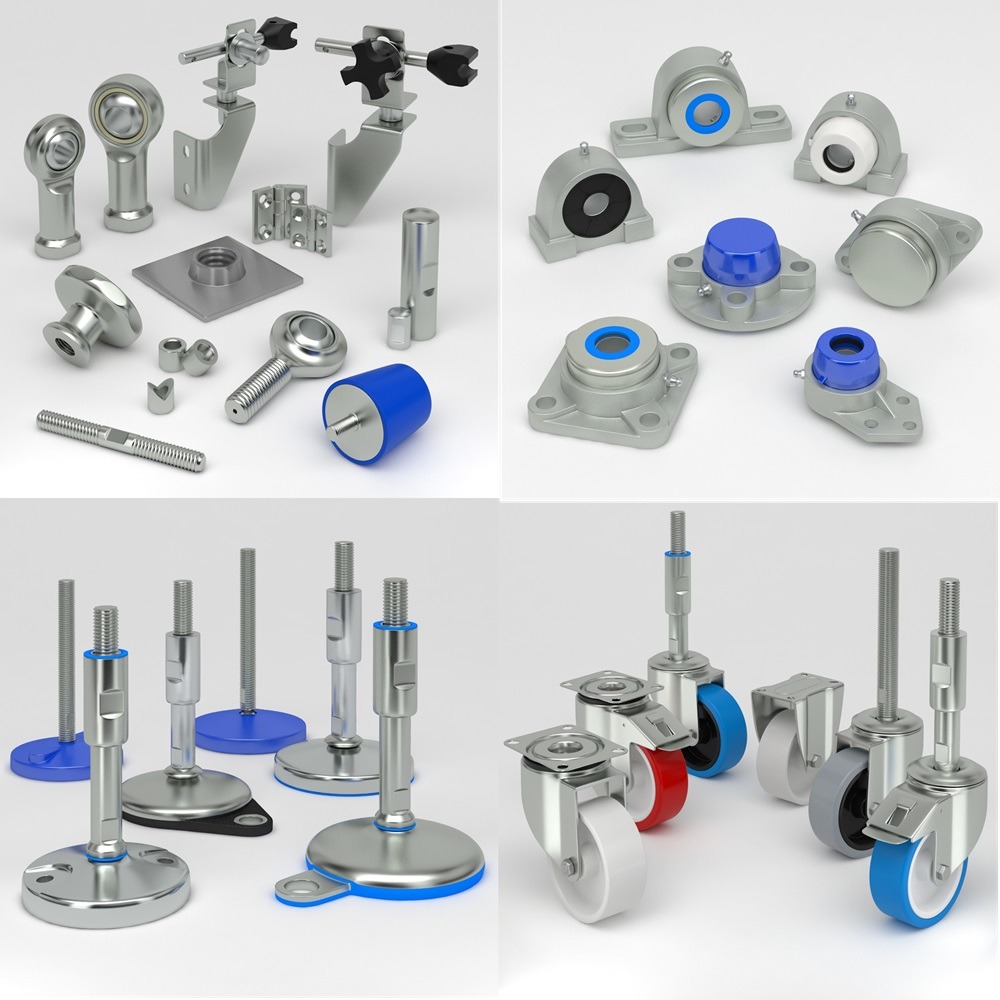
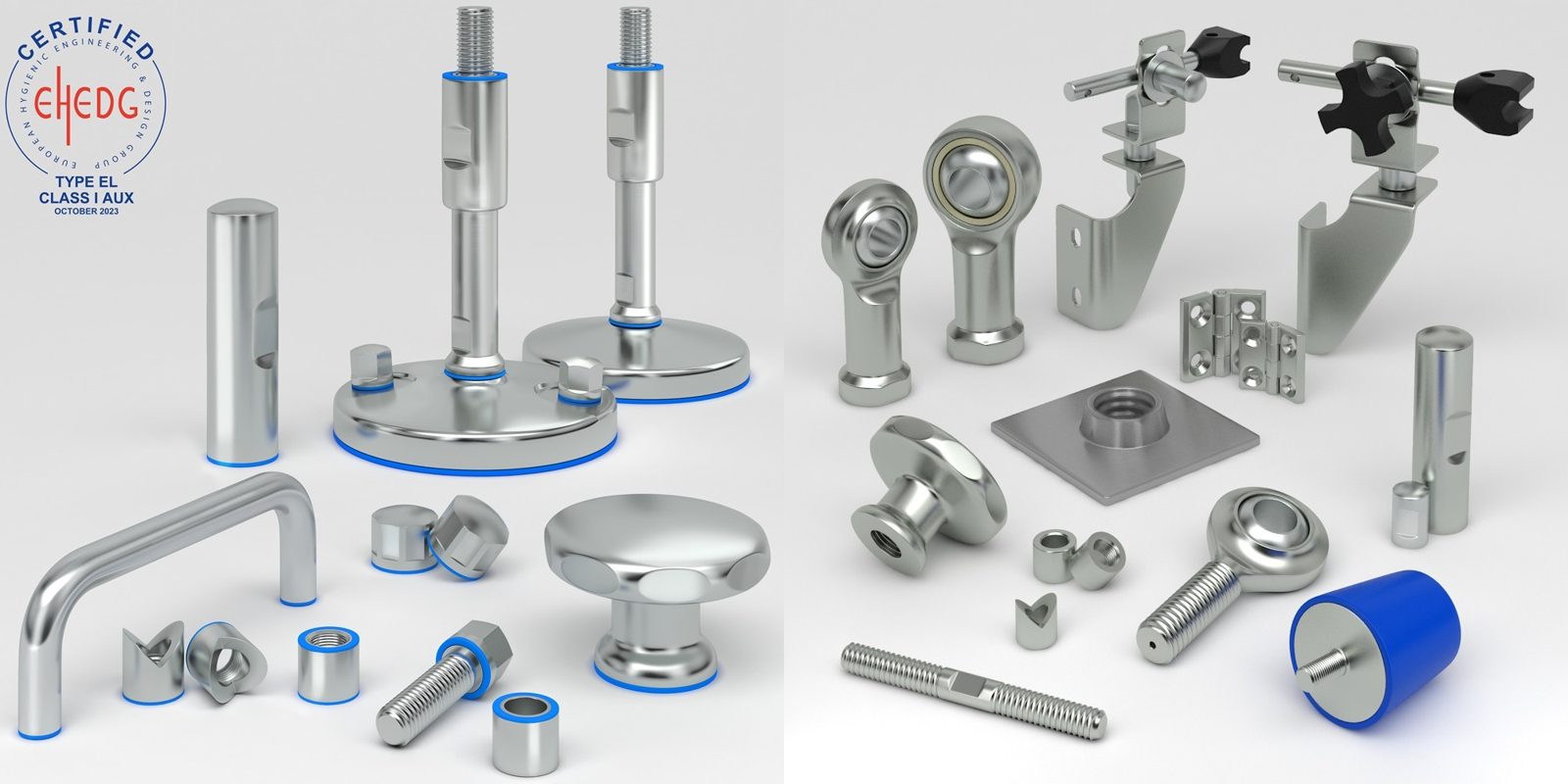
A small hygienic component is a part such as a levelling foot, bolt, seal or bearing unit that costs little compared with the machine but affects every cleaning cycle for the machine's whole life. That is why a small contribution can make a big difference: choosing a hygienic design for these parts improves product safety, protects water, energy and materials, and supports sustainable production in food and beverage, pharmaceutical and cosmetics plants. This guide explains where small parts have the largest effect and how to audit them.
For how small parts add up to downtime, see reducing downtime and maintenance costs.
Why small parts have a large effect
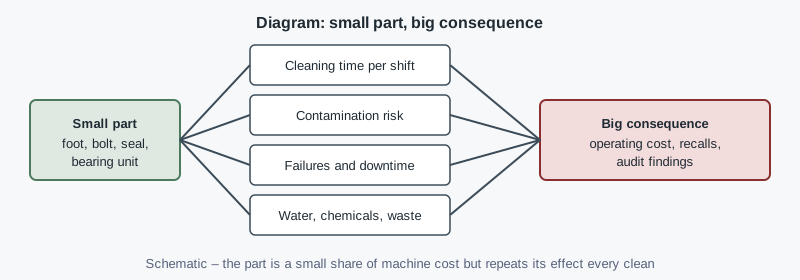
A machine may have dozens of feet, hundreds of fasteners and several bearing units and seals. Each one is either easy to clean or a potential harbourage point – a place where residue and bacteria survive cleaning. Because cleaning is repeated every shift or day, a small design flaw repeats its cost thousands of times over the machine's life:
- extra minutes of spraying and scrubbing per clean;
- higher risk of failed swabs and contamination;
- more water, detergent and hot-water energy;
- earlier corrosion, failure and replacement.
Where small parts go wrong
| Small part | Common problem | Effect | Hygienic alternative |
|---|---|---|---|
| Levelling feet | Exposed thread, lock nut, flat base | Soil in threads, corrosion, slow floor cleaning | Sealed thread, smooth body, sealed base |
| Fasteners | Hex socket, exposed thread, washer gap | Crevices that hold soil | Hygienic bolts with rounded head and seal |
| Bearing units | Open housing, gap to frame | Grease and water mix, bearing failure | Sealed units, gasket to frame |
| Seals and gaskets | Incompatible elastomer | Swelling, cracking, fragments | EPDM, FKM or VMQ matched to product and chemicals |
| Castors | Plated steel, open wheel bearings | Corrosion, particles | Stainless castors with sealed bearings |
| Handles, hinges, clamps | Overlapping parts, hollow sections | Dead spaces (pockets where liquid stands) | One-piece, crevice-free stainless designs |
For movable guards, the stainless steel hinges selection guide adds door-load and installed cleaning checks.
How hygienic small parts add value
Product safety and value
Consumers expect the products they buy to be safe. Small parts designed without crevices and with compatible materials reduce the risk of microbial contamination and foreign bodies, such as loose bolts or seal fragments. This supports product quality and the trust customers place in the brand – but it does not guarantee safety on its own; cleaning procedures and verification remain essential.
Protecting resources
Water, energy and raw materials are valuable resources. Smooth, self-draining parts (shaped so liquid runs off) with no exposed threads need less water and detergent per clean and fewer re-cleans. Corrosion-resistant parts – stainless steel such as AISI 304, or 316L where chlorides cause chloride pitting – are replaced less often, reducing material use and waste.
Sustainable production
Sustainable production depends on many small decisions. Hygienic small parts contribute by cutting resource use during cleaning and extending service life. The environmental effect is indirect and should be measured on the line; certification of a hygienic design does not by itself make a part "eco-friendly".
Certification and compliance for small parts
The European Hygienic Engineering & Design Group (EHEDG) certifies specific equipment designs as cleanable, including small components such as feet, bolts and seals. 3-A Sanitary Standards, Inc. (3-A SSI) standards are widely used for dairy and food equipment; conforming designs may carry the 3-A Symbol after a Third Party Verification. Both are voluntary and apply to the named model.
Certified small parts support compliance and audits, but do not make a machine compliant by themselves. Food-contact materials need a declaration of compliance (EC 1935/2004; EU 10/2011 for plastics; FDA 21 CFR 177.2600 for rubber), and the machine as a whole must meet hygiene requirements such as EN 1672-2.
Examples: NHK's SHAF adjustable feet in sealed hygienic design (EHEDG-certified design) and EHEDG/3-A hygienic bolts M5 to M30 in stainless steel.
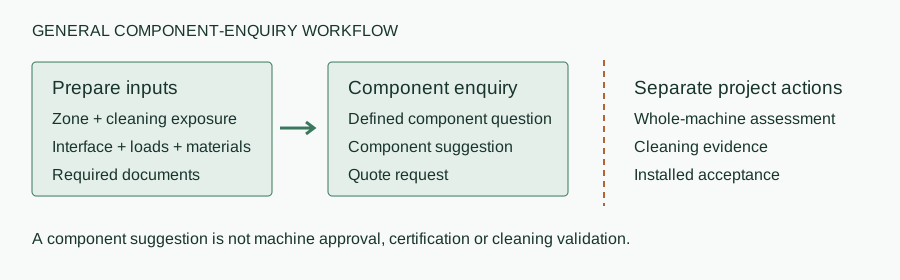
How to audit small parts on a machine
- Map zones: product-contact, splash zone (wetted by spray but not product) and non-contact.
- Count small parts per zone: feet, fasteners, bearings, seals, castors, handles and clamps.
- Observe a clean: note where operators spend extra time and where water pools.
- Check verification results: which locations fail ATP or swab tests repeatedly?
- Inspect condition: corrosion, swollen or cracked seals, loose fasteners, bearing noise.
- Rank by impact: zone × cleaning time × failure history.
- Replace the top items with hygienic designs; request certificates, material certificates and declarations of compliance.
- Re-measure cleaning time and verification results after the change.
Example
Assumptions (illustrative only): a dairy packing machine has 8 threaded feet, 40 hex-socket bolts on its splash-zone frame, 4 open bearing housings and seals in EPDM in contact with a fatty product.
- Audit result: swabs fail repeatedly at the feet and bearing housings; EPDM seals are swollen.
- Changes: sealed-thread hygienic levelling feet, hygienic bolts on the splash-zone frame, sealed stainless bearing units with frame gaskets, and seals changed to an elastomer suited to fats.
- Verification: cleaning time and swab results recorded before and after; no saving is claimed until measured.
For the broader view on choosing component families by environment, see secure sustainable development and growth. More from NHK: EHEDG certified components and 3-A SSI standard parts on this site and hygienicmachineryparts.eu. Packaging machinery parts and processing equipment components are also covered by NHK Group (nhkpackagingmachinery.com).