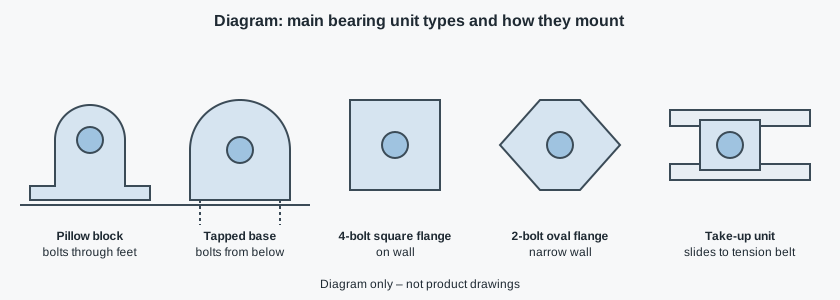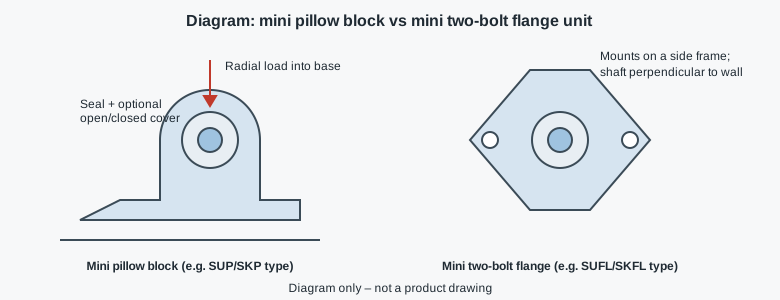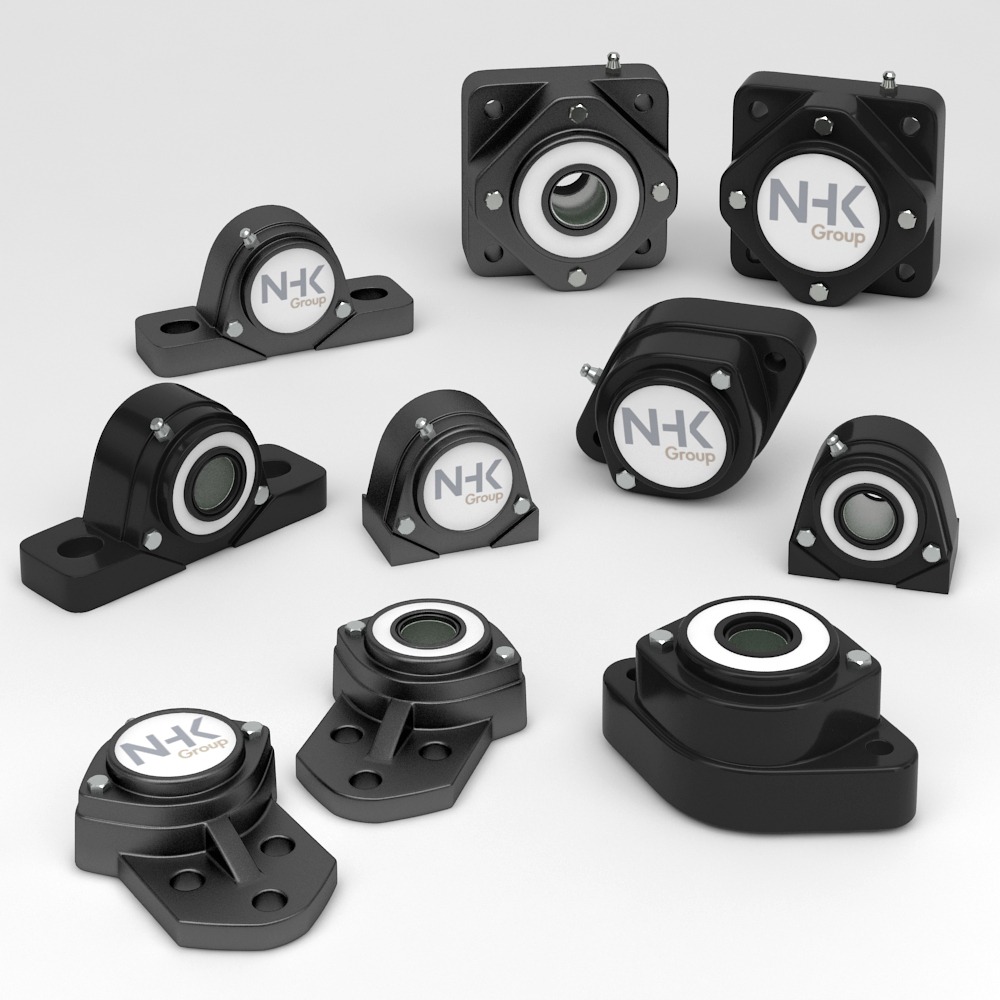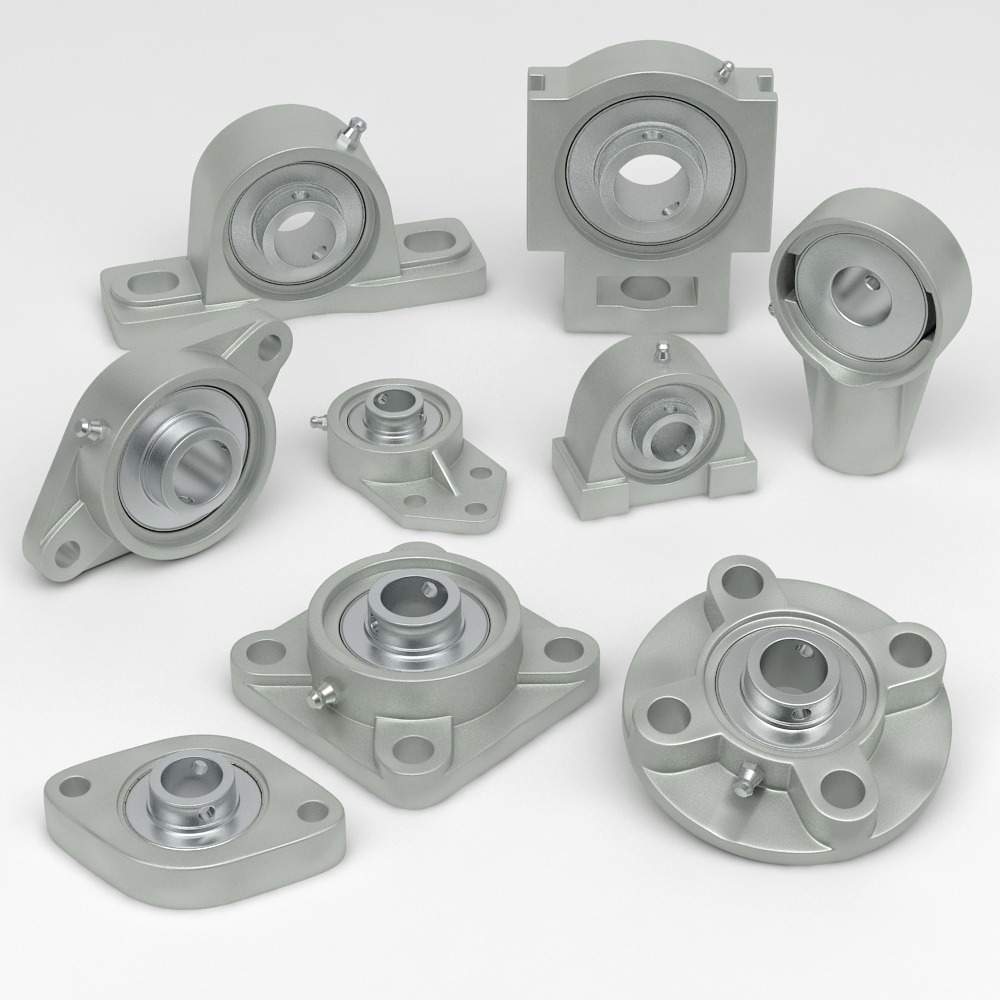
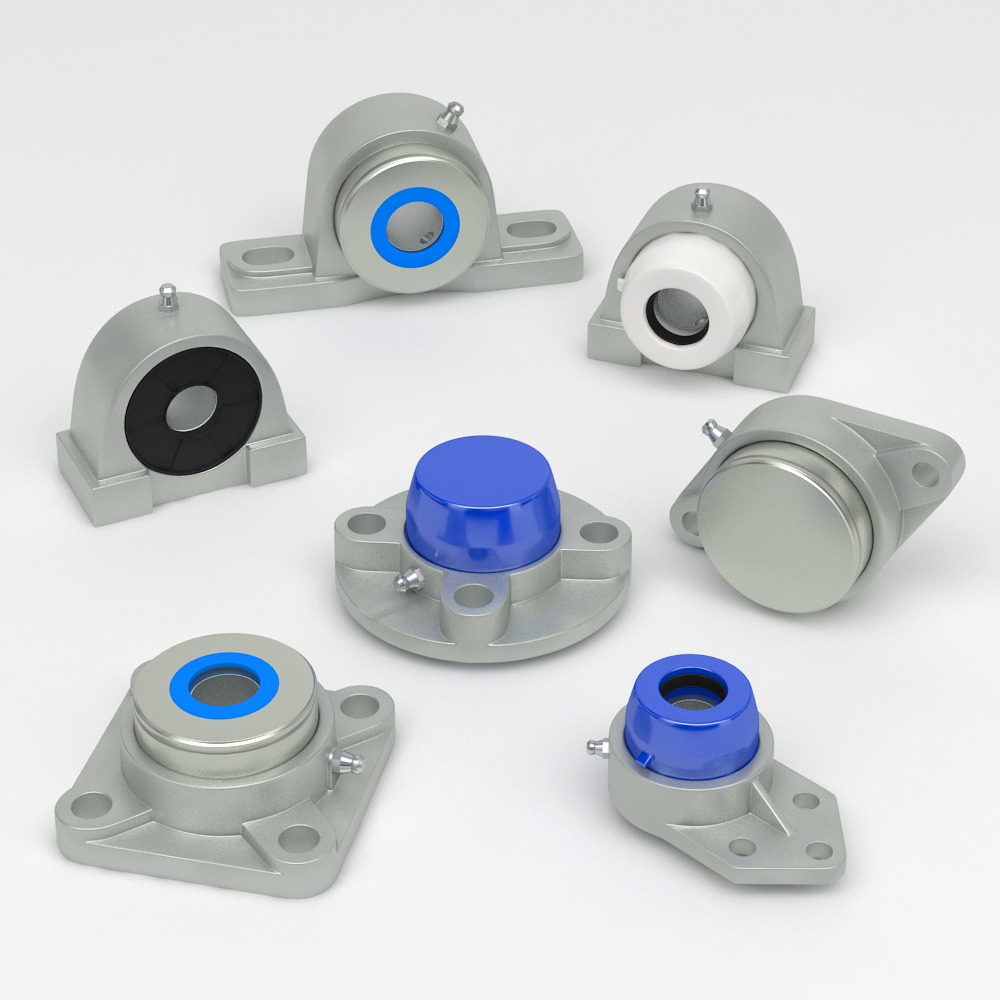
Waterproof bearings are rolling bearings protected so that water cannot reach the raceways and rolling elements under defined conditions; a sealed waterproof stainless steel bearing unit combines a stainless bearing insert, contact seals, water-resistant grease and a corrosion-resistant housing. They are used where machinery is wet, washed down or exposed to corrosive substances – food processing, packaging, marine and chemical applications. This guide explains how the protection works, what the trade-offs are and how to select and maintain these units.
For the housing side – how a waterproof bearing house seals the shaft, cover and mounting face – see waterproof bearing house units.
Are waterproof bearings really waterproof?
Not unconditionally. A bearing is "waterproof", "watertight" or "water resistant" only against a defined exposure: splashing, immersion or high-pressure spray. The protection comes from several layers, and the weakest one decides. That is why specifications should name the exposure and a test (an IP rating), not just the word "waterproof".
How sealed waterproof bearings keep water out
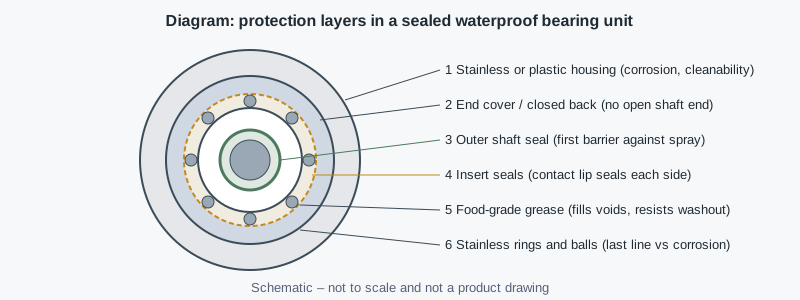
- Housing – stainless steel or food-compatible plastic, so it does not corrode and can be cleaned.
- End cover – closes the shaft end so water cannot enter from the back.
- Outer shaft seal – the first barrier against spray.
- Insert seals – contact lip seals on both sides of the bearing. Contact seals touch the inner ring; non-contact shields leave a gap and are not water resistant.
- Grease – fills the voids and resists washout; food-grade (NSF H1) grease where incidental food contact is possible.
- Stainless rings and balls – resist corrosion if some moisture still gets in.
Stainless steel bearing materials: what to choose
| Part | Typical material | Strength | Limitation |
|---|---|---|---|
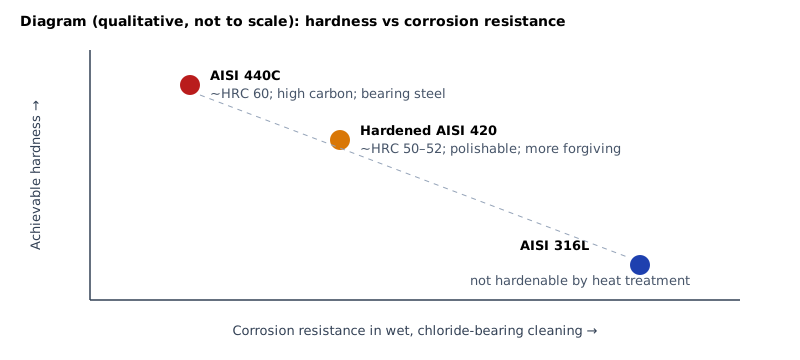
| Rings and balls (insert) | Martensitic stainless, e.g. AISI 440C | Hard enough for rolling contact; good water resistance | Lower load rating than chrome steel; less corrosion resistant than 316 in chlorides |
| Rings and balls (alternative) | Chrome steel (52100) with coating or seals | Highest load capacity | Rusts if water gets in |
| Housing | Austenitic stainless (304 or 316) | Corrosion resistant, cleanable | Heavier and more expensive than plastic |
| Housing (alternative) | Food-compatible thermoplastic | Light, corrosion-free | Lower stiffness and temperature limit |
| Seals | NBR, EPDM, FKM or VMQ | Chosen for chemicals and temperature | Each elastomer has limits with fats, steam or acids |
The main trade-off: corrosion resistance vs load capacity. Stainless inserts typically carry less load than equivalent chrome-steel bearings, so a stainless unit may need to be one size larger for the same life. For the steel comparison, see AISI 440C vs hardened AISI 420.
Waterproof bearings and IP ratings
| Rating | Standard | Test | Use for |
|---|---|---|---|
| IP67 | IEC 60529 | Dust-tight, temporary immersion | Flooding or submersion – not a washdown rating |
| IP69 | IEC 60529 | High-pressure, high-temperature water jets | Pressure-washer cleaning |
| IP69K | ISO 20653 | High-pressure, high-temperature water jets | Pressure-washer cleaning |
IP ratings test ingress only. For cleanability look for designs to EHEDG guidelines or a certificate for the named design.
Where to use sealed waterproof stainless steel bearing units
- Food processing: daily wet cleaning, detergents and disinfectants; units must be easy to clean and corrosion resistant, with sealed designs so grease and water do not mix and escape into the splash zone (area wetted by spray but not product).
- Conveyors and packaging machines: many bearings in wet areas; versatile across shaft sizes and mountings.
- Marine applications: salt water and constant moisture – watch for chloride pitting (local corrosion caused by chlorides) on martensitic grades.
- Chemical plants: corrosive substances; check the chemical compatibility of stainless grade, seals and grease.
For materials, lubrication and selection by industry, see sealed stainless bearing units: hygienic bearing units by industry.
How to select a waterproof bearing unit
- Define the exposure: splash, immersion or high-pressure washdown; chemicals, concentrations and temperatures.
- Choose the IP test to match (IP67 or IP69/IP69K).
- Choose the insert material: stainless (e.g. 440C) for wet areas; consider plastic or ceramic options for very aggressive chemicals.
- Check load and life: calculate with the stainless unit's own load rating, not chrome-steel values; upsize if needed.
- Choose housing: stainless for heavy washdown, plastic where weight and cost matter.
- Choose seals and grease for product fats, chemicals and temperature.
- Decide lubrication strategy: lubricated for life (no grease nipple, fewer harbourage points where residue collects) or relubricable.
- Request documents: IP test evidence, material certificates, food-contact declarations of compliance (EC 1935/2004; FDA 21 CFR 177.2600 for rubber seals) and H1 grease registration.
Example
Assumptions (illustrative only): a packaging-line conveyor shaft in a fish plant is washed daily at high pressure with chlorinated detergent; chrome-steel bearings with shields fail through rust.
- Exposure: high-pressure washdown, chlorides – IP69K-type protection needed.
- Choice: sealed stainless bearing units with contact seals, end covers and H1 grease.
- Load: life recalculated with the stainless insert's lower dynamic rating; one size larger chosen to keep the required life.
- Maintenance: rinse after chlorinated cleaning; inspect seals monthly.
Installation and maintenance checklist
- Clean mounting faces; fit gaskets where specified.
- Align the shaft and tighten locking collars or set screws to the supplier's torque.
- Fit end covers on shaft ends.
- Do not aim pressure washers directly at seals at close range unless rated.
- Rinse off chlorinated detergents after cleaning.
- Inspect seals for cracks or swelling; check noise and temperature.
- Relubricate relubricable units with the specified grease; replace lubricated-for-life units at end of life.
For more on NHK products, see the NHK Machinery Parts website.