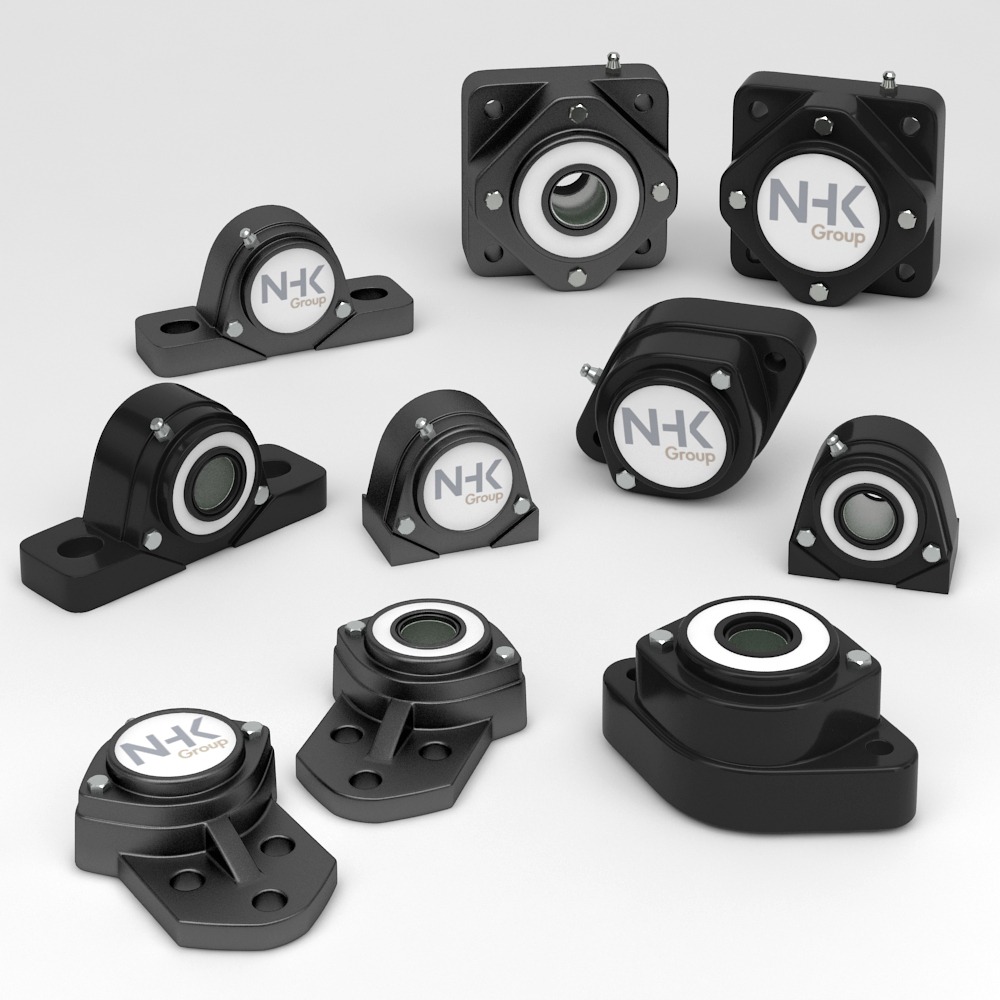
A bearing house is the housing that holds a rolling bearing insert, fixes it to the machine frame and protects it from its surroundings; a waterproof bearing house unit is a bearing house sealed so that water, detergent and dirt cannot reach the bearing. In food, beverage and pharmaceutical machinery, which is cleaned wet every shift or day, that sealing decides how long the bearing lasts and whether the unit itself becomes a contamination risk. This guide explains where waterproof bearing house units are needed, how they differ from standard units, and how to select, install and inspect them.
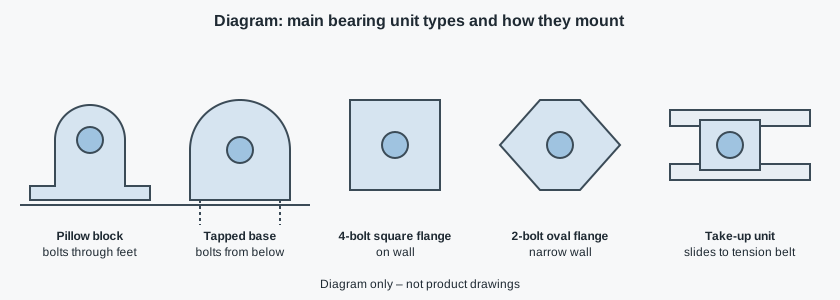
For the housing types themselves – pillow block versus flange – see pillow block bearings: the complete guide.
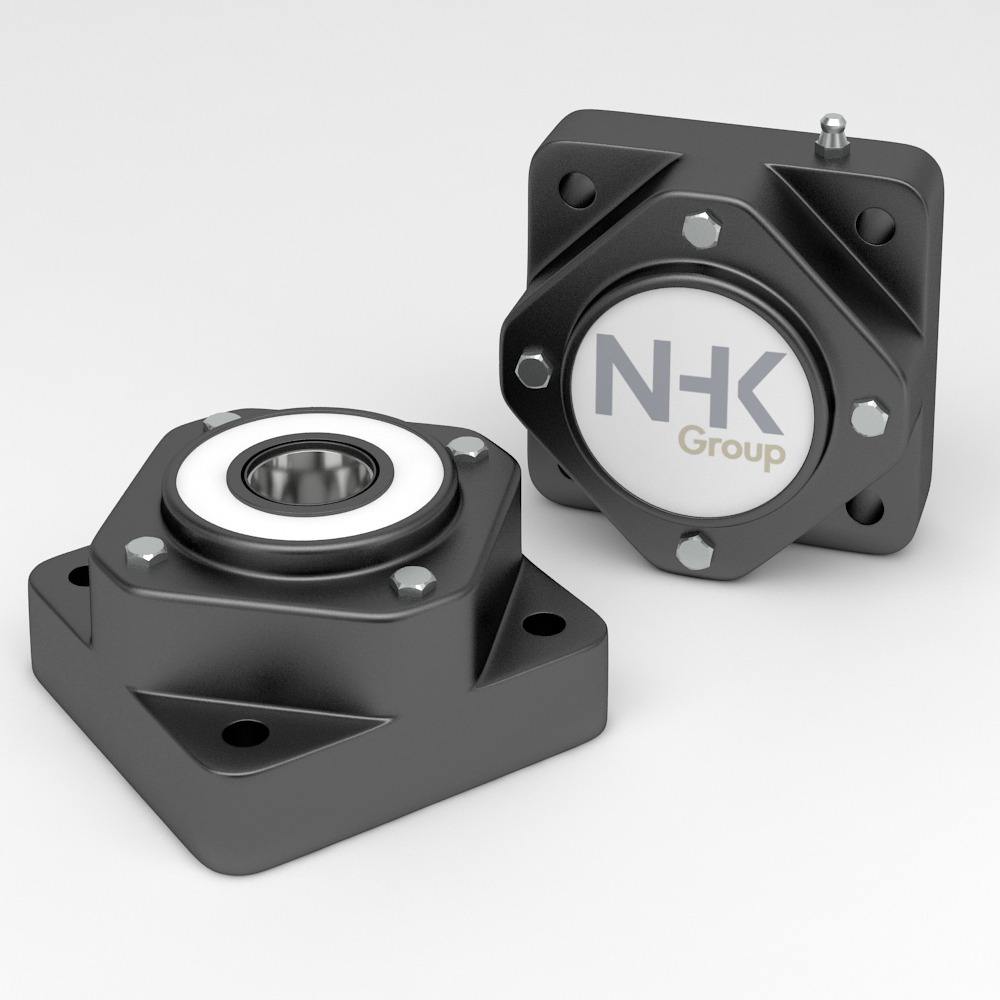
For choosing and mounting the 4-bolt format specifically, see [IP67 waterproof 4-hole square flange bearing units](/ip67-waterproof-4-hole-square-flange-bearing-units/).
What does a bearing house do?
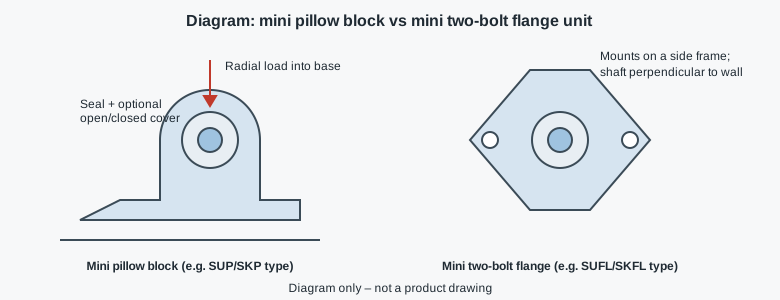
A bearing house unit consists of a housing and a bearing insert, usually a deep-groove ball bearing with integral seals, locked to the shaft with set screws or an eccentric collar. The housing:
- positions the bearing and carries radial and axial loads into the frame;
- allows some initial misalignment where the insert has a spherical outer ring;
- protects the bearing from water, dust and product.
In dry environments the insert's own seals are often enough. In washdown areas they are not: high-pressure water and detergent can pass the seal lips, wash out grease and corrode the raceways.
Why use a waterproof bearing house?
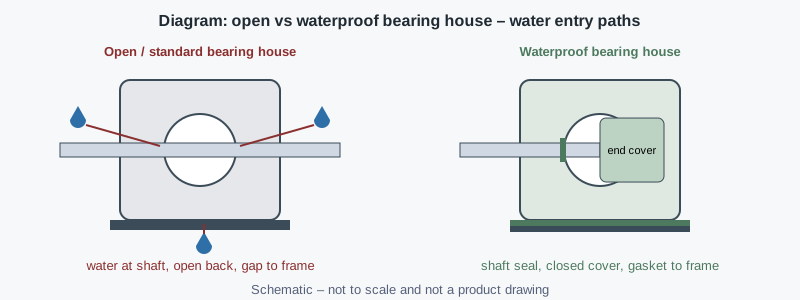
Water enters a standard bearing house by three paths: past the shaft, through an open back or cover, and through the gap between housing and frame. A waterproof design closes each one:
- shaft seals (lip or labyrinth seals) where the shaft enters the housing;
- a closed end cover at shaft ends;
- a gasket or sealed face between housing and frame.
The benefits follow from keeping water out:
- Durability in harsh environments: less grease washout and corrosion, so longer bearing life where water, chemicals and dust are present.
- Lower maintenance: fewer bearing failures and replacements, and less frequent checks.
- Hygiene and safety: no grease–water mixture escaping into the splash zone, and fewer gaps where residue collects (harbourage points – places where bacteria survive cleaning).
Where are waterproof bearing house units needed?
| Application | Conditions | Why a waterproof bearing house helps | What to pay attention to |
|---|---|---|---|
| Food and beverage processing | Daily wet cleaning, foam, high-pressure washdown, detergents | Prevents water ingress that leads to bearing failure and contamination | Food-compatible materials, closed covers, H1 lubricant |
| Meat, poultry and fish | Intensive washdown, fats, salt, chlorinated cleaners | Protects against water and corrosive brine | Stainless or plastic housings; 316L or corrosion-resistant inserts |
| Dairy | Hot water, alkaline and acid cleaners | Keeps hot cleaning fluids out | Seal and housing temperature limits |
| Pharmaceuticals | Regular cleaning with disinfectants | Resists chemical attack; keeps machinery clean | Chemical compatibility of housing and seals |
| Marine and offshore | Seawater, weather | Resists salt-water corrosion | Corrosion-resistant materials, salt spray |
Waterproof bearing housing ratings: IP67, IP69 and IP69K
Ingress protection is stated as an IP rating. These are ingress tests, not hygiene certifications.
| Rating | Standard | What it tests | Relevance |
|---|---|---|---|
| IP54 | IEC 60529 | Dust-protected; splashing water | Dry or occasionally splashed areas |
| IP67 | IEC 60529 | Dust-tight; temporary immersion | Flooding or submersion; not a washdown rating |
| IP69 | IEC 60529 | High-pressure, high-temperature water jets | Washdown with pressure washers |
| IP69K | ISO 20653 | High-pressure, high-temperature water jets | Washdown with pressure washers |
A unit can pass immersion but still let in water under a pressure washer, so specify the test that matches your cleaning method. For cleanability, look for designs to EHEDG guidelines or a certificate for the named design; EHEDG certifies specific designs and 3-A authorisation follows a Third Party Verification.
For a lower-protection composite option, see the square ball bearing unit in IP54 composite housing.
How to select a waterproof bearing house unit
- Define the zone: product-contact, splash zone (wetted by spray but not product) or non-contact.
- Define the cleaning method: dry, foam, low-pressure rinse, high-pressure washdown or CIP (cleaning in place), with chemicals and temperatures.
- Choose the IP test that matches: immersion (IP67) or high-pressure spray (IP69/IP69K).
- Choose the housing material: stainless steel for heavy washdown and aggressive chemicals; food-compatible thermoplastic for many wet areas; avoid coated cast iron in hygienic zones.
- Choose the insert: stainless or corrosion-protected; AISI 304 vs 316L or hardened stainless grades depending on chlorides and load.
- Choose seals and lubricant: elastomer compatible with fats and chemicals (EPDM, FKM, VMQ); NSF H1 food-grade grease where incidental contact is possible.
- Check the mechanics: shaft diameter, load, speed and expected life from the supplier's ratings.
- Request documents: IP test evidence, material certificates, declarations of compliance for food-contact materials (EC 1935/2004; EU 10/2011 for plastics) and certificates by design name where certified.
Example
Assumptions (illustrative only): a conveyor in a poultry plant is cleaned daily with foam and a high-pressure rinse using chlorinated detergent; the existing coated cast-iron pillow blocks fail after repeated washdowns.
- Zone: splash zone beside the product belt.
- Requirement: high-pressure spray protection (IP69K-type test), corrosion resistance to chlorine and fats.
- Choice: sealed stainless or thermoplastic waterproof bearing house units with closed end covers, gaskets to the frame and food-grade grease.
- Mechanics: shaft size and load checked against the supplier's ratings.
- Verification: bearing condition and seal state recorded at each planned inspection to confirm the change.
Installation and inspection checklist
- Mount on clean, flat surfaces; fit the gasket or leave cleanable clearance – no metal-to-metal gaps.
- Use hygienic or cap-sealed fasteners where the unit is in the splash zone.
- Align the shaft; tighten set screws or collars to the supplier's torque.
- Fit end covers on shaft ends and check seals sit correctly.
- Avoid aiming pressure washers directly at seals at close range unless the unit is rated for it.
- Inspect seals and covers for cracks, swelling or displacement at each planned stop.
- Listen for noise and check temperature; replace units before water ingress becomes failure.
For the bearing insert itself – stainless grades, seals and grease – see waterproof bearings: sealed waterproof stainless steel bearing units.
Further reading
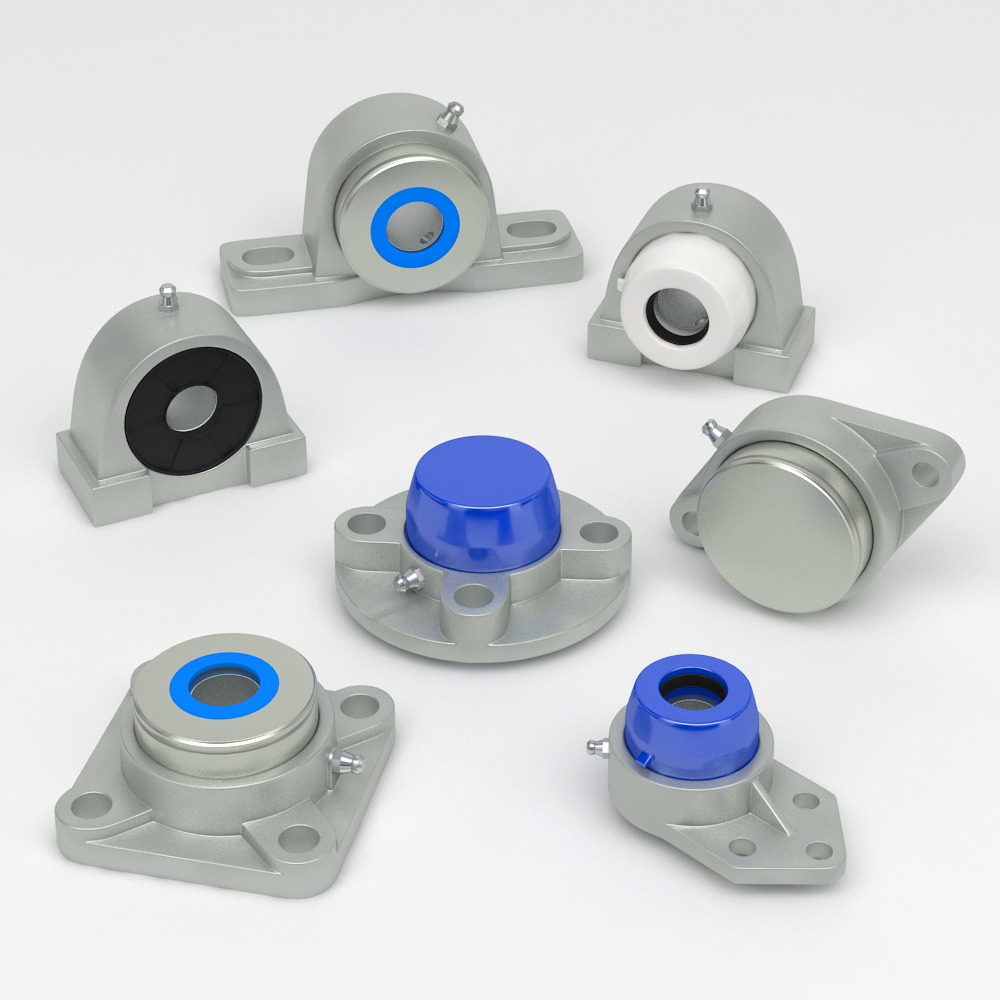
NHK's IP67 waterproof bearing house units and sealed stainless bearing units are examples of these designs; check the product page for the ratings of each model.