The value in technical challenges is the risk they expose and the improvement solving them makes possible – but only if the people who pay for the fix understand both. This guide is for OEM engineers, application engineers and maintenance leads who must turn a technical problem on hygienic machinery into a decision a client or management will make.
For problems seen from the cleaning team's side, see challenges faced by cleaners in food production. For cost and payback calculations, see reducing downtime and maintenance costs. For the root-cause method behind the solution itself, see how do you solve technical challenges. For which arguments for certified components hold up with QA, maintenance and finance, see convincing clients of technical challenge value.
What makes a technical challenge valuable?
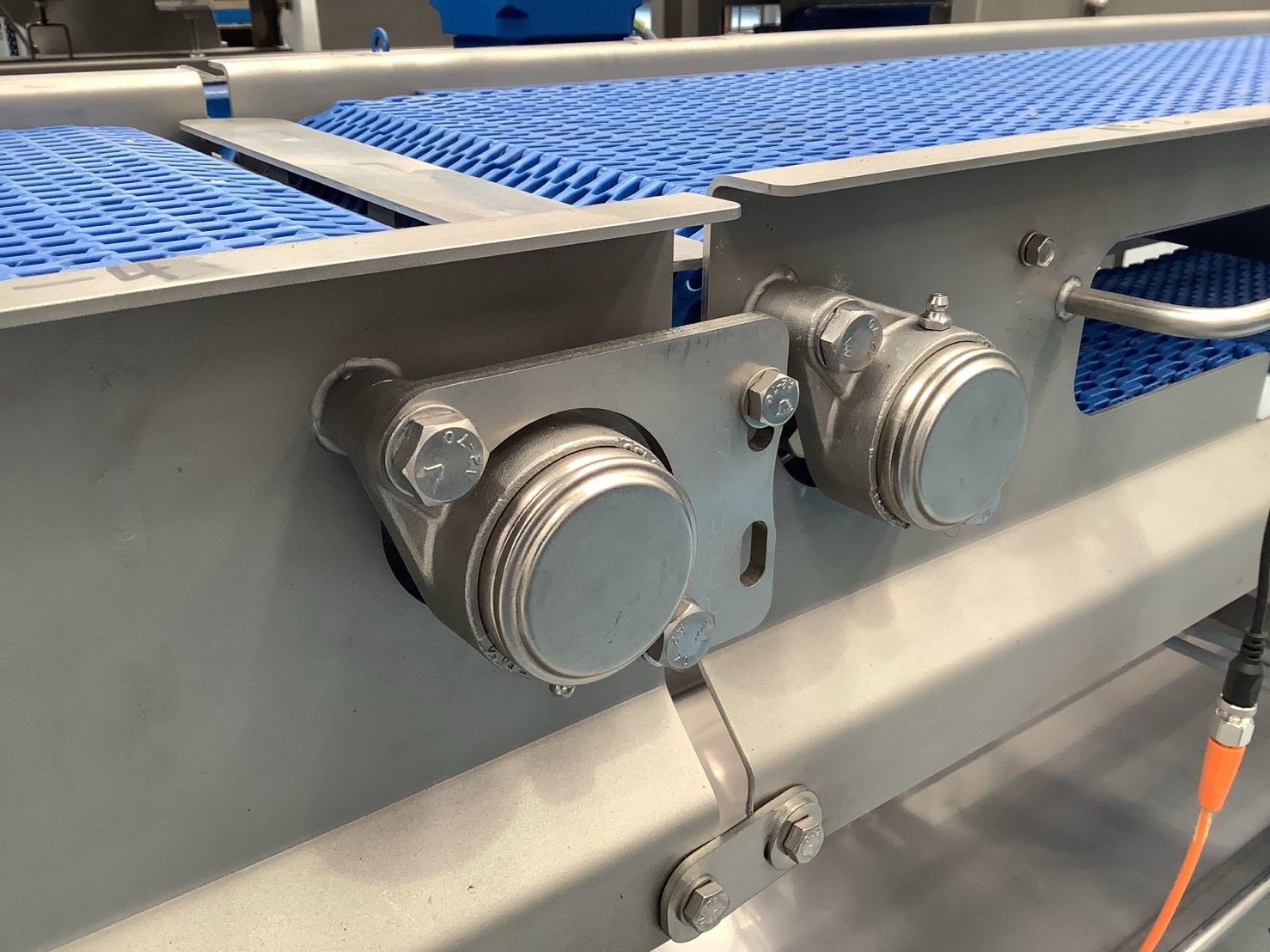
A technical challenge is any recurring problem that the current design, material or installation cannot handle: a bearing unit that fails after washdown, a levelling foot with exposed thread that collects residue, a conveyor frame with dead spaces (areas where product or water stands and is not flushed by cleaning). Each one is a signal. Solved properly, it brings:
- Immediate benefits: less unplanned downtime, shorter cleaning, fewer rejected batches.
- Long-term advantages: a design the client can reuse on the next line, lower risk at audits, and a basis for scaling production.
Ignoring the same challenge carries the opposite: repeated cost, higher contamination risk, and ad hoc fixes that create new problems.
Why do clients see challenges as costs?
Because they usually hear about them as surprises, in technical language, without options. A client told that "the bearings need upgrading to a better seal" hears a bill. A client told that "water is entering the bearings during high-pressure cleaning, which is why they fail every few months; here are two ways to stop it and what each costs" hears a decision.
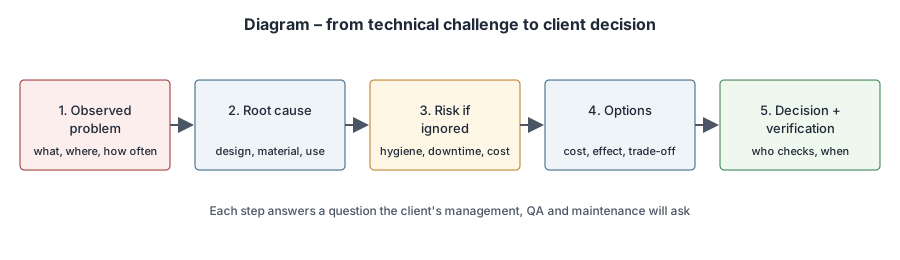
How to frame a challenge: five steps
- Observed problem. What happens, where, how often. Use the client's records: stop logs, cleaning reports, audit findings.
- Root cause. Design (crevice, exposed thread, wrong housing), material (AISI 304 where chlorides cause chloride pitting – local corrosion attack), or use (cleaning jets aimed at seals, wrong detergent).
- Risk if ignored. Hygiene, downtime, safety, cost. Be specific and honest; do not inflate.
- Options. At least two, including "do nothing", each with cost, effect and trade-off.
- Decision and verification. Who decides, what will be done, and how success will be checked – for example swab results, inspection after a set number of cleaning cycles, or failure rate over a period.
Options table: presenting trade-offs
| Option | Typical cost | Effect on risk | Trade-off | When it fits |
|---|---|---|---|---|
| Do nothing | None now | Risk stays; recurring cost continues | Cheapest short term | Only if risk is low and documented |
| Change procedure (cleaning, maintenance) | Low | Partial | Depends on discipline every shift | Root cause is use, not design |
| Replace component with hygienic design | Moderate | High for that point | Part cost, installation time | Root cause is a specific part |
| Redesign the area | High | Highest | Engineering time, downtime | Several root causes in one area |
Costs are deliberately relative; use real quotes and the client's own downtime figures in the actual proposal.
How to educate without jargon
Clients' managers do not need the vocabulary, but they need its consequences. Translate:
| Term | What to say instead |
|---|---|
| Harbourage point | A spot where bacteria survive cleaning |
| Crevice | A narrow gap that dirt and water get into but cleaning cannot reach |
| Self-draining surface | A surface water runs off by itself |
| Chloride pitting | Corrosion caused by salt and chlorinated cleaners |
| Elastomer compatibility | Whether the seal rubber survives your product and detergents |
| Declaration of compliance | The supplier's written statement that a food-contact material meets EC 1935/2004 |
Keep the technical version in an appendix for their engineers and QA staff.
Align with the client's goals
Link each challenge to one of their stated objectives: uptime, food safety, audit readiness, labour for cleaning, or sustainability targets such as water and detergent use. A fix that does not support any goal will not get budget, however correct it is technically. For compliance-related goals, name standards accurately: EHEDG certifies specific designs and 3-A Symbol authorisation follows a Third Party Verification; both are voluntary. IP ratings are ingress tests, not hygiene certificates.
Worked example
Example – assumptions stated, not data from a real plant.
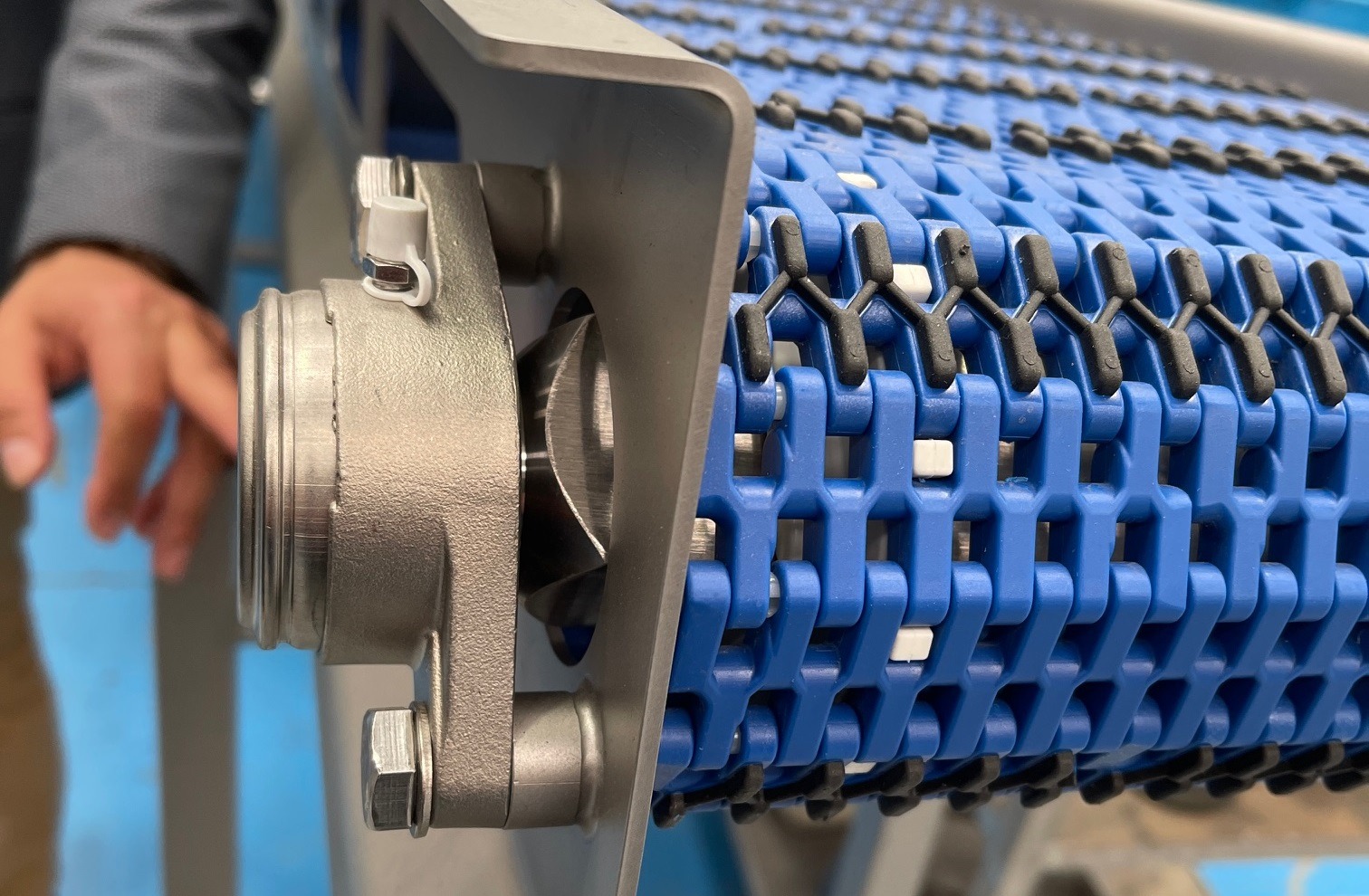
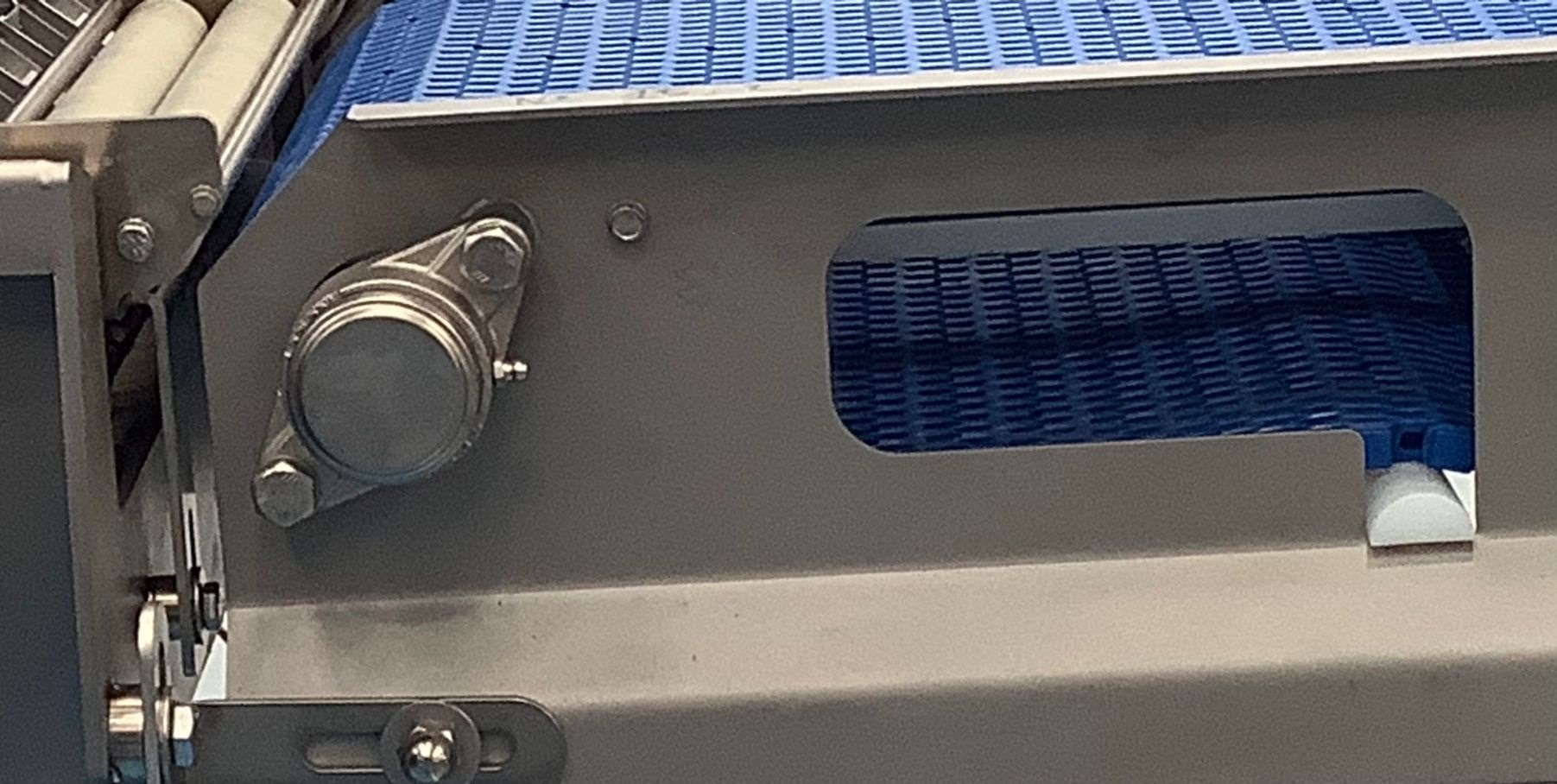
A meat plant reports that flange bearing units on a conveyor fail roughly every few months. Inspection shows rust and grease emulsion; cleaners use high-pressure jets close to the seals.
- Observed problem: repeated bearing failure, unplanned stops, grease visible on the frame.
- Root cause: water ingress through seals under high-pressure cleaning; painted cast iron housings corrode.
- Risk if ignored: further stops, grease and rust near product, audit remarks.
- Options: (a) retrain cleaners on jet distance and angle; (b) replace with sealed stainless bearing units designed for washdown; (c) both.
- Decision and verification: option (c); inspect the units after a defined number of cleaning cycles and track failures for the next period.
The same structure works for a foot with exposed thread, a frame with blind holes or a seal that swells.
Failure modes when presenting challenges
- Leading with the solution: the client sees a sales pitch. Lead with the observed problem.
- Overstating the risk: credibility drops at the first exaggeration.
- Only one option: the client cannot compare and delays.
- No verification plan: nobody can tell later if the money was well spent.
Long-term vision and partnership
Challenges solved and documented become design rules: the next machine starts without the weakness. An OEM or supplier that helps the client find root causes, rather than only selling replacement parts, builds the trust needed for those design rules to be shared and reused.
Where to start in the NHK range
For washdown bearing problems like the example, the relevant NHK line is sealed stainless bearing units; other components are listed in the full NHK product line. Take ratings and certificates from the individual product pages, and send application questions to NHK contact.