Convenience food processing is the preparation and assembly of food that needs limited preparation by its customer, including ready meals and chilled convenience products. For an engineer, the useful starting point is the product’s process flow and intended use: where hazards are controlled, where food becomes exposed again and which equipment interfaces can transfer contamination.
Use the food-equipment process and sector overview as the industry pillar. This guide focuses on ready-meal assembly and chilled handling rather than providing a cooking recipe or designing a complete thermal process. NHK is the component enquiry route; no turnkey meal-production capability is inferred.
Ready meal production line: process steps and component checks
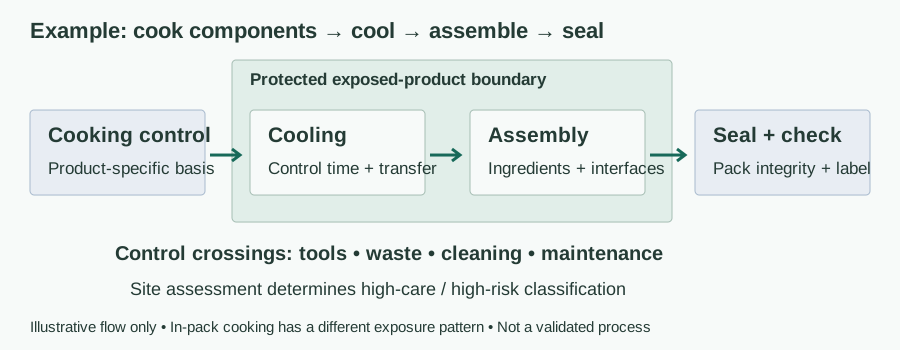
A line that cooks ingredients separately, cools them, assembles portions and seals trays has a different exposure pattern from a line that assembles raw ingredients and cooks the sealed pack. The following table is a review map, not a mandatory sequence or a validated safety plan.
| Stage and typical equipment | Hygiene risk to assess | Component/design requirements | Installed acceptance check |
|---|---|---|---|
| Receiving, storage and ingredient handling | Raw contamination, allergens, packaging/waste movement and temperature control | Accessible conveyors and supports; defined raw/clean transfer routes | Confirm ingredient, waste and mobile-equipment routes do not defeat segregation |
| Washing, cutting, mixing and preparation | Water, soil, fragments, retained deposits and recipe cross-contact | Inspectable seals and scraper joints; compatible contact materials; cleaning access | Expose cutters, mixer interfaces and mounting recesses safely |
| Cooking or other product-specific control | Inadequate process control; hot-product and steam exposure | Equipment suited to the established process; relevant instrument/control evidence | Link the process evidence to actual product and configuration; component rating is not lethality evidence |
| Cooling and transfer after the control step | Growth during unsuitable handling; condensation and recontamination | Controlled cooling path, drainage and protected exposed product | Inspect cold covers, utilities, drip paths and transfer openings |
| Portioning, sauce depositing and assembly | Exposed components, allergens, difficult joints and shared utensils | Removable contact parts, cleanable brackets and defined ingredient/tool entry | Inspect nozzle backs, guide clamps and belt returns |
| Tray sealing, inspection and packing | Recontamination before closure; seal defects and wrong label | Accessible tray path and pack-contact interfaces; defined checks and reject handling | Keep label/recipe and seal-integrity checks separate from machine-cleanliness checks |
| Chilled storage and dispatch | Cold-chain deviation, damaged packs and cross-zone mobile equipment | Suitable wheels/supports and cleanable storage handling equipment | Verify applicable product conditions and pack handling; do not invent universal limits |
Send your application data and get a component recommendation
A product-contact zone directly touches food; a splash zone receives product or cleaning spray without intended direct contact. Foreseeable transfer from an overhead bearing, guard or utility still matters. These component zones are not the same as a room’s high-care or high-risk classification.
Define intended use before assigning the hygiene zone
First distinguish ready-to-eat food, eaten without a further effective safety treatment, from ready-to-cook food whose safe use requires the specified preparation. Do not treat a reheating suggestion as proof of a dependable pathogen-control step. Intended use, instructions and reasonably foreseeable consumer handling belong in the food-safety assessment.
Then map each ingredient and control step. A cooked protein can be combined with another ingredient that has a different microbiological status; cooking one item does not establish control of the final meal. Include sauces, garnishes, rework and additions after cooking. Identify whether food is exposed after the relevant control and whether it can support pathogen growth under its intended conditions.
High-care and high-risk are classifications used by particular schemes, including BRCGS Food Safety. They are not two universally interchangeable names for chilled rooms. Apply the current scheme’s definitions and decision criteria to the actual product, treatment, exposure and intended consumption. Record the rationale and responsible reviewer on the zone drawing; do not classify the plant from this article alone.
In BRCGS usage, high-risk generally protects exposed chilled/frozen products following a full cooking treatment; high-care addresses exposed products with relevant pathogen-reduction measures that do not meet that full-cook route. Growth potential and intended consumption also matter. These are distinctions to assess, not automatic classifications for every cooked meal or salad.
A sign on a door or a stainless machine cannot establish the classification. The boundary must work for people, ingredients, equipment, packaging, waste, air and cleaning activity. The related hygienic-design cluster’s migrated factory zoning and equipment-placement guide provides the layout context; check its general guidance against the current scheme before assigning a formal category.
Protect cooling and exposed assembly after the control step
The protected part of the flow can begin before final packing. Trace exposed food through cooling conveyors, ingredient hoppers, portioning, sauce depositing and tray sealing. Identify doors, conveyor penetrations, mobile racks, tool stations and maintenance access that connect with less controlled areas.
Segregation needs operational details. Define which utensils and replacement parts enter, how they are cleaned or protected, and where waste leaves. A tool used beneath a raw-area conveyor must not become the tool used above exposed cooked product without the approved control. Wheel traffic and maintenance personnel can cross boundaries even when the product itself follows a one-way route.
Inspect condensation on cooling covers, pipes and adjacent structure. Self-draining surfaces shed liquid only when their orientation, mounting and surrounding surfaces allow it. A smooth guard with a horizontal lower edge can still retain liquid or drip toward product. Review changes to ventilation, refrigeration or insulation rather than assuming the original design remains suitable.
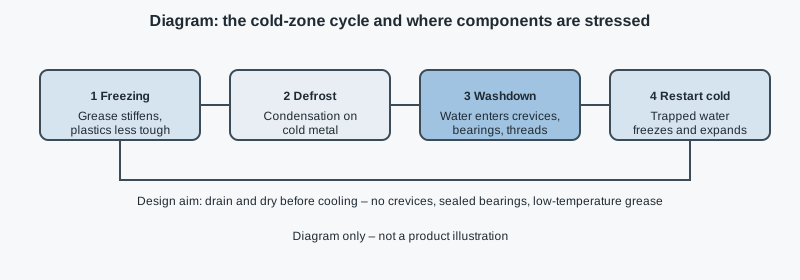
The sibling cold-zone component and condensation guide explains thermal transitions; chilled and frozen process requirements are not identical. No product cooling time, storage temperature or shelf-life value is assigned here. Those limits require the applicable product, process and jurisdictional evidence.
Cleaning regime: separate internal circuits and external machinery
Sauce vessels and closed pipework may use CIP, cleaning in place, where the system is designed to clean internal paths without routine dismantling. Removable depositor parts may use COP, cleaning out of place. Conveyor frames, feet and bearing exteriors can require separate manual or foam cleaning; calling the line CIP does not establish that those interfaces are reached.
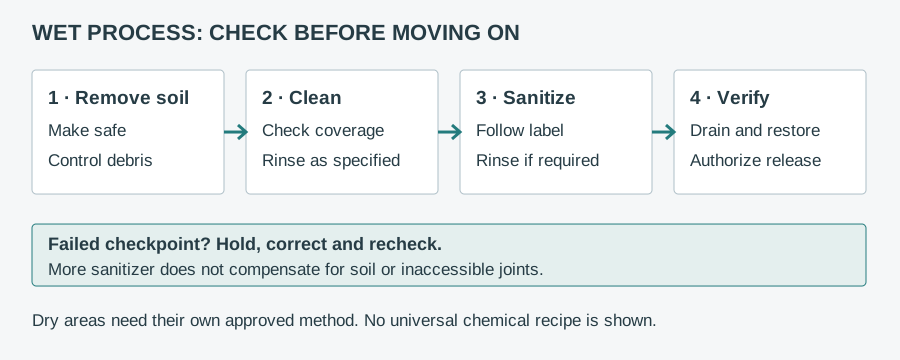
Specify detergent/sanitizer identity, concentration, temperature, contact time, rinse instructions, spray conditions and frequency from the approved procedure. Assess every material in the assembly, not only stainless steel. A housing may tolerate the metal exposure while its seal, adhesive, lubricant or plastic cover does not.
Plan cleaning routes so spray, waste liquid and tools do not transfer contamination from drains or less controlled surfaces toward exposed product or clean equipment. Higher pressure is not proof of better removal and may create splash or force water past seals. Use the related cleaning-cluster sanitation checkpoints and component-exposure guide to define the sequence and responsibility for deviations.
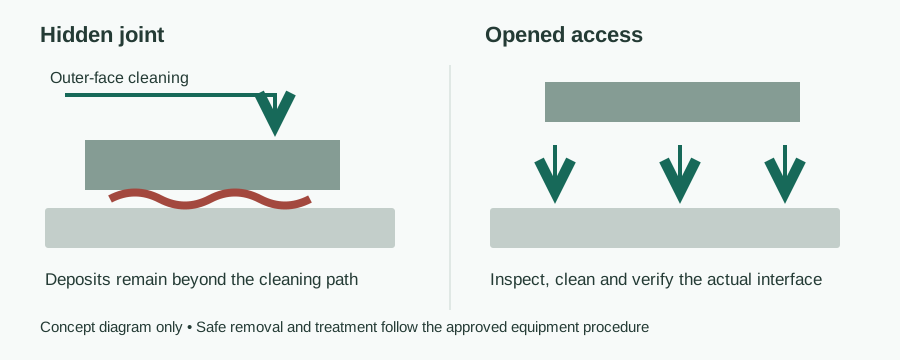
Remove soil before applying the approved microbial-control treatment. Crevices are narrow retaining gaps; dead spaces are pockets not reached by the intended process; harborage points can retain contamination through routine cleaning. An inaccessible lap joint will not become inspectable by extending the exterior spray time. Define safe dismantling and reject an unresolved cleaning-access gap before release.
Recipe changes: allergens and assembly interfaces
Ready meals combine several ingredients and repeated tooling adjustments. Record recipe-specific allergens, shared equipment, rework and labels. A change from one sauce to another can leave residue behind a nozzle seal even when the visible belt has been cleaned. Tooling stored wet or returned from a shared wash area also needs controlled handling.
Use an allergen changeover procedure that covers dismantling, removal, cleaning, restoration and appropriate acceptance evidence. Scheduling and segregation can support control but do not justify an uncleanable interface. ATP testing indicates biological residue; it is not an allergen-specific test or a microbiological count. A pass cannot settle every changeover question.
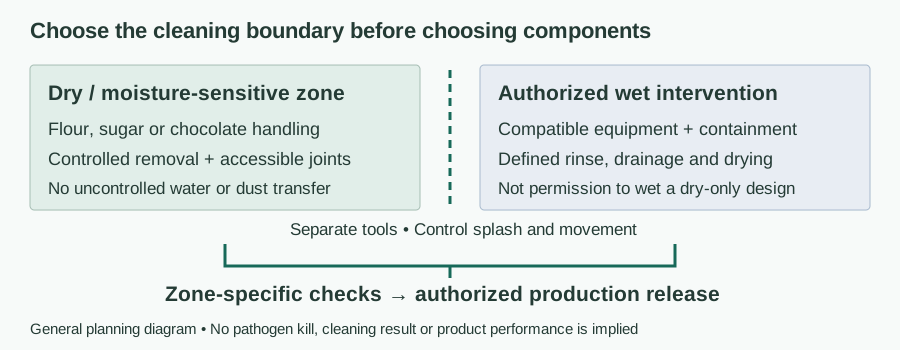
For dough, coatings or fat-bearing deposits within a mixed plant, the sibling bakery and confectionery cleaning-boundary guide adds soil-specific checks. Keep the consumer label/recipe match as a separate control: clean equipment cannot correct an incorrect allergen declaration on the pack.
Convenience food production equipment: specify the installed components
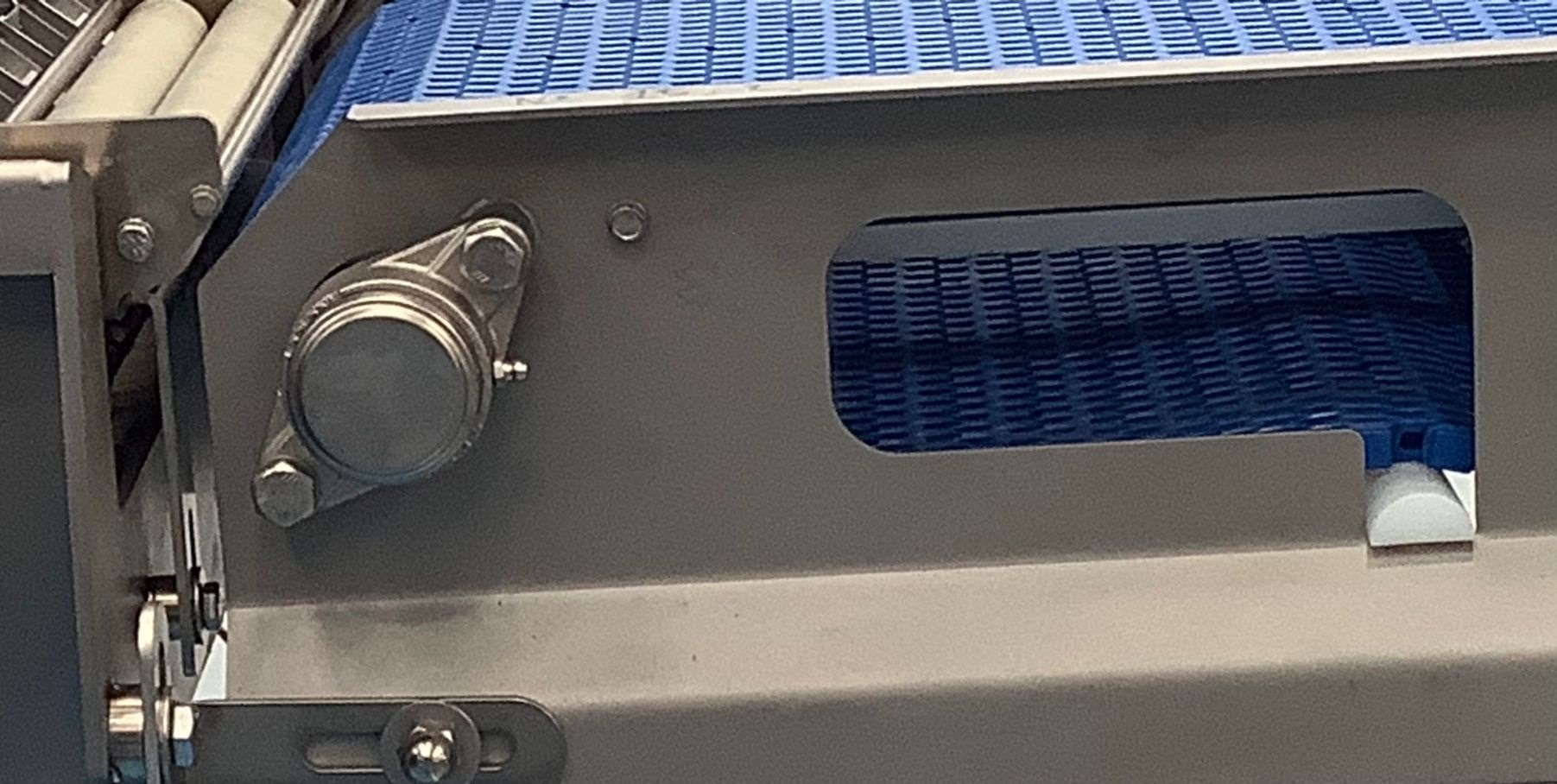
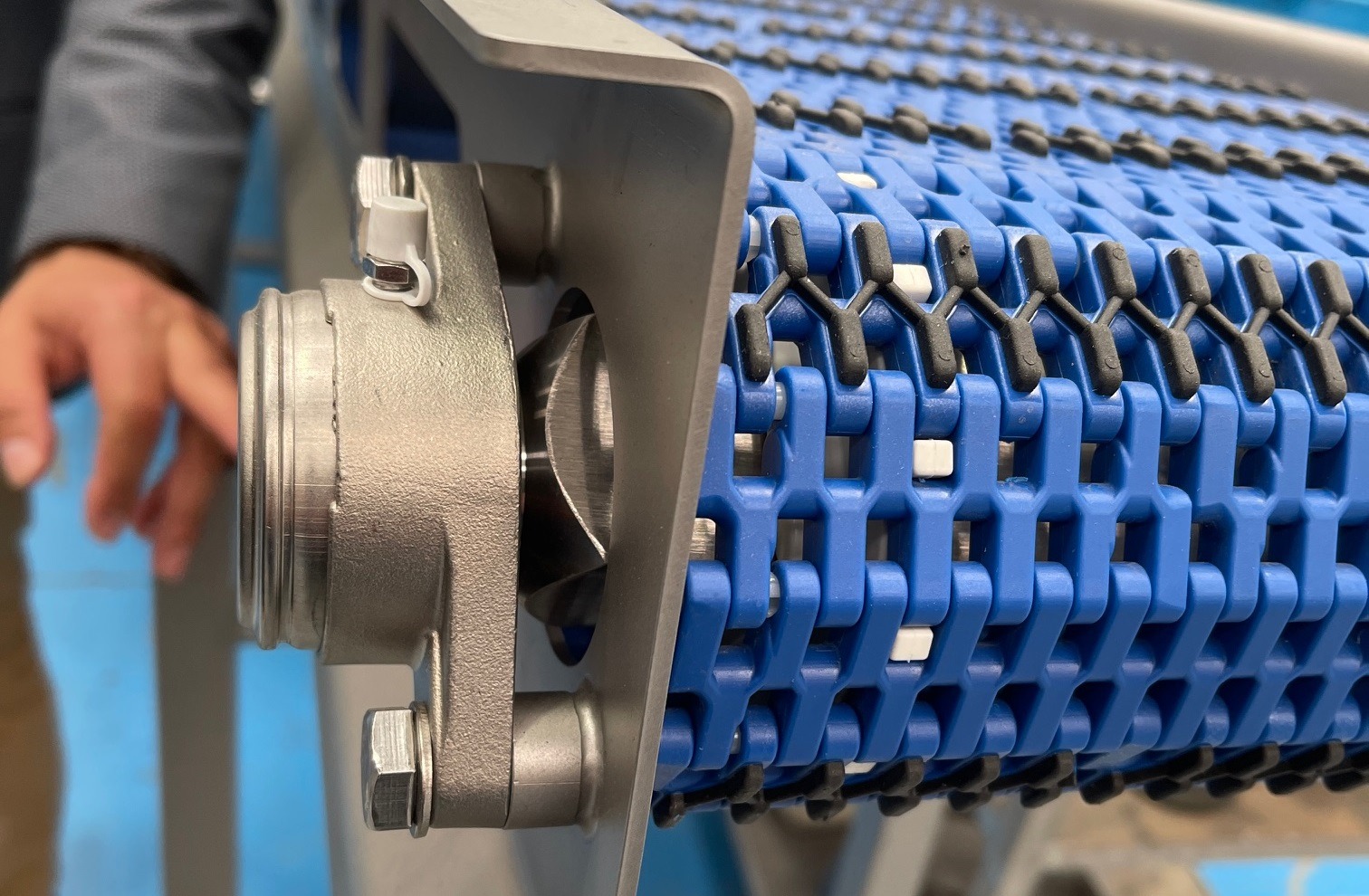
For bearing units, record load, shaft speed, alignment, cover/back-seal arrangement, orientation and actual cleaning exposure. Place lubricant discharge and wear paths away from exposed food; assess the frame joint beneath the housing. NHK lists sealed bearing configurations for ready-meal cleaning reviews; category identity is not a washdown or service-life rating for every variant.
Levelling feet need a support layout, adjustment and fixing specification as well as cleaning access. Enclosed threads can remove a dust or residue trap, but the installed base, floor joint and frame connection still need inspection. Load distribution, movement and anchoring depend on the actual machine; no default load rating is invented.
Fasteners, guards and conveyor guides should expose required interfaces for inspection without repeated damage to seals. A declaration of compliance identifies the applicable food-contact basis and intended-use information where required; it is not a cleanability certificate. Ask for the actual supplied plastics and seal compound, not simply a family name or food-grade label.
AISI 304 or 316L selection depends on product and cleaning exposure, including chloride-related corrosion, rather than a high-care room label. Finished surface condition, welds and trapped liquid can defeat an otherwise suitable alloy. Check the assembly’s temperature and chemical limits and whether replacement parts preserve its approved geometry.
EHEDG certifies specific equipment designs; 3-A Symbol authorisation follows Third Party Verification. Both are voluntary and neither certifies a factory or validates meal processing. IP67 under IEC 60529 is an immersion test, not washdown evidence; IP69K under ISO 20653 is an ingress designation, not hygiene certification or unlimited cleaning resistance.
Environmental findings and maintenance: inspect the niche, not just the swab
Listeria monocytogenes can grow at refrigeration temperatures. Chilled handling therefore does not remove the need to prevent contamination of exposed ready-to-eat food. The site’s environmental programme should use methods, locations, timing and actions suited to its hazards and applicable requirements; this guide assigns no universal sampling frequency or release threshold.
Where results recur, inspect the local geometry and operations: damaged seals, hollow-section openings, wet bracket interfaces, floor joints, cleaning splash, tool movement and condensate. Preserve relevant findings and involve QA in product disposition rather than treating a component replacement as automatic permission to restart.
Use the migrated equipment conversion and intended-use review when an existing machine moves from packed goods to exposed-food handling. Changing bearing housings or feet can support the conversion, but it cannot fix an unsuitable process layout or establish zone classification. Document the revised drawing, cleaning method and operating controls.
A six-step component acceptance checklist
- Confirm product and process scope. State intended consumption, ingredients, control steps and subsequent exposure; record the applicable zone rationale.
- Map installed transfer paths. Include overhead parts, drainage, tools, mobile equipment and maintenance crossings, not only the food-contact belt.
- Check removal and cleaning coverage. Make safe and expose specified seal undersides, depositor backs, guides and housing/frame joints; record inaccessible locations.
- Match supplier evidence to duty. Compare materials, compound identity, service limits and specified certificates with the supplied configuration and cleaning envelope.
- Verify restoration and required checks. Confirm intact seals, accounted-for parts, guards, drainage and QA-defined results; keep process, sanitation, allergen and label evidence distinct.
- Close deviations and control changes. Assign corrective action and release authority; reassess product, tooling, cleaning or component substitutions before use.
Example: a chilled meal depositor and shared maintenance route
Example — hypothetical assumptions, not an NHK installation or test. A line combines cooked meal components and sauce before tray sealing. A depositor seal retains residue, and maintenance tools can enter from a raw preparation area. The site’s formal zone classification and cleaning-effectiveness evidence require review; no contamination result or successful correction is assumed.
QA confirms intended use and the relevant scheme criteria. Engineering reviews the seal joint and safe removal access; operations define tool entry and protected storage. The supplier request includes the actual compound, cleaning exposure and revised drawing. The plant obtains the required control evidence and closes release conditions rather than assuming a stainless replacement part makes the line safe.
Copyable specification and supplier enquiry
Request drawings and item identity, material/contact-use evidence, cleaning and maintenance instructions, actual mechanical/thermal limits and any specified exact-design certificate. EC 1935/2004 provides the EU food-contact framework; EU 10/2011 adds plastics requirements; FDA 21 CFR 177.2600 concerns repeated-use rubber. None supplies a finished meal’s safety assessment. Use the component certificate and configuration review for the separately specified design documents.
Copy and complete: “Product and intended use; ingredients/allergens; process flow, control step and exposed assembly; site zone definition and scheme; component/part number, drawing revision, quantity and contact zone; product/cleaning temperature, chemicals, pressure and frequency; load, speed, supports, fixing and access; seals, covers, drainage and findings; required material and design documents; acceptance and monitoring questions; delivery country.”
Send these details to NHK
NHK can suggest components, clarify supporting documents and prepare a quote; the food business retains process, zone and release responsibility. Browse stainless hygienic component families for chilled assembly enquiries as the secondary path. Direct contact is HMP@nhkgroup.eu and (+45) 2492 5030. No guaranteed audit acceptance, response time or product rating is inferred.