Certified parts are machine components whose specific design has been independently assessed against a hygienic standard such as EHEDG or 3-A. For machine builders (OEMs), they create a competitive edge where end users write hygienic design into their specifications: the certificate is evidence the OEM does not have to produce itself. This page explains where that expectation exists, by industry, and how to use it in tenders.
For what certification proves and does not prove, see advantages of certified components and parts. For hygienic design as a broader competitive factor, see hygienic design principles drive competitiveness. To decode certification labels and rank components by risk, see prioritizing certified components and parts.
What exactly is certified?
- EHEDG certifies specific equipment designs for cleanability, after testing or assessment by an authorised body. It does not certify factories, companies or materials.
- 3-A Symbol authorisation is granted to a specific design after a Third Party Verification against a 3-A Sanitary Standard.
- Both are voluntary. Neither replaces legal requirements such as the hygiene provisions of the EU Machinery Directive, EN 1672-2 and EN ISO 14159, or food-contact material rules under EC 1935/2004.
- IP ratings (IEC 60529; IP69K in ISO 20653) are ingress tests, not hygiene certifications.
So "certified" is always about one design. A supplier can offer certified and non-certified parts side by side.
Where does the competitive edge come from?
Not from the logo, but from three practical effects:
- Tender compliance: where an end-user specification requires certified components in certain zones, only offers that meet it are compared.
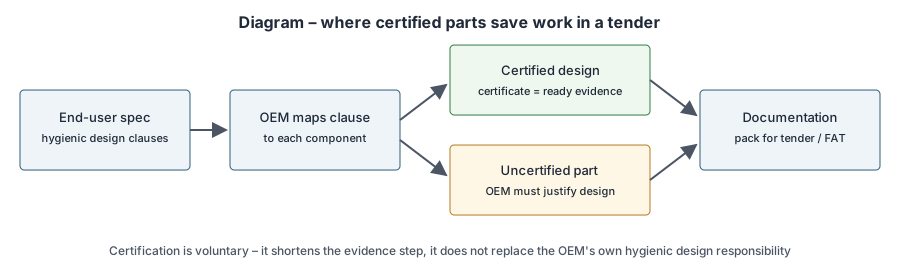
- Less evidence work: in design reviews and factory acceptance tests (FAT), a certificate replaces the OEM's own justification for that component.
- Fewer late changes: components rejected by the end user's QA team after order are costly to replace; certified designs reduce that risk.
The edge is largest for OEMs that sell standard machines into several food sectors: one documented component set can serve many end-user specifications, so the evidence is prepared once and reused in every tender. For one-off machines built to a single specification, the benefit depends on how strictly that end user reviews hygienic design.
What does each industry expect?
The old version of this page listed large companies across industries said to use certified components. Those statements could not be verified and are not repeated here. What can be said is how expectations typically differ by sector – always check the actual specification.
| Industry | Typical reference for hygienic design | How often certified parts are asked for | Where it matters most |
|---|---|---|---|
| Dairy | 3-A Sanitary Standards (especially North America), EHEDG, EN 1672-2 | Often | Product-contact parts, CIP circuits, splash-zone components |
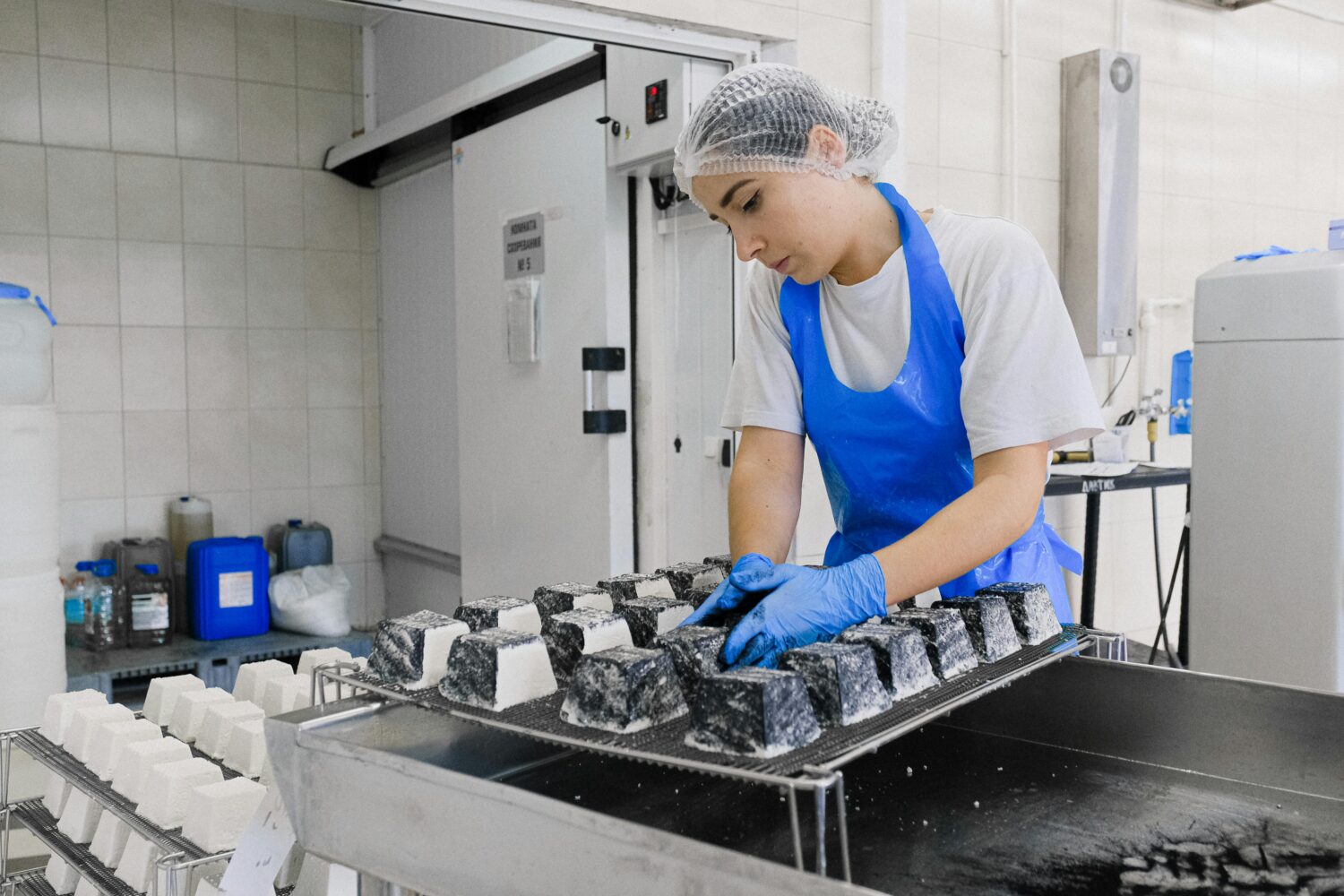
| Food processing (meat, poultry, ready meals) | EHEDG guidelines, EN 1672-2, EN ISO 14159 | Often in larger tenders | Open-plant washdown areas: feet, bearings, fasteners, conveyors |
| Beverage | EHEDG, 3-A for some equipment | Sometimes | Fillers, valves, product lines |
| Bakery and dry food | EHEDG dry-cleaning guidance | Less often | Allergen changeover areas |
| Pharmaceutical | GMP requirements, sector standards such as ASME BPE for process systems | Rarely EHEDG/3-A by name; hygienic design required | Product-contact parts, cleanroom surfaces |
| Cosmetics | Sector GMP guidance | Sometimes, for food-like processes | Mixing and filling |
| Packaging machinery for food | End-user specification, EN 1672-2 | Depends on zone | Parts near open product |
| Water treatment | Drinking-water material approvals (national schemes) | Rarely EHEDG/3-A | Material approval rather than cleanability |
Which components should be certified first?
Prioritise by zone:
- Product-contact zone (surfaces that touch product): highest priority; certified or demonstrably hygienic designs.
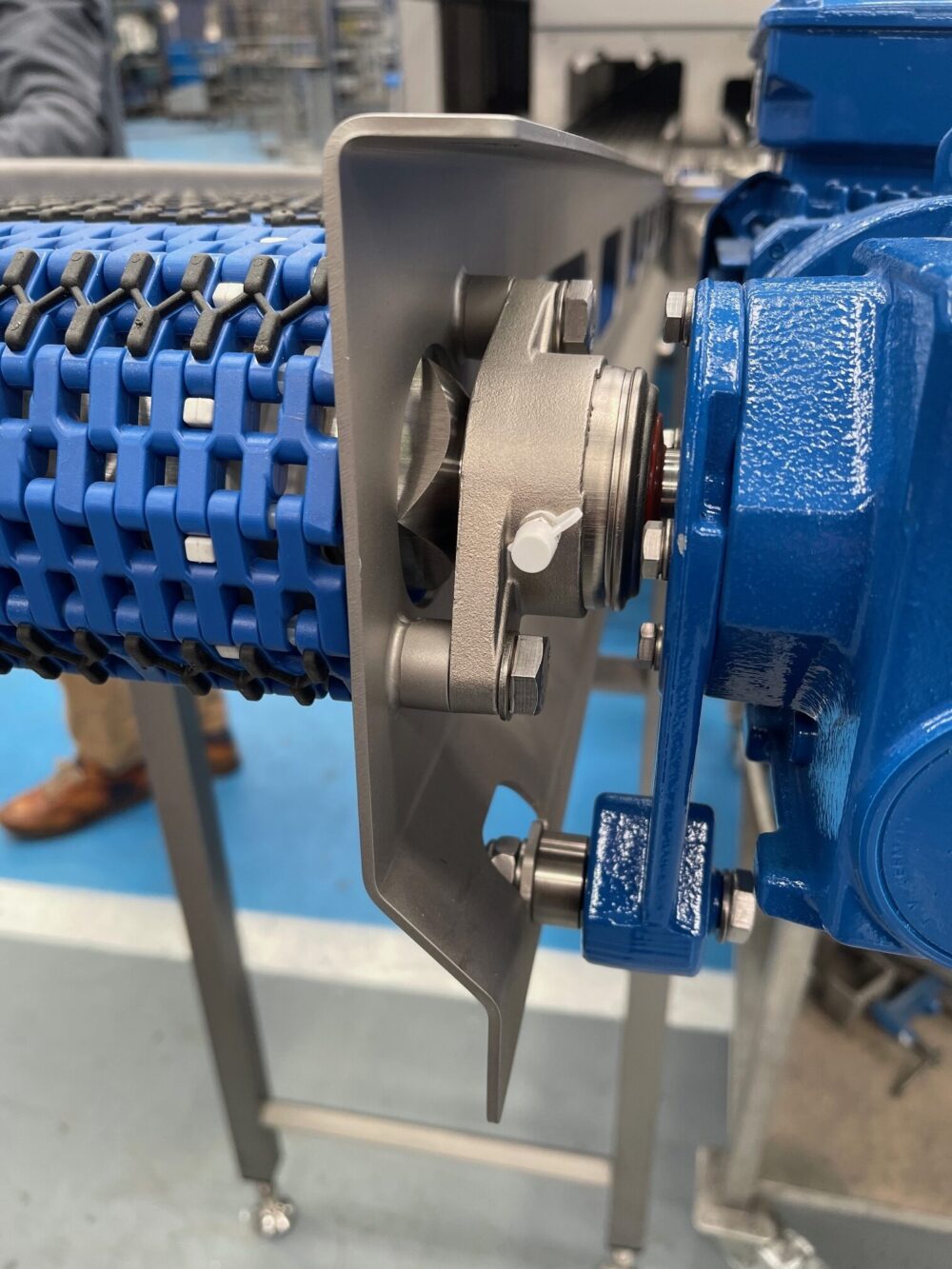
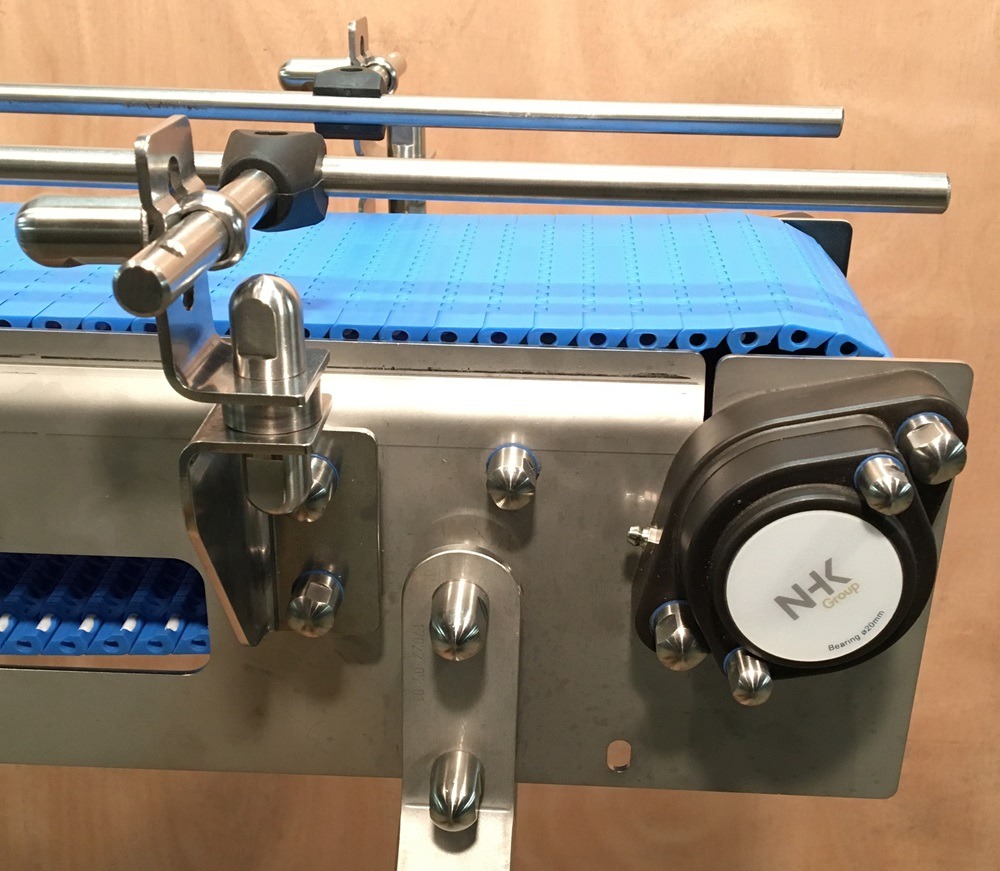
- Splash zone (product and cleaning solution reach the part and drain back): feet, bearing units, fasteners and conveyor parts. Exposed threads, crevices (narrow gaps that trap soil) and dead spaces here create harbourage points where microbes survive cleaning.
- Non-contact zone: standard parts are usually acceptable; certified parts rarely add value.
Typical splash-zone candidates for certified designs are levelling feet with sealed threads, hygienic bolts and bearing units designed for washdown.
How to use certified parts in a tender: step by step
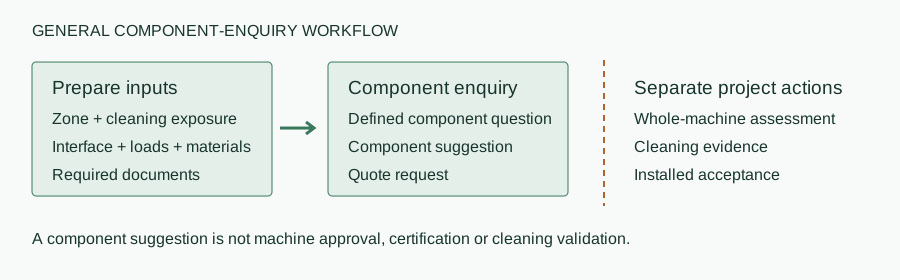
- Read the specification for hygienic design clauses: certified components required, "designed to EHEDG guidelines", or only EN 1672-2.
- Map clauses to components by zone.
- Select certified designs where required; choose hygienic designs with documented features elsewhere.
- Collect certificates for the exact models and variants, checking validity.
- Add supporting documents: declarations of compliance for food-contact materials, material certificates (e.g. AISI 316L where chlorides cause chloride pitting), elastomer compliance (EPDM, FKM, VMQ).
- Build a documentation pack for the tender and FAT.
- Lock the choice in the bill of materials so purchasing cannot substitute an uncertified look-alike.
Example – assumptions stated, not a real tender. A dairy end user requires certified components for all product-contact parts and hygienic design for the splash zone. The OEM's conveyor uses certified sealed levelling feet and hygienic bolts in the splash zone even though only hygienic design is required, because the cost difference is small and it removes discussion at FAT. Bearing units are hygienic designs with datasheets and seal compliance documents. The documentation pack lists each component, its zone, and its evidence.
Failure modes
- Overclaiming: calling a part "certified" without a certificate for that model.
- Look-alike substitution: purchasing swaps a certified part for a cheaper similar one.
- Expired or wrong-variant certificates.
- Certified parts, unhygienic installation: gaps at mounting points or plain steel fixings causing galvanic corrosion.
- Certifying everything: cost without benefit in non-contact zones.
Where to start in the NHK range
The relevant NHK line is EHEDG certified and 3-A SSI standard components; other components are in the full NHK product line. Check each model's certificate on its product page, and send tender questions to NHK contact.