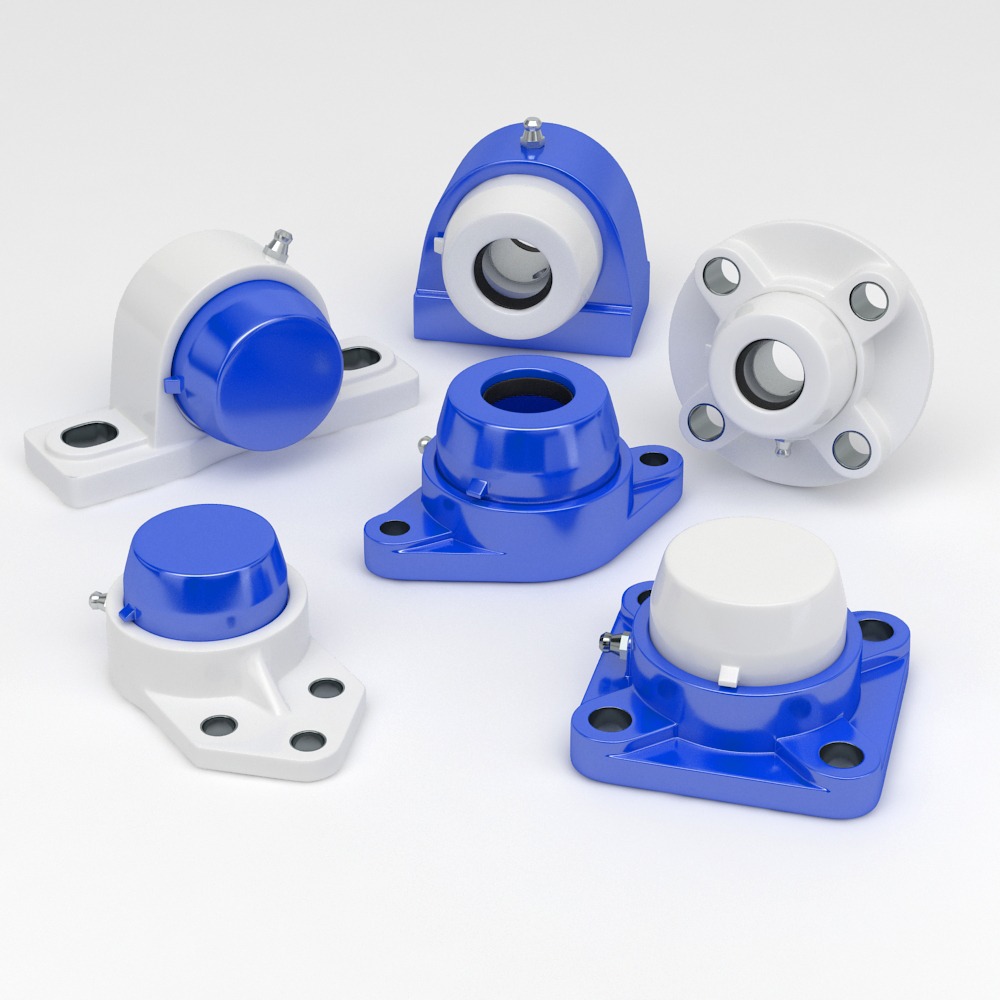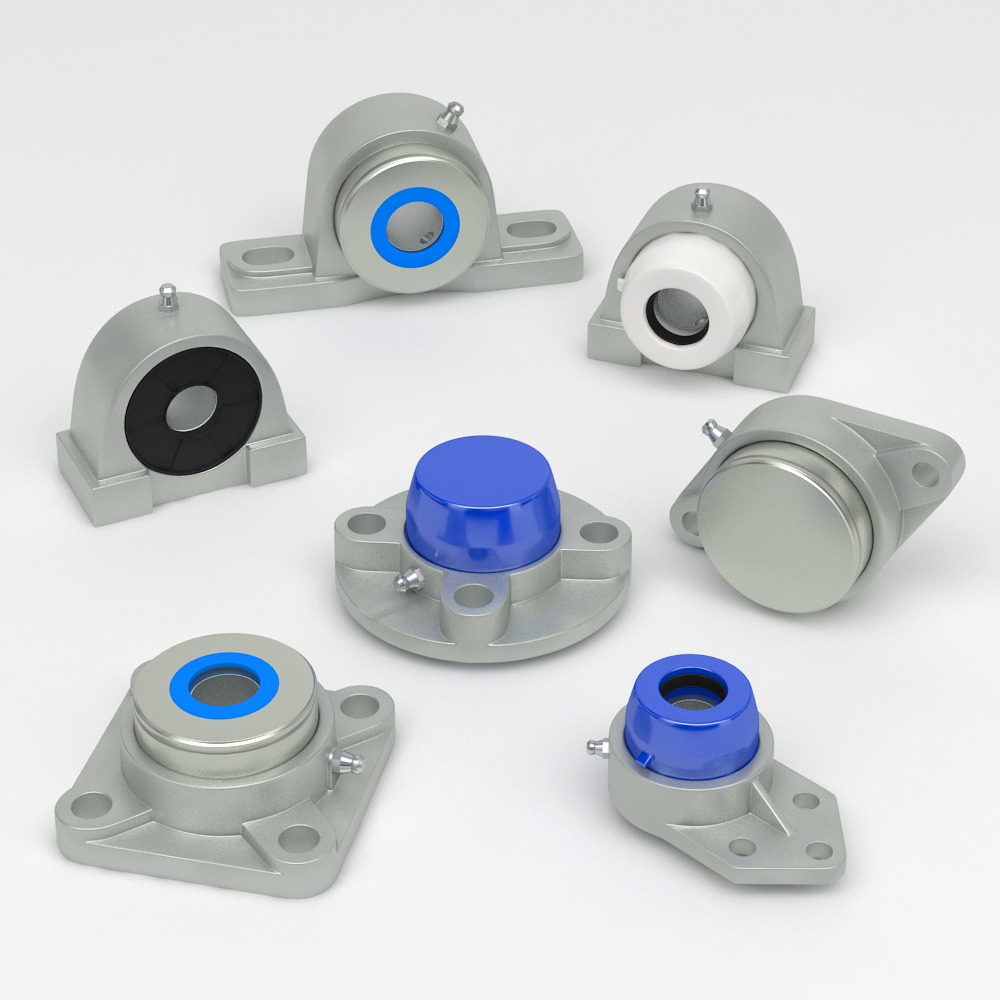
A bearing cover is a cap fitted to the side of a housed bearing unit that encloses the rotating shaft end, the locking collar or set screws and the bearing seal. A closed cover is used where the shaft ends inside the unit; an open cover has a bore with a seal so the shaft can pass through. Covers serve two purposes at once: safety (no exposed rotating parts) and hygiene or protection (spray, dirt and residues kept off the seal). This guide compares open and closed designs, stainless and plastic bearing covers, and how to fit and inspect them. It belongs to the Bearing units hub.
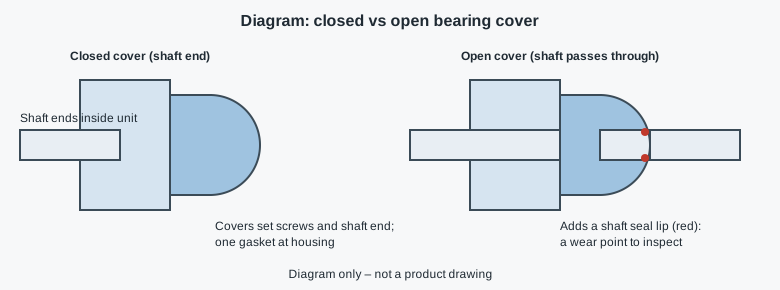 closed vs open bearing cover. Schematic, not a product test report.
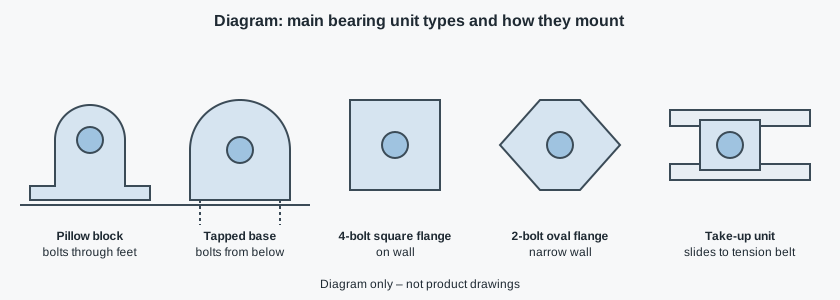
Covers depend on the housing; see bearing unit types.
Open vs closed bearing covers
| Feature | Closed cover | Open cover |
|---|---|---|
| Use | Shaft ends at the bearing (tail shafts, idlers) | Shaft continues through (drive side, through shafts) |
| What it encloses | Shaft end, set screws or collar, bearing seal | Set screws or collar, bearing seal; shaft passes through a seal |
| Sealing points | One: cover to housing | Two: cover to housing and cover to shaft |
| Hygiene | Removes the shaft end and set screws as harbourage points | Same, but the shaft seal is an extra wear and cleaning point |
| Safety | Covers rotating shaft end and screw heads | Covers screw heads; exposed shaft beyond must be guarded separately |
| Inspection | Remove to check set screws and seal | Also check shaft seal lip for wear and residue |
Harbourage points are places where product residues and microbes collect and survive cleaning. On an uncovered bearing unit the set-screw holes, the end of the shaft and the gap at the bearing seal are typical examples.
Send your application data and get a bearing cover recommendation
Why fit covers at all?
- Safety: rotating shaft ends and set screws can catch clothing, gloves or cleaning cloths. EN ISO 12100 and the Machinery Directive require risk reduction for moving parts; a cover is a simple measure at the bearing, though it does not replace guards elsewhere.
- Seal protection: in washdown areas, high-pressure spray aimed at bearing seals forces water and detergent past the lip. A cover takes the direct jet.
- Hygiene: covers turn several crevices into one smooth surface that is easier to clean and inspect.
- Lubricant: they reduce the chance that grease purged from the bearing reaches the product area.
Materials: stainless vs plastic bearing covers
| Material | Strengths | Limitations |
|---|---|---|
| Stainless steel | Impact-resistant, temperature-tolerant, matches stainless housings, no plastic fragments | Heavier; check the gasket for a tight fit; dents can leave gaps |
| Plastic (e.g. polyamide, acetal or similar engineering plastics) | Light, low cost, corrosion-free, often matched to thermoplastic housings | Can crack on impact or in cold zones; check chemical and temperature resistance; fragments are a foreign-body risk |
Material choice depends on the zone, the cleaning chemicals, temperature and impact risk. Near open product, many plants prefer stainless or detectable/colour-contrasting plastics so that fragments can be found. For parts that may touch product, ask for a declaration of compliance under EC 1935/2004 (and EU 10/2011 for plastics).
The cover gasket or O-ring is part of the decision: elastomer compatibility with cleaning agents and temperature (EPDM, FKM, VMQ) decides how long the seal stays tight.
Selecting a cover
- Confirm the housing series and size – covers are specific to the housing.
- Decide open or closed from the shaft layout.
- For open covers, confirm shaft diameter and the cover seal type.
- Choose material by zone, chemicals, temperature and impact risk.
- Check clearance: the cover must not touch the rotating shaft end, and axial shaft movement (thermal expansion on long shafts) must not push the shaft into a closed cover.
- Request material and food-contact documents where needed.
Example (assumptions, for method only): a stainless conveyor in a meat plant with daily foam and high-pressure rinse. Tail-shaft bearings get closed stainless covers; the drive-side bearing, where the shaft continues to a gearbox, gets an open cover with a shaft seal. The shaft is cut so it ends with clearance inside the closed cover, allowing for thermal expansion of the long shaft. Covers are removed at planned maintenance to check set-screw torque and the bearing seal.
Installation and inspection
- Retighten set screws after run-in before fitting covers – they are harder to check once covered.
- Clean and dry the housing face before fitting so the gasket seats evenly.
- Do not pack the cover with grease unless the bearing supplier specifies it.
- Inspect at intervals: cracks, loose fit, damaged gaskets, residue behind the cover, wear on the shaft seal of open covers.
- Replace covers that have been dropped or dented; a gap defeats the purpose.
Common mistakes
- Fitting a closed cover on a shaft that grows into it with temperature.
- Using covers without gaskets in washdown, letting water collect inside.
- Leaving covers off after maintenance.
- Plastic covers in cold or high-impact zones without checking material limits.
- Assuming a covered bearing tolerates direct high-pressure jets; IP ratings are ingress tests, not cleaning instructions.
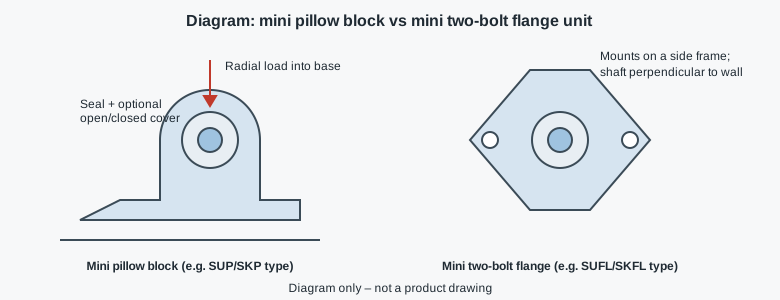
For washdown practice around bearings, see waterproof bearing units designed for easy cleaning. Covers for small units are described in mini bearing units, and the housings themselves in sealed stainless bearing units for hygienic industries.
What to send for a recommendation
For any claimed hygienic certification, use the certificate scope for the housing and cover configuration before relying on it in the specification.
- Bearing unit type and series (pillow block, flange, mini), housing size
- Open or closed; shaft diameter for open covers
- Zone and cleaning method, chemicals, temperature
- Preferred material (stainless or plastic)
- Documents needed, quantities, delivery country
An NHK technician suggests matching covers and sends a quote. NHK lists sealed stainless bearing units; request the cover configuration, material, fit and cleaning documentation for the selected unit rather than inferring them from the category name.