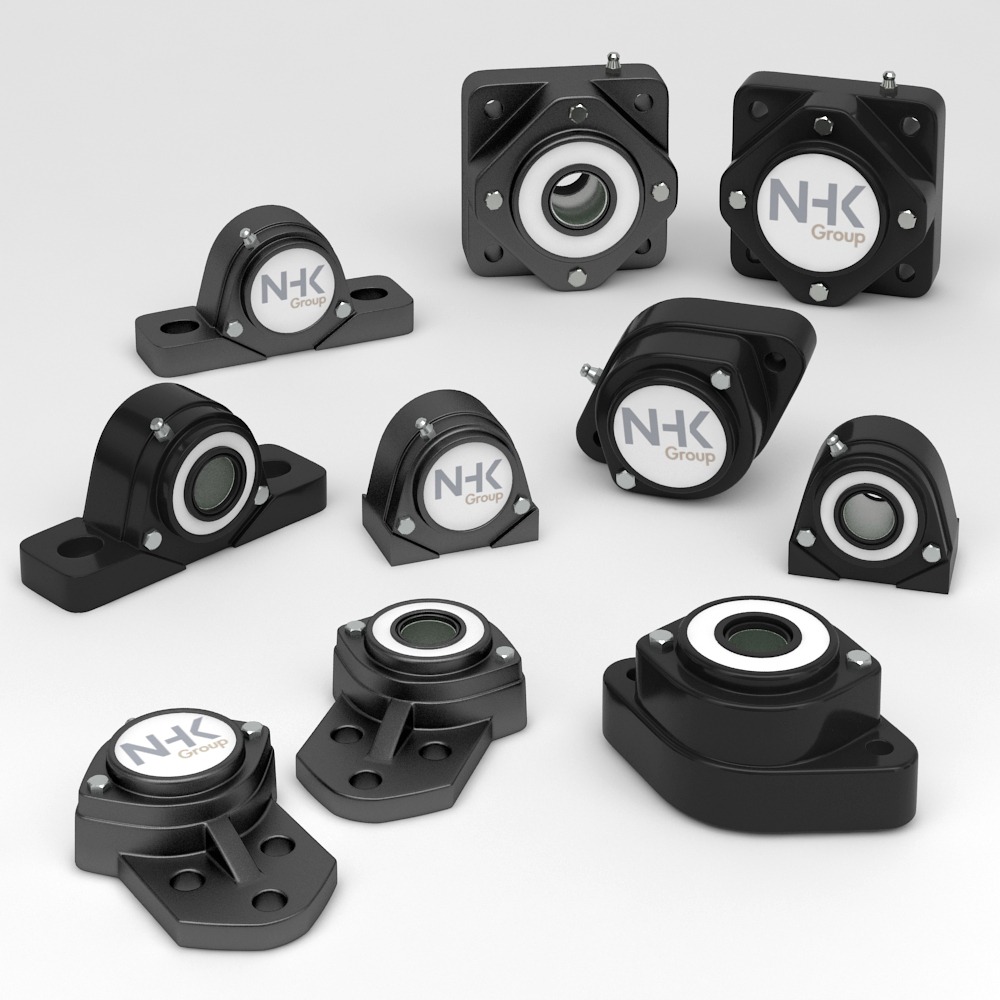
Waterproof bearing units designed for easy cleaning are mounted bearings whose sealing keeps water and dust out of the bearing and whose outer shape lets soil and water run off during cleaning. In food, pharmaceutical, cosmetic and chemical manufacturing, they have to withstand frequent cleaning, moisture and corrosive substances while staying reliable. This guide covers two halves of the same problem: what to look for in the design, and how to clean these units without defeating their sealing.
Why bearing units are a cleaning problem
Bearing units sit in the splash zone – the area reached by product and cleaning spray – on conveyors, mixers and packaging machines. They combine several features that make cleaning difficult: a rotating shaft with a seal gap, bolts, a mounting surface against the frame, and grease that must stay inside. When water enters, it washes out grease, causes corrosion and noise, and leads to early failure. When soil stays outside, the unit becomes a harbourage point – a place where microorganisms survive cleaning.
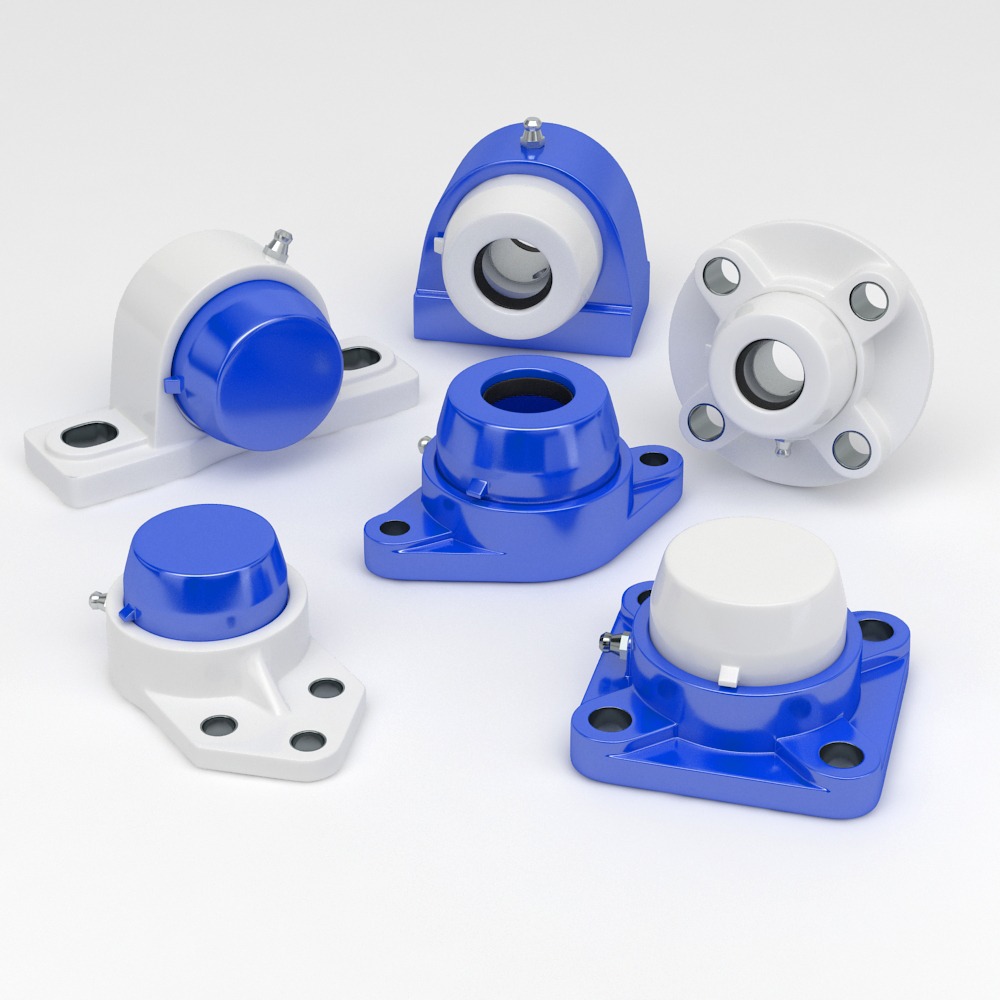
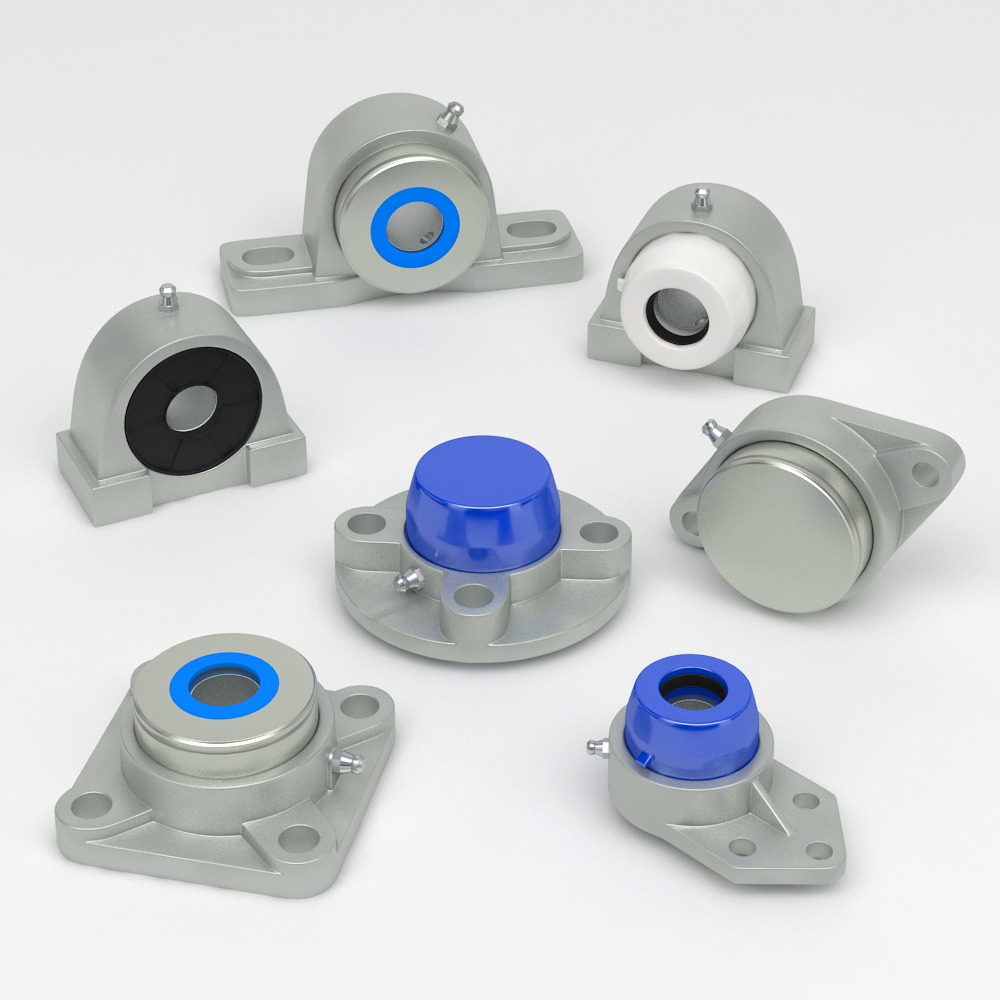
Design features that make cleaning easy
| Feature | Why it helps | What to check |
|---|---|---|
| Smooth, rounded housing | Soil and water run off; fewer places for film to stay | No sharp internal corners, ribs or recesses |
| Few crevices (narrow gaps) | Nothing for soil to hide in | Joints between housing, cover and frame |
| Closed end covers | Shaft end and set screws covered | Cover seals tightly; no gap at the rim |
| Sealed insert and shaft seal | Keeps water out of the bearing | Seal type and condition |
| Self-draining shape | No standing water after rinsing | No upward-facing pockets in the mounted position |
| Mounting contact surface | No gap behind the unit | Full contact or sealed gasket against the frame |
| Corrosion-resistant materials | No rust or flaking paint | Housing material; stainless fasteners |
| Grease nipple (where fitted) | Allows regreasing after washdown | Stainless nipple, accessible position |
IP67 tells you about the sealing: dust-tight and protected against temporary immersion in water under IEC 60529 test conditions. It is not a hygiene certification and not a high-pressure jet test – IP69K (ISO 20653) covers that.
Spherical inserts and why they matter for cleaning
Spherical inserts can tilt slightly in the housing and compensate small static misalignment between bearings on the same shaft. That matters for cleaning too: a misaligned bearing wears its seal unevenly, and a worn seal lets cleaning water in. Correct self-alignment protects the seal and extends bearing life.
How to clean waterproof bearing units
- Dry clean first: remove loose product and debris by hand or scraper.
- Pre-rinse at low pressure to remove coarse soil.
- Apply foam or detergent over the housing and let it act for the contact time in the cleaning procedure.
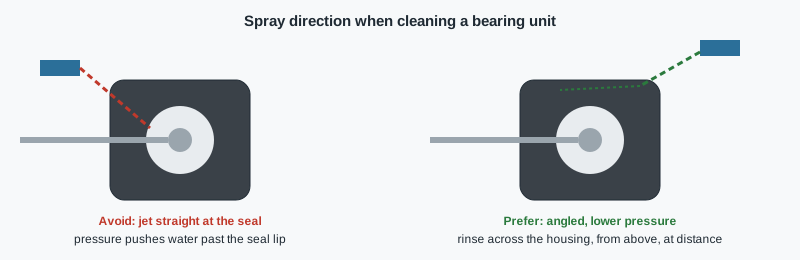
- Rinse at an angle and at distance: across the housing and from above, not straight into the shaft seal or the gap behind the flange.
- Disinfect as specified.
- Inspect for residues, damaged seals and loose covers.
- Relubricate relubricatable units after intensive washdown, with food-grade (NSF H1) grease, until fresh grease appears – not more.
Cleaning methods and what they mean for bearing units
| Cleaning method | Risk for bearing unit | Recommended practice |
|---|---|---|
| Dry cleaning / wiping | Low | Standard sealed units; open covers acceptable where dry |
| Foam and low-pressure rinse | Moderate | Sealed units with closed covers; angled rinse |
| High-pressure washdown | High – water forced past seals | Units with jet-test evidence (IP69K) or supplier confirmation; avoid direct jets on seals |
| Hot water cleaning | Thermal cycling draws moist air in | Relubricate after cleaning; check seal materials for temperature |
| Aggressive chemicals | Seal and housing degradation | Check elastomer compatibility of seals with the chemicals |
Failure modes and prevention
- Water past the seal → grease washout → noise and seizure. Cause: jet aimed at seal, worn seal. Prevention: angled spraying, seal inspection, relubrication.
- Corrosion at fasteners and gaps. Cause: carbon-steel bolts, gap behind flange. Prevention: stainless fasteners, full-contact mounting.
- Soil under open covers. Cause: missing or wrong cover at shaft end. Prevention: closed covers wherever the shaft ends in the unit.
- Seal swelling or cracking. Cause: incompatible cleaning chemicals or temperature. Prevention: confirm seal material against the cleaning chemistry.
- Grease on the machine. Cause: over-greasing. Prevention: defined quantity and interval.
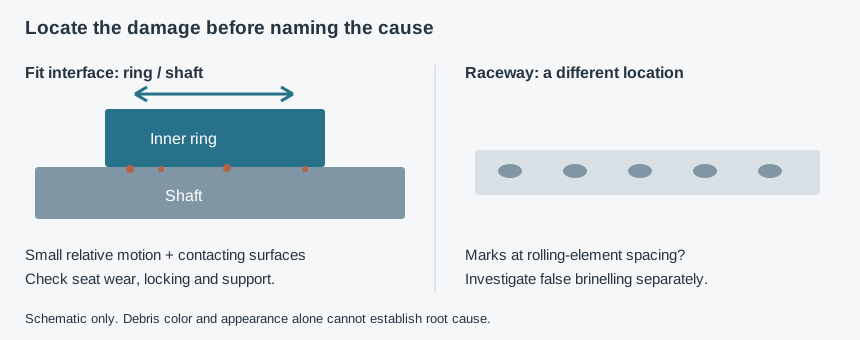
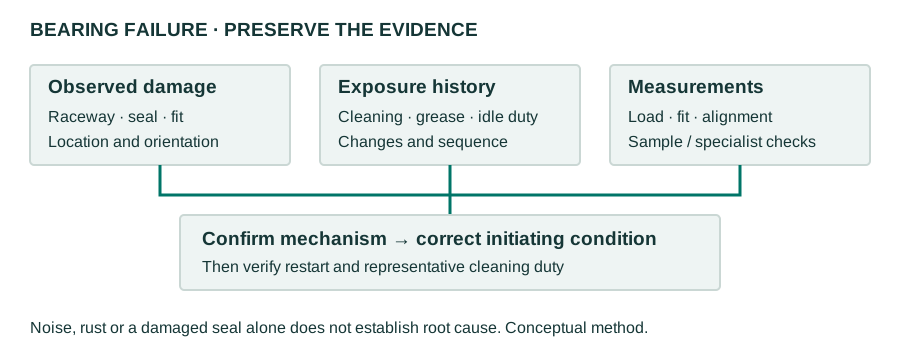
Use the post-cleaning bearing investigation and relubrication checks when symptoms recur; confirm the exact unit's permitted servicing rather than assuming every unit can be purged.
Follow the grease identity, dose and servicing-permission checks before applying a regreasing step to a particular unit; its approved procedure governs whether and how to intervene.
Example – assumptions stated, not a real case. A cosmetics plant cleans a filling-line conveyor daily with foam and a hose rinse. Bearings are noisy after a few months and grease appears below some units. Inspection shows operators rinsing straight into the shaft seals. The plant changes the procedure to an angled rinse from above, adds closed covers on the shaft ends, and adds a regreasing step after the weekly intensive clean. Bearing condition is then tracked at each weekly inspection.
Use the bearing, support and caster inspection plan to connect cleaning observations with scheduled checks and condition trends.
Where easy-clean waterproof units fit
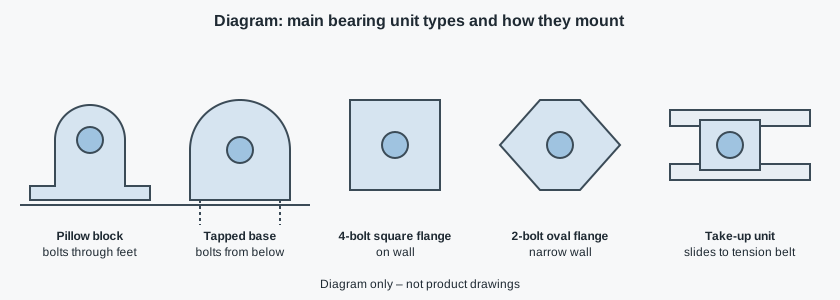
These units suit conveyors, mixers and other machinery in wet and corrosive areas of food, pharmaceutical, cosmetic and chemical plants. For choosing the 4-bolt flange format, see IP67 waterproof 4-hole square flange bearing units; for IP ratings and housing options in general, see waterproof bearing house units.
Conclusion
Easy cleaning is a combination of design and practice. Choose units with smooth, sealed, closed designs, then clean them in a way that keeps the seals working. NHK lists its IP67 waterproof bearing units with spherical inserts on NHK Machinery Parts.