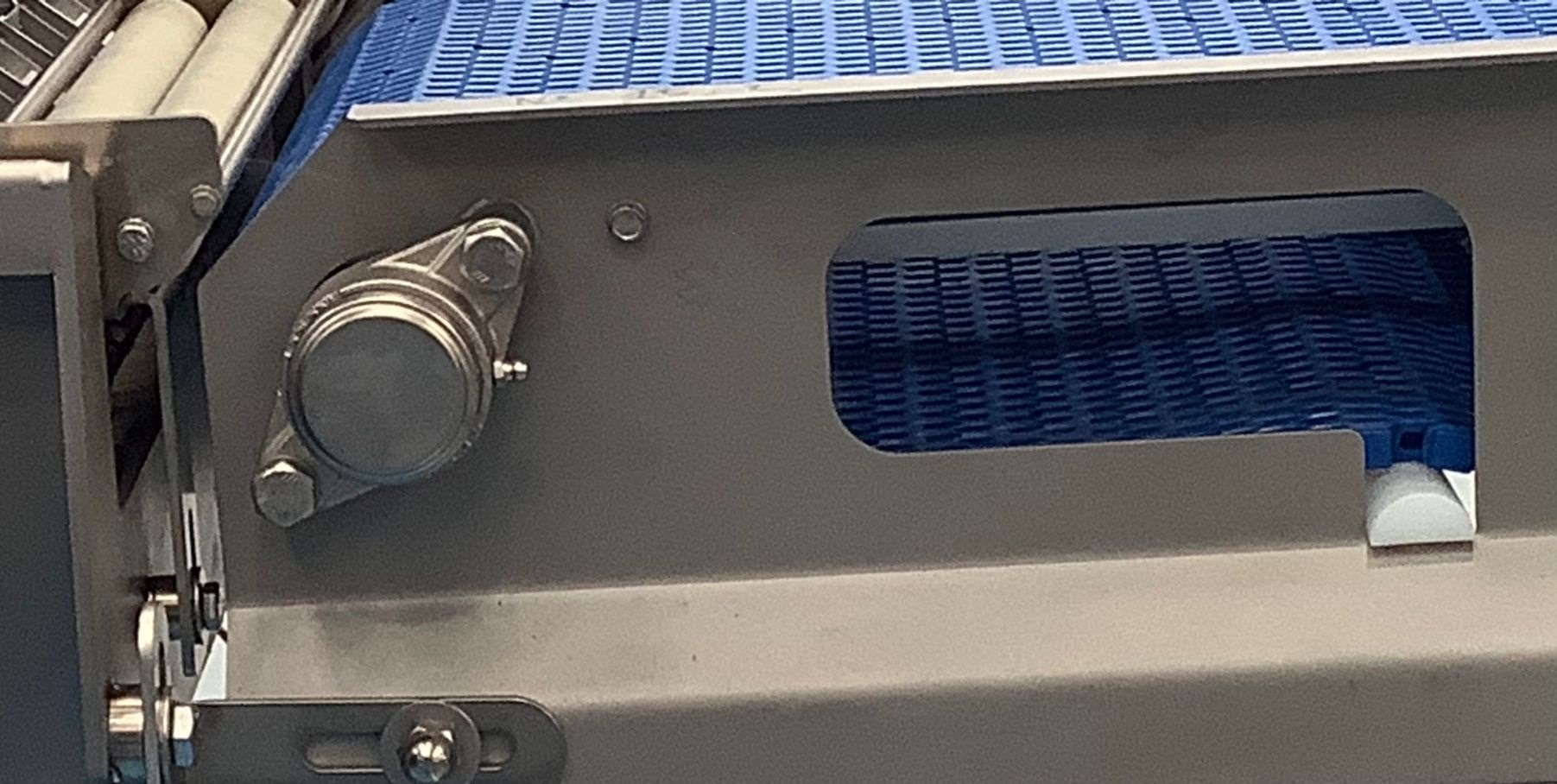
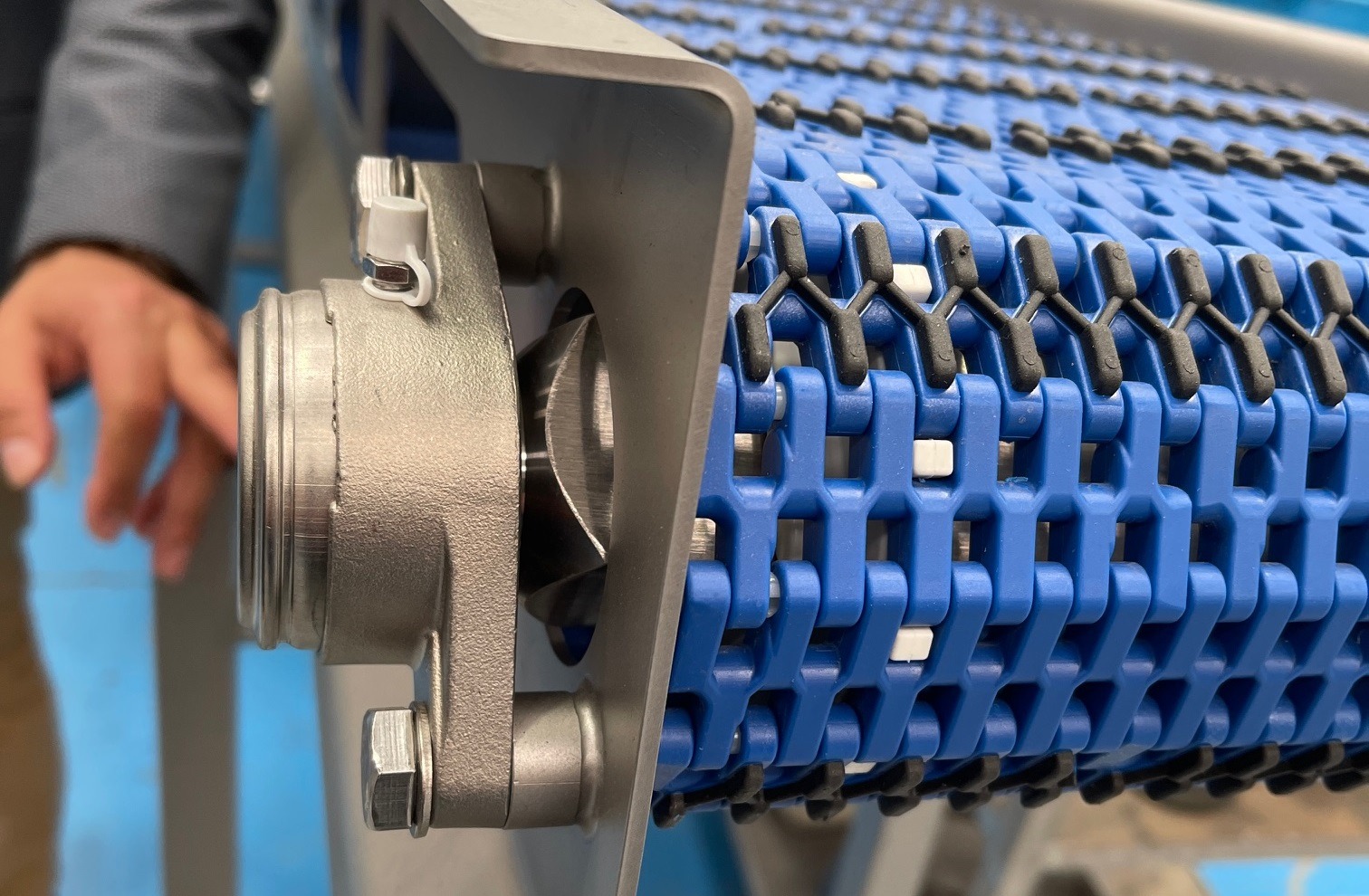
Frozen food processing equipment is the machinery that prepares, freezes and packs products below 0 °C – spiral and tunnel freezers, IQF (individually quick frozen) freezers, plate freezers, glazing, conveyors, weighers and packing lines – and its components must work through repeated cycles of freezing, defrosting and wet cleaning. This guide looks at the component side: what cold, condensation and washdown do to materials, lubrication, bearings, castors and feet, and what to specify. It sits in the industries cluster under food processing equipment by process step.
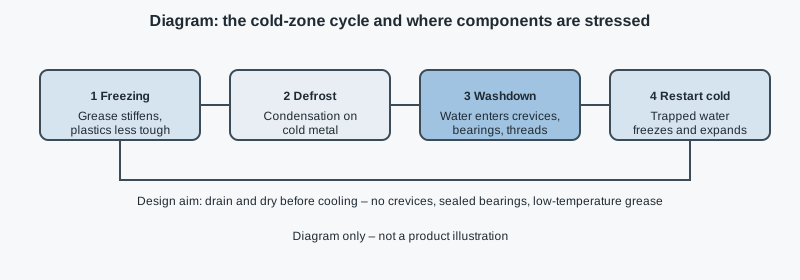 the freezing, defrost, washdown and restart cycle. Schematic, not a product test report.
Process steps, hygiene risks and component requirements
| Process step | Hygiene and technical risks | Component requirements |
|---|---|---|
| Preparation (washing, cutting, blanching, cooking) | Wet, warm, product residues; transition to cold areas | Washdown-capable stainless parts, sealed bearings, hygienic feet |
| Pre-cooling and freezing (spiral, tunnel, IQF) | Low temperature, ice build-up, condensation at doors and during defrost | Low-temperature grease, materials tough at low temperature, drainable frames |
| Glazing (ice layer on fish or seafood) | Water spray in cold zone, ice on parts | Self-draining shapes, no crevices that trap water |
| Cold conveying, weighing, packing | Frost, condensation when cold parts meet warmer room air | Sealed bearings, stainless fasteners, cleanable guides |
| Cold store and dispatch | Mobile racks and carts, floor ice | Castors with wheels suited to low temperature, total lock where needed |
Condensation forms when warm, humid air meets cold metal – at freezer doors, when lines warm up for defrost, and when cold carts move into ambient rooms. It is a hygiene risk because water collects in crevices and drips onto product. Listeria monocytogenes can grow at refrigeration temperatures, so cold, wet niches are not safe just because they are cold.
Send your application data and get a component recommendation for cold zones
The freeze–defrost–washdown cycle
Most component problems in frozen food plants come from the cycle rather than from the low temperature alone:
- Freezing: grease stiffens and starting torque rises; some plastics lose toughness.
- Defrost: ice melts and condensation forms on cold metal.
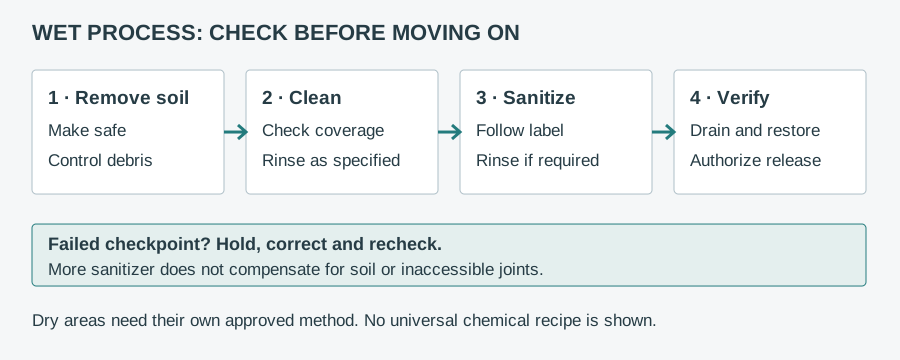
- Washdown: foam and water reach bearings, threads and the gaps under bolt heads and feet.
- Restart: water left in crevices or bearings freezes and expands, which can push seals out of place, crack plastic parts and open crevices further.
The design aim is that water drains off and dries before the line goes cold again: no horizontal ledges, no blind holes, no exposed threads, and bearings that keep water out.
Materials for low temperatures
Austenitic stainless steels such as AISI 304 and 316 keep their toughness at freezer temperatures; unalloyed carbon steels can become brittle as temperature falls. That makes stainless the usual choice for frames, brackets and fasteners, apart from the corrosion argument. Use 316 where glazing water, brine or chlorinated cleaners are present to reduce chloride pitting risk.
Plastics need more care. Check the supplier's stated minimum service temperature for housings, wheels, scrapers and guides; some grades become brittle and crack on impact in the cold. Elastomers stiffen at low temperature and lose sealing force – elastomer compatibility covers both the chemicals and the temperature range, so check grades of EPDM, FKM or VMQ (silicone) against the minimum temperature as well as the cleaning agents. Where a part can contact product, ask for a declaration of compliance under EC 1935/2004.
Lubrication and bearings
Standard grease can become too stiff at freezer temperatures, raising starting torque and leaving rolling elements short of lubricant. Specify a grease rated by its supplier for the lowest operating temperature, and food-grade (NSF H1 registered) where incidental product contact is possible. Re-lubrication intervals should reflect the washdown frequency.
Sealed stainless bearing units keep water out better than open units, so less water is available to freeze inside. Avoid pushing grease through bearings with high pressure immediately before cooling. NHK lists sealed stainless bearing units; establish suitability for wet, cold conveyors from documentation covering the selected unit's seals, grease and operating temperature. For bearing failure after cleaning, see waterproof bearing units designed for easy cleaning.
Castors and feet in cold zones
- Castors: wheels for cold stores and blast-freezer carts must stay tough and roll at the lowest temperature; ask the supplier for the stated temperature range of the wheel and the grease in the wheel and swivel bearings. Ice on floors adds shock loads – use a duty factor when sizing. The industrial castors selection guide covers wheel materials, brakes and load per castor.
- Feet: under freezers and cold conveyors, enclosed threads and sealed bases stop water entering and freezing. Size for load on the feet that actually carry it on an uneven, possibly iced floor; see industrial levelling feet.
For mobile racks, compare the tread and hub checks for wet cleaning alongside the wheel supplier's minimum-temperature data.
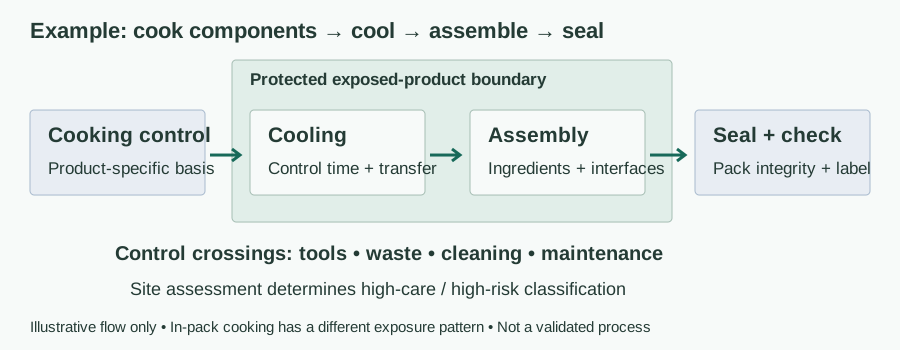
For chilled assembled meals rather than a freezer line, use the ready-meal process and post-control exposure map to review product flow, zone criteria and cleaning boundaries.
Example
Assumed situation, for method only: an IQF line for vegetables runs at freezer temperature, defrosts and is foam-cleaned daily. Findings: open bearings on the infeed conveyor show water ingress and rust; two plastic scraper holders cracked after restart; ice builds up under exposed-thread feet. Changes: sealed stainless bearing units with a low-temperature food-grade grease, scraper holders in a grade with a stated low service temperature, and feet with enclosed threads. The cleaning procedure adds a drain-and-dry step before cooling.
Common mistakes
- Using standard grease in freezer-zone bearings.
- Choosing plastics without checking minimum service temperature.
- Restarting cooling while water is still in crevices and bearings.
- Treating cold areas as low risk for Listeria.
- Painted carbon-steel frames in defrost and washdown zones.
What to send for a recommendation
Before asking for certification evidence, use the verification evidence for components specified in cold zones.
- Equipment and zone (freezer, glazing, cold conveying, cold store)
- Lowest and highest operating temperatures, defrost and cleaning cycle
- Cleaning method and chemicals
- Components: bearings (shaft size, load), castors, feet, fasteners, guides
- Material grade and food-contact needs
- Quantities and delivery country
Send these details to NHK
An NHK technician suggests components for the cold zones of your line and sends a quote. For related industry guidance see seafood processing steps and equipment and dairy processing equipment.