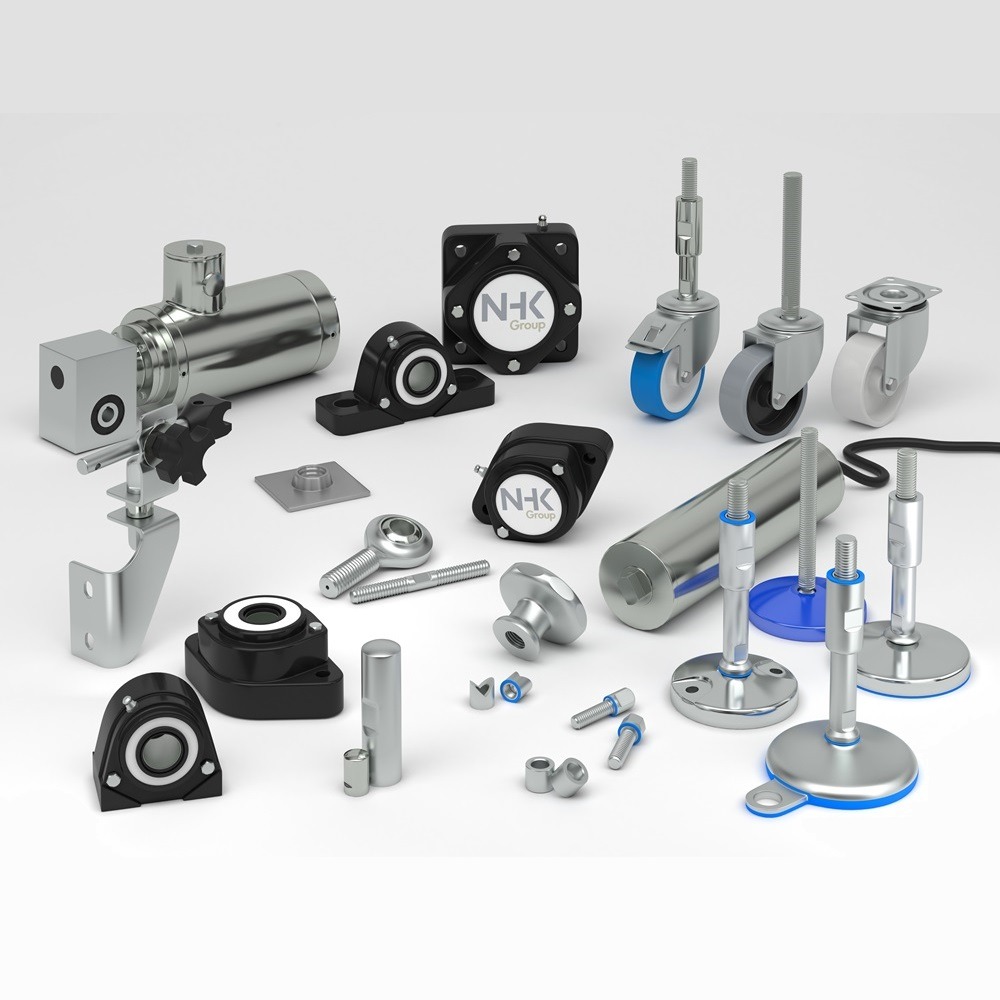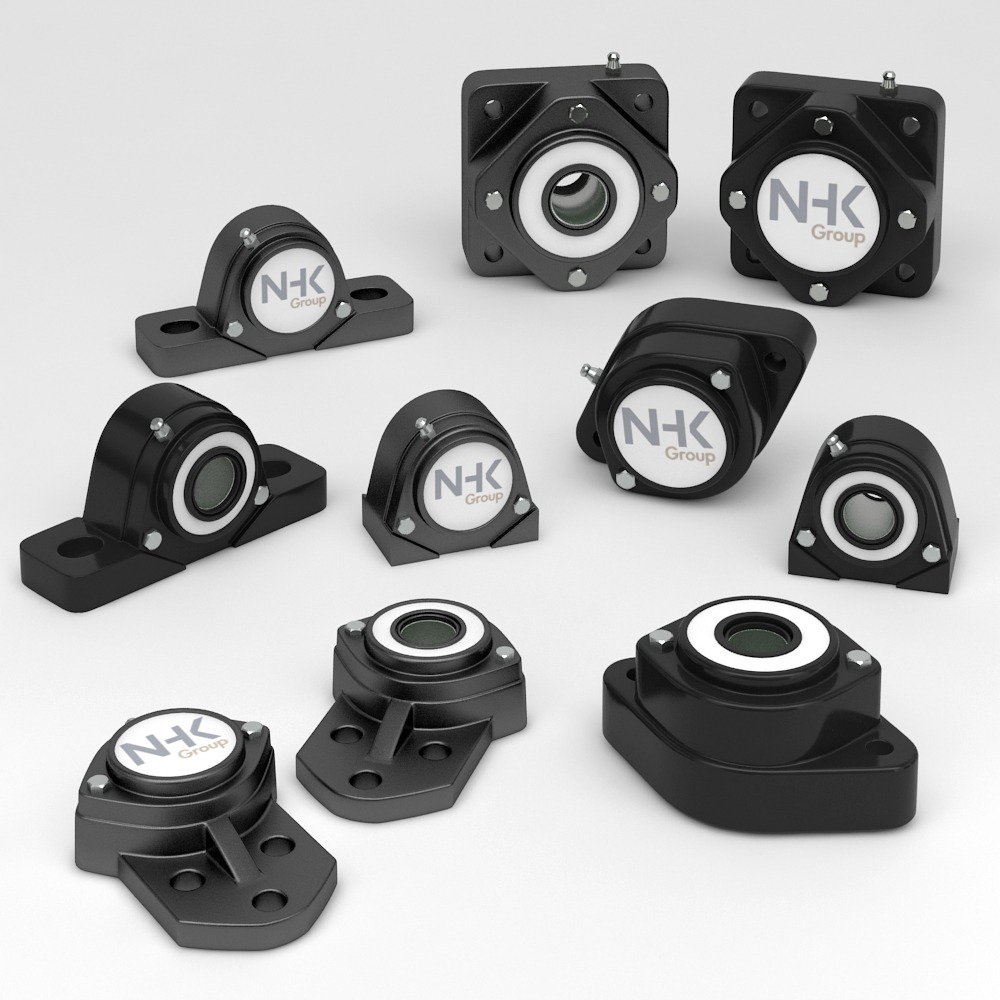
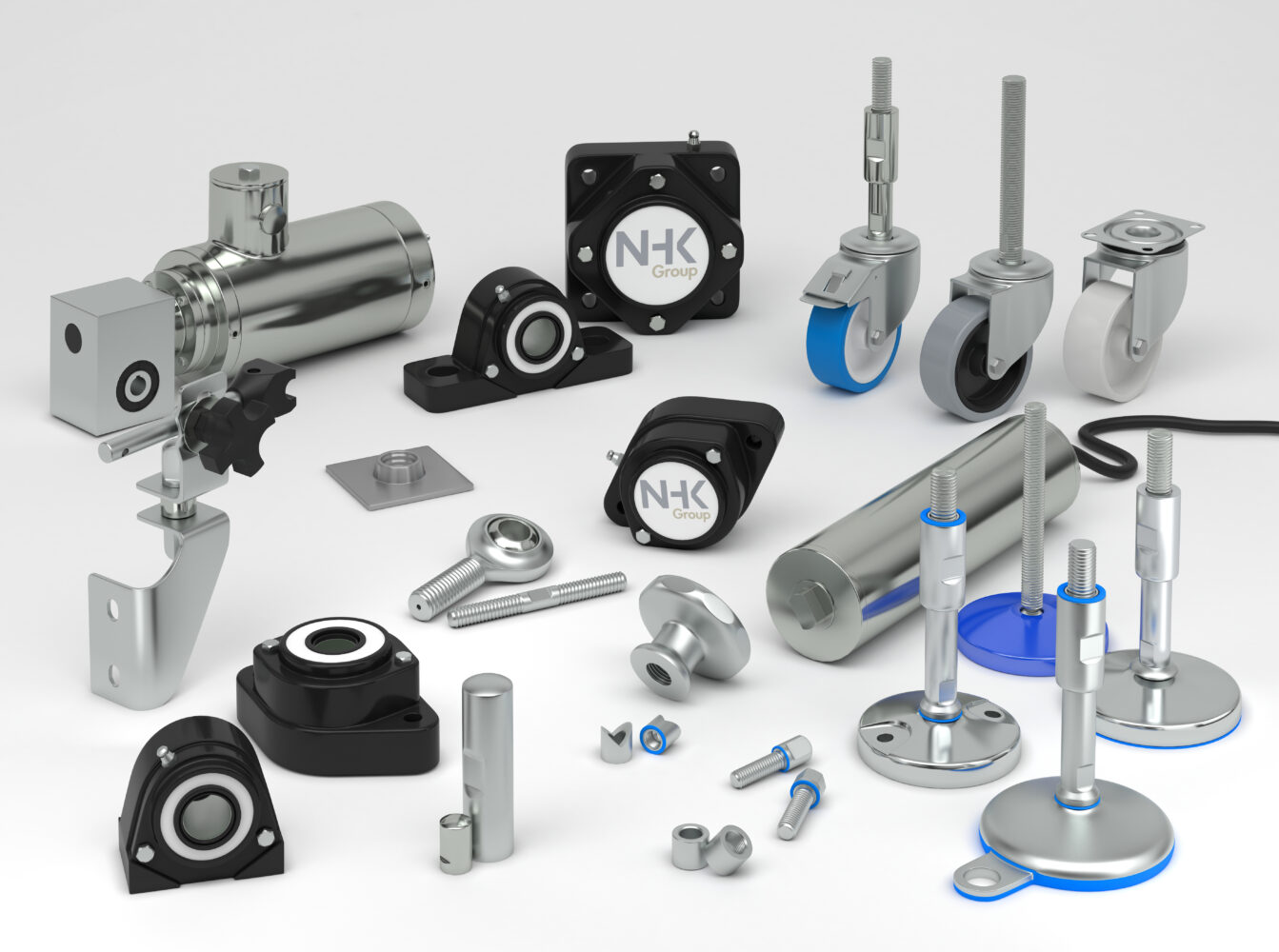
The NHK Group Shop is the online shop of NHK Group, a component supplier in Assens, Denmark, for parts such as hygienic machine leveling feet, bearing units and conveyor components. This guide explains how an engineer or technical buyer gets the right part from a component shop – and when a shop order is the wrong route.
What can you buy from a component shop – and what not?
A shop is efficient for standard catalogue items: a levelling foot of a given thread and load class, a stainless bearing unit with a stated shaft diameter, a conveyor guide or a hygienic bolt. It is not a substitute for engineering when the duty is unusual. The picture and the product name tell you little about whether a part suits your cleaning regime, chemicals or load.
The old version of this page promoted three categories: hygienic machine leveling feet, certified components and specialised equipment for conveyors and packaging machines. Each needs a different level of checking before you click "order".
Which questions should you answer before ordering?
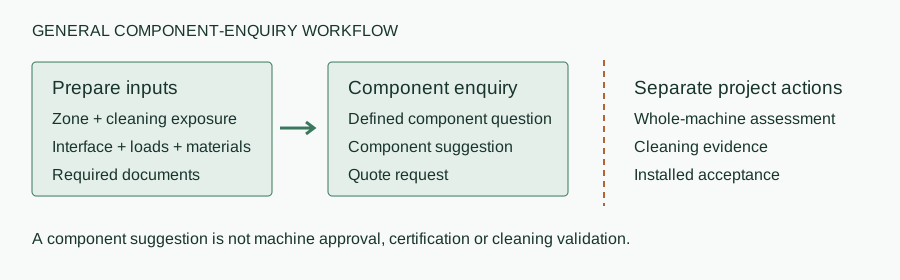
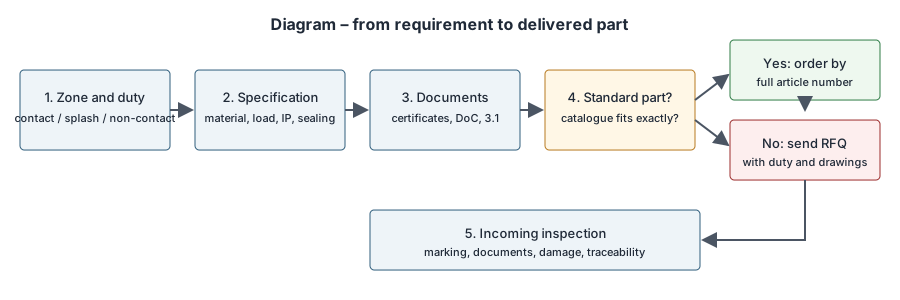
Answer these in order. Each one narrows the catalogue and removes products that look right but are not.
- Zone. Is the part in the product-contact zone (touches food), the splash zone (product or cleaning solution can reach it and drain back) or the non-contact zone? Contact and splash parts need hygienic design: no crevices (narrow gaps that trap soil), no harbourage points (places where microbes survive cleaning), no dead spaces and self-draining surfaces.
- Cleaning method. CIP (cleaning in place), COP (cleaning out of place), foam, or high-pressure washdown. Washdown and caustic or chlorinated detergents rule out many standard parts.
- Material. AISI 304 for dry or mild areas; AISI 316L where chlorides, salt or aggressive cleaning cause chloride pitting (local corrosion attack). Avoid mixing metals that invite galvanic corrosion in wet areas.
- Mechanical duty. Load, speed, shaft size, thread size and stem length, temperature range.
- Sealing and elastomers. Exposed threads or sealed design; seal material (EPDM, FKM or VMQ) compatible with your product fats and detergents.
- Documents. What your customer, auditor or machine directive file will ask for.
For the design principles behind steps 1 and 5, see the core of hygienic design in food processing machinery.
Specification table: what to define per component type
| Component | Must specify | Typical mistake | Documents to request |
|---|---|---|---|
| Hygienic leveling feet | Load per foot, thread size, stem length, base diameter, base material, fixing (free-standing, one or two holes), swivel angle | Choosing by total machine weight without allowing for an uneven floor | Model certificate if claimed, declaration of compliance for base material |
| Bearing units | Shaft diameter, housing type (flange, pillow block), housing material, seal type, grease, IP rating | Treating IP67 (an immersion test) as a washdown rating | Datasheet, grease food-grade statement, IP test basis |
| Conveyor components | Material, surface finish, mounting, compatibility with belt or chain | Ordering a part with blind holes or exposed threads for a splash zone | Material certificate, drawing |
| Fasteners and seals | Thread, length, material grade, seal material and hardness | Standard hex bolts in a product-contact zone | Model certificate for hygienic bolts if claimed, elastomer compliance (e.g. FDA 21 CFR 177.2600) |
How do you check "certified" claims in a shop?
The old page stated that every component "comes with certifications". Treat any such general claim with care and check per item:
- EHEDG certifies specific equipment designs for cleanability, not shops, companies or materials. It is voluntary.
- 3-A Symbol authorisation follows a Third Party Verification of a specific design against a 3-A Sanitary Standard; also voluntary.
- IP ratings (IEC 60529; IP69K in ISO 20653) are ingress tests, not hygiene certifications.
- EC 1935/2004 applies to all food-contact materials; EU 10/2011 covers plastics only.
Ask for the certificate, check that it names the model and variant you are ordering, and check that it is valid. Then file it with the machine documentation. More detail is in ensuring quality and reliability of certified components.
Worked example: ordering levelling feet for a filling machine
Example – assumptions stated, not product data.
A filling machine with product weighs 1,600 kg and stands on six feet in a wet hall with daily foam cleaning.
- On an uneven floor, assume only four feet carry the load until the machine is levelled, and add a safety factor of 1.5.
- Load per foot = 1,600 kg ÷ 4 × 1.5 = 600 kg. Select a foot rated at or above this, not 1,600 ÷ 6 ≈ 267 kg.
- Splash zone with foam cleaning: AISI 316L or AISI 304 depending on chloride exposure; sealed design without exposed thread; base material with declaration of compliance.
- The machine must be anchored, so choose a foot with fixing holes.
- Check that thread size and stem length match the frame and the levelling range needed for the floor slope.
If no catalogue model matches all five points, send an RFQ. The hygienic machine feet guide covers foot types in more depth. To reduce the number of variants you order in the first place, see standardising components across machines.
RFQ checklist: what to send when ordering is not enough
- Application and zone (contact, splash, non-contact)
- Cleaning method, detergents, concentration and temperature
- Loads, speeds, operating temperature range
- Required materials and surface finish (for example Ra ≤ 0.8 µm, the EHEDG guidance value for product-contact surfaces, if relevant)
- Dimensions, drawings or the existing part number being replaced
- Required certificates and documents
- Quantity, series or one-off, and required delivery date
What should you check when the parts arrive?
- Article numbers and marking match the order and the documents.
- Certificates name the delivered model and variant.
- No transport damage to seals, polished surfaces or threads.
- Material certificates match batch or heat numbers where traceability is required.
- Store sealed parts clean and dry until installation.
Common failure modes after a shop order
- Wrong zone assumption: a non-hygienic part placed in a splash zone becomes a harbourage point.
- Undersized feet: load calculated on all feet, not on the feet that actually carry it.
- Incompatible elastomers: seals swell or crack in fats or chlorinated detergents.
- Missing passivation after modification: cutting or welding stainless parts on site removes the passive layer and invites corrosion.
Where to start in the NHK range
For levelling feet the most relevant NHK product line is stainless steel machine levelling feet; the full NHK product line lists bearing units, castors and conveyor components. Product details, ratings and certificates should be taken from the individual NHK product pages, and application questions can go to NHK contact.