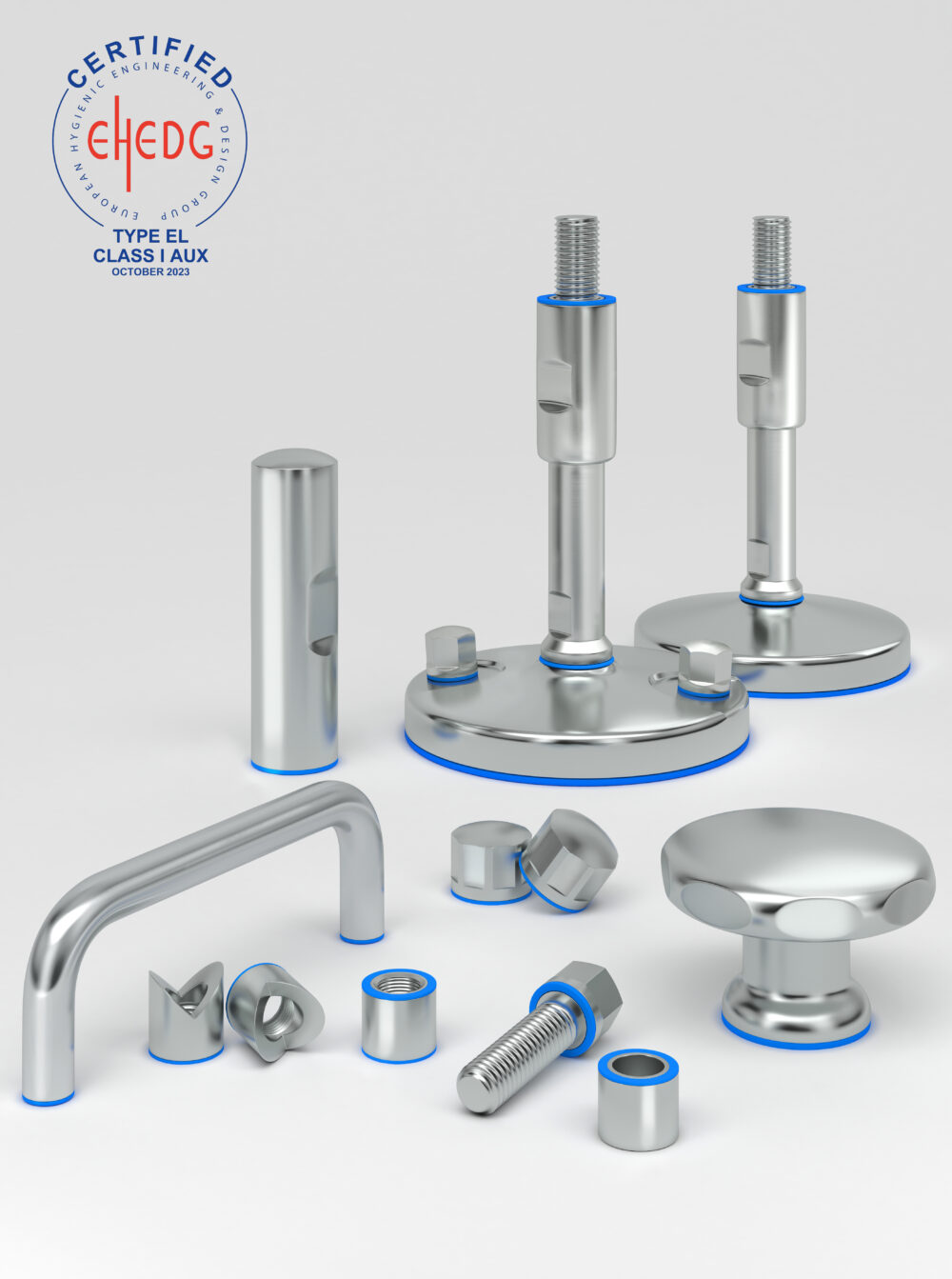
EHEDG and 3-A SSI certified components are machine parts – such as bearing units, levelling feet, fasteners and enclosure parts – whose specific designs have been evaluated against the hygienic design criteria of the European Hygienic Engineering & Design Group (EHEDG) or 3-A Sanitary Standards, Inc. (3-A SSI). In food, dairy, beverage and pharmaceutical production, these components reduce contamination risk at points that are otherwise hard to clean. This guide explains what "EHEDG compliance", an EHEDG certificate and 3-A authorisation actually mean, and how to check them.
Why hygiene at component level matters
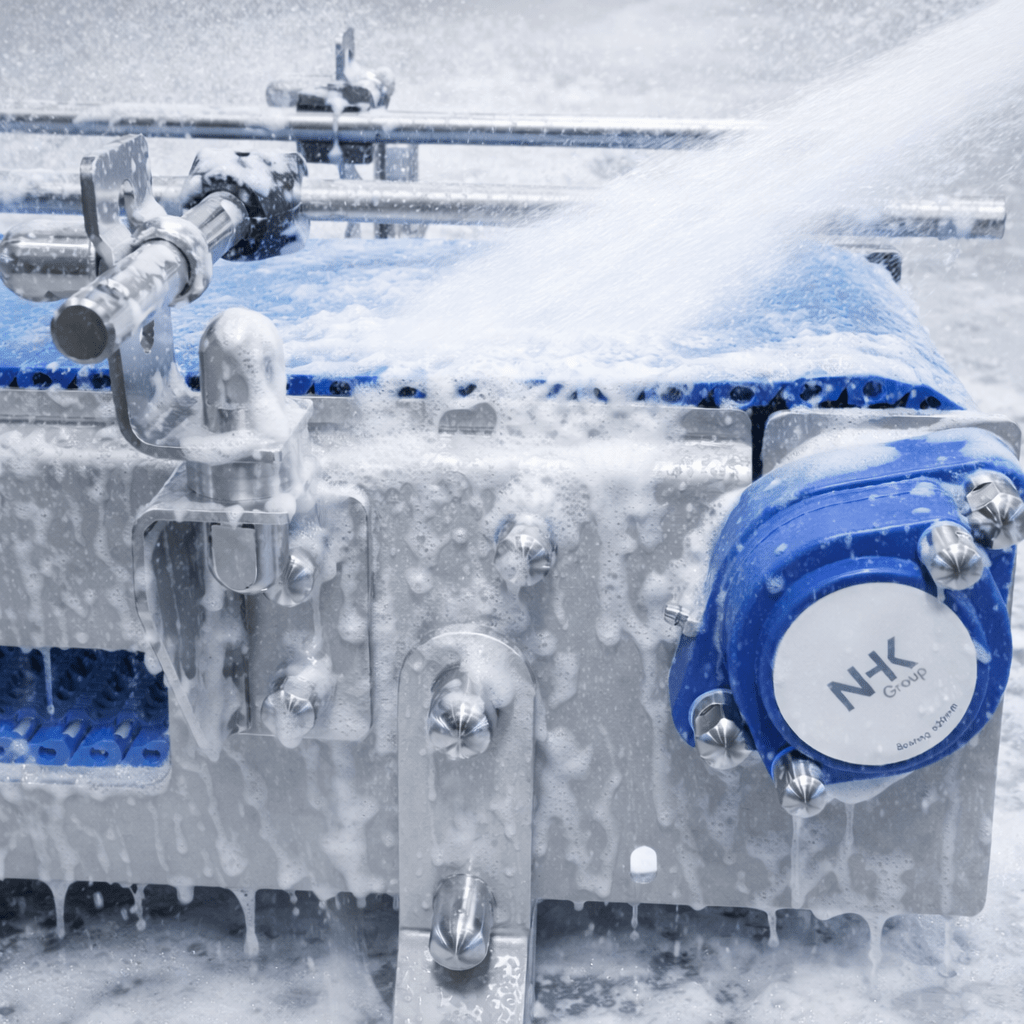
Contamination in food, pharmaceutical and cosmetic production leads to health risks, legal liability and loss of trust. Much of it starts in small places: the thread of a levelling foot, the gap under a bearing housing, the head of a bolt. These are harbourage points – places where residue and microorganisms survive cleaning. Using components with a verified hygienic design removes many of them.
EHEDG certification
EHEDG publishes guidelines on hygienic engineering and certifies equipment designs. For the certification classes and how to verify a certificate, see what EHEDG certification covers. Certification covers:
- Equipment design – the design must prevent contamination and be easy to clean.
- Materials – corrosion-resistant, non-toxic materials suitable for the application.
- Testing and validation – evaluation of the design and, depending on the equipment type, cleanability testing by an authorised test institute.
EHEDG certifies specific designs, not companies, factories or materials. The certificate names the model and the equipment type and has a validity period.
3-A SSI authorisation
3-A SSI is a US-based organisation that develops sanitary standards for dairy and food equipment. A design that conforms to a 3-A Sanitary Standard may carry the 3-A Symbol after a Third Party Verification. Key aspects:
- Hygienic design – equipment must be cleanable and, where intended, easy to disassemble.
- Material compliance – materials must be safe and non-reactive with the product.
- Function – equipment must work as intended without compromising hygiene.
For a fuller comparison, see what is the difference between 3-A and EHEDG.
EHEDG compliance vs EHEDG certificate
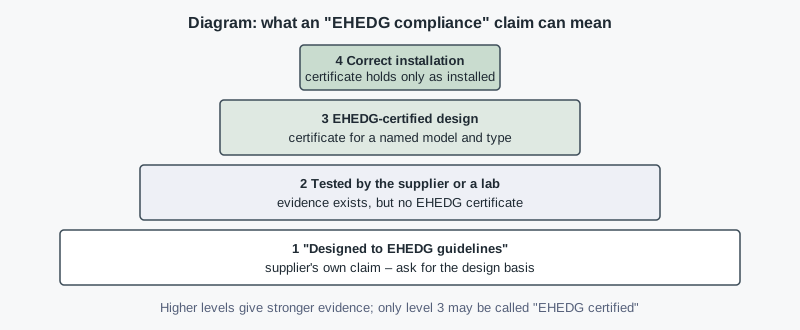
"EHEDG compliance" appears often in catalogues, but EHEDG has no compliance status. In practice the phrase can mean very different things:
| Claim | What it means | Evidence to ask for | May be called "certified"? |
|---|---|---|---|
| "Designed to EHEDG guidelines" | Supplier applied the guidelines | Design basis, drawings, materials | No |
| "Tested for cleanability" | Supplier or a lab tested it | Test report, method, lab | No, unless EHEDG issued a certificate |
| "EHEDG certified" | A specific design holds an EHEDG certificate | Certificate with model, type, validity | Yes – for the listed models only |
| "3-A authorised" | Design verified against a 3-A Sanitary Standard | 3-A Symbol authorisation for the model | Yes – for the authorised models only |
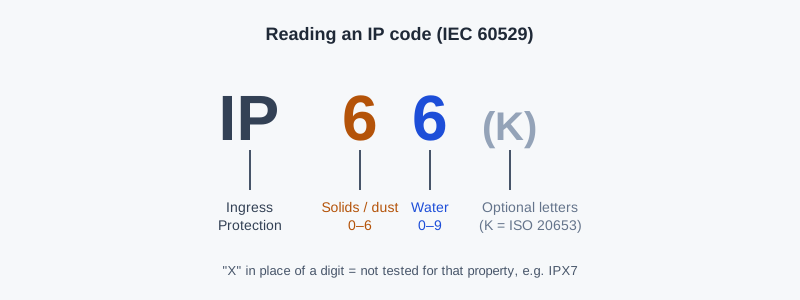
| "IP67" / "IP69K" | Ingress test (IEC 60529 / ISO 20653) | Test report | No – not a hygiene certificate |
| "Food-grade materials" | Material compliance | Declaration of compliance (EC 1935/2004, EU 10/2011, FDA) | No |
A declaration of compliance is the supplier's written statement that a food-contact material meets the applicable regulations; it complements but does not replace a design certificate.
Typical certified and hygienic components
Sealed bearing units
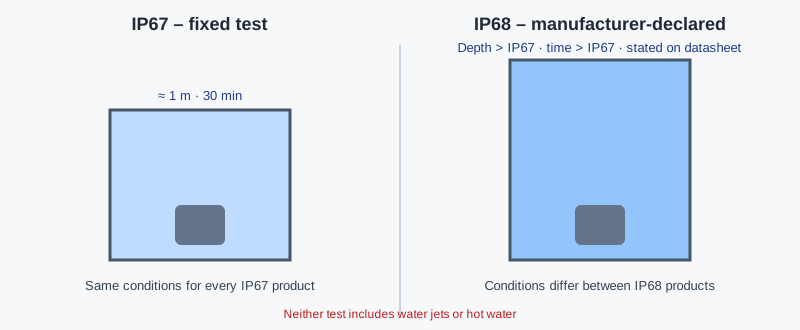
Sealed stainless bearing units keep water, product and cleaning agents out and lubricant in. IP67 means dust-tight and resistant to temporary immersion – useful in wet and dusty areas, but it is not a high-pressure spray test; that is IP69K (sometimes written IP69) under ISO 20653. Stainless steel resists corrosion and the sealed design reduces relubrication. Whether a given bearing unit holds an EHEDG certificate or 3-A authorisation must be checked per model. See sealed stainless bearing units.
Sanitary enclosure parts
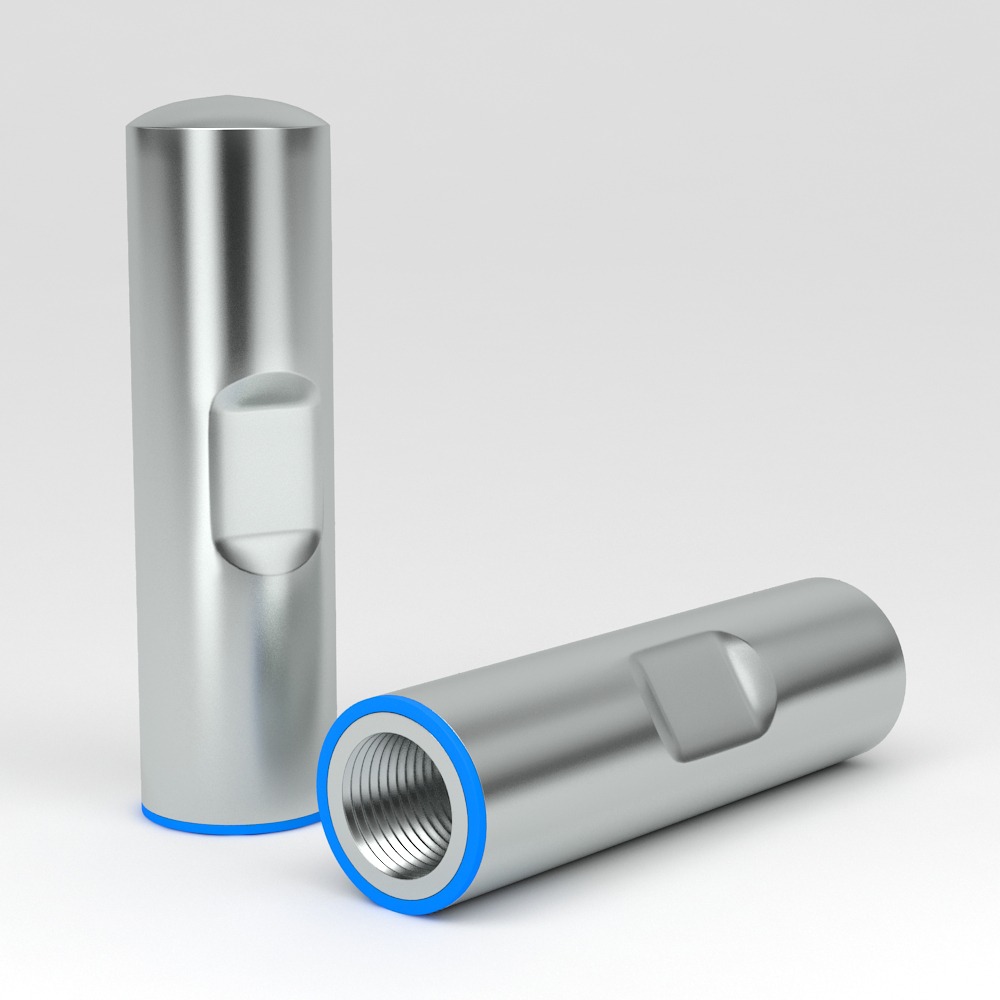
Enclosure parts in hygienic design have smooth surfaces that limit residue, are made of stainless steel or other compliant materials, and can be assembled and disassembled for cleaning and inspection. Claims of 3-A authorisation should be backed by the authorisation for the specific part.
Adjustable machine leveling feet
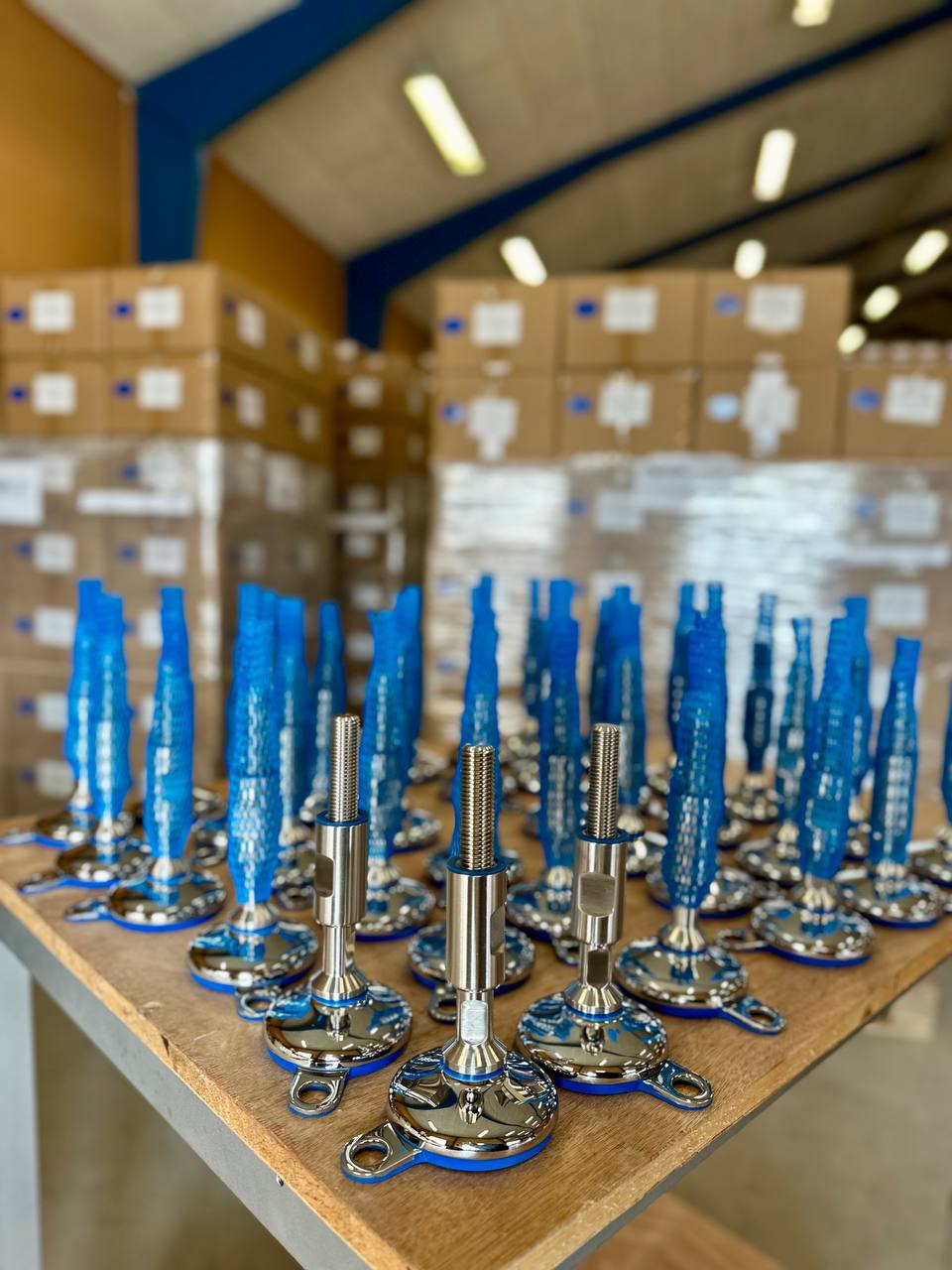
Hygienic adjustable leveling feet allow precise levelling, reduce vibration and help liquids drain from the machine frame. Their hygienic features are a smooth, sloped body, a sealed thread with no exposed crevice, and corrosion-resistant stainless steel. NHK's SHAF adjustable feet in sealed hygienic design are an EHEDG-certified design.
How certified components fit into machine compliance
Certified components help but do not make a machine certified or legally compliant on their own. In the EU, food machinery must meet hygiene requirements, typically through EN 1672-2 and EN ISO 14159, and food-contact materials must comply with EC 1935/2004. A machine built from certified parts can still fail if the parts are installed with gaps, the frame has horizontal ledges, or the parts sit in conditions the certificate did not assume. Certificates normally assume installation according to the supplier's instructions – for example, a foot's base seal correctly seated on a clean floor.
For the wider standards framework, see hygienic machine design standards in 2025. For details of the EHEDG component family and certificate checks, see introducing the EHEDG components.
How to check an EHEDG or 3-A claim
- Ask for the certificate, not a logo on a datasheet.
- Match the model – the exact part number must appear on the certificate or authorisation.
- Check validity – the certificate must be current.
- Read the scope – equipment type, cleaning method and any conditions.
- Get the installation instructions the certificate relies on.
- Request material documents – declarations of compliance and material certificates.
- Record everything in the machine's technical file.
Example
Assumptions (illustrative only): an OEM builds a dairy filler for customers in the EU and US. The customer specification says "EHEDG-compliant components".
- Feet: the OEM selects a foot model with its own EHEDG certificate and keeps the certificate on file.
- Bearings: the chosen sealed stainless bearing unit is designed to EHEDG guidelines but not certified; the OEM describes it that way and adds the material declarations.
- US customers: the OEM checks whether 3-A authorisation is required for any part in product contact and, if so, selects authorised parts.
- Machine wording: "built with EHEDG-certified feet and components designed to EHEDG guidelines" – not "EHEDG-certified machine".
Applications by industry
- Food and beverage – certified or hygienic bearings and enclosures in processing, bottling and packaging lines reduce contamination risk.
- Dairy and bakery – stainless components resist corrosion from dairy products and cleaning; 3-A standards originated in dairy.
- Pharmaceutical and healthcare – hygienic components support Good Manufacturing Practice (GMP) by limiting contamination.
- Chemical and veterinary – corrosion-resistant hygienic components suit chemical environments and reduce cross-contamination in veterinary products, provided materials match the chemicals used.
Benefits of certified components
- Product safety – fewer harbourage points at critical spots.
- Easier compliance evidence – independent certificates simplify audits and customer approvals.
- Operational efficiency – durable, sealed components reduce maintenance and cleaning time.
- Customer trust – documented hygienic design is easier to defend than a general claim.
NHK's overview of these parts: EHEDG and 3-A SSI certified components and parts.
For the contamination pathways these components address, see safeguarding against contamination and product recalls.
For what each type of certificate – hygienic design, material, test and supplier – actually proves, see advantages of certified components and parts.
To check whether a specific fitting, nut or sensor is really certified, use the official-list search and exact-design verification workflow.