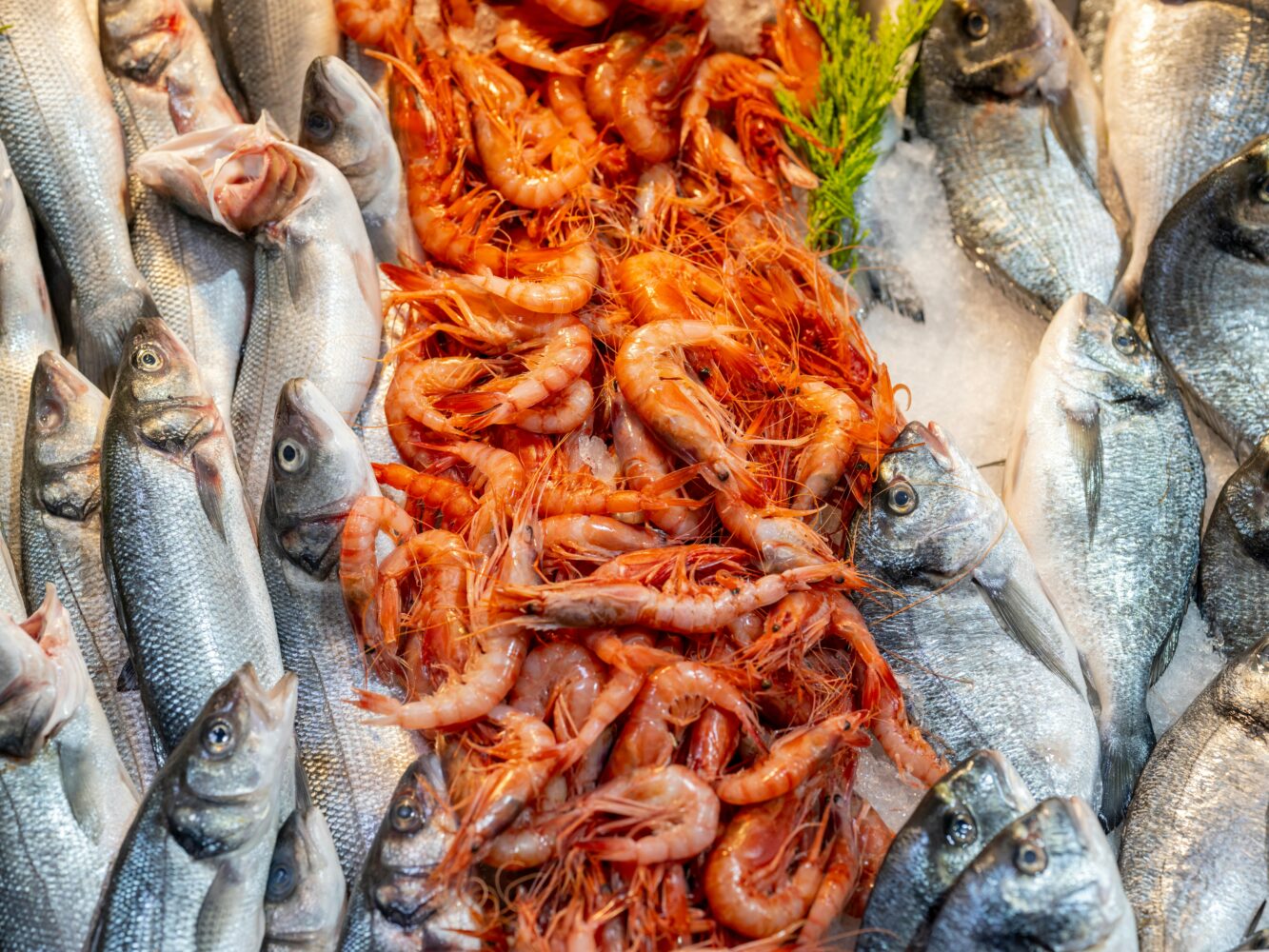
Seafood processing is the series of actions that prepare fish and shellfish for consumption, from the initial cleaning and gutting to preparing the product for retail or direct consumption. Its goal is to preserve quality and safety, extend shelf life and meet the regulatory standards for human consumption. Seafood sustainability solutions at plant level are about losing less of what is landed. This page goes through the processing steps and, for each, the equipment decisions that make hygiene and long component life achievable. For the wider overfishing context, see sustainable seafood and combat overfishing.
Freezing and glazing put specific demands on parts; see components for frozen food processing.
The seafood processing steps
Dairy plants face a different mix of fat, milkstone and brine; dairy processing equipment covers those component choices.
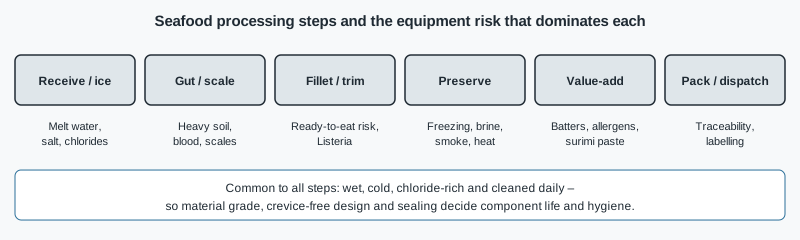
Initial processing
- Cleaning and gutting: done shortly after capture to remove inedible parts and reduce spoilage.
- Scaling and filleting: removing scales and separating meat from bones.
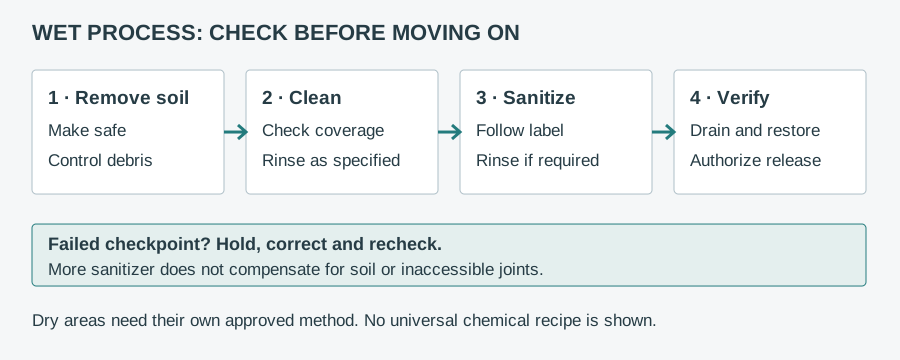
These steps produce heavy soil – blood, viscera, scales – and use large volumes of water.
Preservation methods
- Icing or chilling slows decay and maintains freshness.
- Freezing – quick-freezing preserves quality for long-term storage.
- Canning cooks the product and seals it in an airtight container.
- Smoking adds flavour and preserves by reducing moisture.
- Drying removes moisture; the product can be rehydrated later.
Value-added products
- Ready-to-cook meals such as seasoned or breaded fillets.
- Surimi: fish meat processed into a paste, flavoured and shaped – for example to resemble crab legs.
Quality control and safety
- Inspection and grading by size, appearance and other quality indicators.
- HACCP (Hazard Analysis and Critical Control Points): the system processors use to identify and control food safety hazards.
Sustainability and traceability
- Sustainable practices in fishing and aquaculture secure the long-term viability of seafood sources.
- Traceability from catch to consumer makes origin and handling transparent.
The exact processes vary with species, local regulations and target market.
Equipment demands by process step
| Step | Main hygiene / equipment risk | What to specify |
|---|---|---|
| Receiving, icing | Melt water with salt and chlorides; standing water | Self-draining frames, 316/316L in wet zones, sealed feet |
| Gutting, scaling | Heavy organic soil, high-pressure cleaning | Open, accessible design; washdown-resistant bearings; no exposed threads |
| Filleting, trimming | Ready-to-eat products: Listeria harbourage in crevices | Crevice-free surfaces, smooth finish, hygienic fasteners |
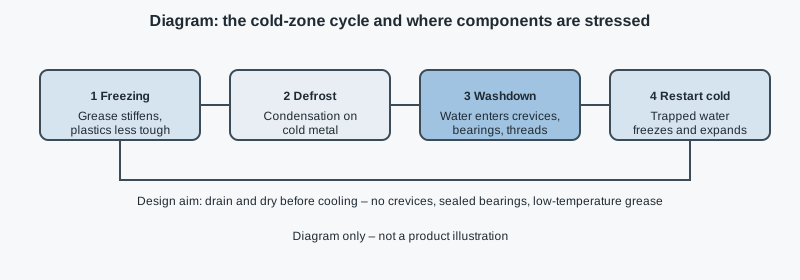
| Freezing | Low temperatures stress seals and lubricants; condensation | Elastomers and grease suited to the temperature range; drainage after defrost |
| Brining, smoking | High chloride and heat exposure | Grade chosen for chlorides; avoid mixed metals |
| Canning | Heat, steam, high line speeds | Temperature-suitable seals; corrosion-resistant conveyor parts |
| Battering, surimi | Allergens and sticky residues | Easy dismantling for allergen changeover, minimal dead spaces |
| Packing | Traceability, labelling | Cleanable conveyors; component batch traceability where available |
Terms: harbourage points are crevices or dead spaces where residue and microorganisms survive cleaning; allergen changeover is the cleaning between products with different allergens (batters often contain gluten, egg or milk); chloride pitting is localised corrosion of stainless steel caused by salt.
Why seafood plants are hard on components
Three conditions occur together in most seafood plants: low temperature, constant water and chlorides from seawater, brine and chlorinated cleaners. Together they:
- concentrate chlorides in crevices and under deposits, where pitting starts;
- let Listeria persist in cold, wet niches;
- push water into bearings during daily washdown.
That is why the frame, feet, fasteners and bearings matter as much as product-contact surfaces – they sit in the splash zone (any surface reached by product or cleaning water).
Selecting components for a seafood line – step by step
- Map each process step to its zone: product-contact, splash or non-contact.
- Set the material by chloride exposure: 304 for dry areas, 316/316L or higher where chlorides reach.
- Remove crevices: sealed levelling feet and fasteners, no horizontal ledges, self-draining surfaces.
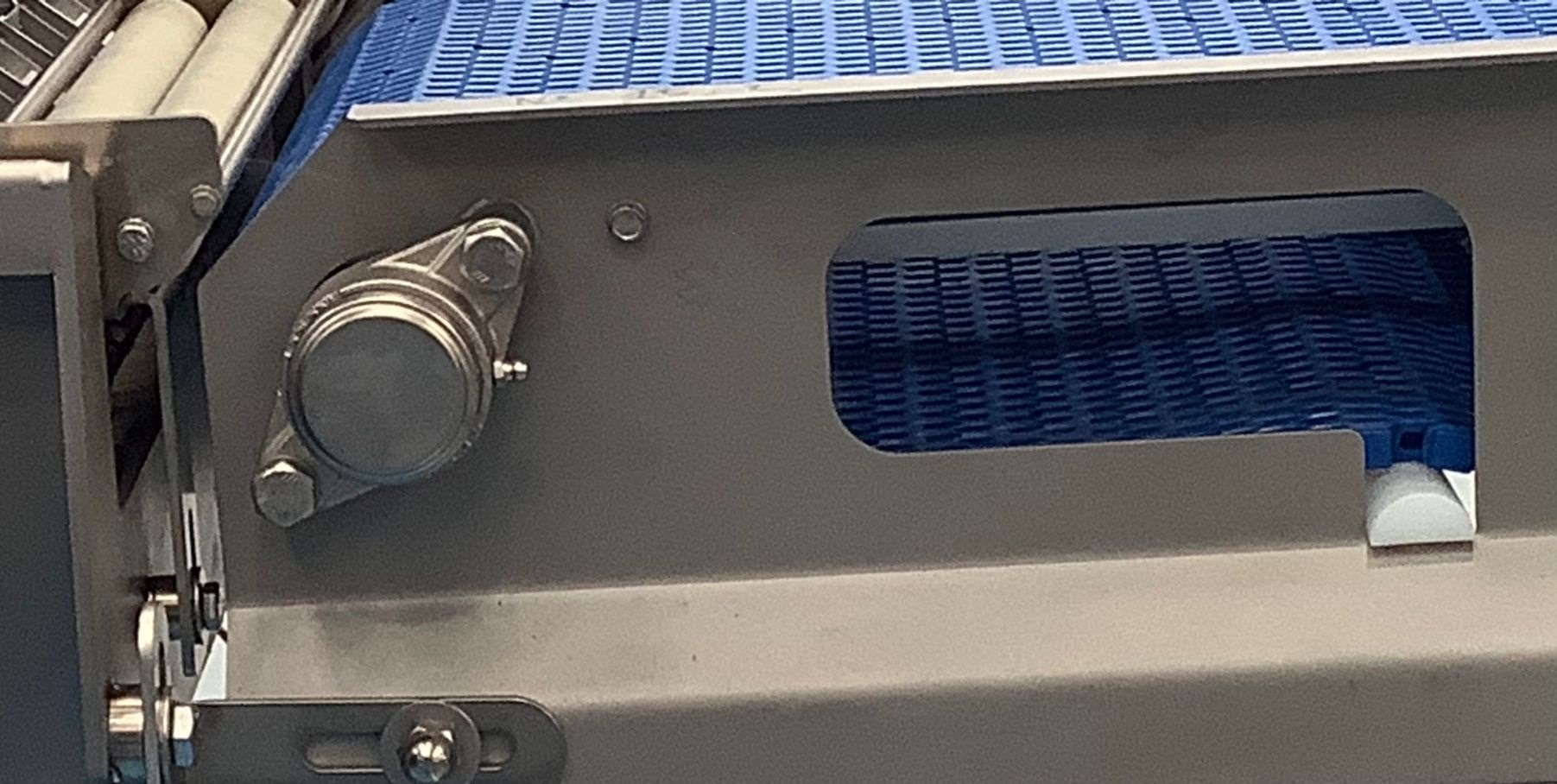
- Choose bearings for the cleaning method: sealed stainless or waterproof units in washdown areas. IP ratings describe ingress, not hygiene.
- Check seals and lubricants for temperature and media (EPDM, FKM, VMQ; food-grade grease).
- Request documents: material certificates, EC 1935/2004 declarations of compliance for food-contact parts, traceability information.
- Verify in service: swab results, corrosion inspection, bearing replacements per quarter.
For washdown bearings see sealed stainless bearing units for hygienic industries.
Example – assumptions stated, not a real case. A shrimp plant cooks, peels and freezes product on one line. Maintenance replaces bearings on the peeler conveyor frequently and finds corrosion at painted steel frame joints near the brine tank. The engineer moves the bearings to sealed stainless units suited to washdown, specifies 316L for frame parts within reach of brine splash, and records replacement intervals before and after.
What to write in a seafood-line RFQ
- Process step, zone and cleaning method for each component position (foam, low-pressure rinse, high-pressure washdown, CIP).
- Media in contact: seawater, brine concentration range, chlorinated or acidic cleaners, fish oils.
- Temperature range, including freezer, defrost and cooking or smoking areas.
- Material grade for metal parts and elastomer type for seals, with certificates.
- Declaration of compliance to EC 1935/2004 for food-contact parts.
- "No exposed threads or crevices in product-contact and splash zones."
- Traceability information supplied with components, where available.
Failure modes to avoid
- Painted carbon-steel parts near brine – coating damage leads to rust flakes in product areas.
- Standard hex fasteners and exposed threads on fillet tables.
- Grease unsuited to freezer temperatures, leading to bearing failure.
- Mixing stainless and zinc-plated parts in wet zones (galvanic corrosion).
NHK bearing ranges named in the original article
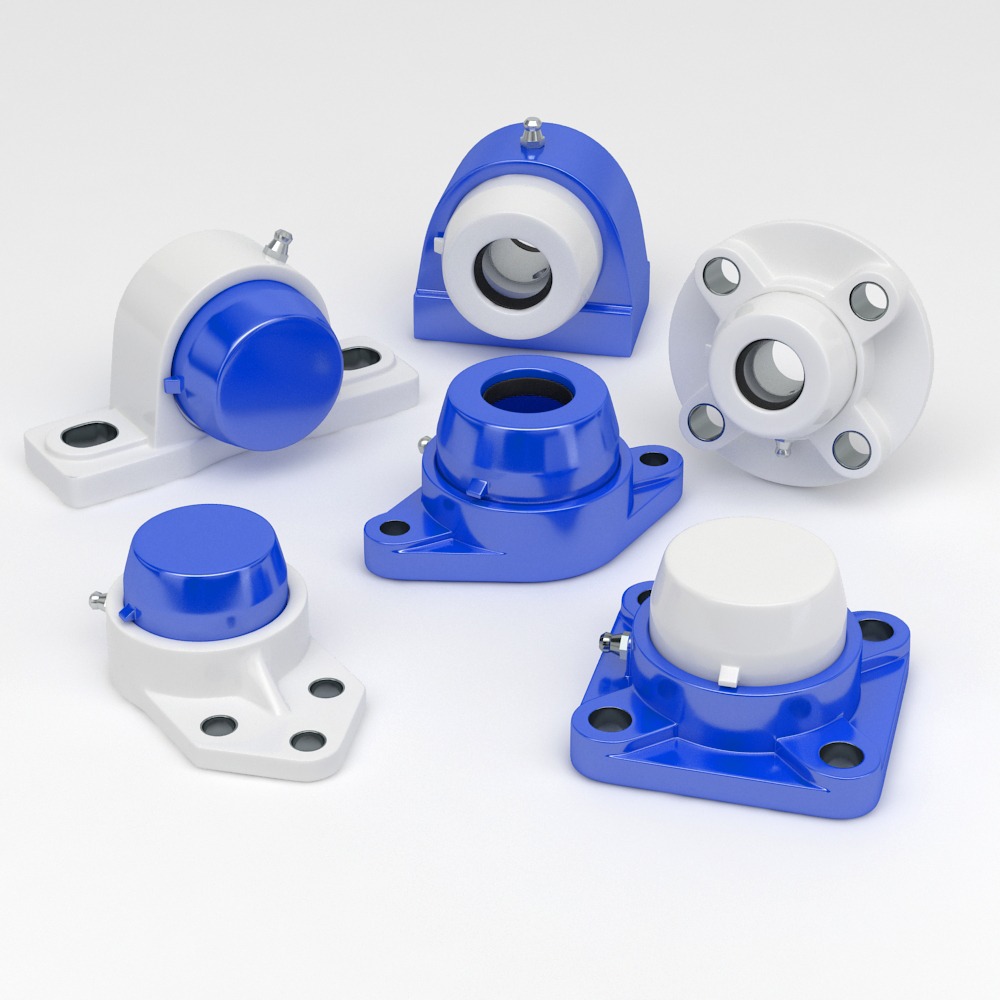
The original article listed NHK's sealed stainless bearing units, bearing units in IP54 thermo plastic housing and mini bearing units in stainless steel among its ranges. IP54 housings suit splash areas, not high-pressure washdown.
For how seafood type and end use set the hygiene level, see seafood for long-term sustainability.