Dairy processing equipment is the machinery that turns raw milk into liquid milk, cream, yoghurt, cheese and powders – tanks, separators, pasteurisers, homogenisers, vats, fillers and conveyors – and its hygiene depends as much on the small components around it as on the stainless steel that touches the product. This guide follows the dairy process step by step, explains how cleaning in place (CIP) and open cleaning shape the hygienic zones, and what that means for feet, bearings, conveyor parts and seals. It is part of our overview of food processing equipment.
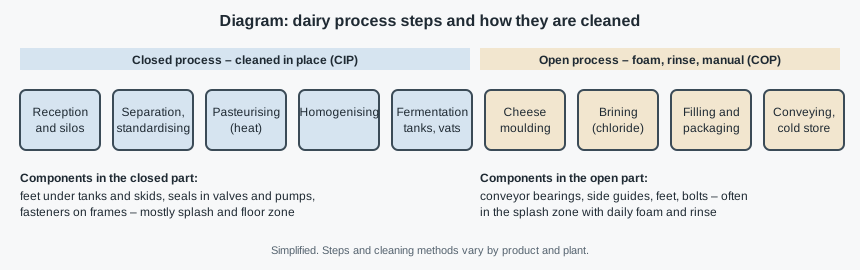 dairy process steps and how they are cleaned. Schematic, not a product test report.
Beverage plants share many CIP points with dairies; see hygienic components for beverage processing.
Dairy process steps, hygiene risks and component requirements
| Process step | Typical equipment | Hygiene risk | What it means for components |
|---|---|---|---|
| Milk reception and storage | Silos, pumps, valves, pipework | Milk residue in dead legs; condensation outside tanks | Feet under silos and skids cleanable and sealed; frame fasteners without recesses |
| Separation and standardisation | Separators, mixing skids | Fat deposits, vibration | Seals compatible with fats; feet that hold level under vibration |
| Pasteurisation | Plate heat exchangers, holding tubes | Milkstone (mineral deposit) on hot surfaces | Seals rated for hot caustic and acid; stable supports for heavy skids |
| Homogenisation | High-pressure homogenisers | Leakage at seals, vibration | Anti-vibration feet; seals checked at every service |
| Fermentation (yoghurt, cultured products) | Tanks, vats | Contamination by unwanted cultures | Closed design; cleanable tank legs and feet |
| Cheese making and moulding | Vats, moulding and pressing lines | Open product, whey splash | Splash-zone parts in hygienic design: bearings, side guides, bolts |
| Brining and salting | Brine baths, racks | Chloride-rich splash | AISI 316L where chloride is present; no carbon steel parts nearby |
| Filling and packaging | Fillers, cup and bottle lines | Product splash, frequent changeovers | Sealed bearing units, cleanable conveyor parts, quick-clean guides |
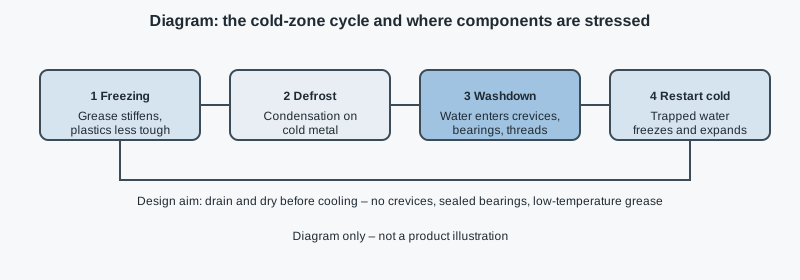
| Conveying and cold storage | Conveyors, palletisers | Condensation, cold-store corrosion | Bearings and grease suited to low temperature and washdown |
Dead legs are pipe branches where liquid stands and cleaning flow does not reach. Milkstone is a mineral and protein deposit that forms on heated surfaces and is removed by acid cleaning.
Send your dairy application data and get a component recommendation
How dairy plants are cleaned – and why it matters for parts
The hygienic rules for each machine assembly are set out in how food processing machinery is built.
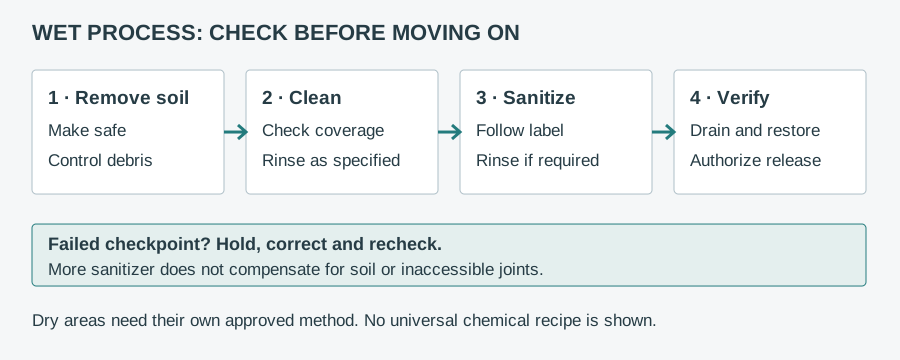
Dairy is one of the most CIP-intensive food sectors. A typical CIP sequence for closed equipment runs:
- Pre-rinse with water to remove loose product.
- Alkaline wash (caustic) to remove fat and protein.
- Intermediate rinse.
- Acid wash to remove milkstone and mineral deposits.
- Final rinse, often followed by a sanitiser or hot water step.
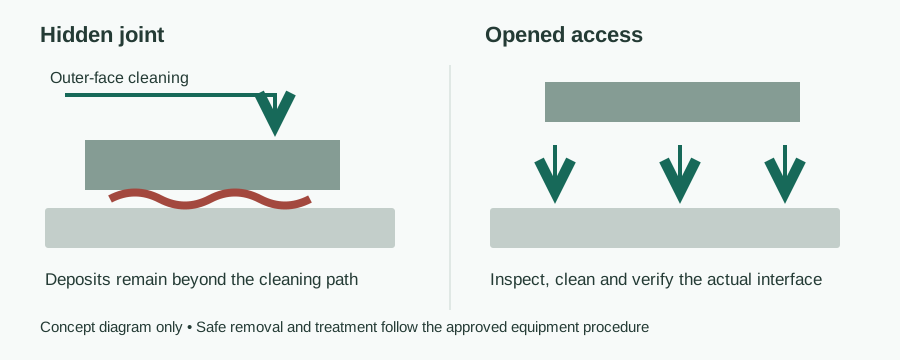
Concentrations, temperatures and times are set by the plant's validated cleaning programme, not by the component supplier. What matters for components is that the closed process is cleaned internally, while the outside of tanks, skids, frames and floors is cleaned separately – usually by foam and rinse. COP (cleaning out of place) means parts are removed and washed in a separate washer or tank.
Open areas such as cheese moulding and packaging are foamed and rinsed daily, often with high-pressure rinse at the end. Components there – conveyor bearings, side-guide brackets, feet and bolts – sit in the splash zone, the area reached by product splash and cleaning water. They see alkaline and acid chemicals, water at varying temperatures, and the mechanical force of rinsing.
Feet under tanks, skids and frames
Cereal plants are the opposite case – mostly dry cleaned – as described in cereal and grain processing equipment.
Silos, process tanks and skids stand on legs and feet that are rarely cleaned as carefully as the product side. Exposed threads and open joints between foot and leg collect milk residue and condensation, and become harbourage points – places where microbes survive cleaning. Specify:
- Hygienic levelling feet with enclosed thread and sealed base in wet areas
- Load per foot sized as if only three of four feet carry the load on an uneven floor, plus a safety factor
- Anchoring where tanks or homogenisers vibrate
- AISI 304 as baseline; 316L near brine or chlorinated cleaners
See adjustable vs levelling feet for how to specify the foot design.
Bearings on conveyors and packaging lines
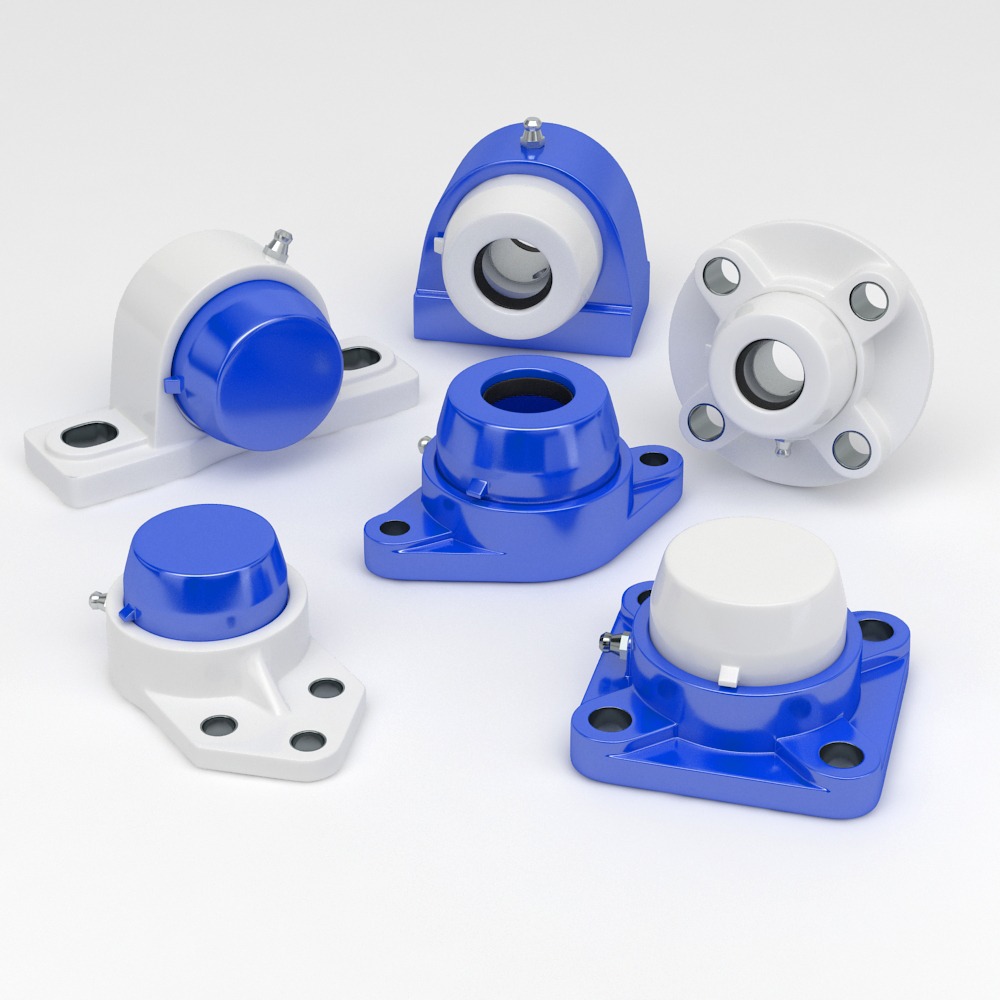
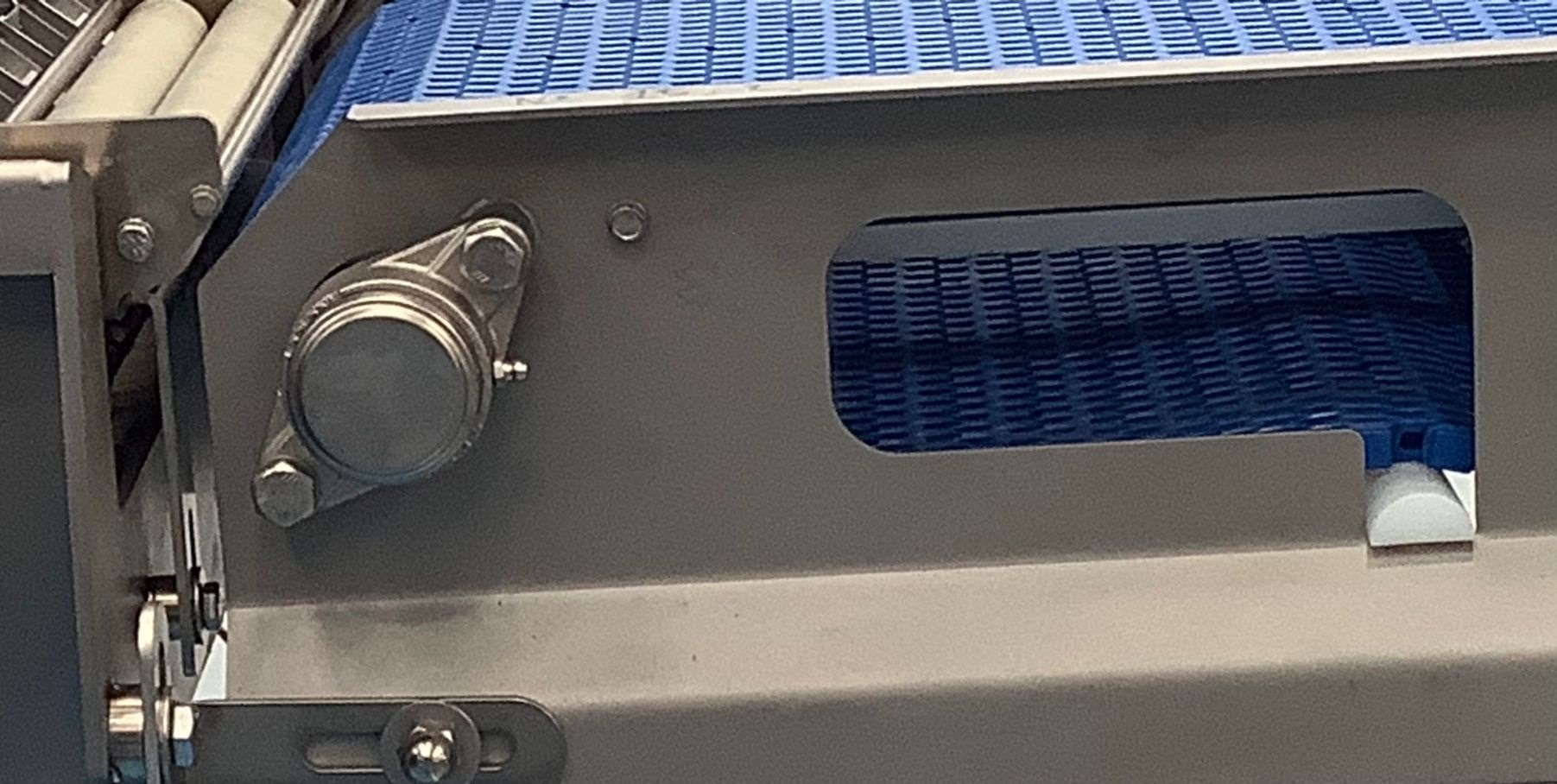
Bearings in cheese, cup-filling and packaging lines face daily foam and rinse. Cast iron units corrode, open units let water and caustic into the grease, and grease washed out leaves the bearing dry. Prefer stainless or sealed hygienic bearing units with closed end covers and food-grade (NSF H1) grease, and avoid aiming high-pressure jets directly at seals. NHK lists sealed stainless bearing units; confirm covers, seals and grease for the proposed unit rather than inferring them from the category name.
Seals and elastomers
Seals in dairy equipment meet fat, hot caustic, acid and sometimes steam. No single elastomer is best for all of them, so compatibility with both product and cleaning agents must be checked:
| Elastomer | Strengths | Weaknesses to check |
|---|---|---|
| EPDM | Hot water, steam, caustic and many acids | Swells with fats and oils |
| FKM | Fats, oils and many chemicals | Can be less suited to hot caustic and steam, depending on grade |
| VMQ (silicone) | Wide temperature range | Lower mechanical and tear strength |
Ask for a declaration of compliance under EC 1935/2004 and, where the market requires it, FDA 21 CFR 177.2600 for rubber.
3-A and EHEDG in dairy
3-A Sanitary Standards started in the US dairy industry, and 3-A Symbol authorisation – granted after a Third Party Verification – is common for dairy equipment sold to North American customers. EHEDG certification is more often specified in Europe. Both are voluntary and apply to specific designs. If a customer asks for 3-A or EHEDG, ask the supplier for the certificate or authorisation of the exact component. The differences are explained in EHEDG and 3-A certified components.
Example
Assumed situation, for method only: a cheese plant's moulding line has eight cast iron flange bearings that rust within months after daily foam and high-pressure rinse, plus 16 exposed-thread feet under the line. Using the step table, the line is in the open, splash zone, with brine nearby. The review specifies stainless sealed bearing units with closed covers and H1 grease, hygienic levelling feet in 316L because of chloride from the brining area, and hygienic bolts on the frame below the product. Bearings are rated for the existing shaft size, and feet are sized with the three-of-four rule.
Common mistakes in dairy plants
- Treating tank legs and skid feet as outside hygiene scope because the process is closed.
- Using EPDM seals in high-fat product contact without checking swelling.
- Fitting 304 parts next to brine baths and finding chloride pitting (local pits in stainless steel caused by chlorides).
- Aiming high-pressure rinse at bearing seals, pushing water into the bearing.
- Mixing stainless and zinc-plated fasteners, causing galvanic corrosion where the two metals touch in wet conditions.
Other industries are covered in seafood processing equipment and hygiene and machinery for poultry processing.
What to send for a recommendation
Before asking for certification evidence, use the how to verify supplier certification evidence.
- Process step and equipment (tank, skid, conveyor, filler)
- Cleaning method: CIP for the process, foam/rinse for the outside, chemicals used
- Components to review: feet, bearings, conveyor parts, seals, bolts – with sizes
- Load and shaft data where relevant
- Material grade (AISI 304 or 316L) and any certificate needed (3-A, EHEDG)
- Quantities and delivery country
Send these details to NHK
An NHK technician suggests suitable components for each step and sends a quote.