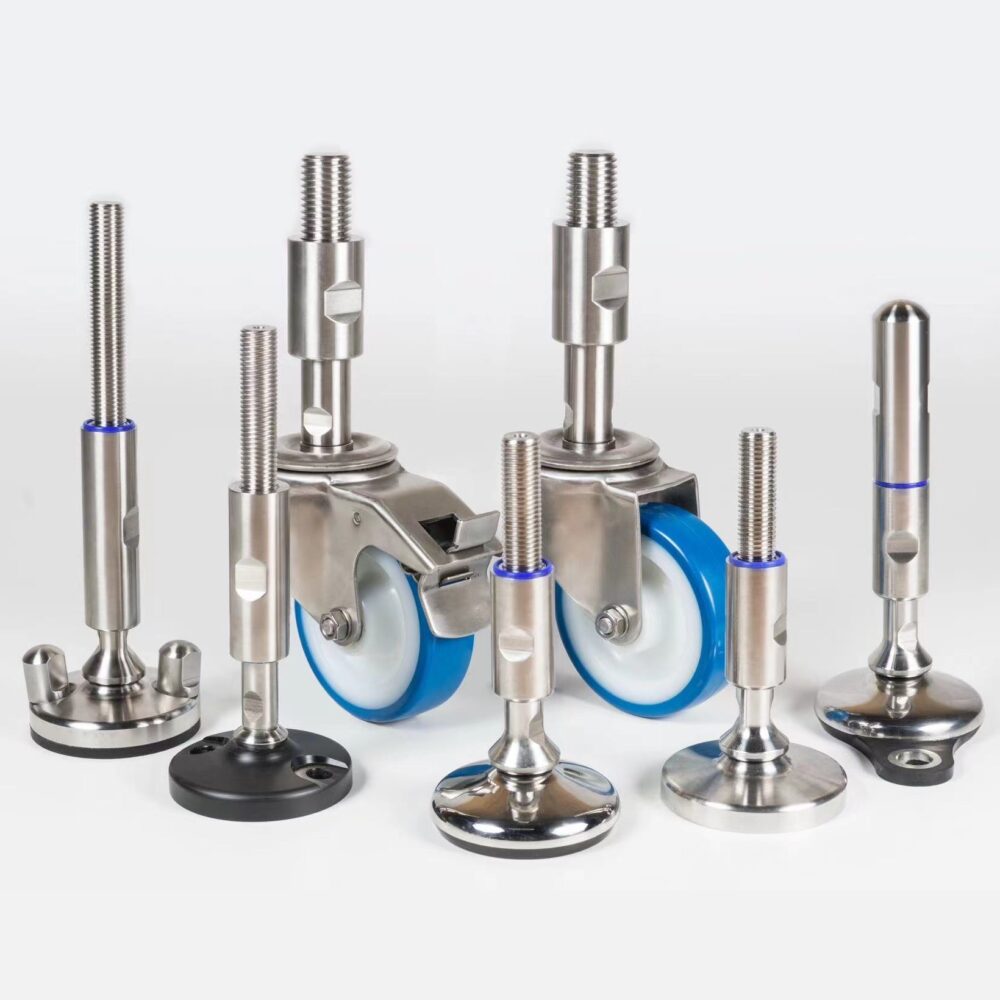

Adjustable feet vs leveling feet is mostly a question of words, not of two different products: an adjustable foot is any machine foot whose height can be changed, a leveling foot ("levelling foot" in British English) is an adjustable foot used to level a machine, and "machine feet" is the umbrella term that also includes non-adjustable solid base feet. What matters for a specification is the design behind the name – fixed or swivel base, exposed or enclosed thread, base material, fixing – and that is what this guide compares. More guides on supports are in the levelling feet and castors section.
What the terms mean
Once the type is clear, the guide to choosing industrial leveling feet covers sizing and anchoring.
| Term | What it usually means | What it does not tell you |
|---|---|---|
| Machine feet | Any foot that supports a machine on the floor – adjustable or fixed | Whether it adjusts, swivels or is cleanable |
| Adjustable feet | Height set by a threaded spindle and nut | Whether the base swivels; whether the thread is exposed |
| Leveling feet | Adjustable feet used to bring a frame level and share load | Load rating, articulation angle, hygiene class |
| Swivel / articulated feet | Leveling feet with a ball joint so the base sits flat on a sloped floor | How far it swivels – the angle varies by design |
| Hygienic leveling feet | Leveling feet with enclosed thread, sealed joints and cleanable surfaces | Whether a specific design is certified – ask for the certificate |
| Solid base feet | Fixed-height feet with no spindle adjustment | – they cannot compensate for floor slope |
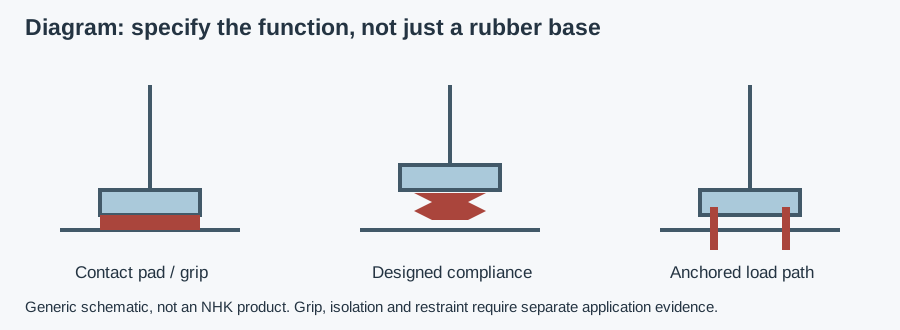
Suppliers use these words interchangeably, so "adjustable feet vs machine feet" or "machine feet vs leveling feet" rarely signals a technical difference. Specify by attributes, not by name.
The articulated-base angle and load checks explain how to assess the joint once the foot type is selected.
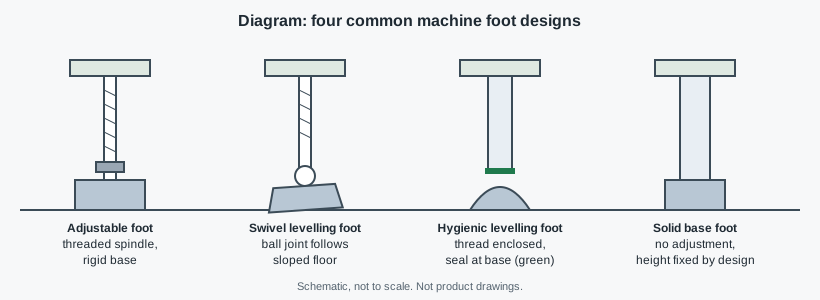 adjustable, swivel leveling, hygienic leveling and solid base feet. Schematic, not a product test report.
How the designs differ
| Design | Leveling range | Sloped floor | Cleanability | Typical use |
|---|---|---|---|---|
| Adjustable, fixed base | Spindle length | Base tilts off the floor on a slope | Exposed thread collects residues | Dry areas, cabinets, light frames |
| Swivel leveling foot | Spindle length | Base follows the slope | Ball joint and thread are harborage points unless enclosed | General machinery, uneven floors |
| Hygienic leveling foot | Spindle length (inside a sleeve) | Depends on design | Thread enclosed, seal at base and frame | Food and pharma wet zones |
| Solid base foot | None | Frame must be shimmed or welded to suit | Few parts; joint to frame decides hygiene | Fixed equipment where height is set once |
Harborage points are gaps, threads and joints where residues and microbes survive cleaning. An exposed thread is the classic example: product and water enter the flanks and cannot be reached by a brush or spray.
Send your application data and get a recommendation on machine feet
Which to specify: a selection method
- Does the floor slope or vary? Food plant floors slope towards drains. If yes, you need adjustment and usually a swivel base; a solid base foot only works with shims or a frame built to the slope.
- Which zone? In the splash zone – where cleaning water and product splash reach – or in wet cleaning, choose a hygienic design with enclosed thread and sealed base. In dry areas, a standard adjustable foot is enough.
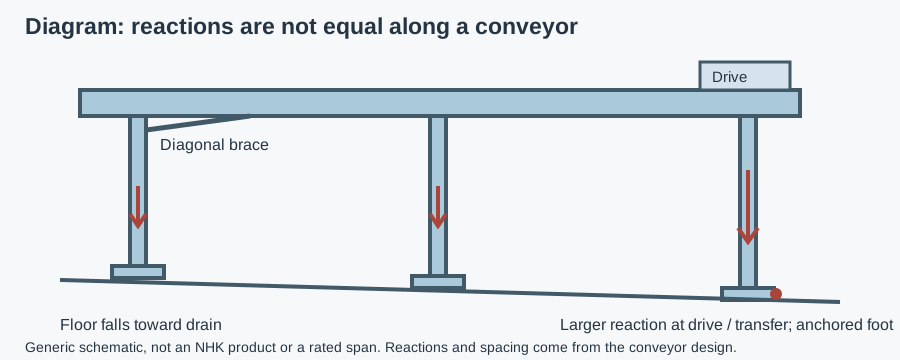
- What load per foot? Size as if only three of four feet carry the load on an uneven floor: total load ÷ (number of feet − 1) × a safety factor for dynamic loads. The method is explained in how machine feet affect stability and vibration.
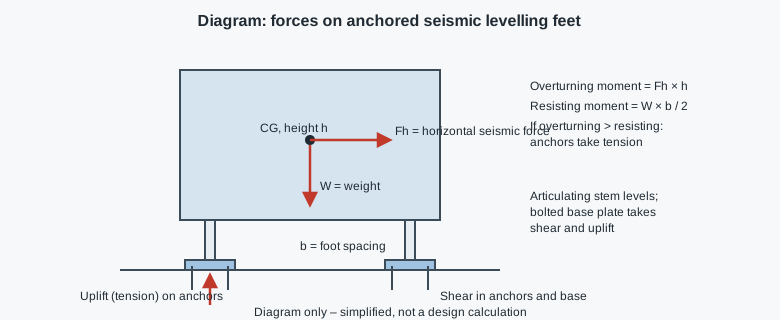
- Must the machine be fixed to the floor? Vibration, tipping risk or seismic requirements call for feet with one or two fixing holes; see anchoring feet with one or two fixing holes.
- Which materials? AISI 304 for most areas; 316L where chlorides from brine, seawater or chlorinated cleaners risk chloride pitting (local pits in stainless steel). Base pads in rubber or plastic need a food-contact declaration of compliance if they can touch product.
- Is a certificate required? EHEDG certifies specific designs and 3-A authorization follows a Third Party Verification. If a customer or audit requires it, ask for the certificate of the exact foot.
If the machine must also move, the decision is a different one – see casters vs leveling feet.
When a solid base foot is the right choice
Solid base feet suit equipment with fixed height that is placed once and rarely moved: platforms, tanks on a leveled plinth, frames on a floor that has been leveled locally. They have fewer parts to clean and no thread to seize. The trade-off is that leveling must be done another way – by shims, which create crevices, or by building the frame to suit. In wet zones, shims under a foot are a common hygiene finding. NHK's solid base feet category also lists adjustable spindle designs; a solid base describes the base construction, not necessarily a fixed support height. Check the actual drawing before selecting it.
Example
Assumed situation, for method only: a 900 kg packing machine stands on four feet in a meat plant packing hall with daily foam cleaning and a floor that slopes 1–2 % towards a drain. Load per foot = 900 kg ÷ (4 − 1) = 300 kg before the safety factor. The floor slope rules out solid base feet; the wet zone rules out exposed threads. The specification is therefore a swivel hygienic leveling foot in AISI 304 (316L if chlorinated cleaners are used), with an enclosed thread, sealed base and a rated load above 300 kg times the chosen safety factor. No anchoring is needed unless the machine vibrates or the customer requires it.
Common mistakes
- Specifying "adjustable feet" in an RFQ and receiving exposed-thread feet for a washdown area.
- Using a fixed-base adjustable foot on a sloped floor, so only the edge of the base touches.
- Leveling with shims under solid base feet in wet zones.
- Leaving a long length of spindle exposed after leveling.
Check the upper spindle enclosure and frame seal across the permitted adjustment range rather than treating a cover as a complete foot redesign.
- Mixing stainless feet with carbon steel nuts or shims, inviting galvanic corrosion (corrosion where two metals touch in a wet environment).
The guide to sanitary adjustable feet covers installation and adjustment of hygienic feet in more detail.
What to send for a recommendation
Before asking for certification evidence, use the documents to compare with the specified foot.
- Machine type, total weight and number of feet
- Floor: slope, drains, condition
- Zone and cleaning method: dry, splash, foam, high-pressure washdown, chemicals
- Thread size and stem length (if replacing), base diameter
- Fixing: free-standing, one or two holes
- Material grade and any certificate needed (EHEDG, 3-A)
- Quantity and delivery country
Send these details to NHK
An NHK technician suggests a suitable foot and sends a quote.