Fruit processing – and vegetable and potato processing on similar lines – turns raw produce into washed, peeled, cut, blanched, frozen, juiced or packed products, and it is one of the hardest duties for machine components: soil and sand abrade, water is everywhere, and fruit acids, sugars and starch leave sticky, corrosive residues. This guide follows the line from intake to packing and explains what each stage means for bearings, conveyor parts, feet, fasteners and seals, including on a potato washing machine and other vegetable processing equipment. It sits under food processing equipment by process step.
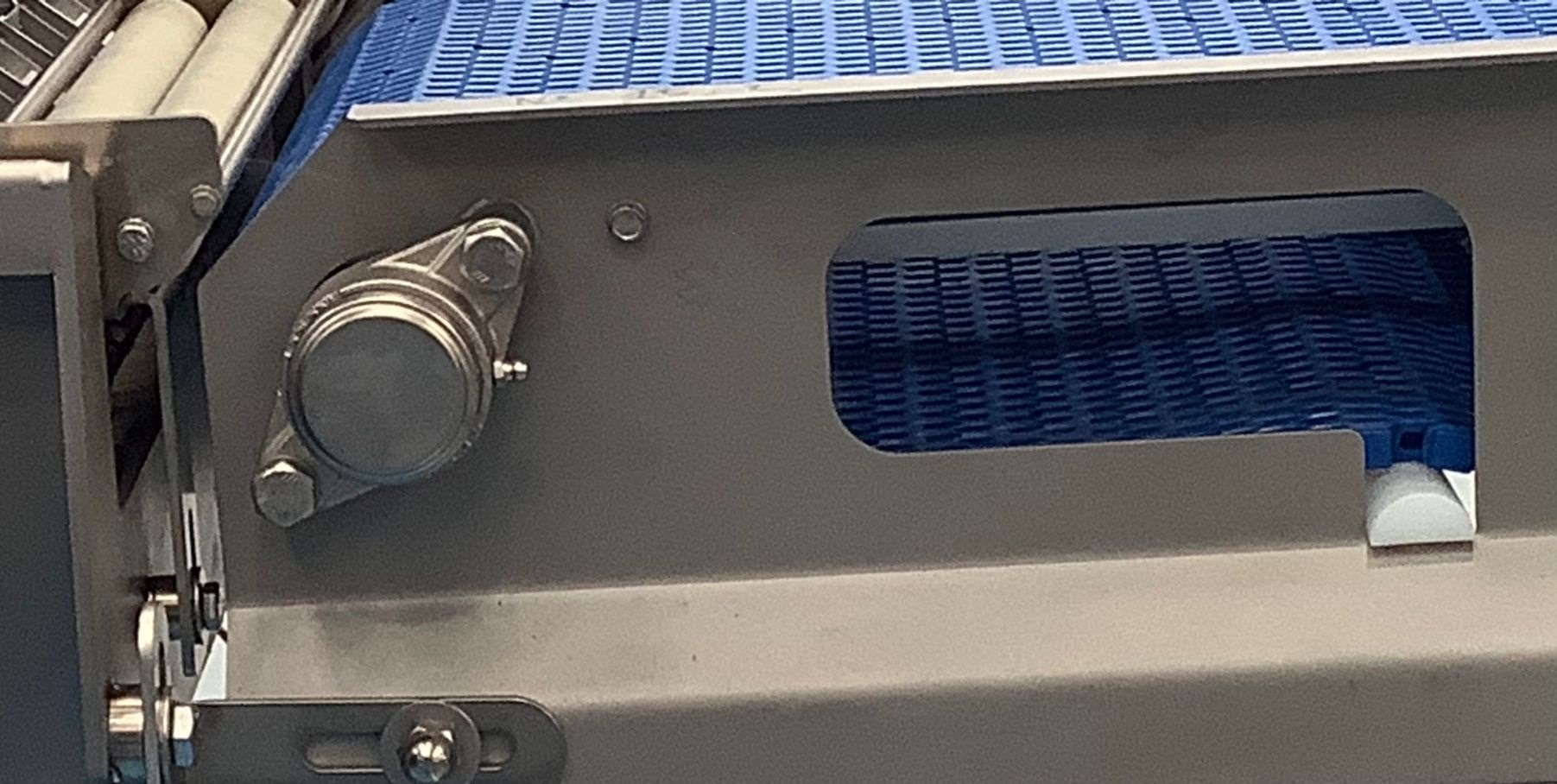
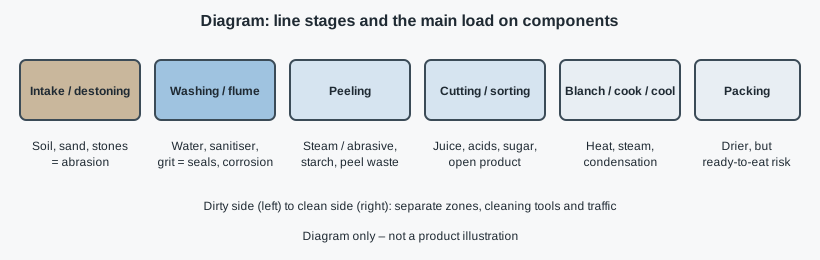 fruit, vegetable and potato line stages and component loads. Schematic, not a product test report.
Process steps, risks and component requirements
| Stage | Hygiene and technical risks | Component requirements |
|---|---|---|
| Intake, destoning, dry cleaning | Soil, sand, stones; heavy, uneven loads; dust | Robust bearings with effective seals, wear-resistant conveyor parts, feet sized for shock loads |
| Washing (drum, brush, flume, potato washing equipment) | Constant water, grit, sanitiser in wash water | Sealed stainless bearings, stainless fasteners, drainable frames, feet with enclosed threads |
| Peeling (steam, abrasive, knife) | Steam, abrasion, starch and peel waste, heat | Seals and grease for heat and water; no ledges where peel collects |
| Cutting, slicing, sorting | Exposed product, juice, fruit acids, sugar, starch | Hygienic design in the product-contact zone, smooth surfaces, quick dismantling |
| Blanching, cooking, cooling | Heat, steam, condensation | Temperature-rated seals and grease; drainage of condensate |
| Freezing, drying, packing | Ready-to-eat product, cold or dry conditions | Crevice-free parts close to product; cleanable guides and feet |
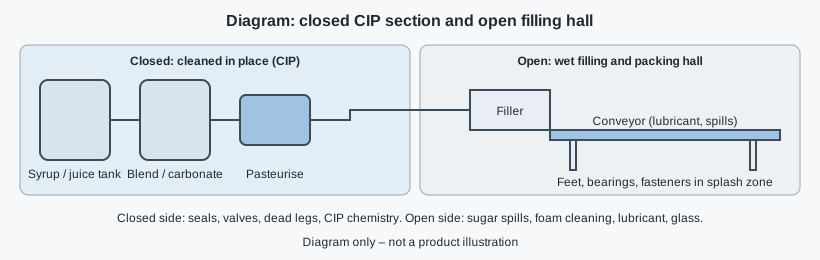
Product-contact zone means surfaces touching product or draining back onto it; the splash zone is everything reached by product splash, wash water or cleaning foam. On produce lines the splash zone is large, because washing and flumes spray continuously during production, not only during cleaning.
Send your application data and get a component recommendation for your produce line
Dirty side and clean side
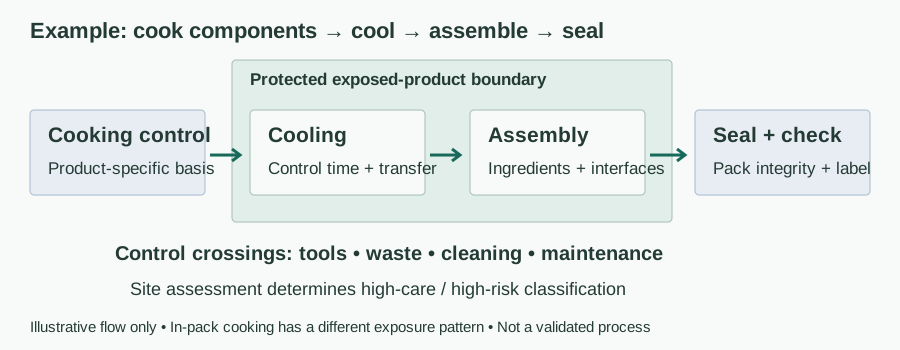
Produce plants work from a dirty side (intake, destoning, washing) to a clean side (cut, cooked, packed product). The dirty side has soil, sand and high bioburden; the clean side handles ready-to-eat or near ready-to-eat product. Listeria monocytogenes is a known risk in wet, cool fresh-cut environments. Keep zones, cleaning tools and traffic separate, and choose components on the clean side to the stricter standard – crevice-free, sealed, quick to clean. The hygienic zones in factory layouts guide covers the layout side.
Abrasion: the dirty-side problem
Sand and soil in wash water act like a grinding paste. Typical results:
- Seal lips on bearings wear, water and grit enter, bearings run rough within months.
- Conveyor wear strips, sprockets and rollers wear quickly; worn plastic fragments are a foreign-body risk.
- Fasteners and threaded feet collect grit in exposed threads and seize.
What helps: bearings with multi-lip or labyrinth seals and stainless inserts, covers over shaft ends, wear parts in a colour that contrasts with the product so fragments are visible, enclosed threads on feet, and enough clearance under machines to flush out sand. Sealed units are covered in sealed stainless bearing units for hygienic industries.
Corrosion: wash water, sanitisers and fruit acids
Wash water is often treated with chlorine-based sanitisers or peracetic acid, and fruit juices contain citric and malic acids. Chlorides and acids together promote chloride pitting – local corrosion pits in stainless steel – especially where water stands in crevices. In practice:
- AISI 304 is widely used for frames and general parts; specify 316/316L for parts in continuous contact with chlorinated wash water or acidic juice.
- Avoid mixing stainless and zinc-plated or mild-steel parts in wet areas: galvanic corrosion attacks the less noble metal.
- Ensure stainless parts are passivated – a cleaned, chromium-rich surface that resists corrosion – after welding or machining.
- Design so water drains: no horizontal flat bar, no blind tube ends.
Sugar, starch and cleaning
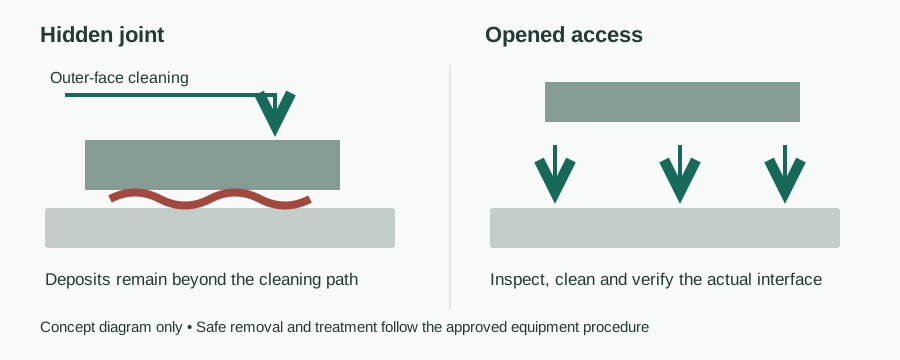
Sugary residues from fruit and starch from potatoes stick and harden when they dry, especially around bearings and under guards. They feed microbial growth and can also bind grit. Cleaning is mostly foam and rinse, sometimes with high-pressure water. Keep jets away from bearing seals at close range, schedule cleaning before residues dry, and use components without recesses so foam can reach all surfaces. IP ratings describe ingress tests, not cleanability. For conveyor selection, use the conveyor type and hygienic belt specification guide.
Example
Assumed situation, for method only: a potato line with a drum washer, steam peeler and slicer. Findings: bearings on the washer drive fail every few months with sand inside; exposed-thread feet under the washer are seized; mild-steel brackets show rust next to stainless frames. Changes: sealed stainless bearing units with covers on the washer, feet with enclosed threads sized for the washer's operating load including water, stainless brackets and fasteners, and a rule to flush sand from under the washer each shift. On the slicer (clean side), dismantling for cleaning is reviewed and the starch-collecting ledge under the outfeed is removed.
Common mistakes
- Using the same component standard on dirty and clean sides – too costly on one, too weak on the other.
- Sizing washer feet on empty weight rather than operating weight with water and product.
- Ignoring sanitiser chemistry when choosing stainless grade and seal material.
- Plastic wear parts in product-coloured materials.
- Letting sugar and starch dry before cleaning.
What to send for a recommendation
Before asking for certification evidence, use the supplier evidence to check for produce-line components.
- Line stage (washing, peeling, cutting, blanching, packing) and dirty/clean side
- Products (fruit, vegetables, potatoes) and sanitisers or cleaning chemicals
- Components: bearings (shaft size, load, speed), feet (operating load), conveyor parts, fasteners
- Material grade and food-contact documents needed
- Quantities and delivery country
Send these details to NHK
An NHK technician suggests components and sends a quote. Browse NHK's conveyor components and machinery parts. For related lines see grain processing equipment and frozen food processing equipment.